Lee Joo Hyung, Kim Seong Hun, Oh Kyung Wha
Department of Organic and Nano Engineering, College of Engineering, Hanyang University, Seoul 04763, Korea.
Department of Fashion, College of Arts, Chung-Ang University, Anseong 17546, Korea.
Polymers (Basel). 2021 Feb 14;13(4):576. doi: 10.3390/polym13040576.
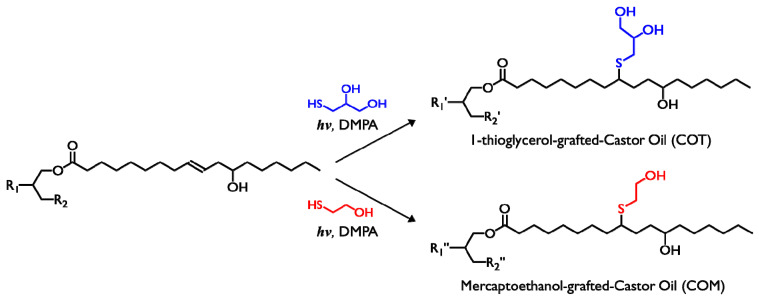
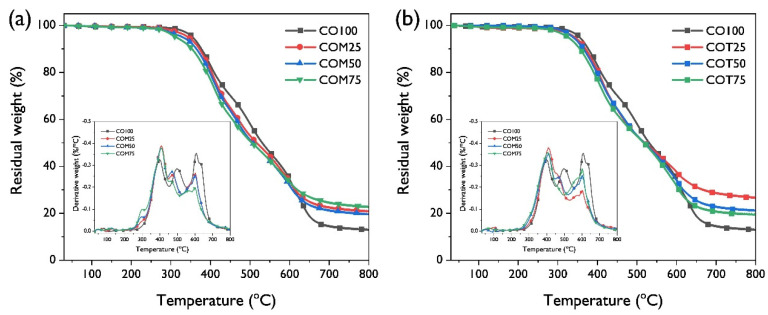
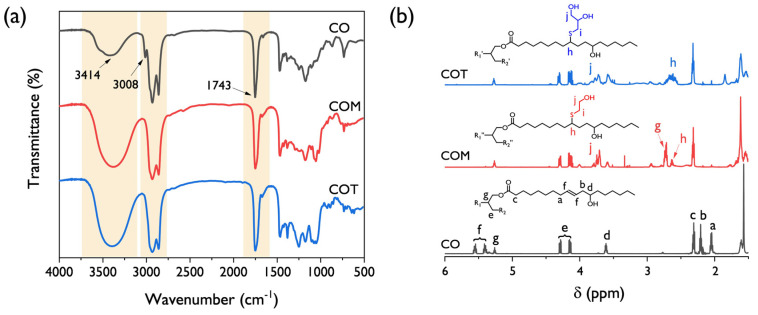
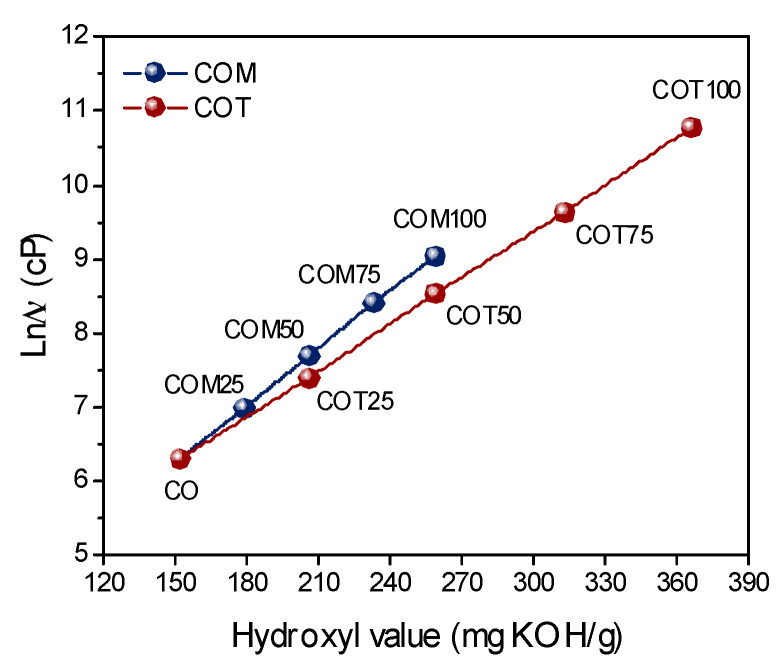
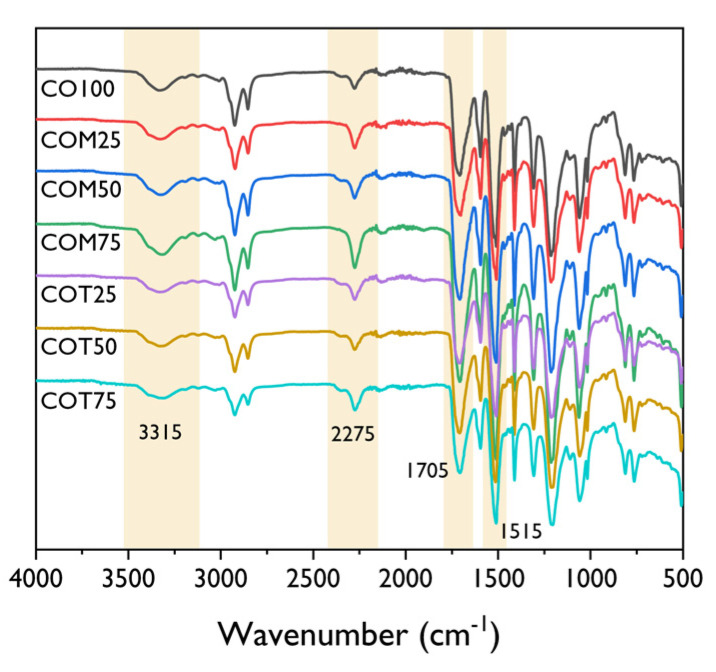
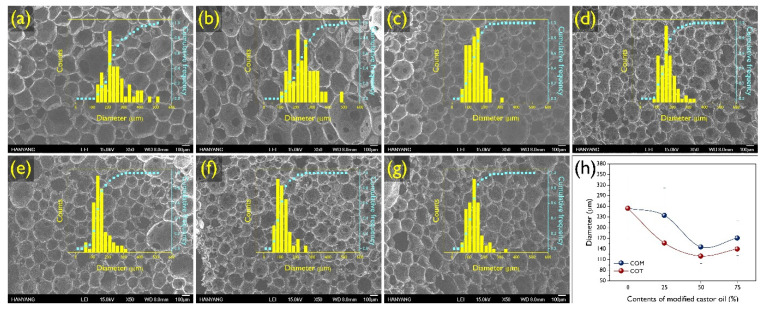
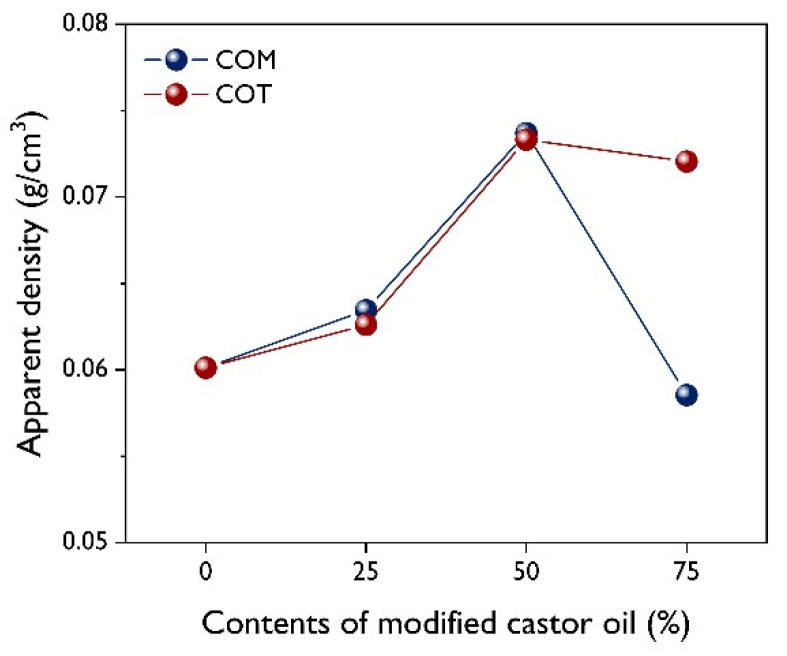
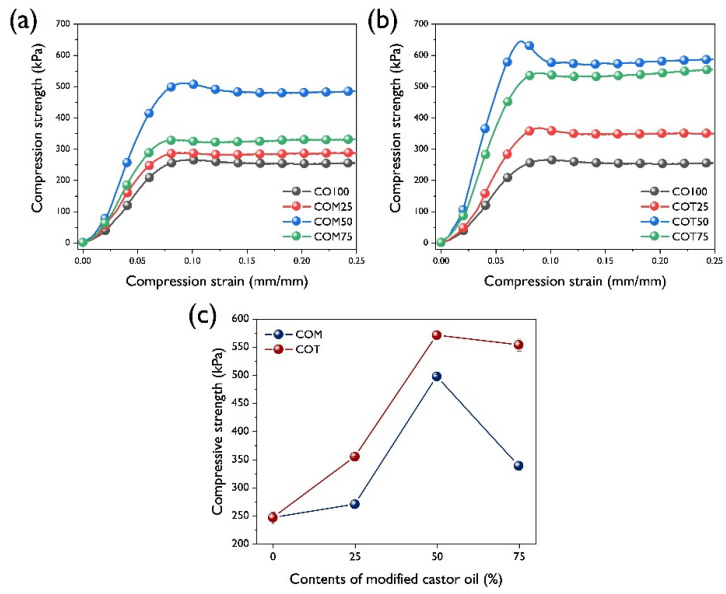
Currently, most commercial polyols used in the production of polyurethane (PU) foam are derived from petrochemicals. To address concerns relating to environmental pollution, a sustainable resource, namely, castor oil (CO), was used in this study. To improve the production efficiency, sustainability, and compressive strength of PU foam, which is widely used as an impact-absorbing material for protective equipment, PU foam was synthesized with CO-based multifunctional polyols. CO-based polyols with high functionalities were synthesized via a facile thiol-ene click reaction method and their chemical structures were analyzed. Subsequently, a series of polyol blends of castor oil and two kinds of castor oil-based polyols with different hydroxyl values was prepared and the viscosity of the blends was analyzed. Polyurethane foams were fabricated from the polyol blends via a free-rising method. The effects of the composition of the polyol blends on the structural, morphological, mechanical, and thermal properties of the polyurethane foams were investigated. The results demonstrated that the fabrication of polyurethane foams from multifunctional polyol blends is an effective way to improve their compressive properties. We expect these findings to widen the range of applications of bio-based polyurethane foams.
目前,用于生产聚氨酯(PU)泡沫的大多数商业多元醇都来自石化产品。为了解决与环境污染相关的问题,本研究使用了一种可持续资源——蓖麻油(CO)。为了提高PU泡沫的生产效率、可持续性和抗压强度(PU泡沫被广泛用作防护装备的吸能材料),用基于CO的多功能多元醇合成了PU泡沫。通过简便的硫醇-烯点击反应法合成了具有高官能度的基于CO的多元醇,并对其化学结构进行了分析。随后,制备了一系列蓖麻油与两种不同羟值的蓖麻油基多元醇的多元醇共混物,并对共混物的粘度进行了分析。通过自由发泡法由多元醇共混物制备聚氨酯泡沫。研究了多元醇共混物的组成对聚氨酯泡沫的结构、形态、力学和热性能的影响。结果表明,由多功能多元醇共混物制备聚氨酯泡沫是提高其压缩性能的有效方法。我们期望这些发现能够拓宽生物基聚氨酯泡沫的应用范围。