Immunology Research Center, Tabriz University of Medical Sciences, Tabriz 5166614766, Iran.
Student Research Committee, Tabriz University of Medical Sciences, Tabriz 5166614766, Iran.
Genes (Basel). 2021 Feb 12;12(2):267. doi: 10.3390/genes12020267.
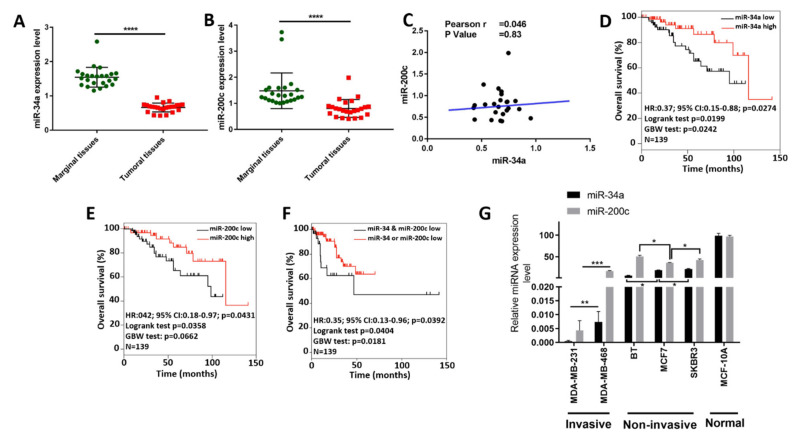
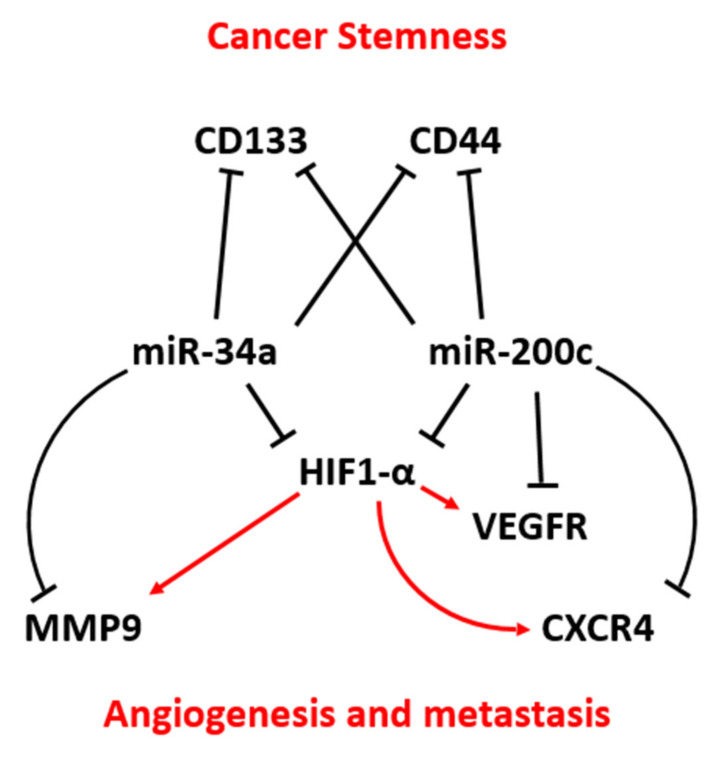
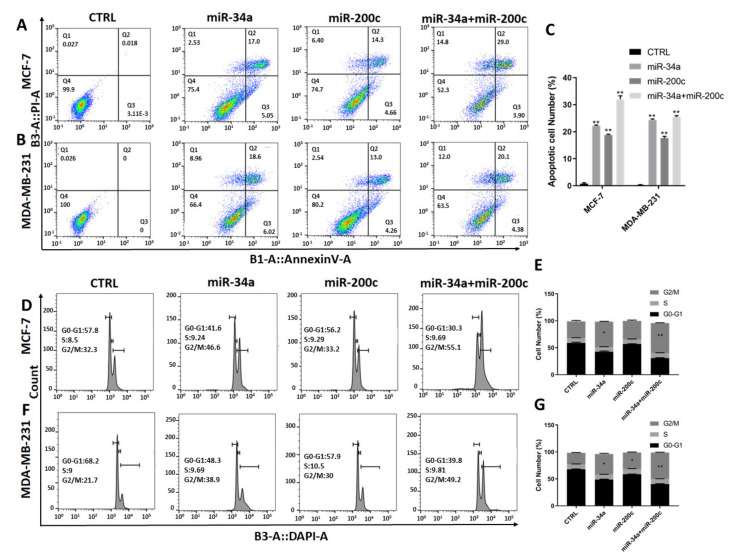
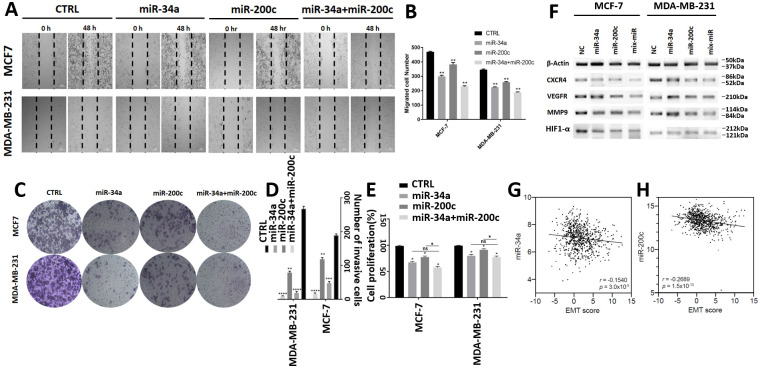
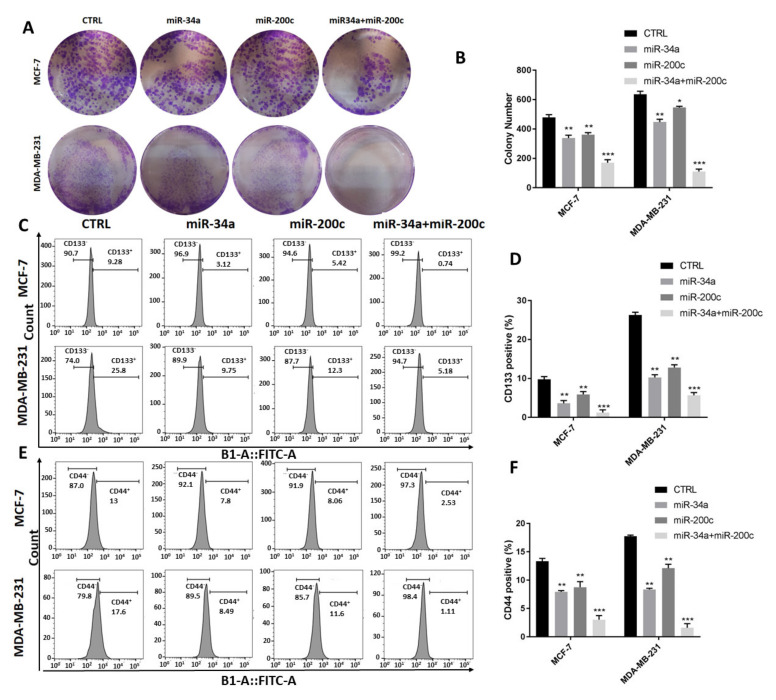
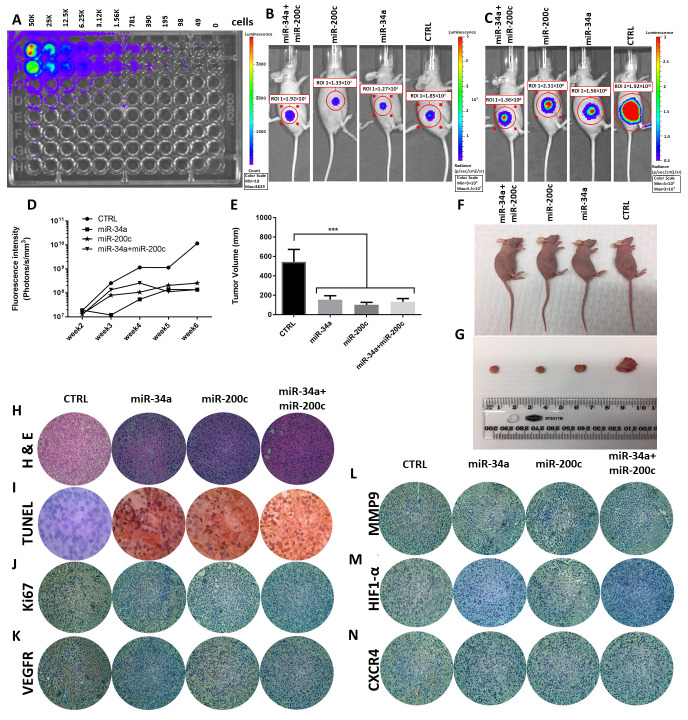
Breast cancer is the most common women's malignancy in the world and, for subgroups of patients, treatment outcomes remain poor. Thus, more effective therapeutic strategies are urgently needed. MicroRNAs (miRNAs) have emerged as promising therapeutic tools and targets, as they play significant roles in regulating key cellular processes by suppressing gene expression. However, additive opportunities involving miRNAs have been underexplored. For example, both miR-34a and miR-200c individually suppress the development of different types of cancer, but the cellular effects of their combined actions remain unknown. Here, we show that miR-34a and miR-200c levels are reduced in breast tumors compared to adjacent normal tissues and that this additively predicts poor patient survival. In addition, in cell lines, miR-34a and miR-200c additively induce apoptosis and cell cycle arrest, while also inhibiting proliferation, invasion, migration, stemness and epithelial-to-mesenchymal transition (EMT). Mechanistically, both miRNA-34a and miR-200c directly target HIF1-α and subsequently downregulate VEGFR, MMP9 and CXCR4, although combined miRNA-34a and miR-200c delivery suppresses mouse xenograft tumor development as effectively as individual delivery. We establish a model, supported by in vitro and clinical data, which collectively suggest that the co-delivery of miR-34a and miR-200c represents a promising novel therapeutic strategy for breast cancer patients.
乳腺癌是全世界最常见的女性恶性肿瘤,对于某些患者亚组,治疗效果仍然不佳。因此,迫切需要更有效的治疗策略。microRNAs(miRNAs)已成为很有前途的治疗工具和靶点,因为它们通过抑制基因表达在调节关键细胞过程中发挥重要作用。然而,miRNAs 的联合应用机会尚未得到充分探索。例如,miR-34a 和 miR-200c 单独抑制不同类型癌症的发展,但它们联合作用的细胞效应尚不清楚。在这里,我们发现与相邻正常组织相比,乳腺癌组织中 miR-34a 和 miR-200c 的水平降低,并且这种降低程度与患者预后不良相关。此外,在细胞系中,miR-34a 和 miR-200c 可协同诱导细胞凋亡和细胞周期停滞,同时抑制增殖、侵袭、迁移、干性和上皮间质转化(EMT)。在机制上,miR-34a 和 miR-200c 都可以直接靶向 HIF1-α,随后下调 VEGFR、MMP9 和 CXCR4,尽管联合递送 miR-34a 和 miR-200c 与单独递送一样有效地抑制了小鼠异种移植肿瘤的发展。我们建立了一个模型,该模型得到了体外和临床数据的支持,共同表明联合递送 miR-34a 和 miR-200c 代表了一种有前途的治疗乳腺癌患者的新策略。