Otte Moritz, Stachelscheid Johanna, Glaß Markus, Wahnschaffe Linus, Jiang Qu, Lone Waseem, Ianevski Aleksandr, Aittokallio Tero, Iqbal Javeed, Hallek Michael, Hüttelmaier Stefan, Schrader Alexandra, Braun Till, Herling Marco
Department I of Internal Medicine, Center for Integrated Oncology, Aachen-Bonn-Cologne-Duesseldorf, University of Cologne, 50937 Cologne, Germany.
Section for Molecular Cell Biology, Institute of Molecular Medicine, Faculty of Medicine, Martin Luther University Halle-Wittenberg, Charles Tanford Protein Center, 06120 Halle, Germany.
Cancers (Basel). 2023 Apr 28;15(9):2527. doi: 10.3390/cancers15092527.
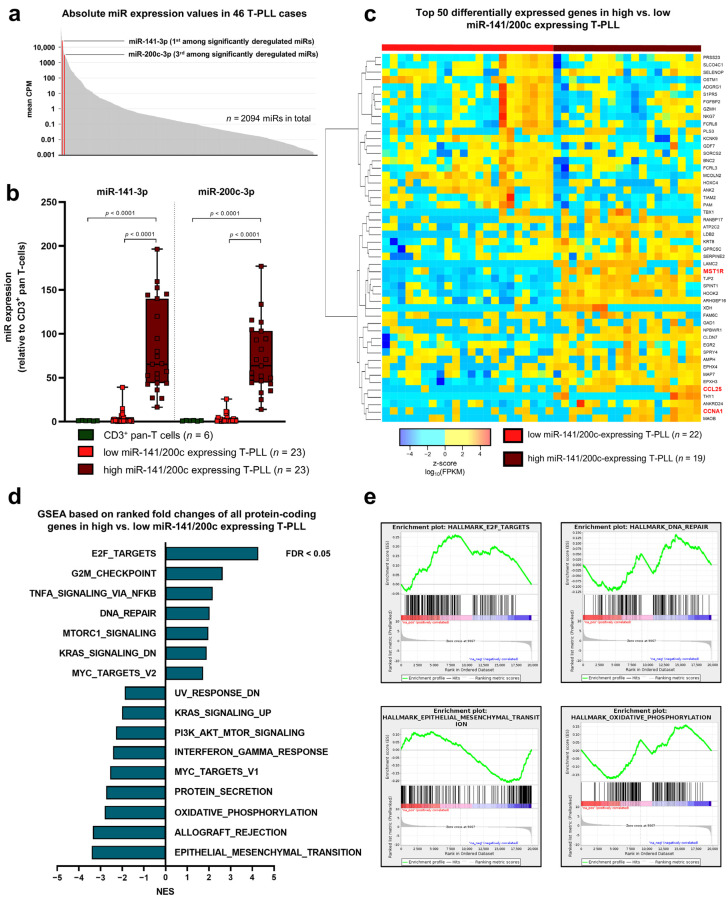
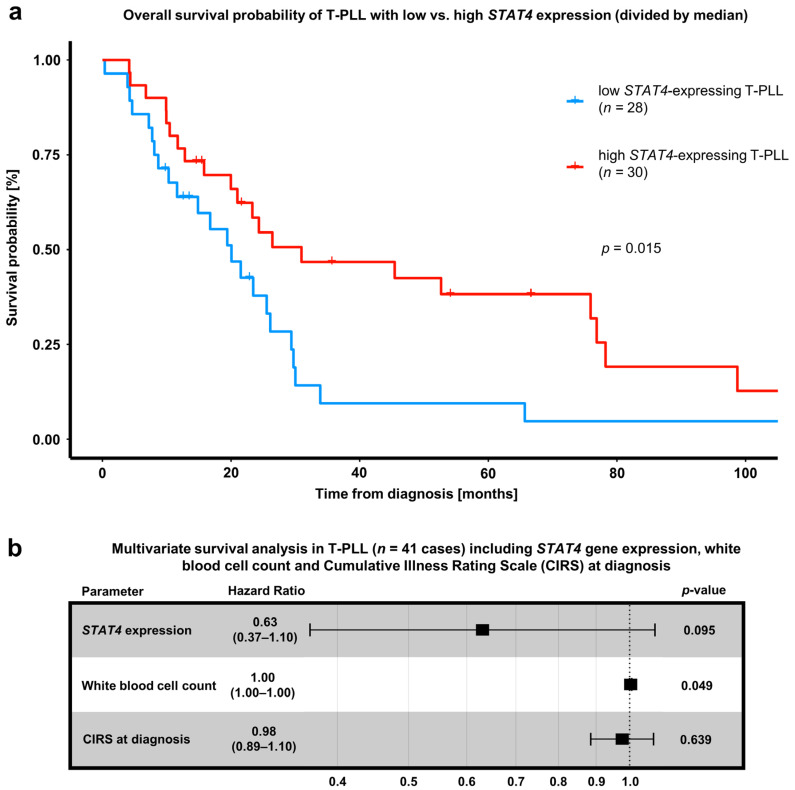
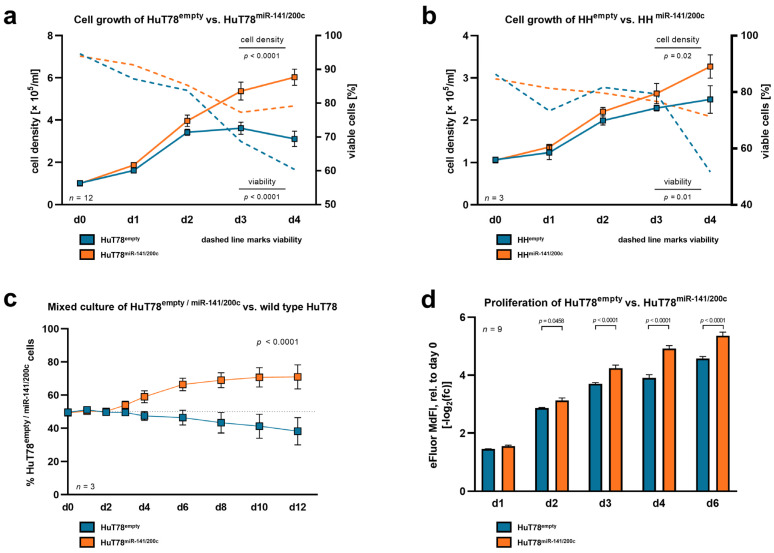
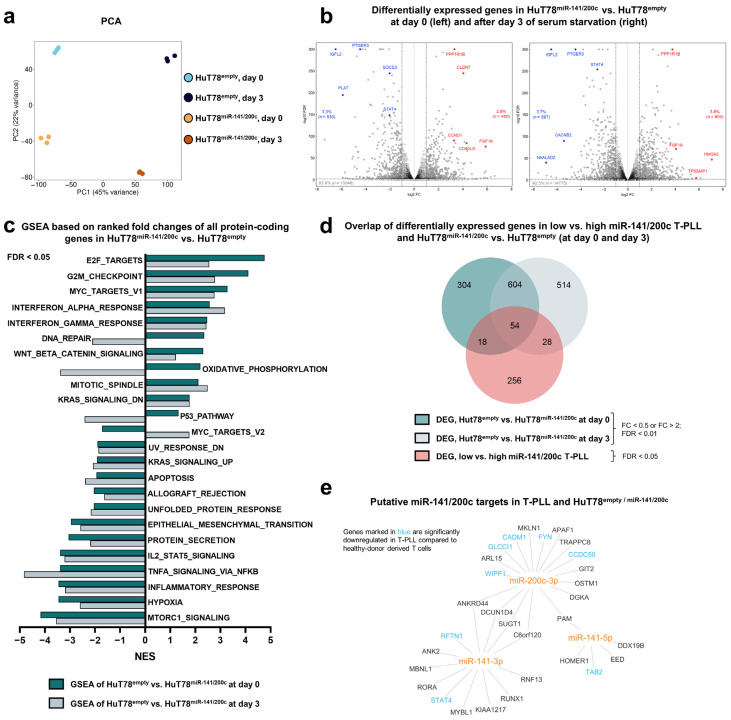
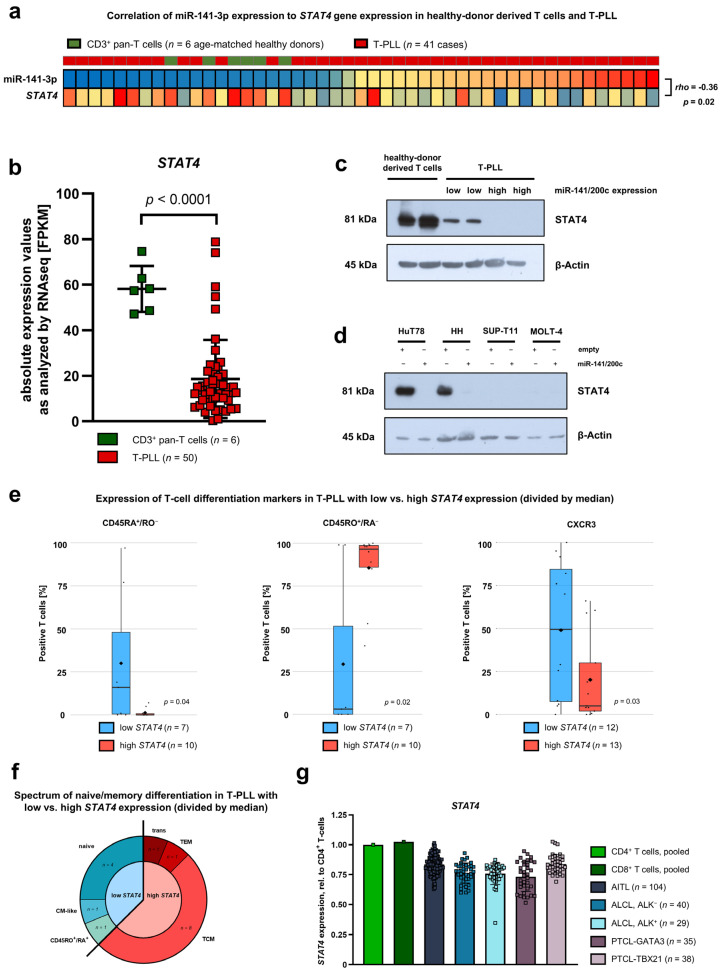
T-prolymphocytic leukemia (T-PLL) is a rare and mature T-cell malignancy with characteristic chemotherapy-refractory behavior and a poor prognosis. Molecular concepts of disease development have been restricted to protein-coding genes. Recent global microRNA (miR) expression profiles revealed miR-141-3p and miR-200c-3p (miR-141/200c) as two of the highest differentially expressed miRs in T-PLL cells versus healthy donor-derived T cells. Furthermore, miR-141/200c expression separates T-PLL cases into two subgroups with high and low expression, respectively. Evaluating the potential pro-oncogenic function of miR-141/200c deregulation, we discovered accelerated proliferation and reduced stress-induced cell death induction upon stable miR-141/200c overexpression in mature T-cell leukemia/lymphoma lines. We further characterized a miR-141/200c-specific transcriptome involving the altered expression of genes associated with enhanced cell cycle transition, impaired DNA damage responses, and augmented survival signaling pathways. Among those genes, we identified as a potential miR-141/200c target. Low expression (in the absence of miR-141/200c upregulation) was associated with an immature phenotype of primary T-PLL cells as well as with a shortened overall survival of T-PLL patients. Overall, we demonstrate an aberrant miR-141/200c-STAT4 axis, showing for the first time the potential pathogenetic implications of a miR cluster, as well as of STAT4, in the leukemogenesis of this orphan disease.
T 细胞幼淋巴细胞白血病(T-PLL)是一种罕见的成熟 T 细胞恶性肿瘤,具有化疗难治的特征且预后较差。疾病发展的分子概念一直局限于蛋白质编码基因。最近的全基因组微小 RNA(miR)表达谱显示,与健康供体来源的 T 细胞相比,miR-141-3p 和 miR-200c-3p(miR-141/200c)是 T-PLL 细胞中差异表达最高的两种 miR。此外,miR-141/200c 的表达将 T-PLL 病例分为两个亚组,分别具有高表达和低表达。评估 miR-141/200c 失调的潜在促癌功能时,我们发现成熟 T 细胞白血病/淋巴瘤细胞系中稳定过表达 miR-141/200c 后,细胞增殖加速且应激诱导的细胞死亡减少。我们进一步对 miR-141/200c 特异性转录组进行了表征,该转录组涉及与细胞周期转换增强、DNA 损伤反应受损以及生存信号通路增强相关的基因表达改变。在这些基因中,我们将[此处原文缺失具体基因名称]鉴定为潜在的 miR-141/200c 靶点。低[此处原文缺失具体基因名称]表达(在 miR-141/200c 未上调的情况下)与原发性 T-PLL 细胞的未成熟表型以及 T-PLL 患者的总生存期缩短有关。总体而言,我们证明了 miR-141/200c-STAT4 轴异常,首次显示了 miR 簇以及 STAT4 在这种罕见疾病白血病发生中的潜在致病意义。