Dipartimento di Fisica e Astronomia "Ettore Majorana", INFN Sezione di Catania, Università di Catania, Catania, Italy.
Dipartimento di Economia e Impresa, Università di Catania, Catania, Italy.
Sci Rep. 2021 Mar 5;11(1):5304. doi: 10.1038/s41598-021-82310-4.
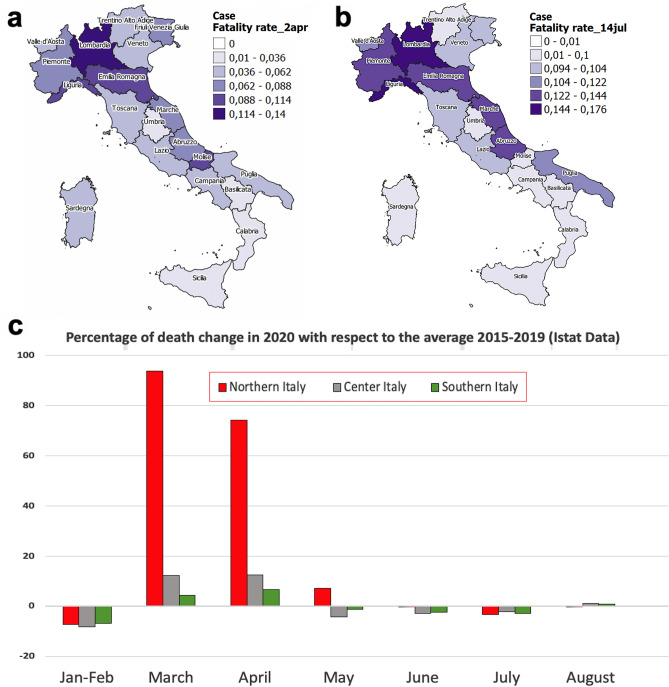
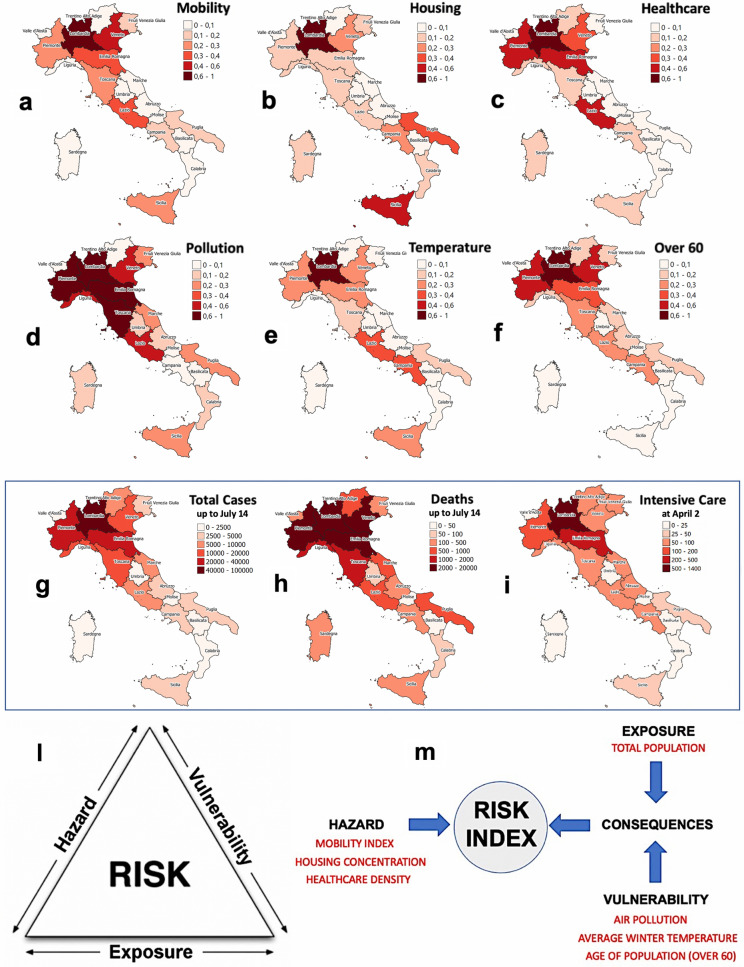
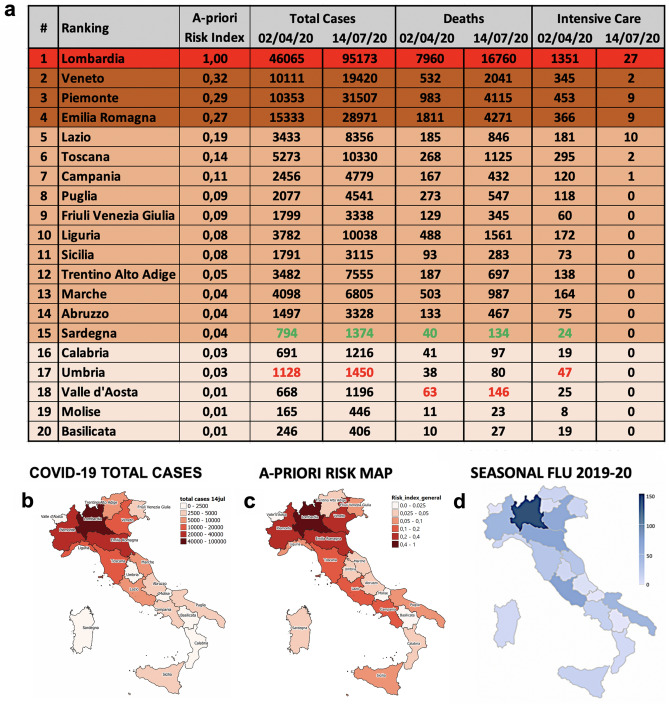
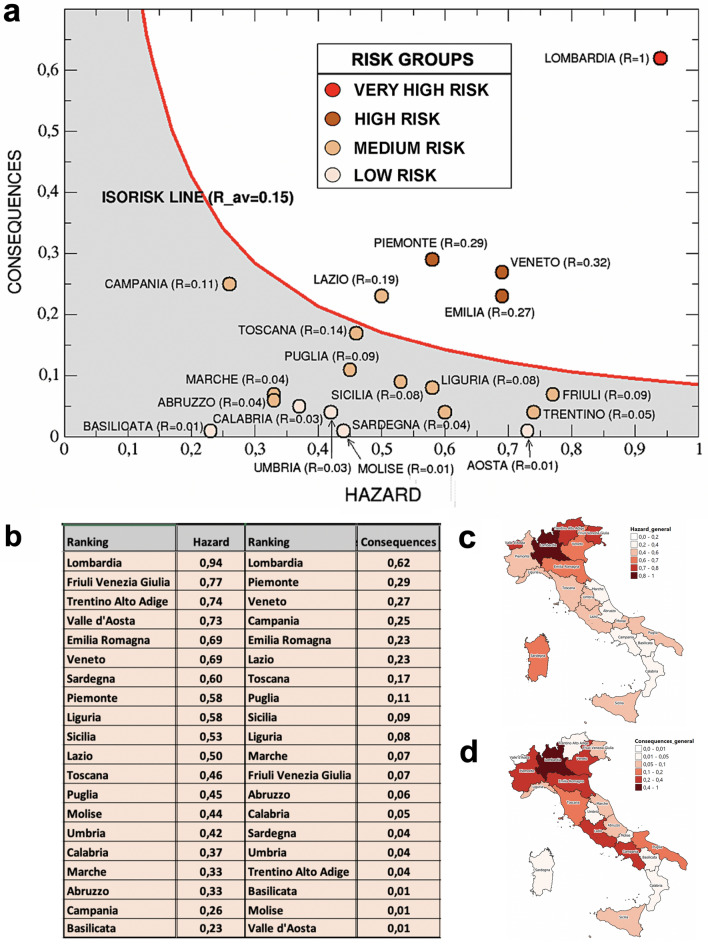
We propose a novel data-driven framework for assessing the a-priori epidemic risk of a geographical area and for identifying high-risk areas within a country. Our risk index is evaluated as a function of three different components: the hazard of the disease, the exposure of the area and the vulnerability of its inhabitants. As an application, we discuss the case of COVID-19 outbreak in Italy. We characterize each of the twenty Italian regions by using available historical data on air pollution, human mobility, winter temperature, housing concentration, health care density, population size and age. We find that the epidemic risk is higher in some of the Northern regions with respect to Central and Southern Italy. The corresponding risk index shows correlations with the available official data on the number of infected individuals, patients in intensive care and deceased patients, and can help explaining why regions such as Lombardia, Emilia-Romagna, Piemonte and Veneto have suffered much more than the rest of the country. Although the COVID-19 outbreak started in both North (Lombardia) and Central Italy (Lazio) almost at the same time, when the first cases were officially certified at the beginning of 2020, the disease has spread faster and with heavier consequences in regions with higher epidemic risk. Our framework can be extended and tested on other epidemic data, such as those on seasonal flu, and applied to other countries. We also present a policy model connected with our methodology, which might help policy-makers to take informed decisions.
我们提出了一种新颖的数据驱动框架,用于评估地理区域的先验流行病风险,并识别国家内的高风险区域。我们的风险指数是作为疾病的危险、区域的暴露和居民的脆弱性这三个不同组成部分的函数来评估的。作为一个应用案例,我们讨论了意大利 COVID-19 疫情爆发的情况。我们通过使用可用的空气污染、人员流动、冬季温度、住房密度、医疗保健密度、人口规模和年龄等历史数据,对意大利的二十个地区进行了特征描述。我们发现,与意大利中部和南部相比,北部一些地区的疫情风险更高。相应的风险指数与已有的感染人数、重症监护患者和死亡患者的官方数据相关,这有助于解释为什么伦巴第、艾米利亚-罗马涅、皮埃蒙特和威尼托等地区比其他地区遭受了更多的苦难。尽管 COVID-19 疫情首先在北部(伦巴第)和中部意大利(拉齐奥)爆发,但当 2020 年初首次正式确诊病例时,在疫情风险更高的地区,疾病传播得更快,后果更严重。我们的框架可以扩展并应用于其他流行病数据,如季节性流感,并应用于其他国家。我们还提出了一个与我们的方法相关的政策模型,这可能有助于决策者做出明智的决策。