Singh Sunil, Ahuja Umang, Kumar Munish, Kumar Krishan, Sachdeva Monika
Department of Information Technology, University Institute of Engineering and Technology, Panjab University, Chandigarh, India.
Department of Computational Sciences, Maharaja Ranjit Singh Punjab Technical University, Bathinda, Punjab India.
Multimed Tools Appl. 2021;80(13):19753-19768. doi: 10.1007/s11042-021-10711-8. Epub 2021 Mar 1.
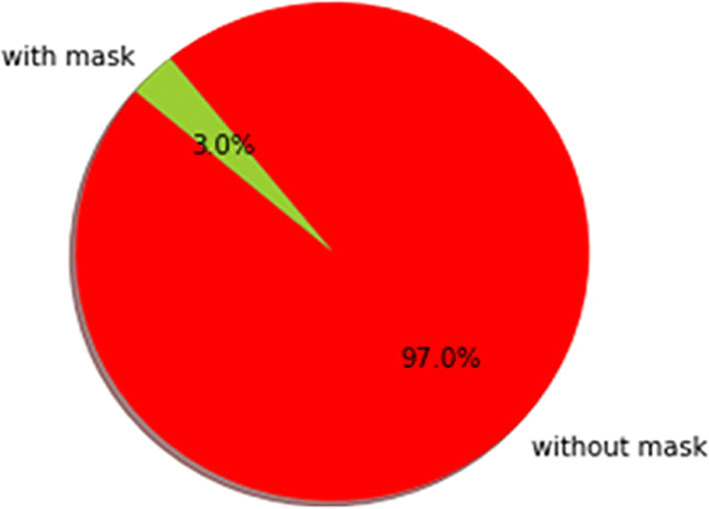
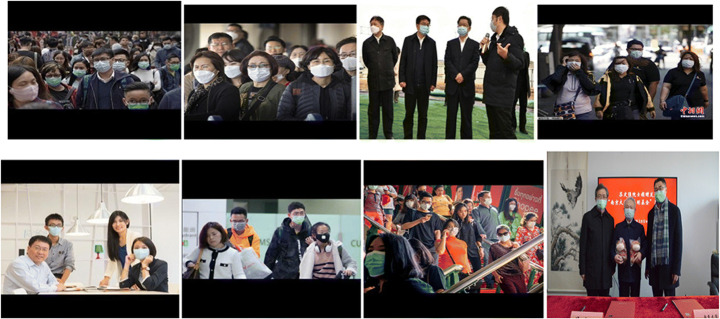
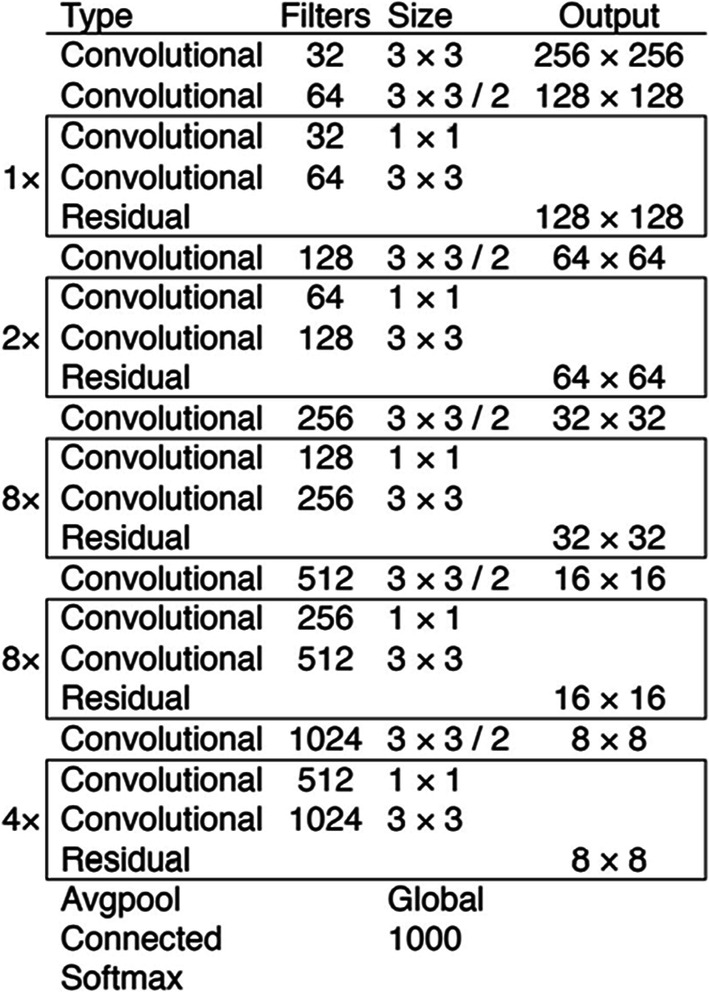
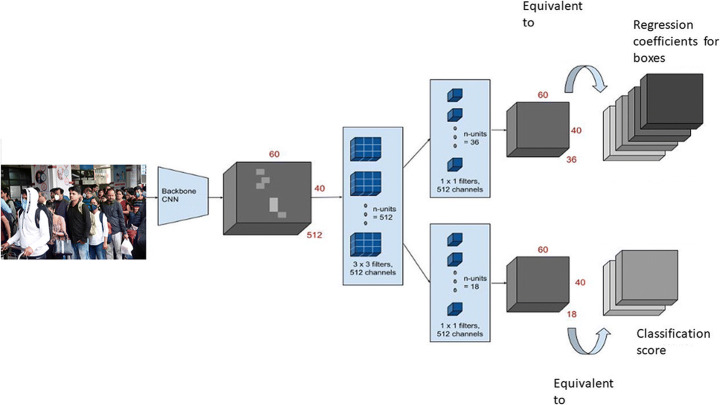
There are many solutions to prevent the spread of the COVID-19 virus and one of the most effective solutions is wearing a face mask. Almost everyone is wearing face masks at all times in public places during the coronavirus pandemic. This encourages us to explore face mask detection technology to monitor people wearing masks in public places. Most recent and advanced face mask detection approaches are designed using deep learning. In this article, two state-of-the-art object detection models, namely, YOLOv3 and faster R-CNN are used to achieve this task. The authors have trained both the models on a dataset that consists of images of people of two categories that are with and without face masks. This work proposes a technique that will draw bounding boxes (red or green) around the faces of people, based on whether a person is wearing a mask or not, and keeps the record of the ratio of people wearing face masks on the daily basis. The authors have also compared the performance of both the models i.e., their precision rate and inference time.
有许多预防新冠病毒传播的方法,其中最有效的方法之一就是佩戴口罩。在新冠疫情期间,几乎每个人在公共场所都时刻佩戴口罩。这促使我们探索口罩检测技术,以监测公共场所佩戴口罩的人群。最新且先进的口罩检测方法是基于深度学习设计的。在本文中,使用了两种最先进的目标检测模型,即YOLOv3和更快的R-CNN来完成这项任务。作者在一个由两类人员图像组成的数据集上对这两种模型进行了训练,这两类人员分别是佩戴口罩和未佩戴口罩的。这项工作提出了一种技术,该技术将根据人们是否佩戴口罩在人脸周围绘制边界框(红色或绿色),并每天记录佩戴口罩的人员比例。作者还比较了这两种模型的性能,即它们的准确率和推理时间。