Noor Manan Binth Taj, Zenia Nusrat Zerin, Kaiser M Shamim, Mamun Shamim Al, Mahmud Mufti
Institute of Information Technology, Jahangirnagar University, Savar, 1342, Dhaka, Bangladesh.
Department of Computing & Technology, Nottingham Trent University, NG11 8NS, Nottingham, UK.
Brain Inform. 2020 Oct 9;7(1):11. doi: 10.1186/s40708-020-00112-2.
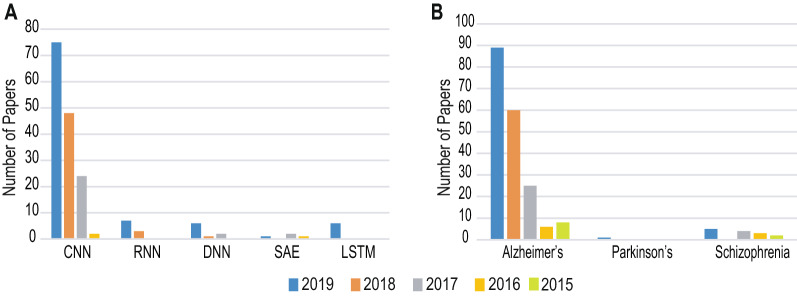
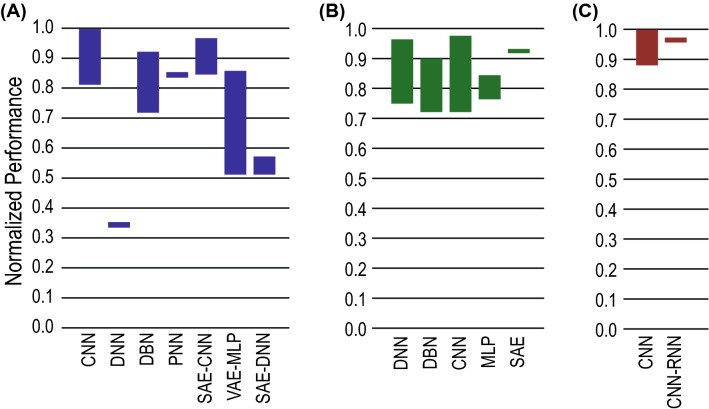
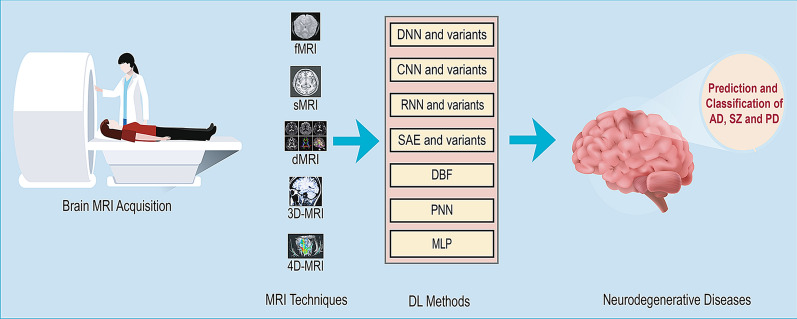
Neuroimaging, in particular magnetic resonance imaging (MRI), has been playing an important role in understanding brain functionalities and its disorders during the last couple of decades. These cutting-edge MRI scans, supported by high-performance computational tools and novel ML techniques, have opened up possibilities to unprecedentedly identify neurological disorders. However, similarities in disease phenotypes make it very difficult to detect such disorders accurately from the acquired neuroimaging data. This article critically examines and compares performances of the existing deep learning (DL)-based methods to detect neurological disorders-focusing on Alzheimer's disease, Parkinson's disease and schizophrenia-from MRI data acquired using different modalities including functional and structural MRI. The comparative performance analysis of various DL architectures across different disorders and imaging modalities suggests that the Convolutional Neural Network outperforms other methods in detecting neurological disorders. Towards the end, a number of current research challenges are indicated and some possible future research directions are provided.
在过去几十年里,神经成像,尤其是磁共振成像(MRI),在理解大脑功能及其紊乱方面发挥了重要作用。这些由高性能计算工具和新颖的机器学习技术支持的前沿MRI扫描,为以前所未有的方式识别神经系统疾病开辟了可能性。然而,疾病表型的相似性使得从获取的神经成像数据中准确检测此类疾病变得非常困难。本文批判性地研究并比较了现有的基于深度学习(DL)的方法从使用包括功能和结构MRI在内的不同模态获取的MRI数据中检测神经系统疾病(重点是阿尔茨海默病、帕金森病和精神分裂症)的性能。对不同疾病和成像模态的各种深度学习架构的比较性能分析表明,卷积神经网络在检测神经系统疾病方面优于其他方法。最后,指出了一些当前的研究挑战,并提供了一些可能的未来研究方向。