Meteier Quentin, Capallera Marine, Ruffieux Simon, Angelini Leonardo, Abou Khaled Omar, Mugellini Elena, Widmer Marino, Sonderegger Andreas
HumanTech Institute, University of Applied Sciences of Western Switzerland, Haute École Spécialisée de Suisse Occidentale, Fribourg, Switzerland.
Department of Informatics, University of Fribourg, Fribourg, Switzerland.
Front Psychol. 2021 Feb 18;12:596038. doi: 10.3389/fpsyg.2021.596038. eCollection 2021.
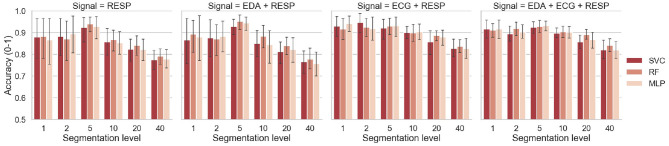
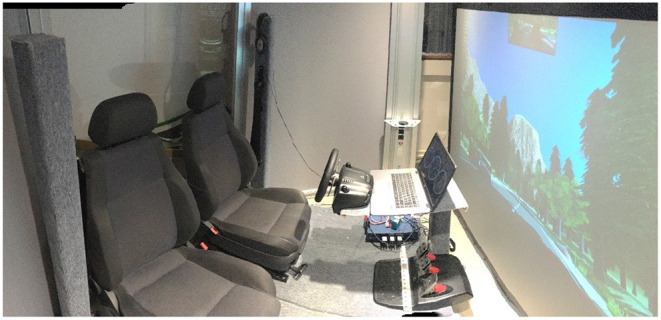
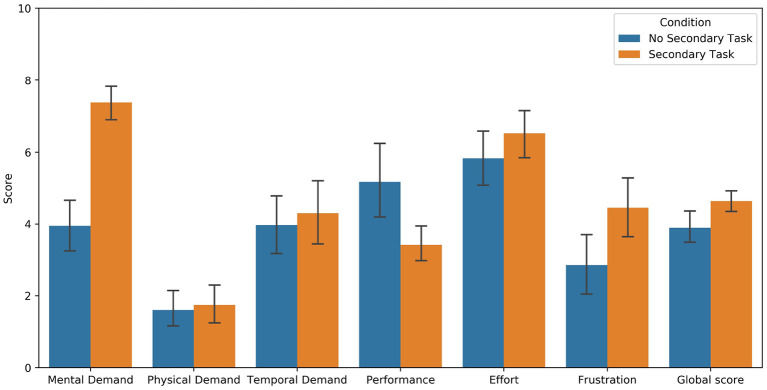
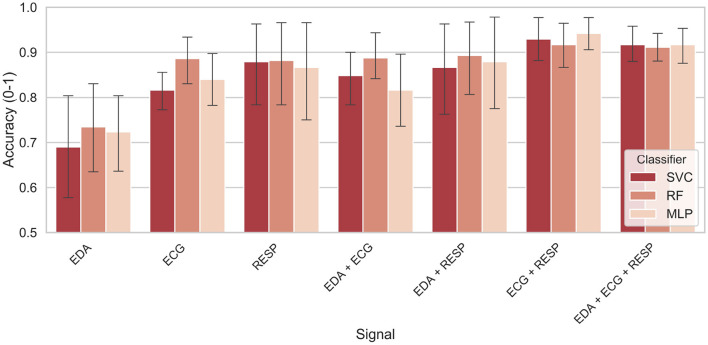
The use of automation in cars is increasing. In future vehicles, drivers will no longer be in charge of the main driving task and may be allowed to perform a secondary task. However, they might be requested to regain control of the car if a hazardous situation occurs (i.e., conditionally automated driving). Performing a secondary task might increase drivers' mental workload and consequently decrease the takeover performance if the workload level exceeds a certain threshold. Knowledge about the driver's mental state might hence be useful for increasing safety in conditionally automated vehicles. Measuring drivers' workload continuously is essential to support the driver and hence limit the number of accidents in takeover situations. This goal can be achieved using machine learning techniques to evaluate and classify the drivers' workload in real-time. To evaluate the usefulness of physiological data as an indicator for workload in conditionally automated driving, three physiological signals from 90 subjects were collected during 25 min of automated driving in a fixed-base simulator. Half of the participants performed a verbal cognitive task to induce mental workload while the other half only had to monitor the environment of the car. Three classifiers, sensor fusion and levels of data segmentation were compared. Results show that the best model was able to successfully classify the condition of the driver with an accuracy of 95%. In some cases, the model benefited from sensors' fusion. Increasing the segmentation level (e.g., size of the time window to compute physiological indicators) increased the performance of the model for windows smaller than 4 min, but decreased for windows larger than 4 min. In conclusion, the study showed that a high level of drivers' mental workload can be accurately detected while driving in conditional automation based on 4-min recordings of respiration and skin conductance.
汽车自动化的应用正在增加。在未来的车辆中,驾驶员将不再负责主要驾驶任务,并且可能被允许执行次要任务。然而,如果发生危险情况(即有条件自动驾驶),他们可能会被要求重新控制车辆。执行次要任务可能会增加驾驶员的心理负荷,因此如果负荷水平超过一定阈值,会降低接管性能。因此,了解驾驶员的心理状态可能有助于提高有条件自动驾驶车辆的安全性。持续测量驾驶员的负荷对于支持驾驶员并因此减少接管情况下的事故数量至关重要。可以使用机器学习技术实时评估和分类驾驶员的负荷来实现这一目标。为了评估生理数据作为有条件自动驾驶中负荷指标的有用性,在固定基座模拟器中进行25分钟自动驾驶期间,收集了90名受试者的三种生理信号。一半的参与者执行言语认知任务以诱导心理负荷,而另一半只需要监测车辆周围环境。比较了三种分类器、传感器融合和数据分割水平。结果表明,最佳模型能够以95%的准确率成功分类驾驶员的状态。在某些情况下,模型受益于传感器融合。增加分割水平(例如,计算生理指标的时间窗口大小)会提高小于4分钟窗口的模型性能,但对于大于4分钟的窗口则会降低。总之,该研究表明,基于4分钟的呼吸和皮肤电导率记录,可以在有条件自动化驾驶过程中准确检测到驾驶员的高心理负荷。