Barroso Marina Valente, Gropillo Isabella, Detoni Marcella A A, Thompson-Souza Glaucia A, Muniz Valdirene S, Vasconcelos Claudia Regina Isaías, Figueiredo Rodrigo T, Melo Rossana C N, Neves Josiane S
Institute of Microbiology Paulo de Góes, Federal University of Rio de Janeiro, Rio de Janeiro, Brazil.
Institute of Biomedical Sciences, Federal University of Rio de Janeiro, Rio de Janeiro, Brazil.
Front Microbiol. 2021 Feb 18;12:633696. doi: 10.3389/fmicb.2021.633696. eCollection 2021.
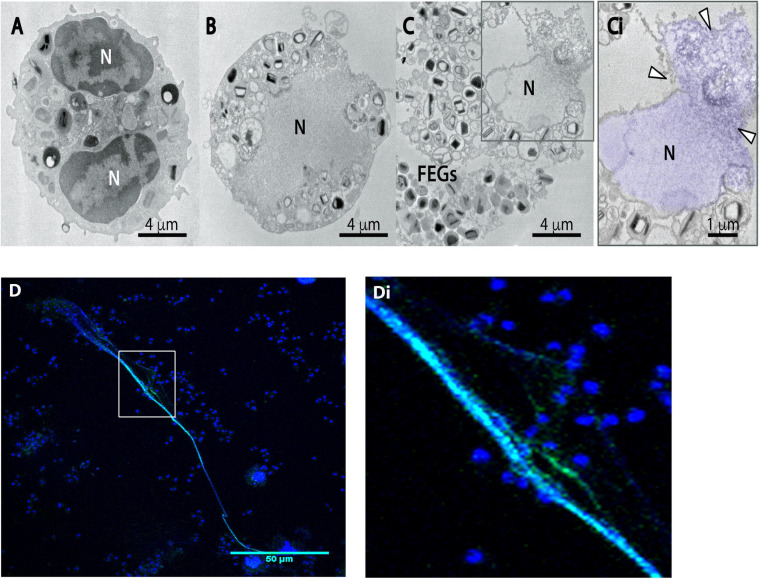
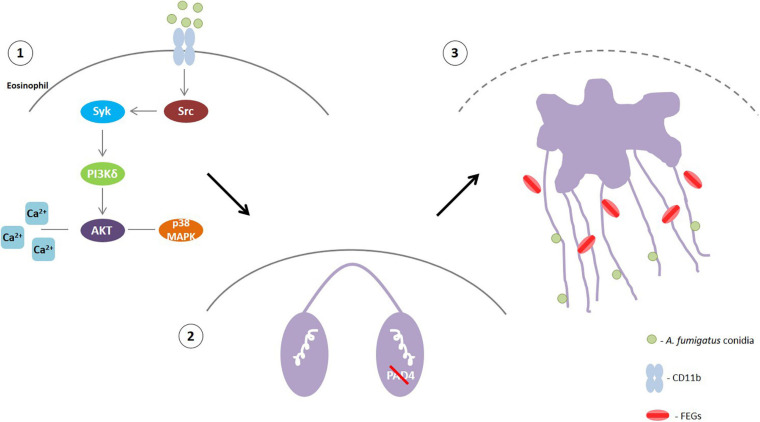
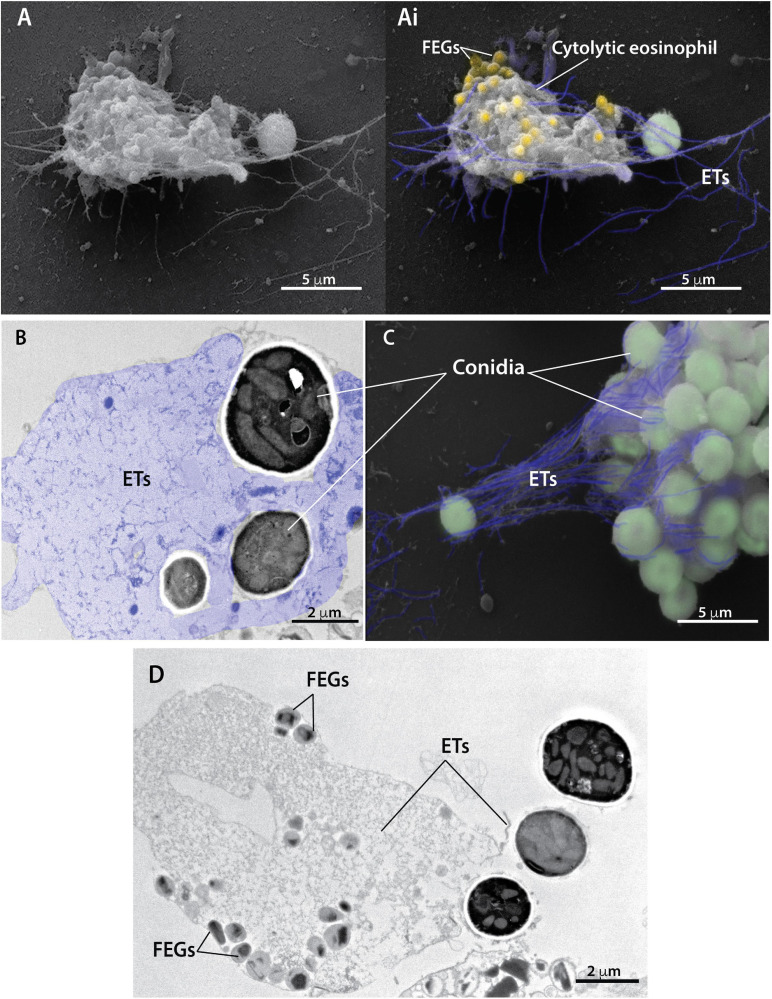
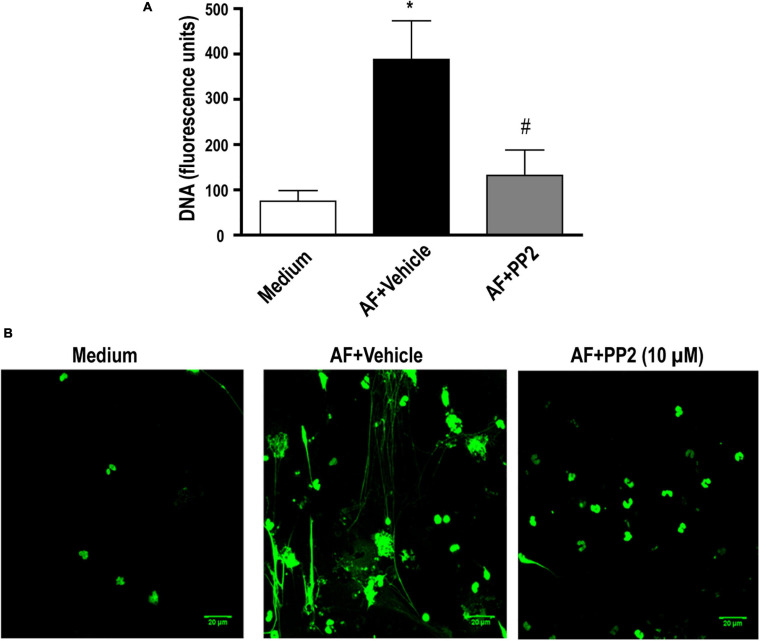
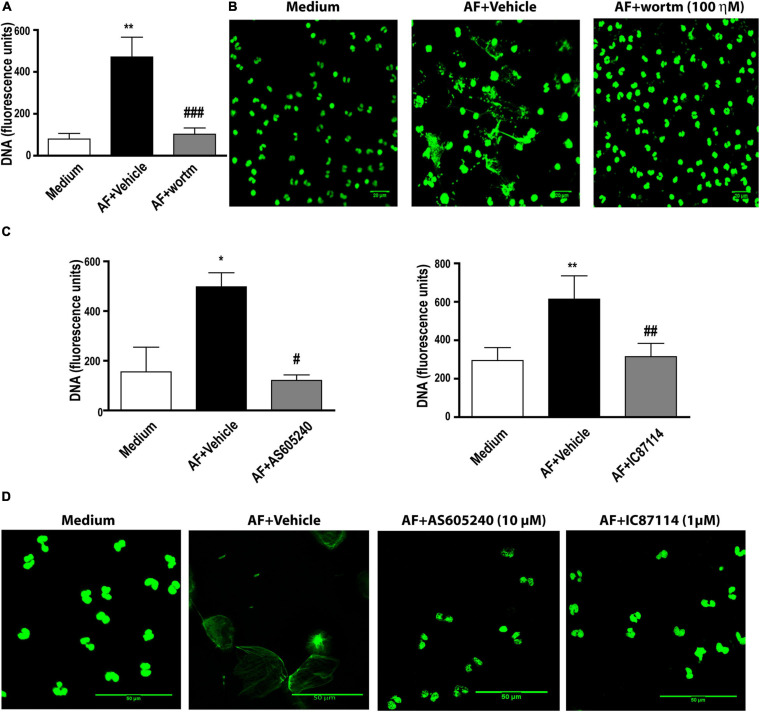
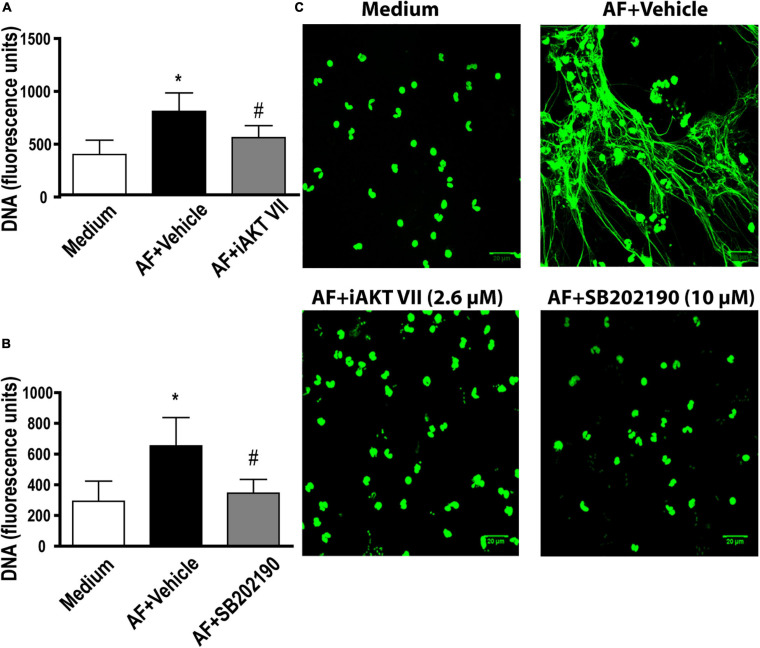
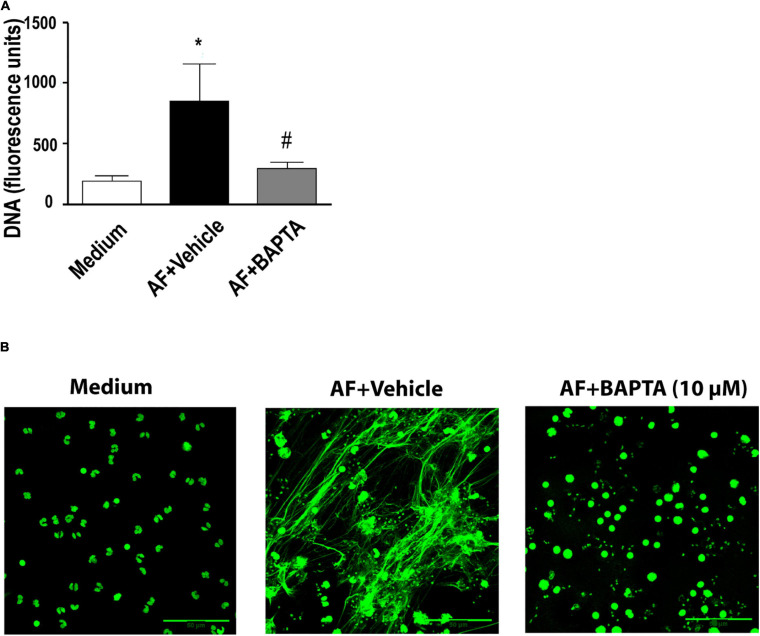
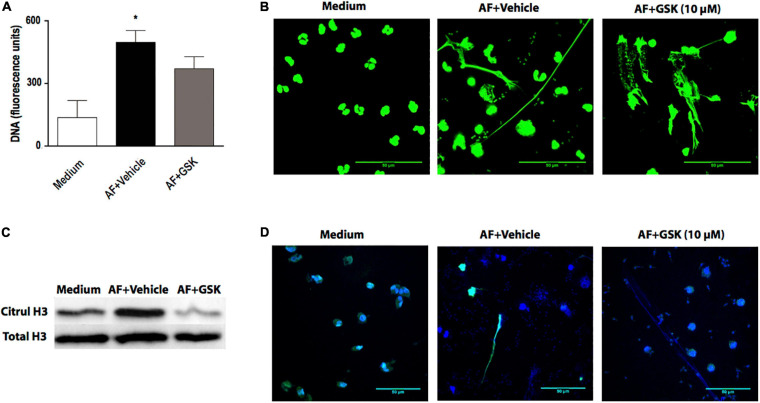
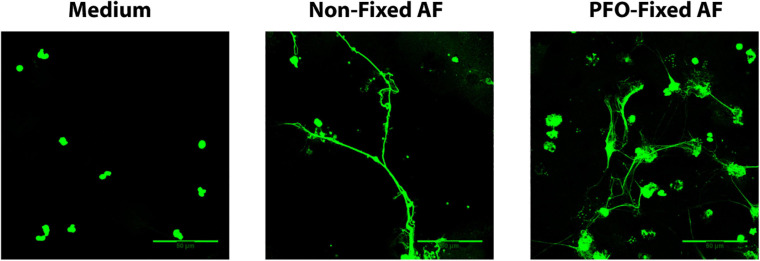
Eosinophils are granulocytes classically involved in allergic diseases and in the host immune responses to helminths, fungi, bacteria and viruses. The release of extracellular DNA traps by leukocytes is an important mechanism of the innate immune response to pathogens in various infectious conditions, including fungal infections. is an opportunistic fungus responsible for allergic bronchopulmonary aspergillosis (ABPA), a pulmonary disease marked by prominent eosinophilic inflammation. Previously, we demonstrated that isolated human eosinophils release extracellular DNA traps (eosinophil extracellular traps; EETs) when stimulated by . This release occurs through a lytic non-oxidative mechanism that involves CD11b and Syk tyrosine kinase. In this work, we unraveled different intracellular mechanisms that drive the release of extracellular DNA traps by -stimulated eosinophils. Ultrastructurally, we originally observed that -stimulated eosinophils present typical signs of extracellular DNA trap cell death (ETosis) with the nuclei losing both their shape (delobulation) and the euchromatin/heterochromatin distinction, followed by rupture of the nuclear envelope and EETs release. We also found that by targeting class I PI3K, and more specifically PI3Kδ, the release of extracellular DNA traps induced by is inhibited. We also demonstrated that -induced EETs release depends on the Src family, Akt, calcium and p38 MAPK signaling pathways in a process in which fungal viability is dispensable. Interestingly, we showed that -induced EETs release occurs in a mechanism independent of PAD4 histone citrullination. These findings may contribute to a better understanding of the mechanisms that underlie EETs release in response to , which may lead to better knowledge of ABPA pathophysiology and treatment.
嗜酸性粒细胞是经典的粒细胞,参与过敏性疾病以及宿主对蠕虫、真菌、细菌和病毒的免疫反应。白细胞释放细胞外DNA陷阱是在包括真菌感染在内的各种感染情况下对病原体的先天性免疫反应的重要机制。烟曲霉是一种机会性真菌,可导致过敏性支气管肺曲霉病(ABPA),这是一种以显著嗜酸性粒细胞炎症为特征的肺部疾病。此前,我们证明分离出的人类嗜酸性粒细胞在受到烟曲霉刺激时会释放细胞外DNA陷阱(嗜酸性粒细胞细胞外陷阱;EETs)。这种释放通过一种涉及CD11b和Syk酪氨酸激酶的溶解性非氧化机制发生。在这项研究中,我们揭示了驱动烟曲霉刺激的嗜酸性粒细胞释放细胞外DNA陷阱的不同细胞内机制。在超微结构上,我们最初观察到烟曲霉刺激的嗜酸性粒细胞呈现出细胞外DNA陷阱细胞死亡(ETosis)的典型迹象,细胞核失去其形状(分叶消失)以及常染色质/异染色质的区别,随后核膜破裂并释放EETs。我们还发现,通过靶向I类PI3K,更具体地说是PI3Kδ,可抑制烟曲霉诱导的细胞外DNA陷阱的释放。我们还证明,烟曲霉诱导的EETs释放依赖于Src家族、Akt、钙和p38 MAPK信号通路,在这个过程中真菌的活力并非必需。有趣的是,我们表明烟曲霉诱导的EETs释放以一种独立于PAD4组蛋白瓜氨酸化的机制发生。这些发现可能有助于更好地理解响应烟曲霉时EETs释放的潜在机制,这可能会增进对ABPA病理生理学和治疗的了解。