Masiero Marianna, Busacchio Derna, Guiddi Paolo, Arnaboldi Paola, Musi Gennaro, De Cobelli Ottavio, Didier Florence, Pravettoni Gabriella
Applied Research Division for Cognitive and Psychological Science, European Institute of Oncology, IRCCS, Milan, Italy.
Department of Oncology and Hemato-Oncology, University of Milan, Milan, Italy.
Ecancermedicalscience. 2021 Jan 5;15:1163. doi: 10.3332/ecancer.2021.1163. eCollection 2021.
The impact of neobladder and urostomy on bladder cancer patient's health-related quality of life (HR-QoL) is controversial and many issues currently remain under-investigated. Initial studies pointed out that the emotional responses of caregivers might be '', influencing emotional reactions in bladder cancer patients undergoing radical cystectomy.
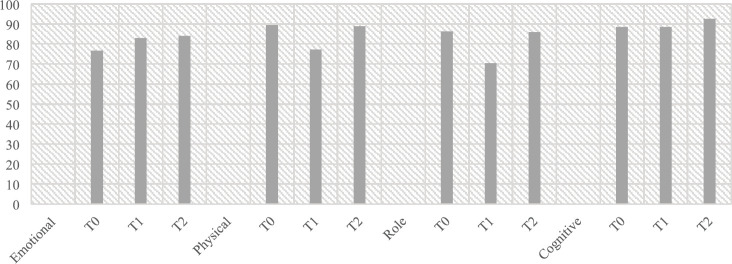
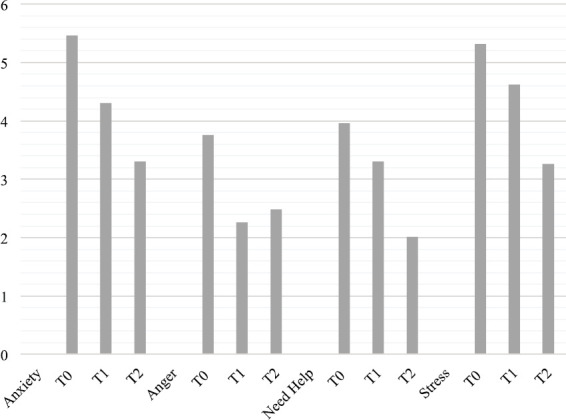
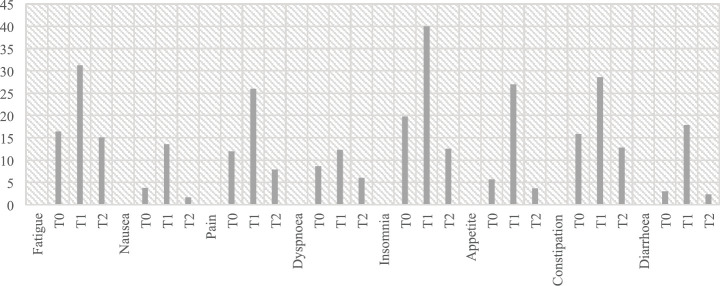
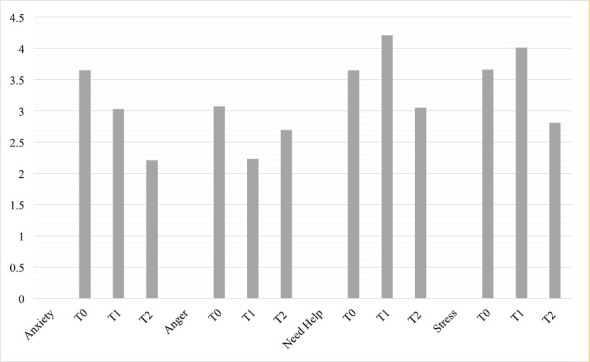
Three hundred and eighty-two bladder cancer patients (aged = 67.29 years; SD = 9.23) (16.9% (65) were female and 82.9% (319) were male) and their caregivers were enrolled. Data were collected prospectively: at T0 (1 month before the surgery), at T1 (2 weeks after the surgery, at patient discharge from the hospital) and at T2 (6-month follow-up). At each time point (T0, T1 and T2), a set of questionnaires (EORT QLQ-C30 and emotion thermometer) were given to patients and their caregivers.
All patients reported a general improvement in the HR-QoL and global health status/QoL from T0 to T2 ( < 0.001). No significant differences were observed between neobladder and urostomy. At T0, the emotional thermometer total scoring in caregivers was positive in relation to HR-QoL ( < 0.001) and negative in relation to the patient's perception of QoL ( < 0.001) and global health (p < 0.001). Similar trends were observed at T1 and T2.
These results suggest that patients and their caregiver's emotional reactions to cancer are deep-rooted and strongly interconnected, and they provide innovative insights for the clinical management of bladder cancer patients.
新膀胱术和尿流改道术对膀胱癌患者健康相关生活质量(HR-QoL)的影响存在争议,目前许多问题仍未得到充分研究。初步研究指出,护理人员的情绪反应可能会“”,影响接受根治性膀胱切除术的膀胱癌患者的情绪反应。
招募了382名膀胱癌患者(年龄 = 67.29岁;标准差 = 9.23)(16.9%(65)为女性,82.9%(319)为男性)及其护理人员。前瞻性收集数据:在T0(手术前1个月)、T1(手术后2周,患者出院时)和T2(6个月随访时)。在每个时间点(T0、T1和T2),向患者及其护理人员发放一组问卷(EORT QLQ-C30和情绪温度计)。
所有患者均报告从T0到T2,HR-QoL和总体健康状况/生活质量有总体改善(< 0.001)。新膀胱术和尿流改道术之间未观察到显著差异。在T0时,护理人员的情绪温度计总分与HR-QoL呈正相关(< 0.001),与患者对生活质量的感知呈负相关(< 0.001),与总体健康呈负相关(p < 0.001)。在T1和T2时观察到类似趋势。
这些结果表明,患者及其护理人员对癌症的情绪反应根深蒂固且紧密相连,为膀胱癌患者的临床管理提供了创新见解。