Faculty of Biosciences, Department of Biochemistry and Biotechnology, College of Science, Kwame Nkrumah University of Science and Technology, Kumasi, Ghana.
Department of Community Health, School of Public Health, Kwame Nkrumah University of Science and Technology, Kumasi, Ghana.
PLoS One. 2021 Mar 8;16(3):e0247979. doi: 10.1371/journal.pone.0247979. eCollection 2021.
Dietary diversity, a qualitative measure of dietary intake, which reflects the variety of foods consumed has been recommended to assuage nutritional problems related to insufficient micronutrients, and food insecurity. To better understand the underlying factors for poor birth outcomes in Ghana, we assessed factors associated with dietary diversity among rural and urban pregnant adolescents in the Ashanti Region of Ghana.
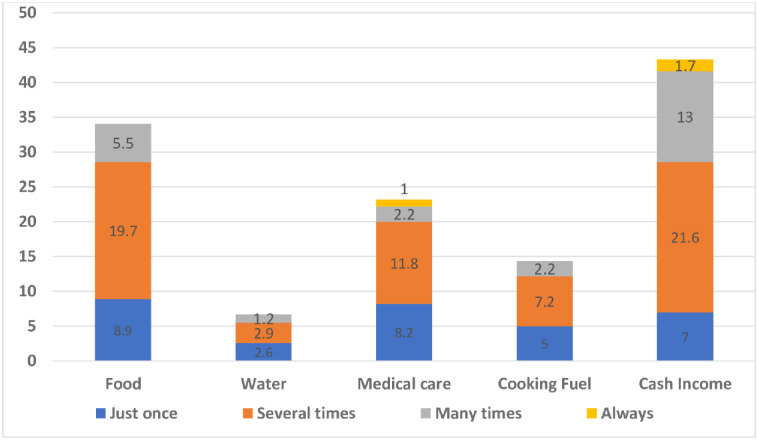
As part of a larger longitudinal cohort of 416 pregnant adolescents, the FAO minimum dietary diversity for women index was used to determine the dietary diversity score (DDS) of the participants from a previous days' 24-hour dietary recall data. The household hunger scale (HHS) and lived poverty index (LPI) were used to determine hunger and socioeconomic status. Eating behavior and socio-demographic data were gathered using interviewer-administered questionnaires.
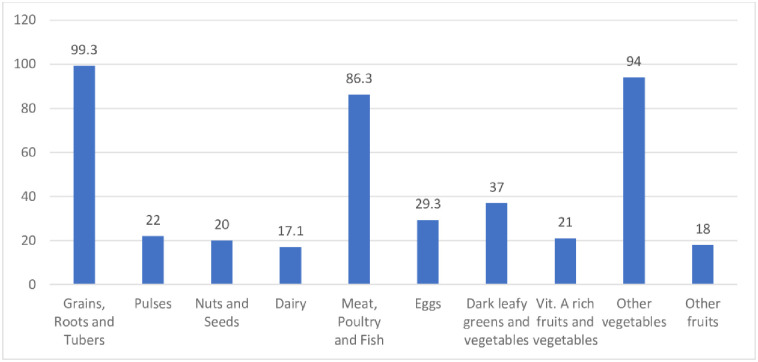
The mean age of the participants was 17.5 (±1.4) years with an MDD-W of 4.4 and 56% recording inadequate MDD score. More rural (63.6%) than urban dwellers (50.6%) had inadequate DDS (p = 0.008). Among all the multiple variables tests of associations on dietary diversity, only hunger status (p = 0.028) and both food aversion and poverty status (p = 0.003) had a significant effect on the adolescents' dietary diversity. Rural dwelling adolescents (AOR = 1.7, p = 0.035, 95% CI = 1.0-2.6) recorded higher odds for inadequate DD compared with the urban respondents. Pregnant adolescents with severe hunger had higher odds (Unadjusted OR = 1.9, p = 0.053, 95% CI 1.1-3.8) for inadequate dietary diversity compared with those with no hunger.
Inadequate DD is common among pregnant adolescents in this study and is associated with rural living, food insecurity, poverty, and food craving. Livelihood support for pregnant teenagers and nutrition education are recommended interventions to improve dietary quality and limit the consequences of poor dietary diversity.
饮食多样性是衡量饮食摄入的一种定性指标,反映了所摄入食物的种类,它被推荐用来缓解与微量营养素摄入不足和粮食不安全有关的营养问题。为了更好地了解加纳农村和城市青少年孕妇不良生育结果的潜在因素,我们评估了阿散蒂地区农村和城市青少年孕妇饮食多样性相关的因素。
作为一个更大的 416 名孕妇纵向队列的一部分,使用粮农组织妇女最低饮食多样性指数来确定参与者前一天 24 小时饮食回忆数据的饮食多样性得分(DDS)。家庭饥饿量表(HHS)和生活贫困指数(LPI)用于确定饥饿和社会经济地位。使用访谈者管理的问卷收集饮食行为和社会人口统计学数据。
参与者的平均年龄为 17.5(±1.4)岁,多维离散最小需求(MDD-W)为 4.4,56%的人记录的 MDD 得分不足。与城市居民(50.6%)相比,农村居民(63.6%)的 DDS 不足比例更高(p=0.008)。在对饮食多样性进行的所有多项变量测试关联中,只有饥饿状况(p=0.028)和食物厌恶与贫困状况(p=0.003)对青少年的饮食多样性有显著影响。与城市受访者相比,农村居住的青少年(AOR=1.7,p=0.035,95%CI=1.0-2.6)记录的不适当 DD 更高。与没有饥饿的青少年相比,严重饥饿的孕妇青少年(未经调整的 OR=1.9,p=0.053,95%CI 1.1-3.8)更有可能出现不适当的饮食多样性。
在这项研究中,青少年孕妇的饮食多样性不足很常见,与农村生活、粮食不安全、贫困和食物渴望有关。建议为青少年孕妇提供生计支持和营养教育,以改善饮食质量并限制不良饮食多样性的后果。