Wang Qingxiu, Liu Jianbo, Shao Runxia, Han Xiaopeng, Su Chenhao, Lu Wenjia
Department of Respiratory Medicine, The Second Affiliated Hospital of Zhengzhou University, Zhengzhou, 450014, Henan, China.
Department of Rheumatology, The Second Affiliated Hospital of Zhengzhou University, Zhengzhou, 450014, Henan, China.
Rheumatol Int. 2021 May;41(5):851-861. doi: 10.1007/s00296-021-04803-9. Epub 2021 Mar 9.
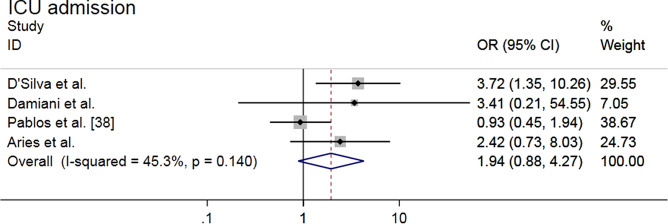
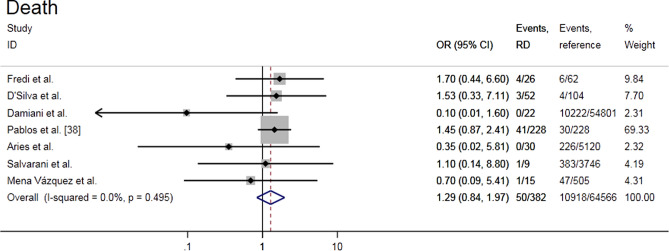
Patients with rheumatic diseases are often more susceptible to different bacteria and viruses because of immune impairment, but it is not clear whether there is a higher risk of infection and a more serious course of disease for novel coronavirus (SARS-CoV-2). We performed this systematic review and meta analysis to assess the risk and clinical outcomes of COVID-19 in patients with rheumatic diseases compared with the general population. We searched PubMed, EMBASE, Scopus and Web of Science databases from January 1, 2020 to October 20, 2020 to determine epidemiological information related to patients with rheumatic diseases and COVID-19, including clear risk estimate or data that could be converted and extracted. We included 26 observational studies, totaling about 2000 patients with rheumatic diseases of whom were infected with COVID-19. Meta-analysis showed that the risk of COVID-19 infection in rheumatic patients was significantly higher than that in the general population (OR = 1.53, 95% CI 1.24-1.88, P = 0.000). In terms of hospitalization and severe clinical outcomes associated with COVID-19, we found that rheumatic patients showed similar results to the reference population (hospitalization OR = 1.36, 95% CI 0.81-2.29, P = 0.247; admitted to ICU OR = 1.94, 95% CI 0.88-4.27, P = 0.098; death OR = 1.29, 95% CI 0.84-1.97, P = 0.248). The presence of comorbidities, hypertension, lung diseases were significantly associated with the increased risk of COVID-19-related hospitalization in rheumatic patients and anti-TNF drugs were associated with lower hospitalization risk. Older age was related to severe COVID-19. Our meta-analysis indicated that rheumatic patients were at a higher risk of COVID-19 infection but might not lead to a more serious disease process.
由于免疫功能受损,风湿性疾病患者通常更容易感染不同的细菌和病毒,但新型冠状病毒(SARS-CoV-2)感染风险是否更高以及病程是否更严重尚不清楚。我们进行了这项系统评价和荟萃分析,以评估与普通人群相比,风湿性疾病患者感染新型冠状病毒肺炎(COVID-19)的风险和临床结局。我们检索了2020年1月1日至2020年10月20日期间的PubMed、EMBASE、Scopus和Web of Science数据库,以确定与风湿性疾病患者和COVID-19相关的流行病学信息,包括明确的风险估计或可转换和提取的数据。我们纳入了26项观察性研究,共约2000例感染COVID-19的风湿性疾病患者。荟萃分析表明,风湿性疾病患者感染COVID-19的风险显著高于普通人群(比值比[OR]=1.53,95%置信区间[CI]1.24-1.88,P=0.000)。在与COVID-19相关的住院和严重临床结局方面,我们发现风湿性疾病患者与参照人群结果相似(住院OR=1.36,95%CI 0.81-2.29,P=0.247;入住重症监护病房[ICU]OR=1.94,95%CI 0.88-4.27,P=0.098;死亡OR=1.29,95%CI 0.84-1.97,P=0.248)。合并症、高血压、肺部疾病的存在与风湿性疾病患者COVID-19相关住院风险增加显著相关,而抗肿瘤坏死因子(TNF)药物与较低的住院风险相关。年龄较大与严重的COVID-19相关。我们的荟萃分析表明,风湿性疾病患者感染COVID-19的风险较高,但可能不会导致更严重的病程。