Departments of Family Medicine (Naji, Singh, Kavanagh, Profetto) and of Health Research Methods, Evidence and Impact (Naji, Alyass, Samaan, Thabane), McMaster University; Michael G. DeGroote School of Medicine (Shah); Departments of Vascular Surgery (Naji) and Medicine (Dennis); Health Sciences Library (Banfield), McMaster University, Hamilton, Ont.; Li Ka Shing Knowledge Institute (Razak), St. Michael's Hospital, Toronto, Ont.; Department of Psychiatry and Behavioural Neurosciences (Samaan), McMaster University, Hamilton, Ont.; Biostatistics Unit, St. Joseph's Healthcare - Hamilton (Thabane), Hamilton, Ont.; Faculty of Medicine (Sohani), University of Toronto, Toronto, Ont.; Department of Internal Medicine (Sohani), McGill University, Montréal, Que.
CMAJ Open. 2021 Mar 8;9(1):E189-E200. doi: 10.9778/cmajo.20200068. Print 2021 Jan-Mar.
Burnout among postgraduate medical trainees (PMTs) is increasingly being recognized as a crisis in the medical profession. We aimed to establish the prevalence of burnout among PMTs, identify risk and protective factors, and assess whether burnout varied by country of training, year of study and specialty of practice.
We systematically searched MEDLINE, Embase, PsycINFO, the Cochrane Database of Systematic Reviews, Web of Science and Education Resources Information Center from their inception to Aug. 21, 2018, for studies of burnout among PMTs. The primary objective was to identify the global prevalence of burnout among PMTs. Our secondary objective was to evaluate the association between burnout and country of training, year of study, specialty of training and other sociodemographic factors commonly thought to be related to burnout. We employed random-effects meta-analysis and meta-regression techniques to estimate a pooled prevalence and conduct secondary analyses.
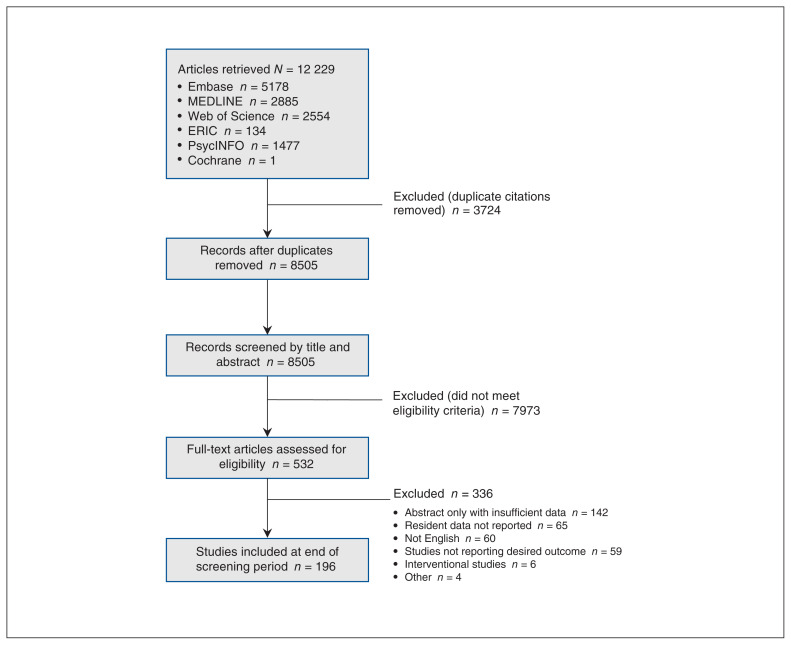
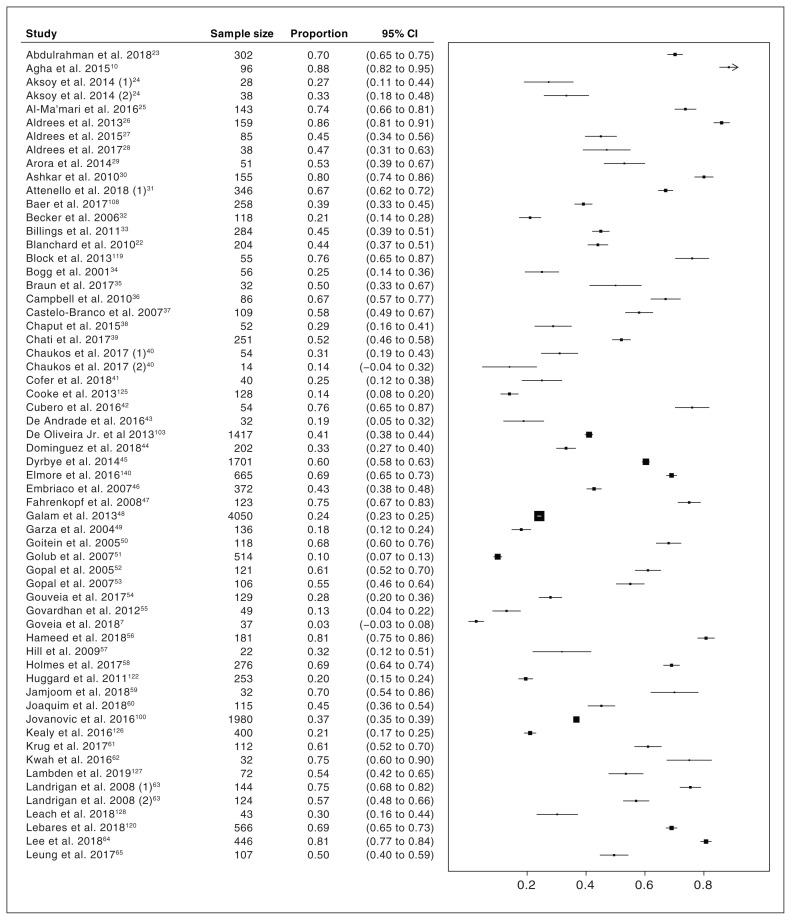
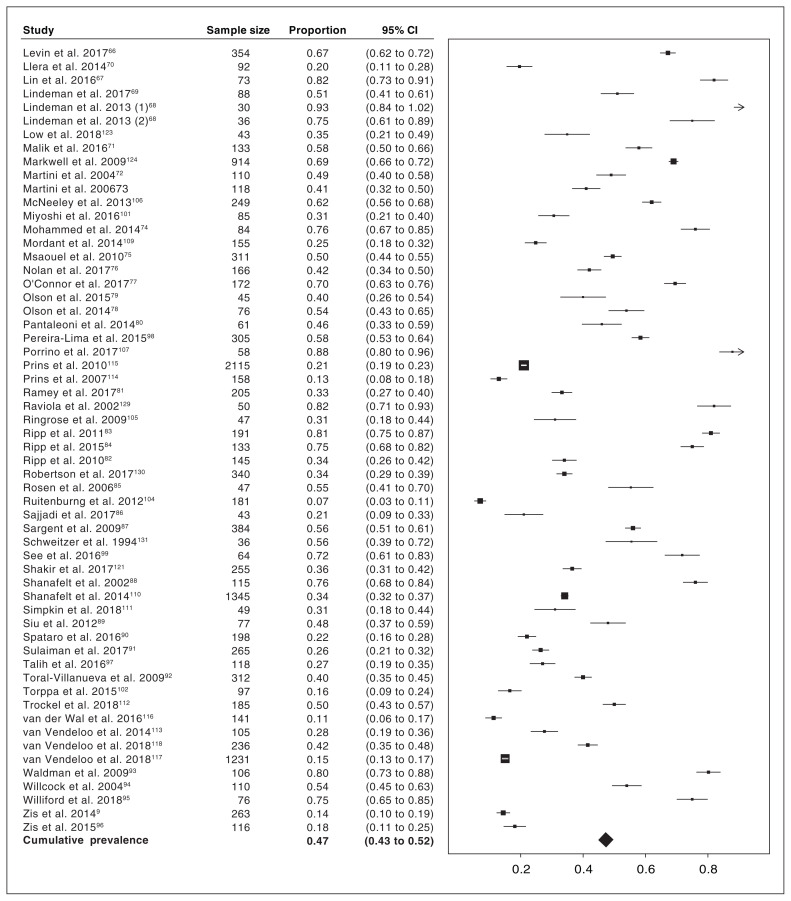
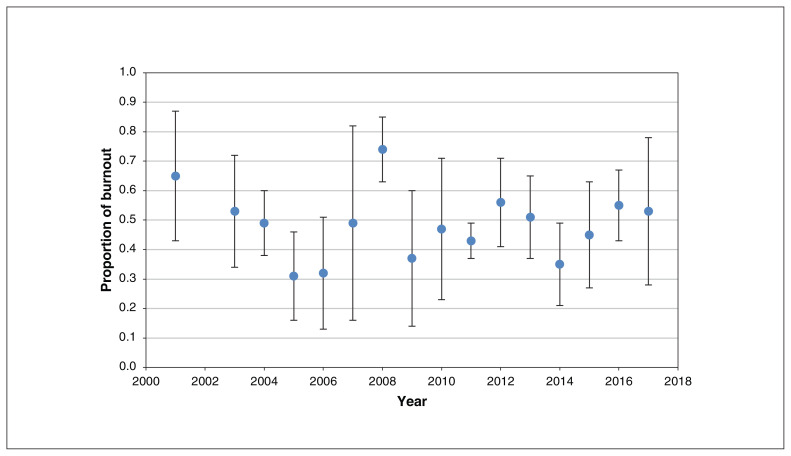
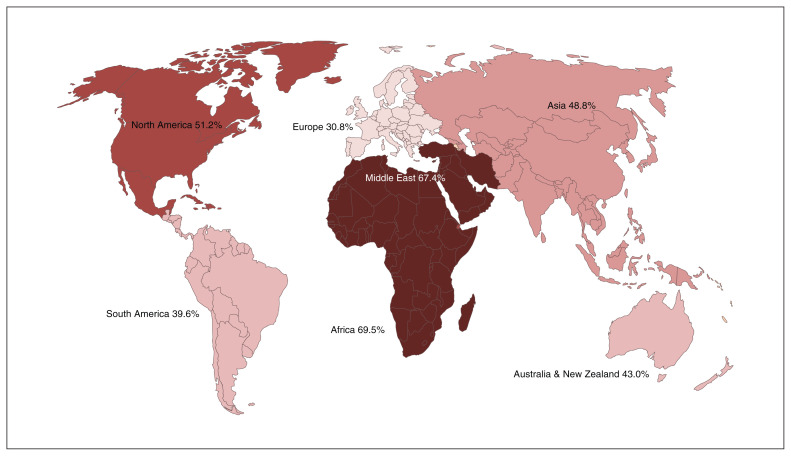
In total, 8505 published studies were screened, 196 met eligibility and 114 were included in the meta-analysis. The pooled prevalence of burnout was 47.3% (95% confidence interval 43.1% to 51.5%), based on studies published over 20 years involving 31 210 PMTs from 47 countries. The prevalence of burnout remained unchanged over the past 2 decades. Burnout varied by region, with PMTs of European countries experiencing the lowest level. Burnout rates among medical and surgical PMTs were similar.
Current wellness efforts and policies have not changed the prevalence of burnout worldwide. Future research should focus on understanding systemic factors and leveraging these findings to design interventions to combat burnout.
PROSPERO no. CRD42018108774.
越来越多的人认识到,研究生医学培训生(PMTs)的倦怠是医学专业的一场危机。我们旨在确定 PMTs 倦怠的流行率,确定风险和保护因素,并评估倦怠是否因培训国家、学习年限和实践专业的不同而有所不同。
我们系统地检索了 MEDLINE、Embase、PsycINFO、Cochrane 系统评价数据库、Web of Science 和教育资源信息中心,从它们的创建到 2018 年 8 月 21 日,以寻找 PMTs 倦怠的研究。主要目的是确定 PMTs 倦怠的全球流行率。我们的次要目标是评估倦怠与培训国家、学习年限、培训专业以及其他通常被认为与倦怠有关的社会人口因素之间的关系。我们采用随机效应荟萃分析和荟萃回归技术来估计一个综合的流行率,并进行二次分析。
共筛选了 8505 篇已发表的研究,有 196 篇符合入选标准,114 篇纳入荟萃分析。基于过去 20 年发表的涉及来自 47 个国家的 31210 名 PMTs 的研究,倦怠的总体流行率为 47.3%(95%置信区间为 43.1%至 51.5%)。在过去的 20 年里,倦怠的流行率并没有改变。倦怠的程度因地区而异,欧洲国家的 PMTs 经历的程度最低。医学和外科 PMTs 的倦怠率相似。
目前的健康促进措施和政策并没有改变全球倦怠的流行率。未来的研究应侧重于理解系统性因素,并利用这些发现设计干预措施来对抗倦怠。
PROSPERO 号 CRD42018108774。