Vilnius University, Faculty of Medicine, Vilnius, Lithuania.
Vilnius University, Center for Neurology, Vilnius, Lithuania.
Int J Chron Obstruct Pulmon Dis. 2021 Mar 3;16:553-562. doi: 10.2147/COPD.S290363. eCollection 2021.
Chronic obstructive pulmonary disease (COPD) is often accompanied by different neurological and psychiatric comorbidities. The purpose of this study was to examine which of them are the most frequent and to explore whether their manifestation can be explained by underlying latent variables.
Data about patients with COPD and their neurological and psychiatric comorbidities were extracted from an electronic database of the National Health Insurance Fund of Lithuania for the period between January 1, 2012, and June 30, 2014. Exploratory factor analysis (EFA) was used to investigate comorbidity patterns.
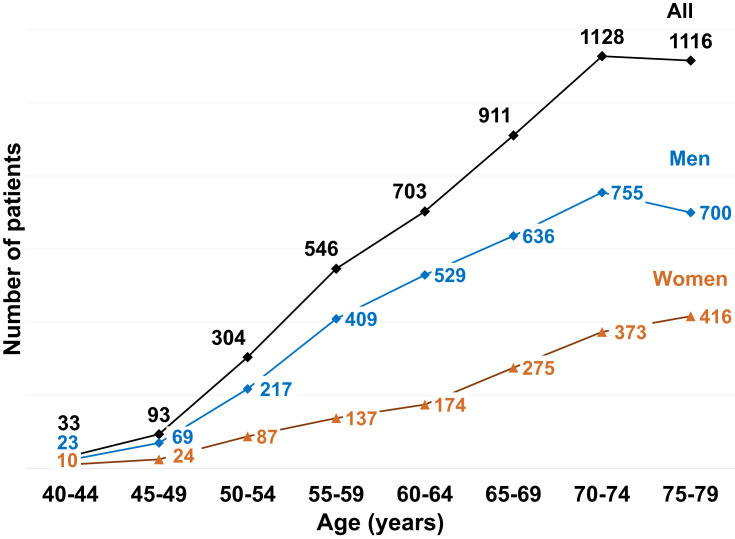
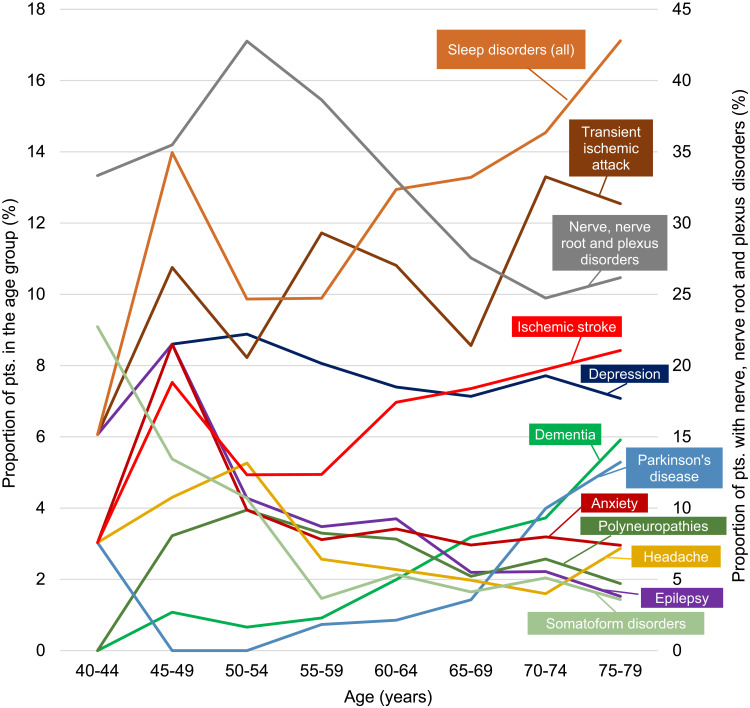
A study sample of 4834 patients with COPD was obtained from the database, 3338 (69.1%) of who were male. The most frequent neurological and psychiatric comorbidities were nerve, nerve root and plexus disorders (n=1439, 29.8%), sleep disorders (n=666, 13.8%), transient ischemic attack (n=545, 11.3%), depression (n=364, 7.5%) and ischemic stroke (n=349, 7.2%). The prevalence of ischemic stroke, transient ischemic attack, Parkinson's disease, dementia and sleep disorders increased with age. One latent variable outlined during EFA grouped neurological disorders, namely ischemic stroke, transient ischemic attack, epilepsy, dementia and Parkinson's disease. The second encompassed depression, anxiety, somatoform and sleep disorders. While similar patterns emerged in data from male patients, no clear comorbidity profiles among women with COPD were obtained.
Our study provides novel insights into the neurological and psychiatric comorbidities in COPD by outlining an association among cerebrovascular, neurodegenerative disorders and epilepsy, and psychiatric and sleep disorders. Future studies could substantiate the discrete pathological mechanism that underlie these comorbidity groups.
慢性阻塞性肺疾病(COPD)常伴有不同的神经和精神共病。本研究旨在探讨其中哪些是最常见的,并探索其表现是否可以用潜在的潜在变量来解释。
从立陶宛国家健康保险基金的电子数据库中提取了 2012 年 1 月 1 日至 2014 年 6 月 30 日期间患有 COPD 及其神经和精神共病患者的数据。采用探索性因子分析(EFA)来探讨共病模式。
从数据库中获得了 4834 名 COPD 患者的研究样本,其中 3338 名(69.1%)为男性。最常见的神经和精神共病为神经、神经根和神经丛疾病(n=1439,29.8%)、睡眠障碍(n=666,13.8%)、短暂性脑缺血发作(n=545,11.3%)、抑郁症(n=364,7.5%)和缺血性中风(n=349,7.2%)。缺血性中风、短暂性脑缺血发作、帕金森病、痴呆和睡眠障碍的患病率随着年龄的增长而增加。EFA 期间概述的一个潜在变量将神经障碍分组,即缺血性中风、短暂性脑缺血发作、癫痫、痴呆和帕金森病。第二个涵盖了抑郁、焦虑、躯体形式和睡眠障碍。虽然在男性患者的数据中出现了类似的模式,但没有得到 COPD 女性患者的明确共病特征。
本研究通过概述脑血管、神经退行性疾病和癫痫以及精神和睡眠障碍之间的关联,为 COPD 的神经和精神共病提供了新的见解。未来的研究可以证实这些共病群体背后的离散病理机制。