Department of Neurophysiology and Pathophysiology, University Medical Center Hamburg-Eppendorf, Hamburg, Germany.
Department of Psychology, University of Amsterdam, Amsterdam, The Netherlands.
J Neurophysiol. 2021 Apr 1;125(4):1468-1481. doi: 10.1152/jn.00462.2020. Epub 2021 Mar 10.
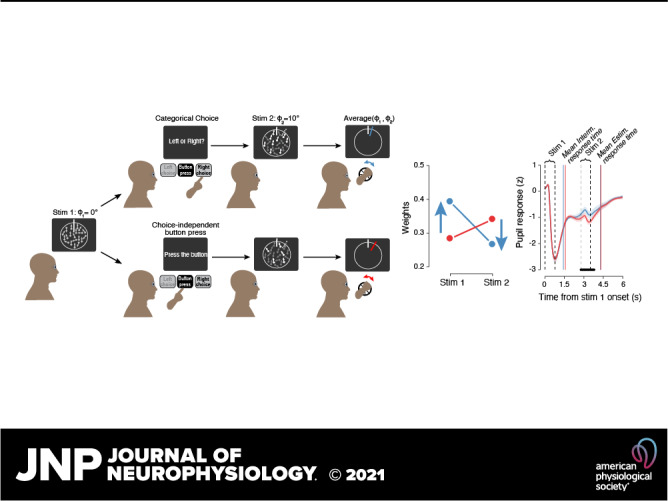
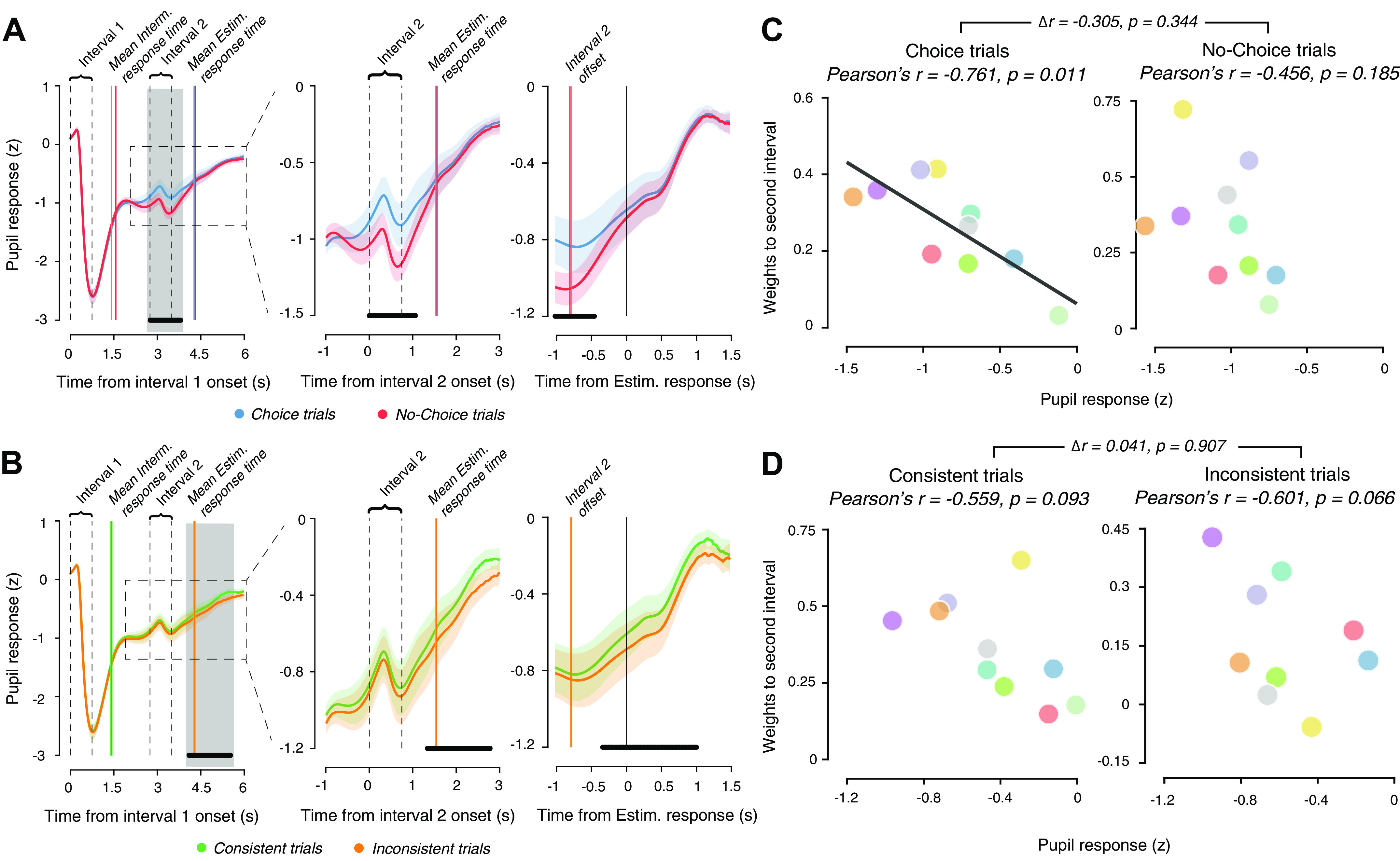
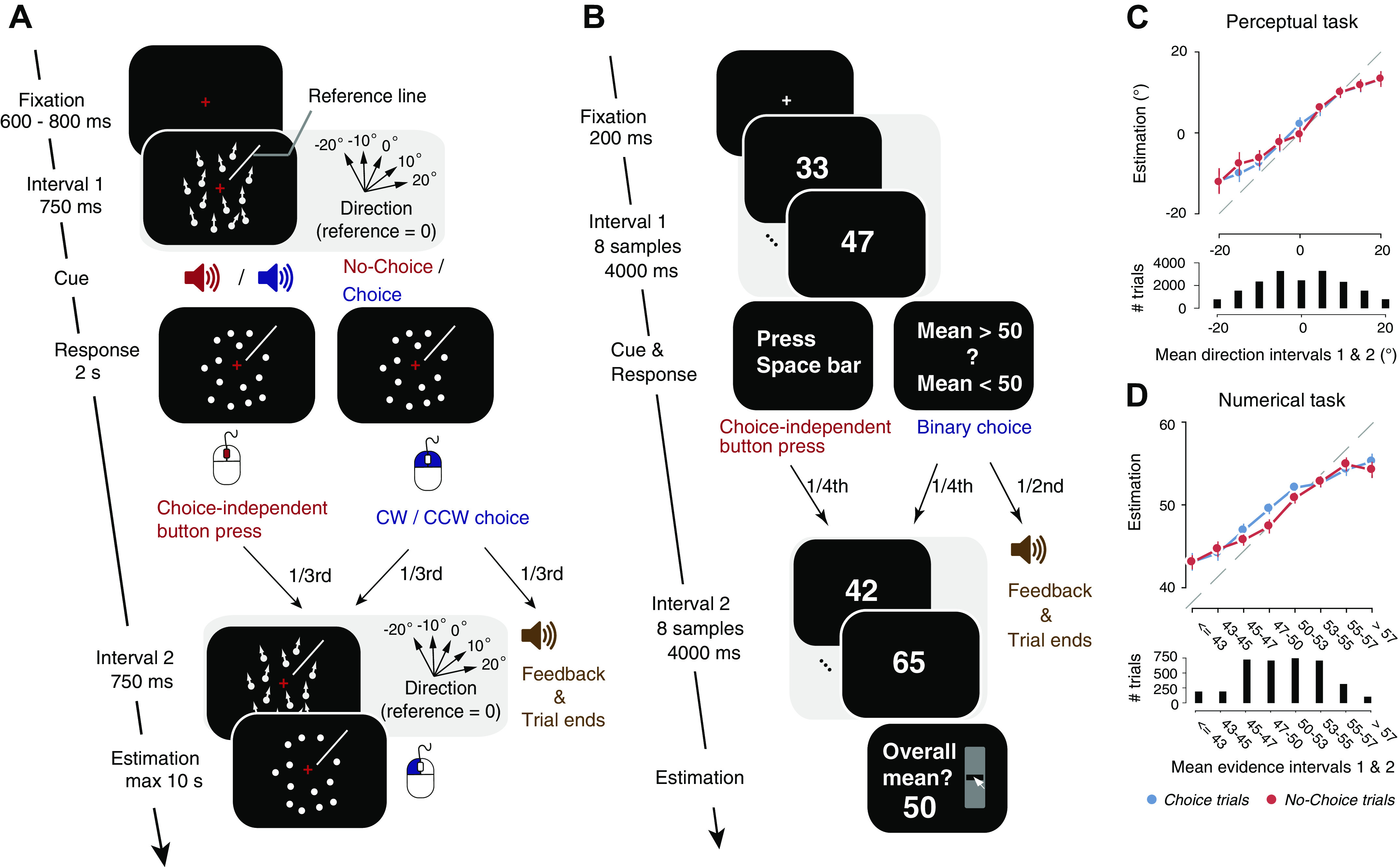
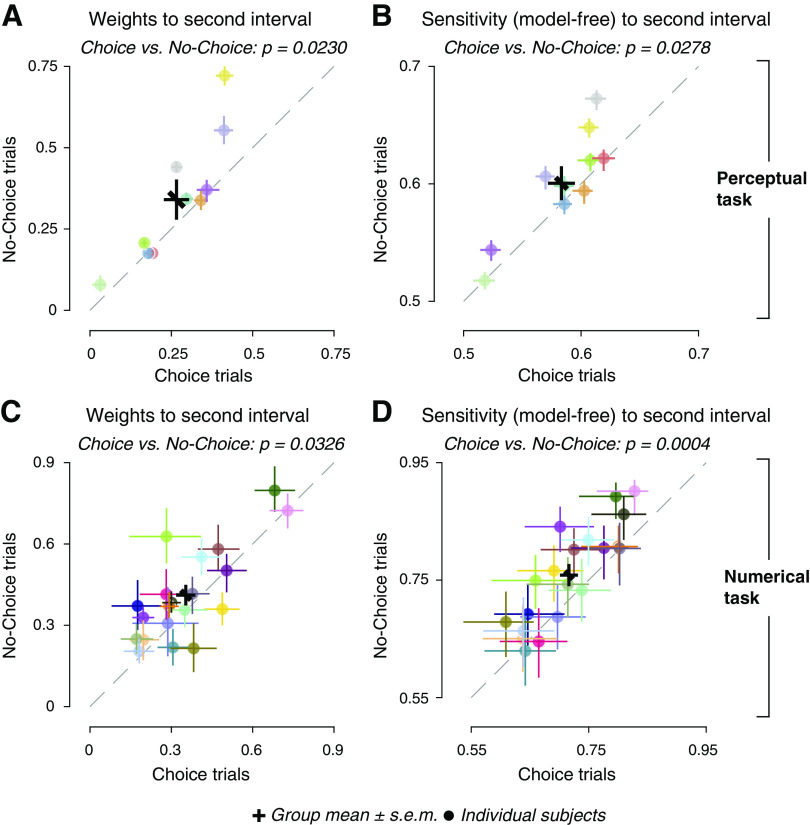
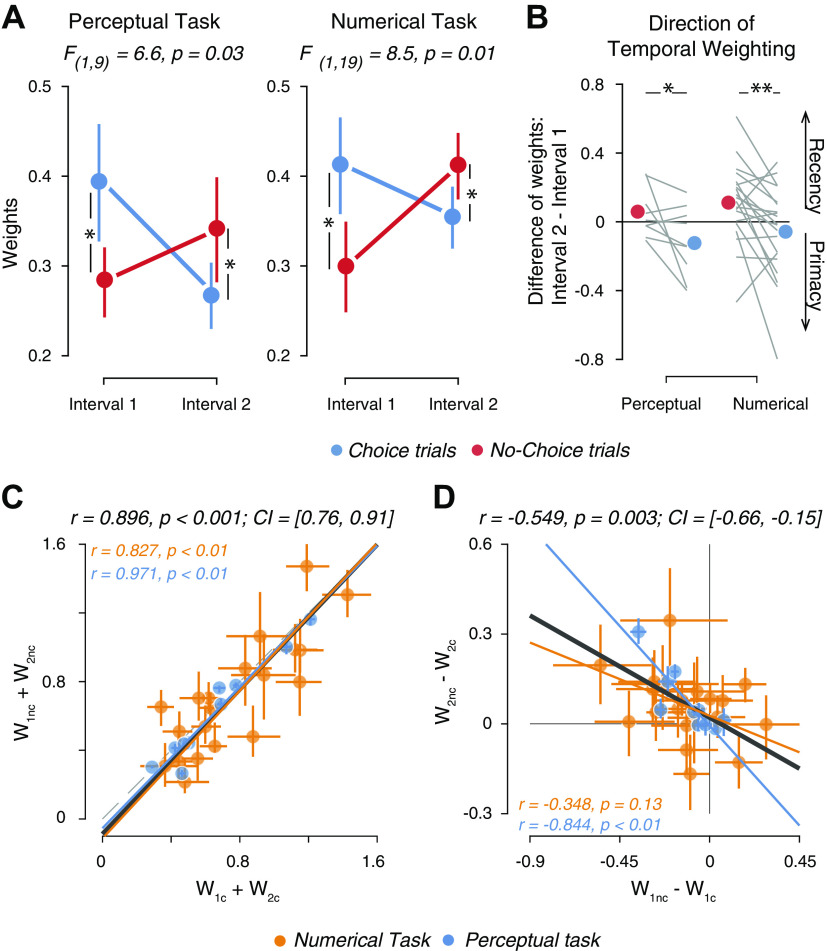
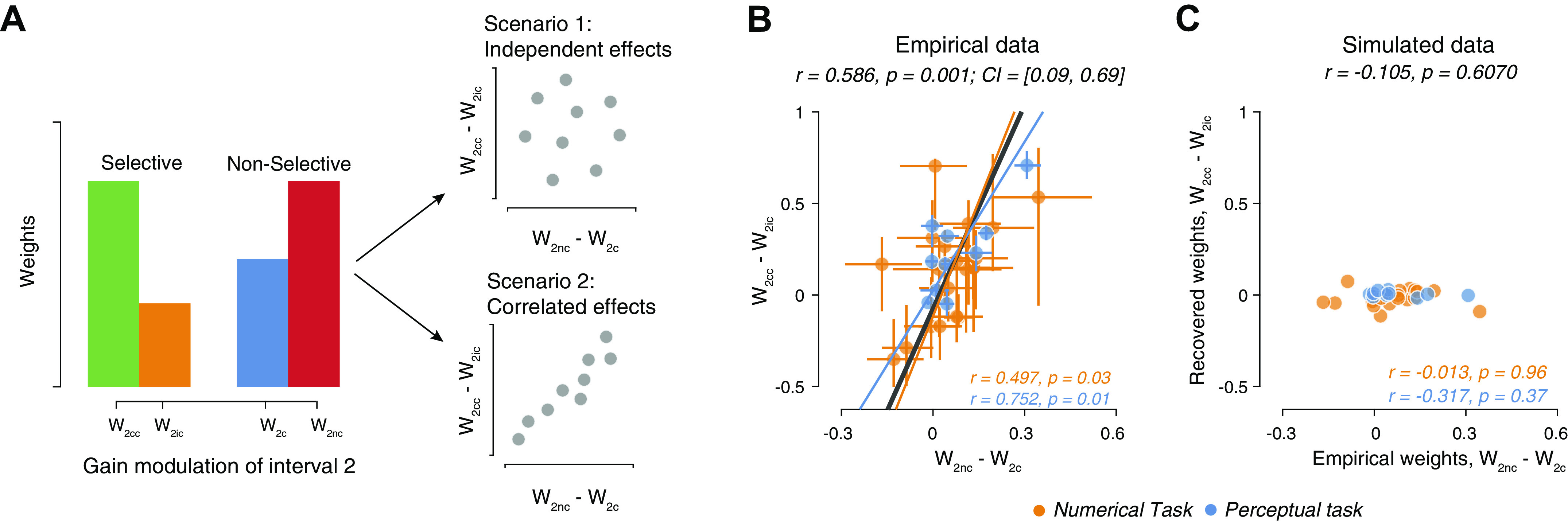
Many decisions result from the accumulation of decision-relevant information (evidence) over time. Even when maximizing decision accuracy requires weighting all the evidence equally, decision-makers often give stronger weight to evidence occurring early or late in the evidence stream. Here, we show changes in such temporal biases within participants as a function of intermittent judgments about parts of the evidence stream. Human participants performed a decision task that required a continuous estimation of the mean evidence at the end of the stream. The evidence was either perceptual (noisy random dot motion) or symbolic (variable sequences of numbers). Participants also reported a categorical judgment of the preceding evidence half-way through the stream in one condition or executed an evidence-independent motor response in another condition. The relative impact of early versus late evidence on the final estimation flipped between these two conditions. In particular, participants' sensitivity to late evidence after the intermittent judgment, but not the simple motor response, was decreased. Both the intermittent response as well as the final estimation reports were accompanied by nonluminance-mediated increases of pupil diameter. These pupil dilations were bigger during intermittent judgments than simple motor responses and bigger during estimation when the late evidence was consistent than inconsistent with the initial judgment. In sum, decisions activate pupil-linked arousal systems and alter the temporal weighting of decision evidence. Our results are consistent with the idea that categorical choices in the face of uncertainty induce a change in the state of the neural circuits underlying decision-making. The psychology and neuroscience of decision-making have extensively studied the accumulation of decision-relevant information toward a categorical choice. Much fewer studies have assessed the impact of a choice on the processing of subsequent information. Here, we show that intermittent choices during a protracted stream of input reduce the sensitivity to subsequent decision information and transiently boost arousal. Choices might trigger a state change in the neural machinery for decision-making.
许多决策都是随着时间推移,对决策相关信息(证据)的积累而产生的。即使最大化决策准确性需要对所有证据平等加权,决策者通常也会对证据流中早期或晚期的证据给予更大的权重。在这里,我们展示了随着参与者对证据流部分的间歇性判断,这种时间偏差会在参与者内部发生变化。人类参与者执行了一项决策任务,需要在证据流结束时连续估计平均证据。证据要么是感知性的(有噪声的随机点运动),要么是符号性的(数字的变量序列)。在一种情况下,参与者在证据流中途报告了对前半部分证据的分类判断,而在另一种情况下,他们在另一种情况下执行了与证据无关的运动反应。早期证据与晚期证据对最终估计的相对影响在这两种情况下会发生翻转。特别是,在间歇性判断之后,参与者对晚期证据的敏感性降低了,但对简单的运动反应没有影响。间歇性反应和最终的估计报告都伴随着瞳孔直径的非光介导增加。与简单的运动反应相比,间歇性判断期间的瞳孔扩张更大,而当晚期证据与初始判断一致时,比不一致时的瞳孔扩张更大。总之,决策激活了与瞳孔相关的唤醒系统,并改变了决策证据的时间权重。我们的结果与以下观点一致,即面对不确定性时的分类选择会引起决策相关神经回路状态的变化。决策的心理学和神经科学已经广泛研究了决策相关信息的积累,以实现分类选择。评估选择对后续信息处理的影响的研究要少得多。在这里,我们表明,在输入的长时间流中进行间歇性选择会降低对后续决策信息的敏感性,并短暂提高唤醒。选择可能会触发决策神经机制的状态变化。