University of Birmingham, Birmingham, UK.
Anaesthesia. 2021 Jun;76(6):748-758. doi: 10.1111/anae.15458. Epub 2021 Mar 9.
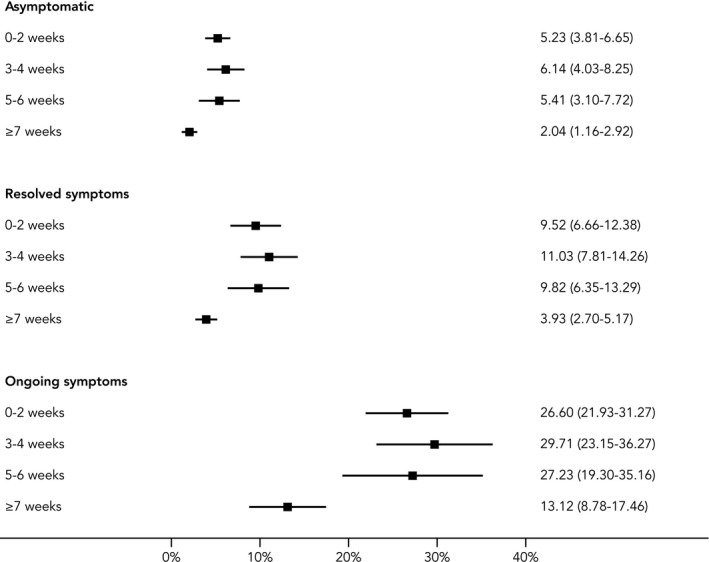
Peri-operative SARS-CoV-2 infection increases postoperative mortality. The aim of this study was to determine the optimal duration of planned delay before surgery in patients who have had SARS-CoV-2 infection. This international, multicentre, prospective cohort study included patients undergoing elective or emergency surgery during October 2020. Surgical patients with pre-operative SARS-CoV-2 infection were compared with those without previous SARS-CoV-2 infection. The primary outcome measure was 30-day postoperative mortality. Logistic regression models were used to calculate adjusted 30-day mortality rates stratified by time from diagnosis of SARS-CoV-2 infection to surgery. Among 140,231 patients (116 countries), 3127 patients (2.2%) had a pre-operative SARS-CoV-2 diagnosis. Adjusted 30-day mortality in patients without SARS-CoV-2 infection was 1.5% (95%CI 1.4-1.5). In patients with a pre-operative SARS-CoV-2 diagnosis, mortality was increased in patients having surgery within 0-2 weeks, 3-4 weeks and 5-6 weeks of the diagnosis (odds ratio (95%CI) 4.1 (3.3-4.8), 3.9 (2.6-5.1) and 3.6 (2.0-5.2), respectively). Surgery performed ≥ 7 weeks after SARS-CoV-2 diagnosis was associated with a similar mortality risk to baseline (odds ratio (95%CI) 1.5 (0.9-2.1)). After a ≥ 7 week delay in undertaking surgery following SARS-CoV-2 infection, patients with ongoing symptoms had a higher mortality than patients whose symptoms had resolved or who had been asymptomatic (6.0% (95%CI 3.2-8.7) vs. 2.4% (95%CI 1.4-3.4) vs. 1.3% (95%CI 0.6-2.0), respectively). Where possible, surgery should be delayed for at least 7 weeks following SARS-CoV-2 infection. Patients with ongoing symptoms ≥ 7 weeks from diagnosis may benefit from further delay.
围手术期感染严重急性呼吸综合征冠状病毒2(SARS-CoV-2)会增加术后死亡率。本研究的目的是确定SARS-CoV-2感染患者手术前计划延迟的最佳时长。这项国际多中心前瞻性队列研究纳入了2020年10月期间接受择期或急诊手术的患者。将术前感染SARS-CoV-2的手术患者与既往未感染SARS-CoV-2的患者进行比较。主要结局指标是术后30天死亡率。采用逻辑回归模型计算从SARS-CoV-2感染诊断到手术的时间分层的调整后30天死亡率。在140231例患者(来自116个国家)中,3127例患者(2.2%)术前诊断为SARS-CoV-2感染。未感染SARS-CoV-2的患者调整后30天死亡率为1.5%(95%置信区间1.4-1.5)。在术前诊断为SARS-CoV-2感染的患者中,在诊断后0-2周、3-4周和5-6周内进行手术的患者死亡率增加(优势比(95%置信区间)分别为4.1(3.3-4.8)、3.9(2.6-5.1)和3.6(2.0-5.2))。SARS-CoV-2诊断后≥7周进行手术与基线死亡率风险相似(优势比(95%置信区间)1.5(0.9-2.1))。SARS-CoV-2感染后手术延迟≥7周,仍有症状的患者死亡率高于症状已缓解或无症状的患者(分别为6.0%(95%置信区间3.2-8.7)、2.4%(95%置信区间1.4-3.4)和1.3%(95%置信区间0.6-2.0))。可能的话,SARS-CoV-2感染后手术应至少延迟7周。诊断后≥7周仍有症状的患者可能会从进一步延迟手术中获益。