• 文献检索
  • 文档翻译
  • 深度研究
  • 学术资讯
  • Suppr Zotero 插件Zotero 插件
  • 邀请有礼
  • 套餐&价格
  • 历史记录
应用&插件
Suppr Zotero 插件Zotero 插件浏览器插件Mac 客户端Windows 客户端微信小程序
定价
高级版会员购买积分包购买API积分包
服务
文献检索文档翻译深度研究API 文档MCP 服务
关于我们
关于 Suppr公司介绍联系我们用户协议隐私条款
关注我们

Suppr 超能文献

核心技术专利:CN118964589B侵权必究
粤ICP备2023148730 号-1Suppr @ 2026

文献检索

告别复杂PubMed语法,用中文像聊天一样搜索,搜遍4000万医学文献。AI智能推荐,让科研检索更轻松。

立即免费搜索

文件翻译

保留排版,准确专业,支持PDF/Word/PPT等文件格式,支持 12+语言互译。

免费翻译文档

深度研究

AI帮你快速写综述,25分钟生成高质量综述,智能提取关键信息,辅助科研写作。

立即免费体验

开发一种慢性植入的小鼠模型,用于研究耳蜗健康和植入功能。

Development of a chronically-implanted mouse model for studies of cochlear health and implant function.

机构信息

Kresge Hearing Research Institute, Department of Otolaryngology - Head and Neck Surgery, 1150 West Medical Center Drive, University of Michigan, Ann Arbor 48109-5616, MI, USA.

Kresge Hearing Research Institute, Department of Otolaryngology - Head and Neck Surgery, 1150 West Medical Center Drive, University of Michigan, Ann Arbor 48109-5616, MI, USA.

出版信息

Hear Res. 2021 May;404:108216. doi: 10.1016/j.heares.2021.108216. Epub 2021 Feb 21.

DOI:10.1016/j.heares.2021.108216
PMID:33691255
原文链接:https://pmc.ncbi.nlm.nih.gov/articles/PMC8080901/
Abstract

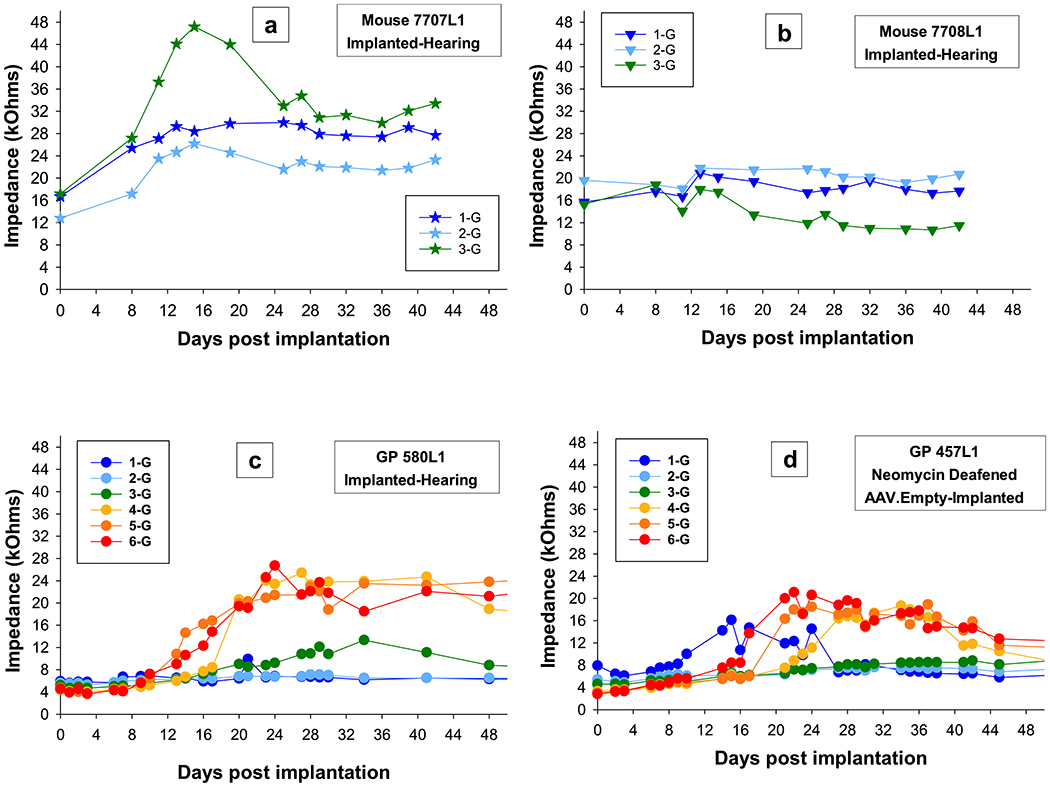
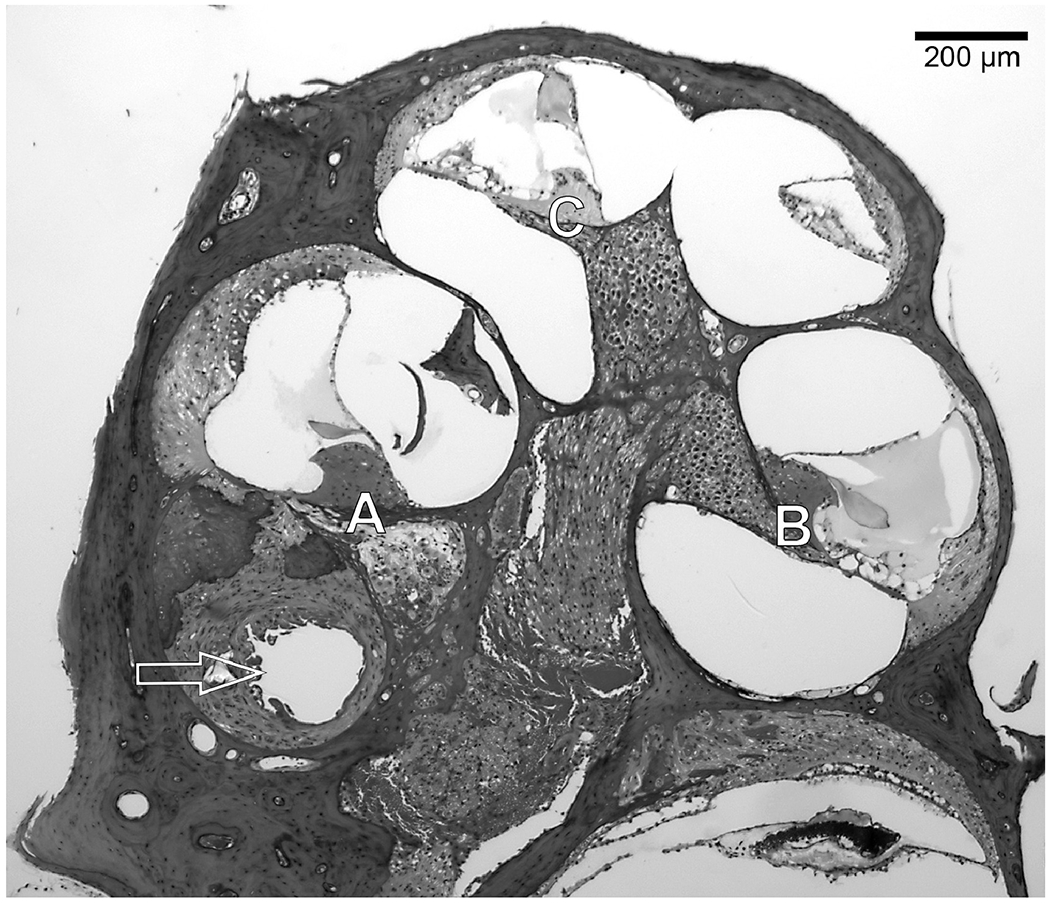
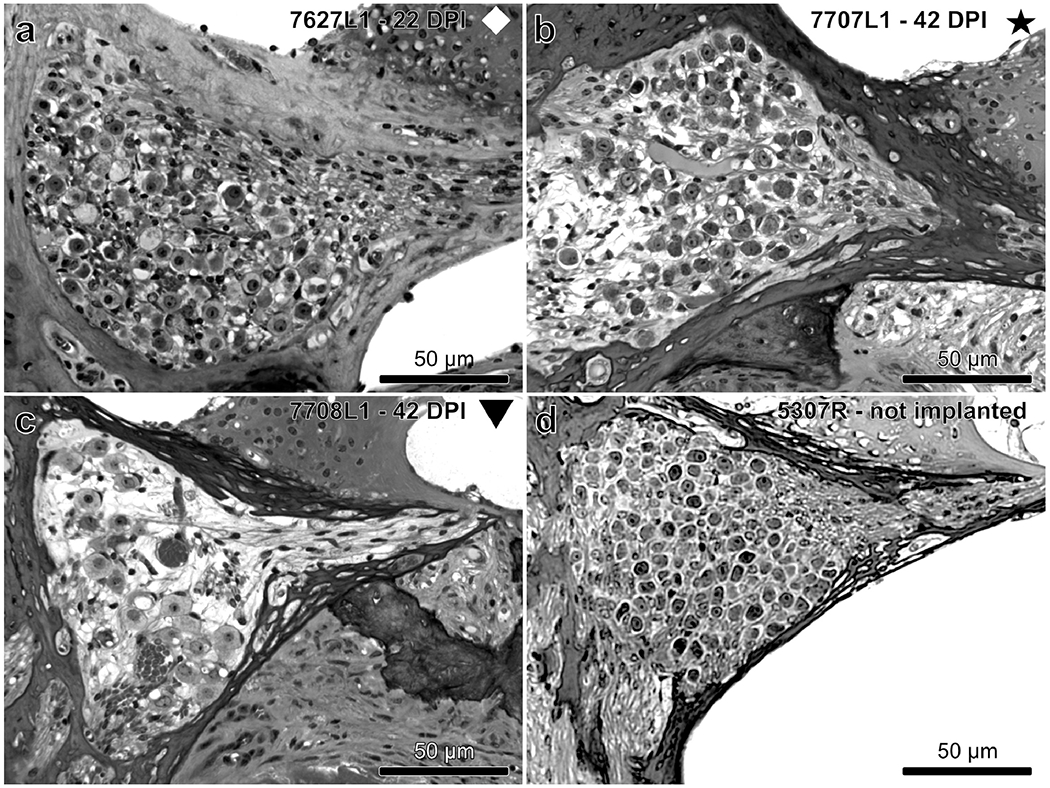
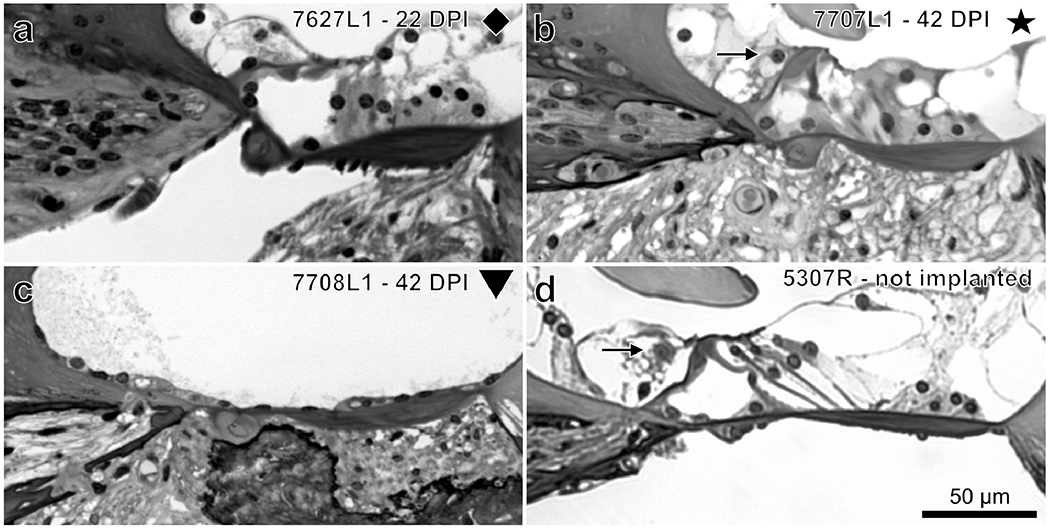
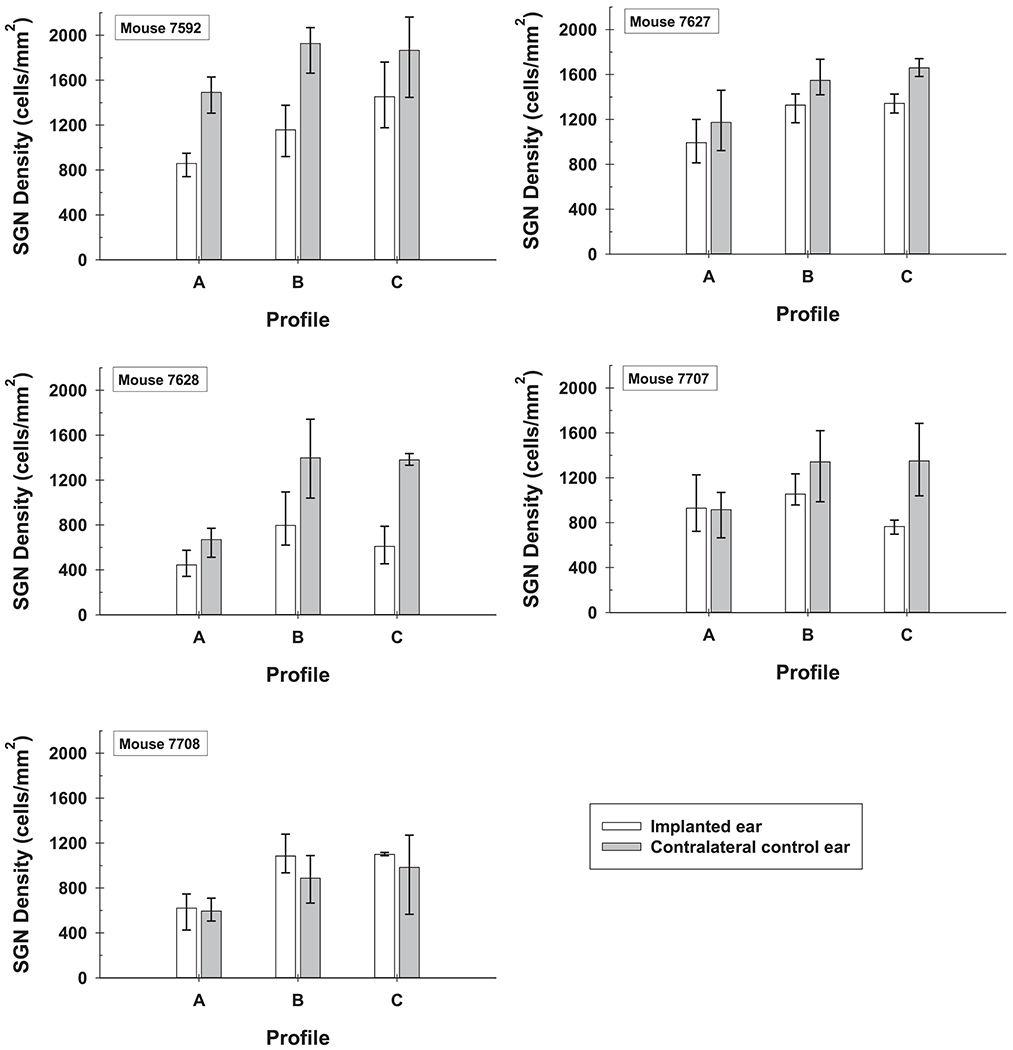
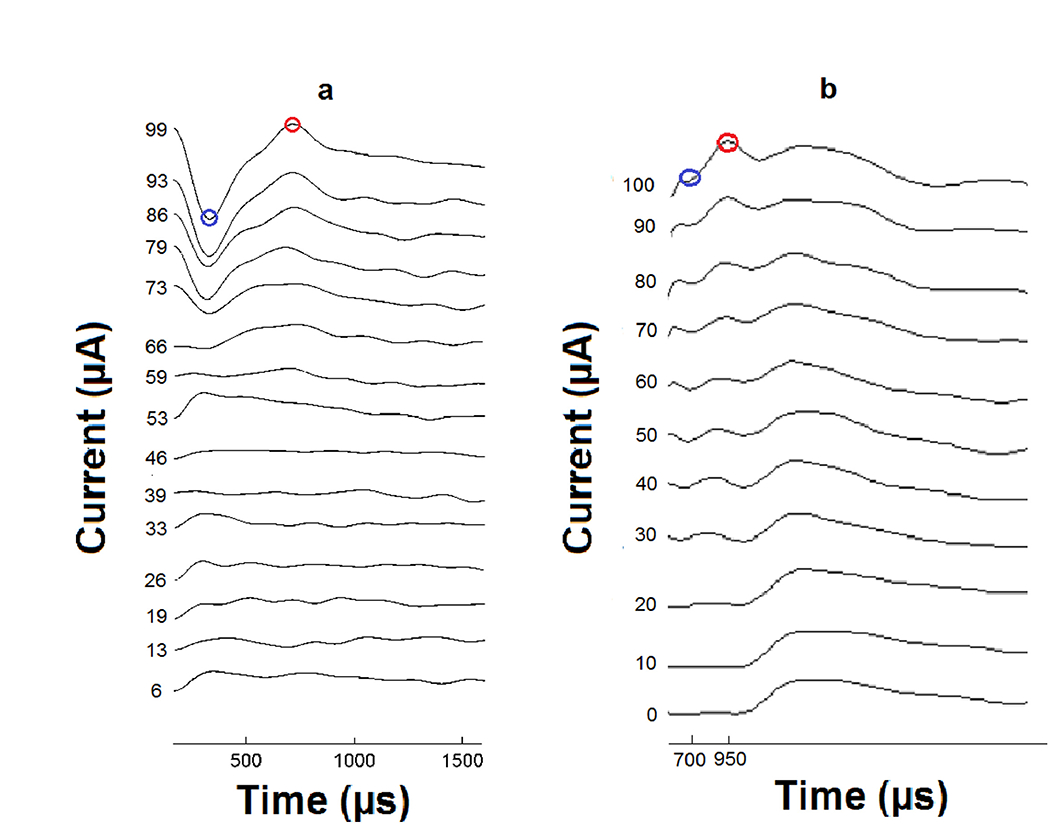
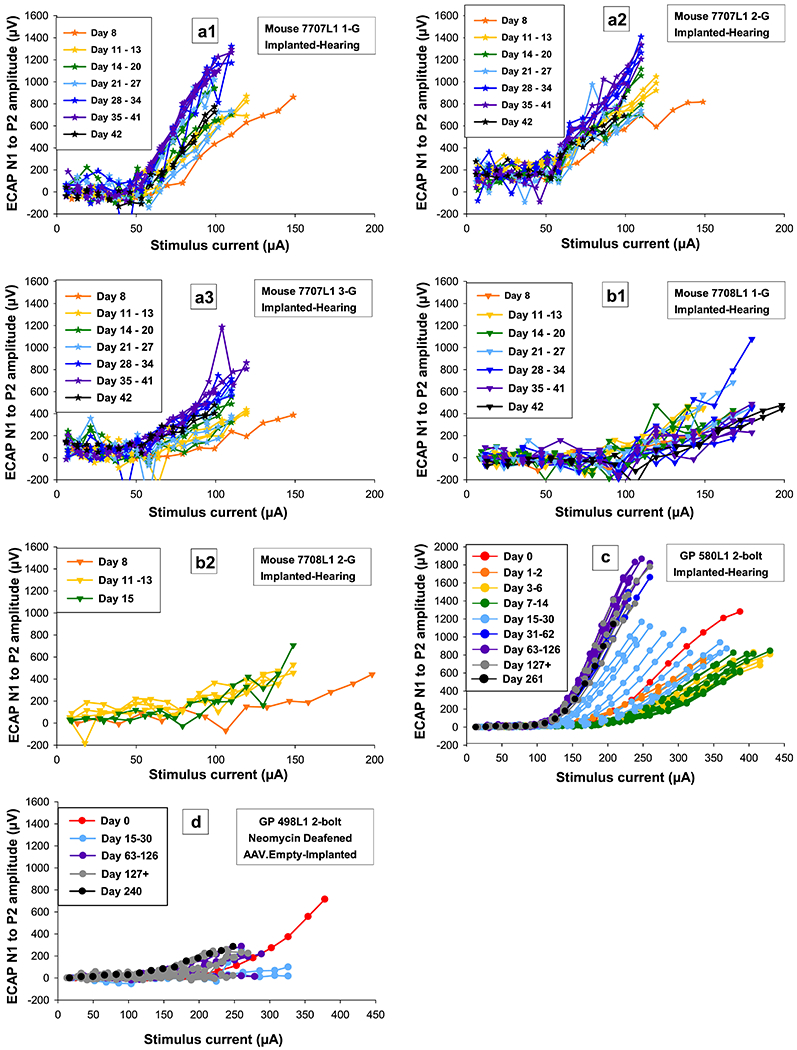
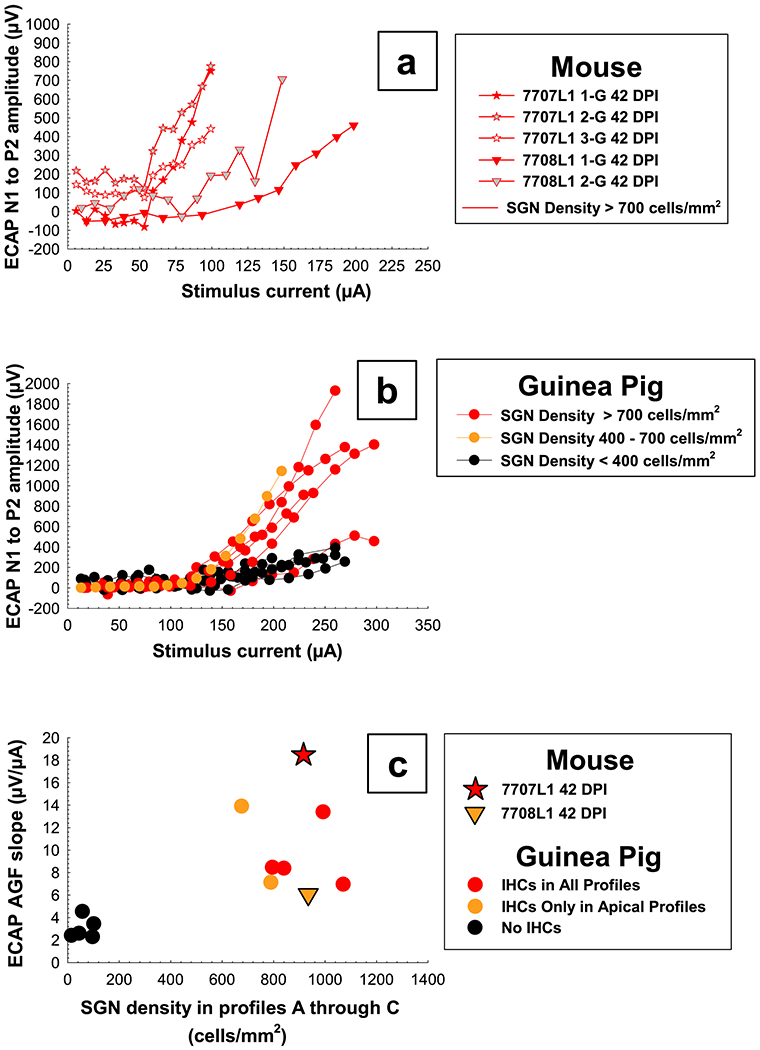
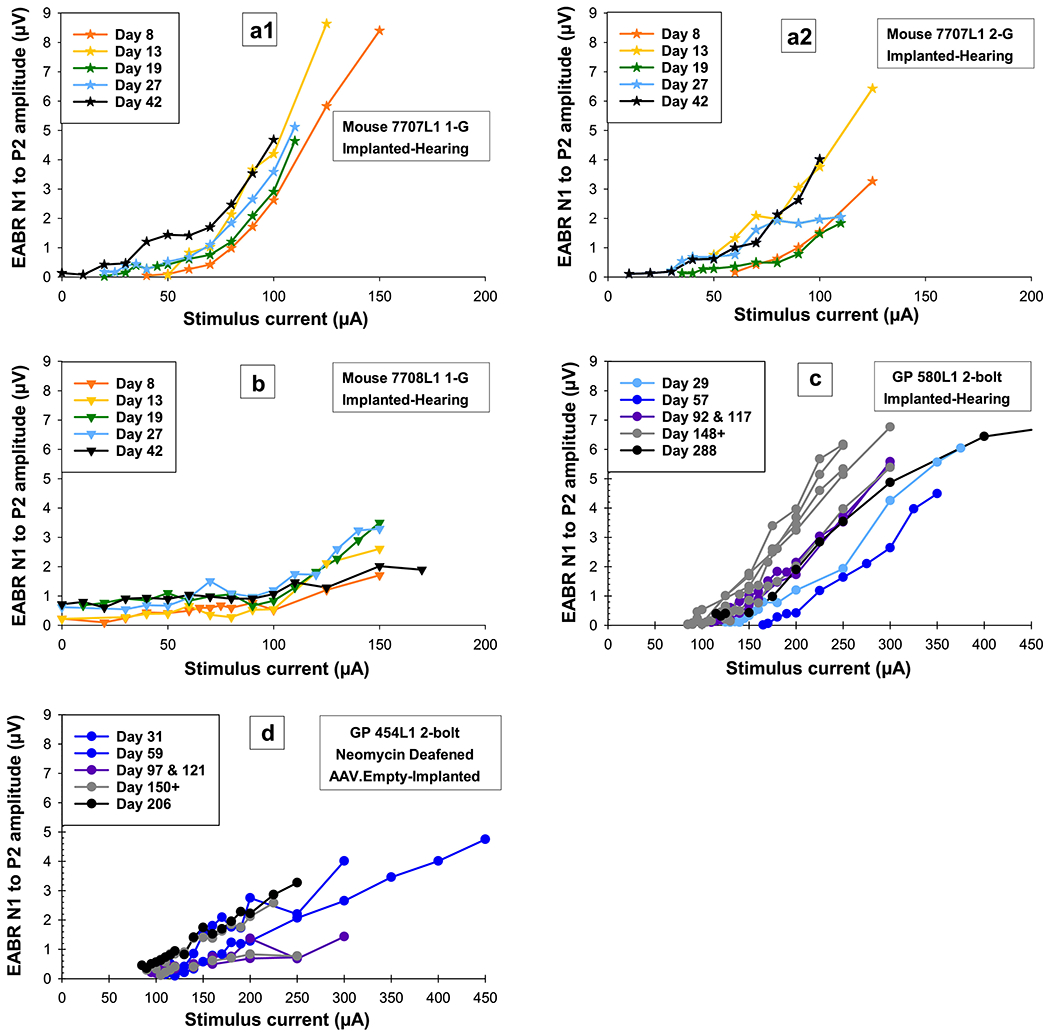
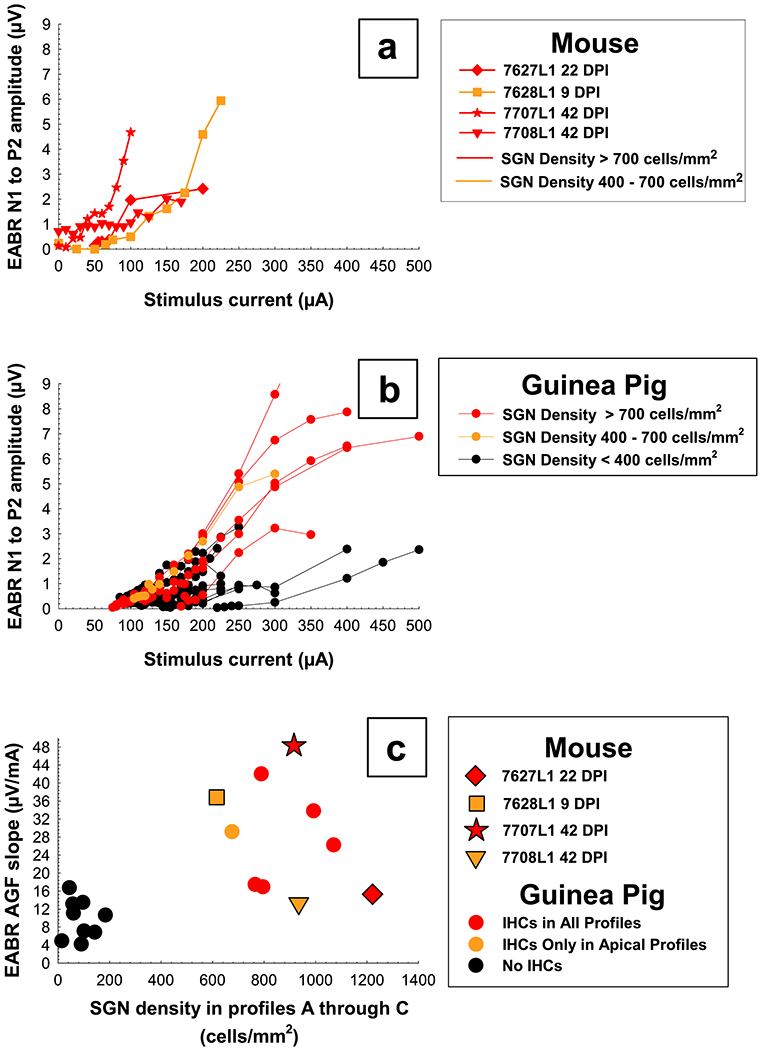
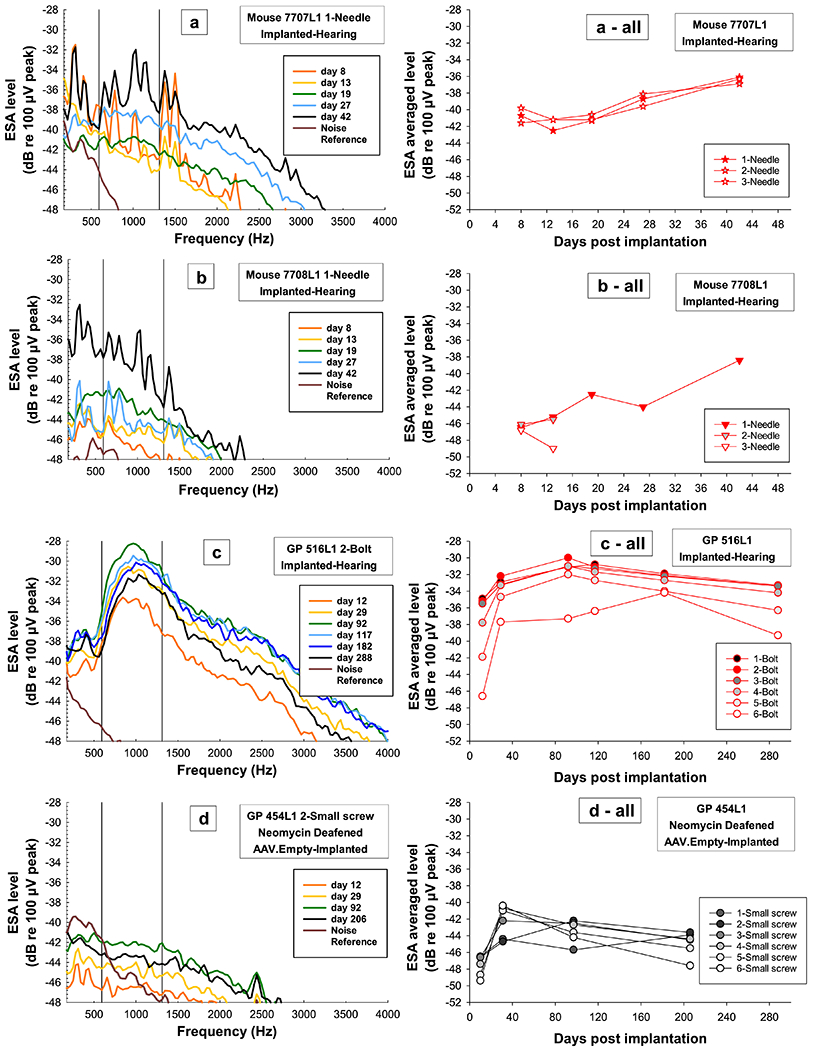
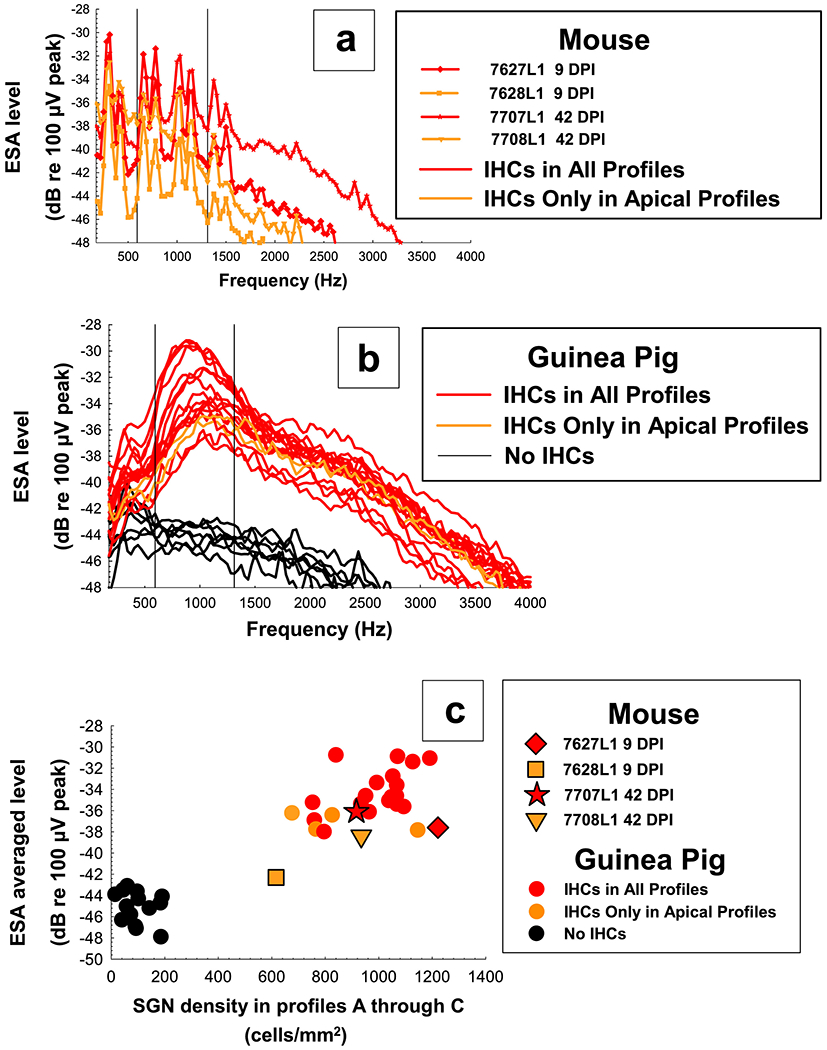
Mice with chronic cochlear implants can significantly contribute to our understanding of the relationship between cochlear health and implant function because of the availability of molecular tools for controlling conditions in the cochlea and transgenic lines modeling human disease. To date, research in implanted mice has mainly consisted of short-term studies, but since there are large changes in implant function following implant insertion trauma, and subsequent recovery in many cases, longer-term studies are needed to evaluate function and perception under stable conditions. Because frequent anesthetic administration can be especially problematic in mice, a chronic model that can be tested in the awake condition is desirable. Electrically-evoked compound action potentials (ECAPs) recorded with multichannel cochlear implants are useful functional measures because they can be obtained daily without anesthesia. In this study, we assessed changes and stability of ECAPs, electrically-evoked auditory brainstem responses (EABRs), ensemble spontaneous activity (ESA), and impedance data over time after implanting mice with multichannel implants. We then compared these data to histological findings in these implanted cochleae, and compared results from this chronic mouse model to data previously obtained in a well-established chronically-implanted guinea pig model. We determined that mice can be chronically implanted with cochlear implants, and ECAP recordings can be obtained frequently in an awake state for up to at least 42 days after implantation. These recordings can effectively monitor changes or stability in cochlear function over time. ECAP and EABR amplitude-growth functions (AGFs), AGF slopes, ESA levels and impedances in mice with multichannel implants appear similar to those found in guinea pigs with long-term multichannel implants. Animals with better survival of spiral ganglion neurons (SGNs) and inner hair cells (IHCs) have steeper AGF slopes, and larger ESA responses. The time course of post-surgical ear recovery may be quicker in mice and can show different patterns of recovery which seem to be dependent on the degree of insertion trauma and subsequent histological conditions. Histology showed varying degrees of cochlear damage with fibrosis present in all implanted mouse ears and small amounts of new bone in a few ears. Impedance changes over time varied within and across animals and may represent changes over time in multiple variables in the cochlear environment post-implantation. Due to the small size of the mouse, susceptibility to stress, and the higher potential for implant failure, chronic implantation in mice can be challenging, but overall is feasible and useful for cochlear implant research.

摘要

慢性耳蜗植入的小鼠可以为我们理解耳蜗健康和植入功能之间的关系提供重要的帮助,因为我们可以使用分子工具来控制耳蜗的条件,并且可以使用转基因模型来模拟人类疾病。迄今为止,植入小鼠的研究主要由短期研究组成,但由于植入创伤后植入功能会发生很大变化,并且在许多情况下会恢复,因此需要进行更长时间的研究,以评估稳定条件下的功能和感知。由于频繁的麻醉管理在小鼠中可能特别成问题,因此需要一种可以在清醒状态下进行测试的慢性模型。使用多通道耳蜗植入物记录的电诱发复合动作电位 (ECAP) 是有用的功能测量指标,因为它们可以每天在不使用麻醉的情况下获得。在这项研究中,我们评估了在植入多通道植入物后,ECAP、电诱发听脑干反应 (EABR)、整体自发活动 (ESA) 和阻抗数据随时间的变化和稳定性。然后,我们将这些数据与这些植入耳蜗的组织学发现进行了比较,并将该慢性小鼠模型的结果与先前在长期植入的豚鼠模型中获得的数据进行了比较。我们确定可以对小鼠进行慢性植入,并且可以在植入后至少 42 天内经常在清醒状态下获得 ECAP 记录。这些记录可以有效地监测随时间推移耳蜗功能的变化或稳定性。多通道植入小鼠的 ECAP 和 EABR 幅度生长函数 (AGF)、AGF 斜率、ESA 水平和阻抗与长期多通道植入的豚鼠相似。具有更多螺旋神经节神经元 (SGN) 和内毛细胞 (IHC) 存活的动物具有更陡峭的 AGF 斜率和更大的 ESA 反应。术后耳朵恢复的时间过程可能在小鼠中更快,并且可以显示出不同的恢复模式,这些模式似乎取决于插入创伤的程度和随后的组织学状况。组织学显示所有植入小鼠耳朵都有不同程度的耳蜗损伤,并且少数耳朵中存在少量新骨。随着时间的推移,阻抗变化在动物内部和之间变化,可能代表植入后耳蜗环境中多个变量随时间的变化。由于小鼠体积小、易受压力影响以及植入物故障的可能性较高,因此慢性植入在小鼠中可能具有挑战性,但总体上是可行的,并且对耳蜗植入研究很有用。
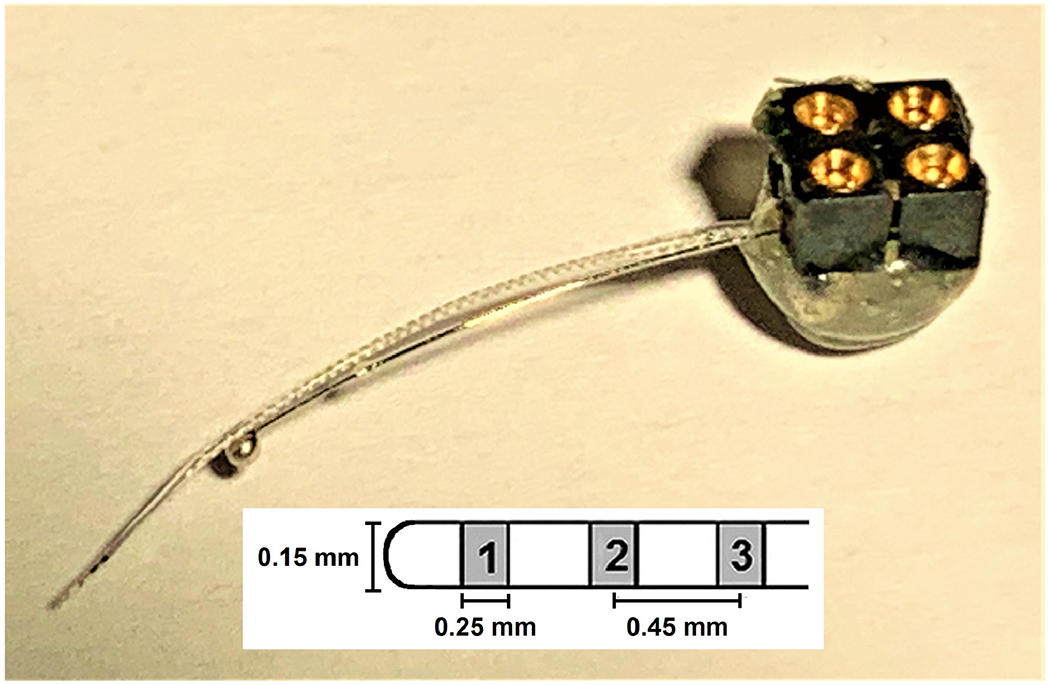
https://cdn.ncbi.nlm.nih.gov/pmc/blobs/34d9/8080901/206ccee64a00/nihms-1685175-f0013.jpg
https://cdn.ncbi.nlm.nih.gov/pmc/blobs/34d9/8080901/65f758c69eeb/nihms-1685175-f0001.jpg
https://cdn.ncbi.nlm.nih.gov/pmc/blobs/34d9/8080901/ca0cb81d5070/nihms-1685175-f0002.jpg
https://cdn.ncbi.nlm.nih.gov/pmc/blobs/34d9/8080901/d164ad39e6ae/nihms-1685175-f0003.jpg
https://cdn.ncbi.nlm.nih.gov/pmc/blobs/34d9/8080901/066d9db24fd0/nihms-1685175-f0004.jpg
https://cdn.ncbi.nlm.nih.gov/pmc/blobs/34d9/8080901/dd00539bdb54/nihms-1685175-f0005.jpg
https://cdn.ncbi.nlm.nih.gov/pmc/blobs/34d9/8080901/16699fb539bc/nihms-1685175-f0006.jpg
https://cdn.ncbi.nlm.nih.gov/pmc/blobs/34d9/8080901/2477544d2f17/nihms-1685175-f0007.jpg
https://cdn.ncbi.nlm.nih.gov/pmc/blobs/34d9/8080901/c635f997b1eb/nihms-1685175-f0008.jpg
https://cdn.ncbi.nlm.nih.gov/pmc/blobs/34d9/8080901/01a98b3630ce/nihms-1685175-f0009.jpg
https://cdn.ncbi.nlm.nih.gov/pmc/blobs/34d9/8080901/da97cab9b4f8/nihms-1685175-f0010.jpg
https://cdn.ncbi.nlm.nih.gov/pmc/blobs/34d9/8080901/e810bc193136/nihms-1685175-f0011.jpg
https://cdn.ncbi.nlm.nih.gov/pmc/blobs/34d9/8080901/1249efc0bec6/nihms-1685175-f0012.jpg
https://cdn.ncbi.nlm.nih.gov/pmc/blobs/34d9/8080901/206ccee64a00/nihms-1685175-f0013.jpg
https://cdn.ncbi.nlm.nih.gov/pmc/blobs/34d9/8080901/65f758c69eeb/nihms-1685175-f0001.jpg
https://cdn.ncbi.nlm.nih.gov/pmc/blobs/34d9/8080901/ca0cb81d5070/nihms-1685175-f0002.jpg
https://cdn.ncbi.nlm.nih.gov/pmc/blobs/34d9/8080901/d164ad39e6ae/nihms-1685175-f0003.jpg
https://cdn.ncbi.nlm.nih.gov/pmc/blobs/34d9/8080901/066d9db24fd0/nihms-1685175-f0004.jpg
https://cdn.ncbi.nlm.nih.gov/pmc/blobs/34d9/8080901/dd00539bdb54/nihms-1685175-f0005.jpg
https://cdn.ncbi.nlm.nih.gov/pmc/blobs/34d9/8080901/16699fb539bc/nihms-1685175-f0006.jpg
https://cdn.ncbi.nlm.nih.gov/pmc/blobs/34d9/8080901/2477544d2f17/nihms-1685175-f0007.jpg
https://cdn.ncbi.nlm.nih.gov/pmc/blobs/34d9/8080901/c635f997b1eb/nihms-1685175-f0008.jpg
https://cdn.ncbi.nlm.nih.gov/pmc/blobs/34d9/8080901/01a98b3630ce/nihms-1685175-f0009.jpg
https://cdn.ncbi.nlm.nih.gov/pmc/blobs/34d9/8080901/da97cab9b4f8/nihms-1685175-f0010.jpg
https://cdn.ncbi.nlm.nih.gov/pmc/blobs/34d9/8080901/e810bc193136/nihms-1685175-f0011.jpg
https://cdn.ncbi.nlm.nih.gov/pmc/blobs/34d9/8080901/1249efc0bec6/nihms-1685175-f0012.jpg
https://cdn.ncbi.nlm.nih.gov/pmc/blobs/34d9/8080901/206ccee64a00/nihms-1685175-f0013.jpg

相似文献

1
Development of a chronically-implanted mouse model for studies of cochlear health and implant function.开发一种慢性植入的小鼠模型,用于研究耳蜗健康和植入功能。
Hear Res. 2021 May;404:108216. doi: 10.1016/j.heares.2021.108216. Epub 2021 Feb 21.
2
Changes over time in the electrically evoked compound action potential (ECAP) interphase gap (IPG) effect following cochlear implantation in Guinea pigs.豚鼠耳蜗植入后电诱发复合动作电位(ECAP)相间间隙(IPG)效应随时间的变化
Hear Res. 2019 Nov;383:107809. doi: 10.1016/j.heares.2019.107809. Epub 2019 Oct 4.
3
Neurotrophin Gene Therapy in Deafened Ears with Cochlear Implants: Long-term Effects on Nerve Survival and Functional Measures.神经营养因子基因疗法对植入人工耳蜗的聋耳的长期影响:对神经存活及功能指标的作用
J Assoc Res Otolaryngol. 2017 Dec;18(6):731-750. doi: 10.1007/s10162-017-0633-9. Epub 2017 Aug 3.
4
Across-site patterns of electrically evoked compound action potential amplitude-growth functions in multichannel cochlear implant recipients and the effects of the interphase gap.多通道人工耳蜗植入受者电诱发复合动作电位幅度增长函数的跨部位模式及相间间隙的影响
Hear Res. 2016 Nov;341:50-65. doi: 10.1016/j.heares.2016.08.002. Epub 2016 Aug 10.
5
Insertion trauma and recovery of function after cochlear implantation: Evidence from objective functional measures.人工耳蜗植入后的插入创伤与功能恢复:来自客观功能测量的证据
Hear Res. 2015 Dec;330(Pt A):98-105. doi: 10.1016/j.heares.2015.07.010. Epub 2015 Jul 21.
6
Chronic Electro-Acoustic Stimulation May Interfere With Electric Threshold Recovery After Cochlear Implantation in the Aged Guinea Pig.慢性电声刺激可能会干扰老年豚鼠人工耳蜗植入后电阈值的恢复。
Ear Hear. 2024;45(6):1554-1567. doi: 10.1097/AUD.0000000000001545. Epub 2024 Jul 12.
7
A Broadly Applicable Method for Characterizing the Slope of the Electrically Evoked Compound Action Potential Amplitude Growth Function.一种广泛适用于描述电诱发复合动作电位幅度增长函数斜率的方法。
Ear Hear. 2022 Jan/Feb;43(1):150-164. doi: 10.1097/AUD.0000000000001084.
8
Identifying Cochlear Implant Channels With Relatively Poor Electrode-Neuron Interfaces Using the Electrically Evoked Compound Action Potential.使用电诱发复合动作电位识别电极-神经元界面相对较差的人工耳蜗通道。
Ear Hear. 2020 Jul/Aug;41(4):961-973. doi: 10.1097/AUD.0000000000000844.
9
Transplantation of adipose-derived stromal cells protects functional and morphological auditory nerve integrity in a model of cochlear implantation.脂肪来源基质细胞移植可保护人工耳蜗植入模型中听觉神经的功能和形态完整性。
Neuroreport. 2021 Jun 9;32(9):776-782. doi: 10.1097/WNR.0000000000001651.
10
Evaluation of focused multipolar stimulation for cochlear implants: a preclinical safety study.聚焦多极刺激在人工耳蜗中的评估:一项临床前安全性研究。
J Neural Eng. 2017 Aug;14(4):046020. doi: 10.1088/1741-2552/aa7586.

引用本文的文献

1
Micro-CT Analysis of Rodent Temporal Bones: Identifying Optimal Species for Otological Research.啮齿类动物颞骨的显微CT分析:确定耳科学研究的最佳物种
Laryngoscope Investig Otolaryngol. 2025 Jun 24;10(3):e70190. doi: 10.1002/lio2.70190. eCollection 2025 Jun.
2
Animal models of cochlear implant: Classification and update.人工耳蜗动物模型:分类与更新
J Otol. 2024 Jul;19(3):173-177. doi: 10.1016/j.joto.2024.05.002. Epub 2024 Oct 19.
3
Electrical stimulation of cochlear implant promotes activation of macrophages and fibroblasts under inflammation.

本文引用的文献

1
How electrically evoked compound action potentials in chronically implanted guinea pigs relate to auditory nerve health and electrode impedance.长期植入豚鼠的电诱发复合动作电位与听神经健康及电极阻抗之间的关系。
J Acoust Soc Am. 2020 Dec;148(6):3900. doi: 10.1121/10.0002882.
2
Relationships between Intrascalar Tissue, Neuron Survival, and Cochlear Implant Function.内毛细胞组织、神经元存活与人工耳蜗功能的关系。
J Assoc Res Otolaryngol. 2020 Aug;21(4):337-352. doi: 10.1007/s10162-020-00761-4. Epub 2020 Jul 20.
3
The Distribution and Prevalence of Macrophages in the Cochlea Following Cochlear Implantation in the Human: An Immunohistochemical Study Using Anti-Iba1 Antibody.
人工耳蜗的电刺激可促进炎症状态下巨噬细胞和成纤维细胞的激活。
Laryngoscope Investig Otolaryngol. 2023 Sep 7;8(5):1390-1400. doi: 10.1002/lio2.1149. eCollection 2023 Oct.
4
Using x-ray micro computed tomography to quantify intracochlear fibrosis after cochlear implantation in a Guinea pig model.在豚鼠模型中使用X射线显微计算机断层扫描技术量化人工耳蜗植入后的耳蜗内纤维化情况。
Heliyon. 2023 Aug 19;9(9):e19343. doi: 10.1016/j.heliyon.2023.e19343. eCollection 2023 Sep.
5
Cochlear Health and Cochlear-implant Function.耳蜗健康与人工耳蜗功能。
J Assoc Res Otolaryngol. 2023 Feb;24(1):5-29. doi: 10.1007/s10162-022-00882-y. Epub 2023 Jan 4.
6
The intraoperative relationship between intracochlear electrical field and excitability of the auditory nerve.耳蜗内电场与听神经兴奋性之间的术中关系。
Heliyon. 2022 Nov 29;8(12):e11970. doi: 10.1016/j.heliyon.2022.e11970. eCollection 2022 Dec.
7
Cochlear implants: Causes, effects and mitigation strategies for the foreign body response and inflammation.人工耳蜗植入:异物反应和炎症的原因、影响和缓解策略。
Hear Res. 2022 Sep 1;422:108536. doi: 10.1016/j.heares.2022.108536. Epub 2022 May 24.
人内耳植入后巨噬细胞的分布和流行:抗 Iba1 抗体的免疫组织化学研究。
Otol Neurotol. 2020 Mar;41(3):e304-e316. doi: 10.1097/MAO.0000000000002495.
4
Changes over time in the electrically evoked compound action potential (ECAP) interphase gap (IPG) effect following cochlear implantation in Guinea pigs.豚鼠耳蜗植入后电诱发复合动作电位(ECAP)相间间隙(IPG)效应随时间的变化
Hear Res. 2019 Nov;383:107809. doi: 10.1016/j.heares.2019.107809. Epub 2019 Oct 4.
5
A mouse model of cochlear implantation with chronic electric stimulation.慢性电刺激下的人工耳蜗植入鼠模型。
PLoS One. 2019 Apr 18;14(4):e0215407. doi: 10.1371/journal.pone.0215407. eCollection 2019.
6
Cochlear Implant Surgery and Electrically-evoked Auditory Brainstem Response Recordings in C57BL/6 Mice.C57BL/6小鼠的人工耳蜗植入手术及电诱发听觉脑干反应记录
J Vis Exp. 2019 Jan 9(143). doi: 10.3791/58073.
7
Assessing the Relationship Between the Electrically Evoked Compound Action Potential and Speech Recognition Abilities in Bilateral Cochlear Implant Recipients.评估双侧人工耳蜗植入者中电诱发复合动作电位与言语识别能力的关系。
Ear Hear. 2018 Mar/Apr;39(2):344-358. doi: 10.1097/AUD.0000000000000490.
8
Neurotrophin Gene Therapy in Deafened Ears with Cochlear Implants: Long-term Effects on Nerve Survival and Functional Measures.神经营养因子基因疗法对植入人工耳蜗的聋耳的长期影响:对神经存活及功能指标的作用
J Assoc Res Otolaryngol. 2017 Dec;18(6):731-750. doi: 10.1007/s10162-017-0633-9. Epub 2017 Aug 3.
9
Application of Mouse Models to Research in Hearing and Balance.小鼠模型在听力与平衡研究中的应用
J Assoc Res Otolaryngol. 2016 Dec;17(6):493-523. doi: 10.1007/s10162-016-0589-1. Epub 2016 Oct 17.
10
Selective hair cell ablation and noise exposure lead to different patterns of changes in the cochlea and the cochlear nucleus.选择性毛细胞消融和噪声暴露导致耳蜗及耳蜗核出现不同模式的变化。
Neuroscience. 2016 Sep 22;332:242-57. doi: 10.1016/j.neuroscience.2016.07.001. Epub 2016 Jul 9.