Midwifery Department, College of Medicine and Health Sciences, Bahir Dar University, Bahir Dar, Ethiopia.
Reprod Health. 2021 Mar 10;18(1):61. doi: 10.1186/s12978-021-01103-0.
Obstructed labor is a preventable obstetric complication. However, it is an important cause of maternal mortality and morbidity and of adverse outcomes for newborns in resource-limited countries in which undernutrition is common resulting in a small pelvis in which there is no easy access to functioning health facilities with a capacity to carry out operative deliveries. Therefore, this systematic review and meta-analysis aimed to estimate the incidence, causes, and maternofetal outcomes of obstructed labor among mothers who gave birth in Ethiopia.
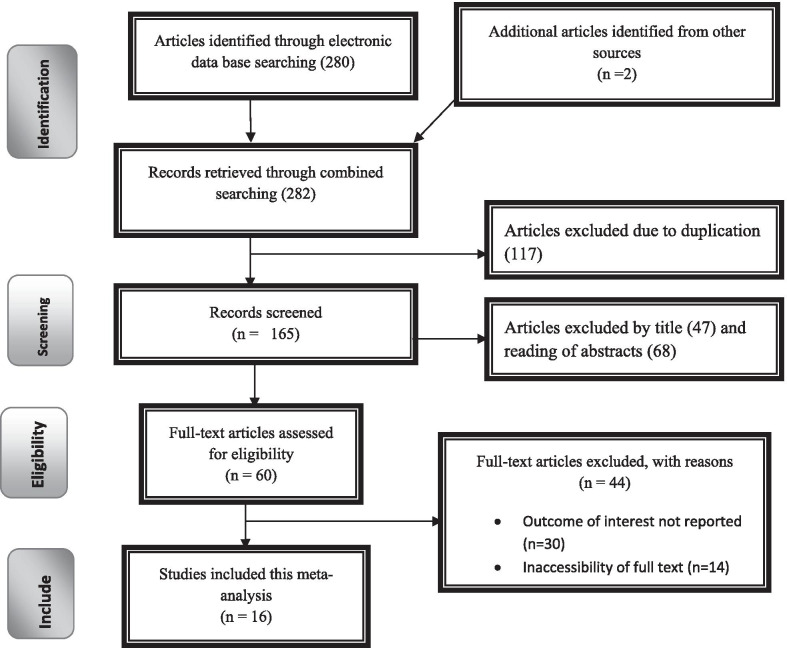
for this review, we used the standard PRISMA checklist guideline. Different online databases were used for the review: PubMed, Google Scholar, EMBASE, Cochrane Library, HINARI, AFRO Library Databases, and African Online Journals. Based on the adapted PICO principles, different search terms were applied to achieve and access the essential articles. The search included all published and unpublished observational studies written only in the English language and conducted in Ethiopia. Microsoft Excel 16 was used for data entrance, and Stata version 11.0 (Stata Corporation, College Station, Texas, USA) was used for data analysis.
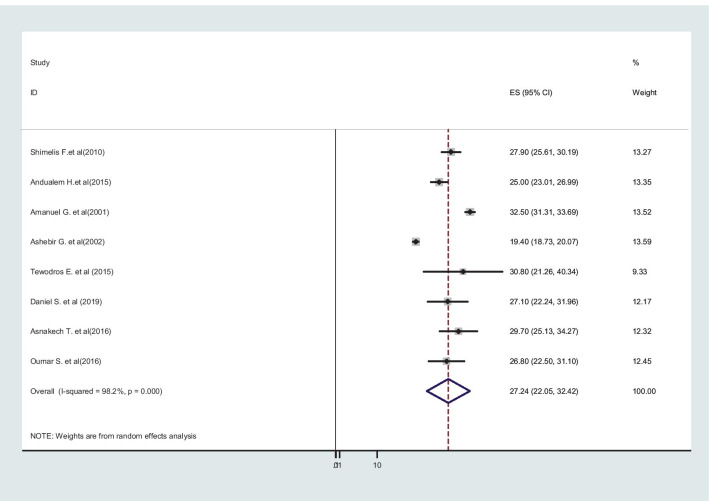
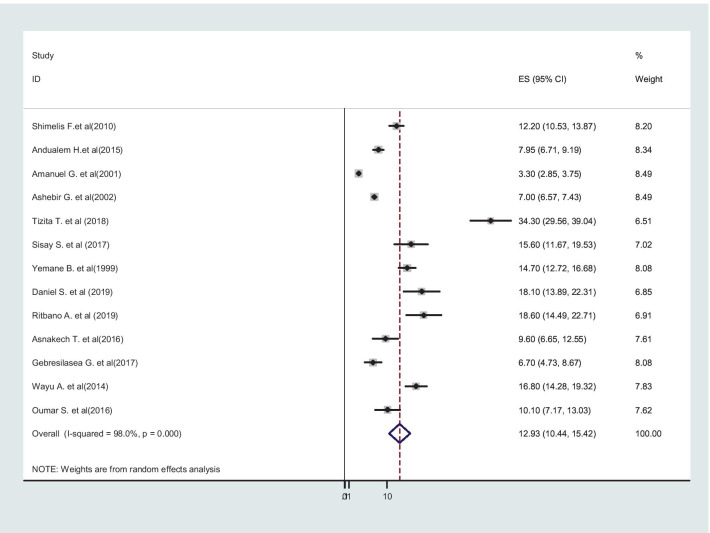
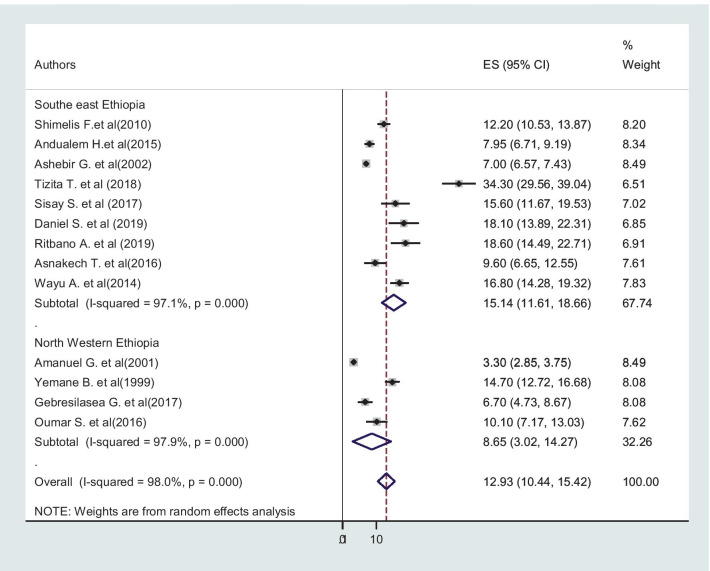
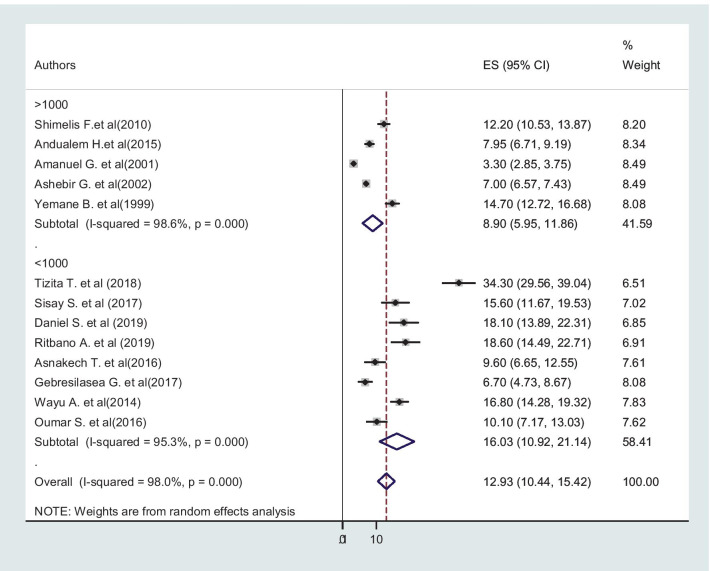
I included sixteen (16) primary studies with twenty-eight thousand five hundred ninety-one (28,591) mothers who gave birth in Ethiopia. The pooled incidence of obstructed labor in Ethiopia was 12.93% (95% CI: 10.44-15.42, I = 98.0%, p < 0.001). Out of these, 67.3% (95% CI: 33.32-101.28) did not have antenatal care follow-up, 77.86% (95% CI: 63.07-92.66) were from the rural area, and 58.52% (95% CI: 35.73- 82.31) were referred from health centers and visited hospitals after 12 h of labor. The major causes of obstructed labor were cephalo-pelvic disproportion 64.65% (95% CI: 57.15- 72.14), and malpresentation and malposition in 27.24% (95% CI: 22.05-32.42) of the cases. The commonest complications were sepsis in 38.59% (95% CI: 25.49-51.68), stillbirth in 38.08% (95% CI: 29.55-46.61), postpartum hemorrhage in 33.54% (95% CI:12.06- 55.02), uterine rupture in 29.84% (95% CI: 21.09-38.58), and maternal death in 17.27% (95% CI: 13.47-48.02) of mothers who gave birth in Ethiopia.
This systematic review and meta-analysis showed that the incidence of obstructed labor was high in Ethiopia. Not having antenatal care follow-up, rural residency, and visiting hospitals after 12 h of labor increased the incidence of obstructed labor. The major causes of obstructed labor were cephalo-pelvic disproportion, and malpresentation and malpresentation. Additionally, the commonest complications were sepsis, stillbirth, postpartum hemorrhage, uterine rupture, and maternal death. Thus, promoting antenatal care service utilization, a good referral system, and availing comprehensive obstetric care in nearby health institutions are recommended to prevent the incidence of obstructed labor and its complications.
梗阻性分娩是一种可预防的产科并发症。然而,在资源有限的国家,它是导致孕产妇死亡和发病以及新生儿不良结局的一个重要原因,这些国家普遍存在营养不良,导致骨盆较小,难以获得能够进行手术分娩的正常运作的卫生设施。因此,本系统评价和荟萃分析旨在估计在埃塞俄比亚分娩的母亲中梗阻性分娩的发生率、原因和母婴结局。
为了进行这次审查,我们使用了标准的 PRISMA 清单指南。不同的在线数据库被用于审查:PubMed、Google Scholar、EMBASE、Cochrane 图书馆、HINARI、AFRO 数据库和非洲在线期刊。根据适应的 PICO 原则,应用了不同的搜索词来获得和获取必要的文章。搜索包括所有发表和未发表的仅用英语撰写并在埃塞俄比亚进行的观察性研究。Microsoft Excel 16 用于数据输入,Stata 版本 11.0(Stata Corporation,德克萨斯州学院站,美国)用于数据分析。
我纳入了 16 项初级研究,涉及 28591 名在埃塞俄比亚分娩的母亲。埃塞俄比亚梗阻性分娩的总发生率为 12.93%(95%CI:10.44-15.42,I=98.0%,p<0.001)。其中,67.3%(95%CI:33.32-101.28)没有进行产前护理随访,77.86%(95%CI:63.07-92.66)来自农村地区,58.52%(95%CI:35.73-82.31)在分娩后 12 小时从卫生中心转诊并前往医院就诊。梗阻性分娩的主要原因是头盆不称 64.65%(95%CI:57.15-72.14),以及胎位不正和胎位不正 27.24%(95%CI:22.05-32.42)。常见的并发症是败血症 38.59%(95%CI:25.49-51.68)、死产 38.08%(95%CI:29.55-46.61)、产后出血 33.54%(95%CI:12.06-55.02)、子宫破裂 29.84%(95%CI:21.09-38.58)和孕产妇死亡 17.27%(95%CI:13.47-48.02)。
本系统评价和荟萃分析表明,埃塞俄比亚梗阻性分娩的发生率较高。没有产前护理随访、农村居住和分娩后 12 小时就诊增加了梗阻性分娩的发生率。梗阻性分娩的主要原因是头盆不称和胎位不正、胎位不正。此外,常见的并发症是败血症、死产、产后出血、子宫破裂和孕产妇死亡。因此,建议推广产前保健服务的利用、良好的转诊系统和提供附近卫生机构的全面产科护理,以预防梗阻性分娩及其并发症的发生。