Department of Midwifery, College of Medicine and Health Sciences, Bahir Dar University, Bahir Dar, Ethiopia.
Department of Midwifery, College of Health Sciences, Woldia University, Woldia, Ethiopia.
BMC Pediatr. 2020 Mar 24;20(1):135. doi: 10.1186/s12887-020-02039-3.
Despite different preventive strategies that have been implemented in different health institutions in the country, neonatal mortality and morbidity are still significantly increasing in Ethiopia. Perinatal asphyxia is the leading cause of neonatal morbidity and mortality worldwide. As a result, this systematic review and meta-analysis aimed to assess the prevalence and associated factors of perinatal asphyxia in Ethiopia.
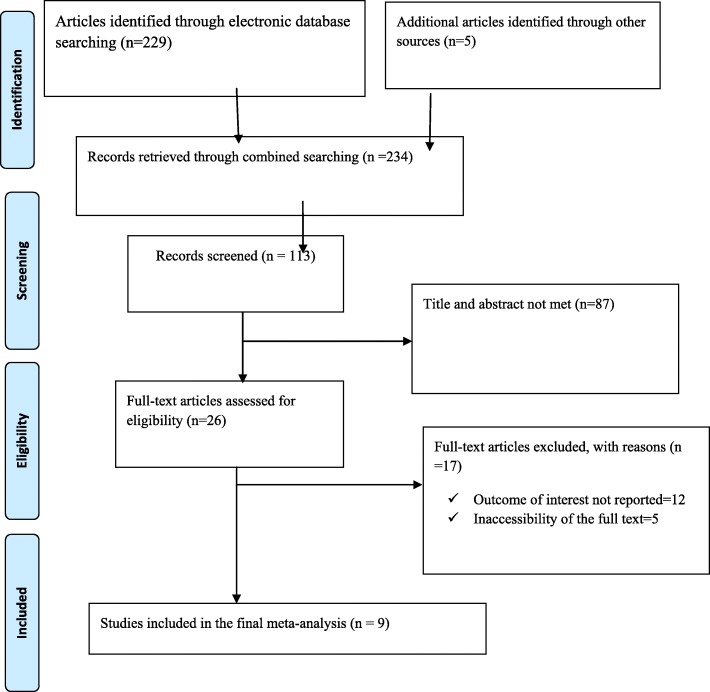
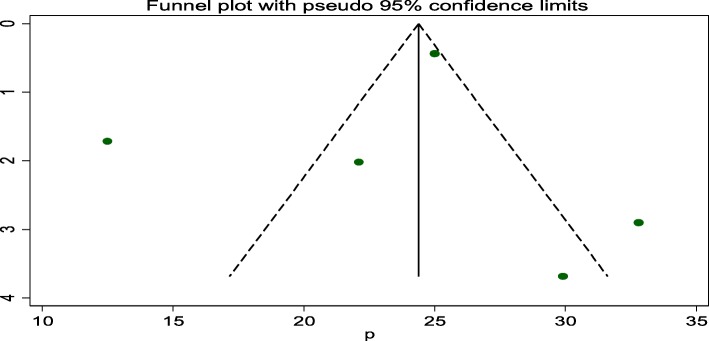
Online databases (PubMed, HINARI, EMBASE, Google Scholar and African Journals), other gray and online repository accessed studies were searched using different search engines. Newcastle-Ottawa Quality Assessment Scale (NOS) was used for critical appraisal of studies. The analysis was done using STATA 11 software. The Cochran Q test and I test statistics were used to test the heterogeneity of studies. The funnel plot and Egger's test were used to detect publication bias of the studies. The pooled prevalence of perinatal asphyxia and the odds ratio (OR) with a 95% confidence interval was presented using forest plots.
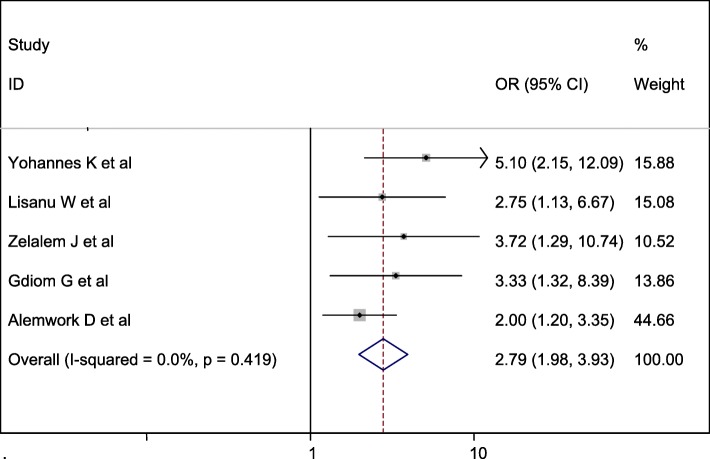
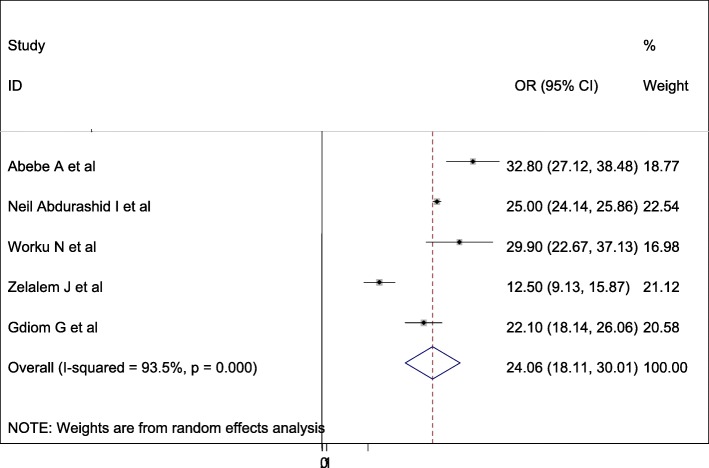
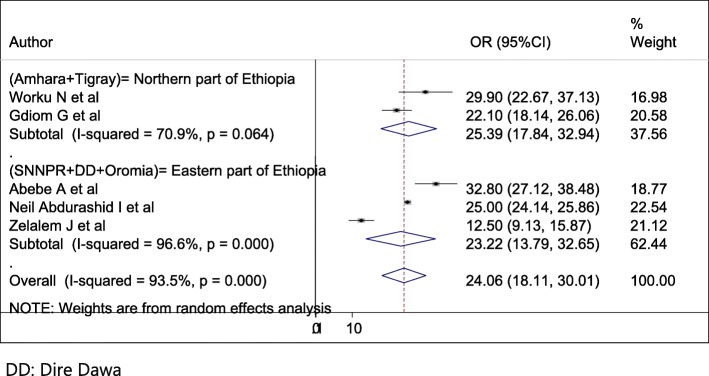
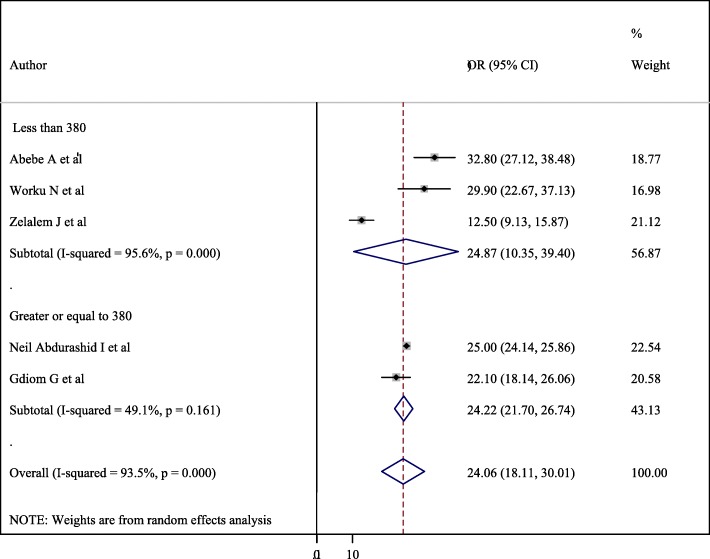
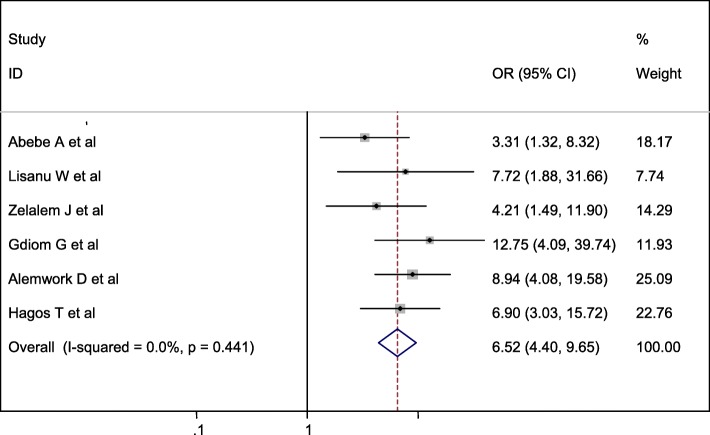
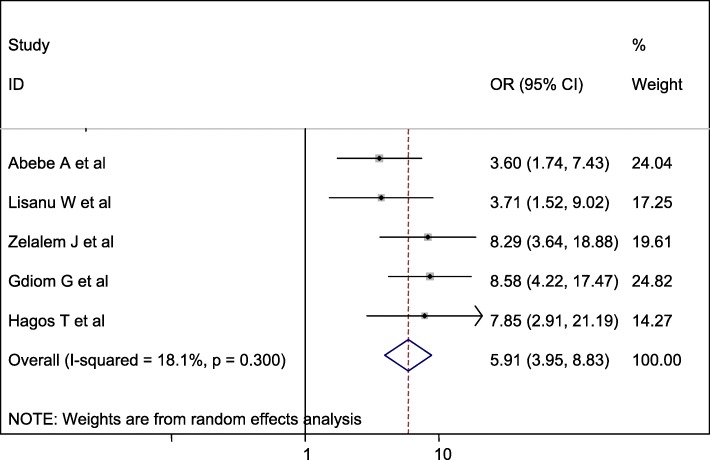
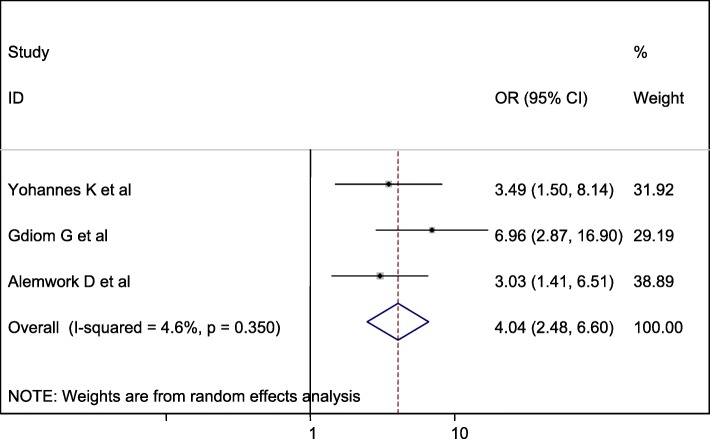
Nine studies were included in this review, with a total of 12,249 live births in Ethiopia. The overall pooled prevalence of perinatal asphyxia in Ethiopia was 24.06% (95 95%CI: 18.11-30.01). Associated factors of perinatal asphyxia included prolonged labor (OR = 2.79, 95% CI: 1.98, 3.93), low birth weight (OR = 6.52, 95% CI: 4.40, 9.65), meconium-stained amniotic fluid (OR = 5.91, 95% CI: 3.95, 8.83) and instrumental delivery (OR = 4.04, 95% CI: 2.48, 6.60) were the determinant factors of perinatal asphyxia in Ethiopia.
The overall pooled prevalence of perinatal asphyxia was remarkably high. Duration of labor, meconium-stained amniotic fluid, instrumental deliveries, and birth weight were the associated factors of perinatal asphyxia in Ethiopia. Therefore, efforts should be made to improve the quality of intrapartum care service to prevent prolonged labor and fetal complications and to identify and make a strict follow up of mothers with meconium-stained amniotic fluid. This finding is important to early recognition and management of its contributing factors, might modify hypoxic-ischemic encephalopathy and may improve the implementation of the standard guideline effectively and consistently.
尽管该国不同卫生机构已经实施了不同的预防策略,但新生儿死亡率和发病率仍在显著上升。围产期窒息是全球新生儿发病率和死亡率的主要原因。因此,本系统评价和荟萃分析旨在评估埃塞俄比亚围产期窒息的患病率和相关因素。
在线数据库(PubMed、HINARI、EMBASE、Google Scholar 和 African Journals)、其他灰色和在线存储库访问的研究使用不同的搜索引擎进行搜索。使用纽卡斯尔-渥太华质量评估量表(NOS)对研究进行批判性评估。使用 STATA 11 软件进行分析。使用 Cochran Q 检验和 I 检验统计量检验研究的异质性。使用漏斗图和 Egger 检验检测研究的发表偏倚。使用森林图呈现围产期窒息的总患病率和优势比(OR)及其 95%置信区间。
本综述纳入了 9 项研究,共涉及埃塞俄比亚 12249 例活产儿。埃塞俄比亚围产期窒息的总患病率为 24.06%(95%置信区间:18.11-30.01)。围产期窒息的相关因素包括产程延长(OR=2.79,95%置信区间:1.98-3.93)、低出生体重(OR=6.52,95%置信区间:4.40-9.65)、羊水胎粪污染(OR=5.91,95%置信区间:3.95-8.83)和器械分娩(OR=4.04,95%置信区间:2.48-6.60)。
围产期窒息的总患病率非常高。产程延长、羊水胎粪污染、器械分娩和出生体重是埃塞俄比亚围产期窒息的相关因素。因此,应努力提高产时护理服务质量,以预防产程延长和胎儿并发症,并识别和严格跟踪羊水胎粪污染的产妇。这一发现对于早期识别和管理其相关因素很重要,可能改变缺氧缺血性脑病的发生,并有助于更有效地和一贯地实施标准指南。