Ophthalmology, Visual and Anatomical Sciences Department, Wayne State University School of Medicine, Detroit, MI 48202.
Neurology Department, Wayne State University School of Medicine, Detroit, MI 48202.
eNeuro. 2021 Apr 7;8(2). doi: 10.1523/ENEURO.0526-20.2021. Print 2021 Mar-Apr.
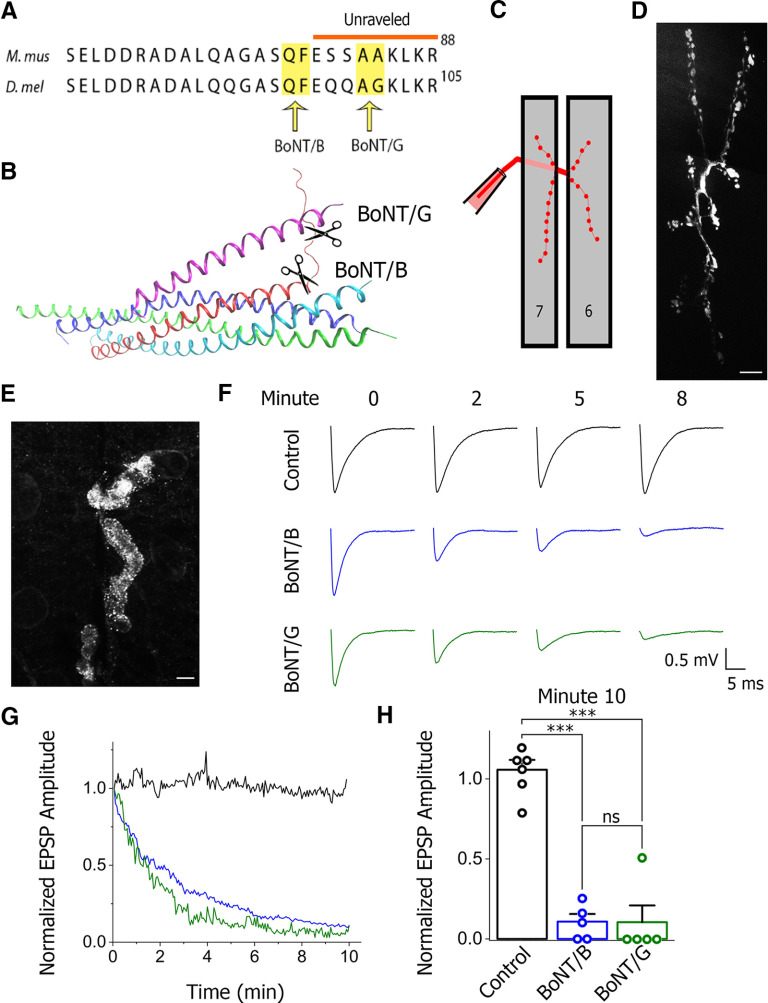
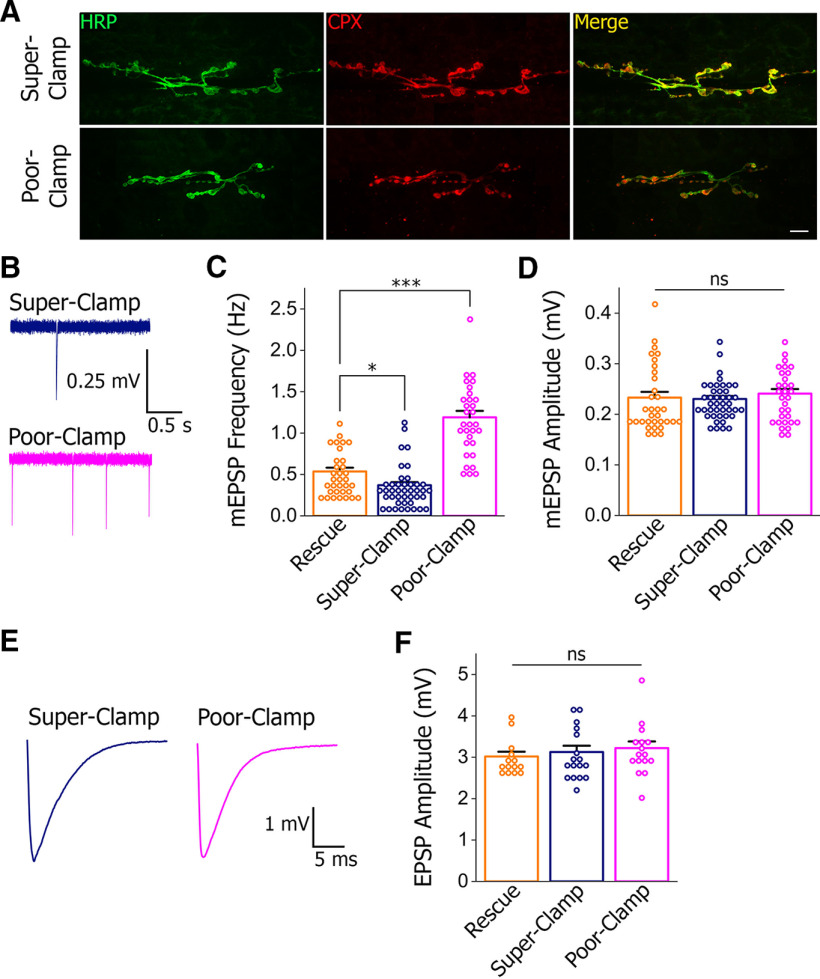
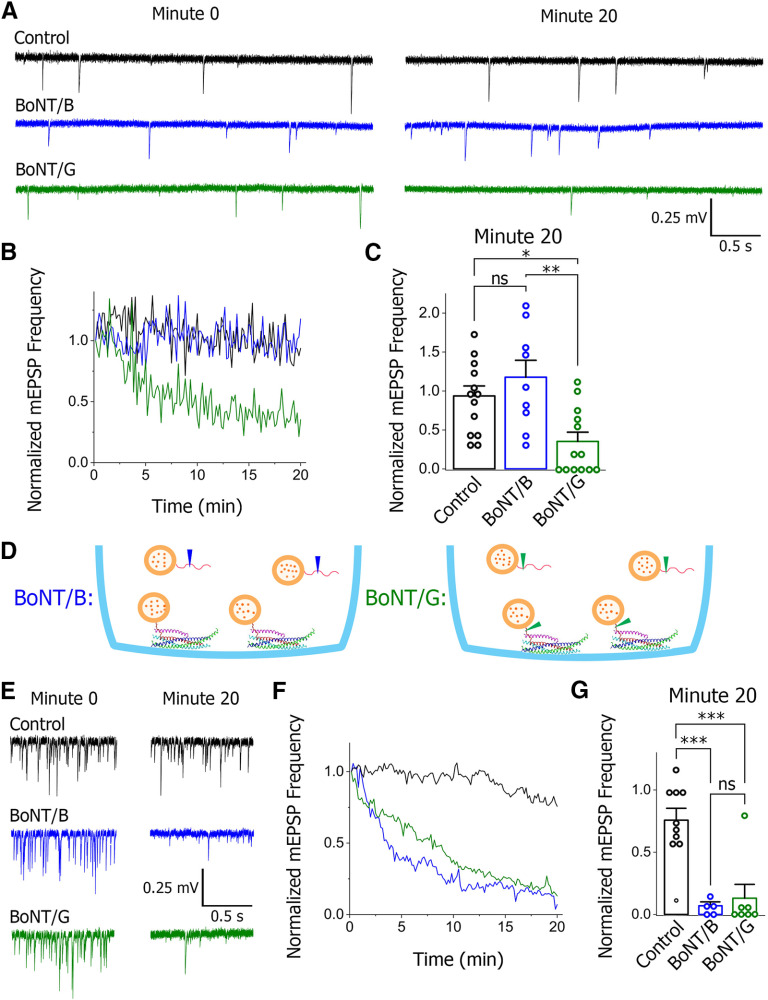
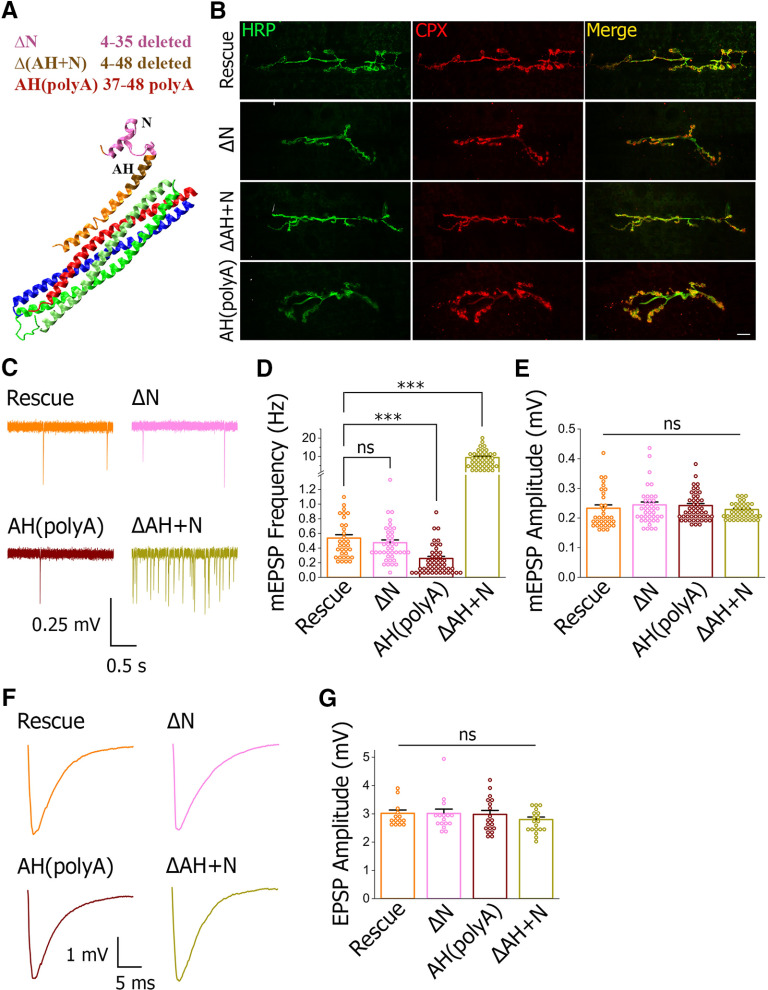
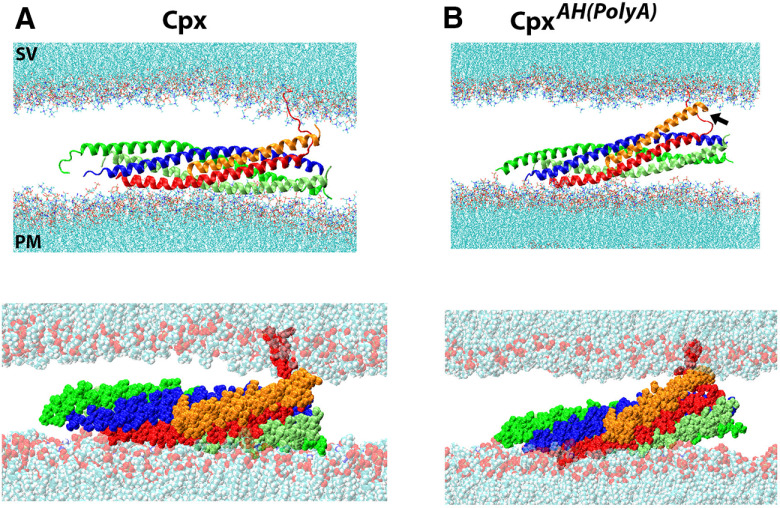
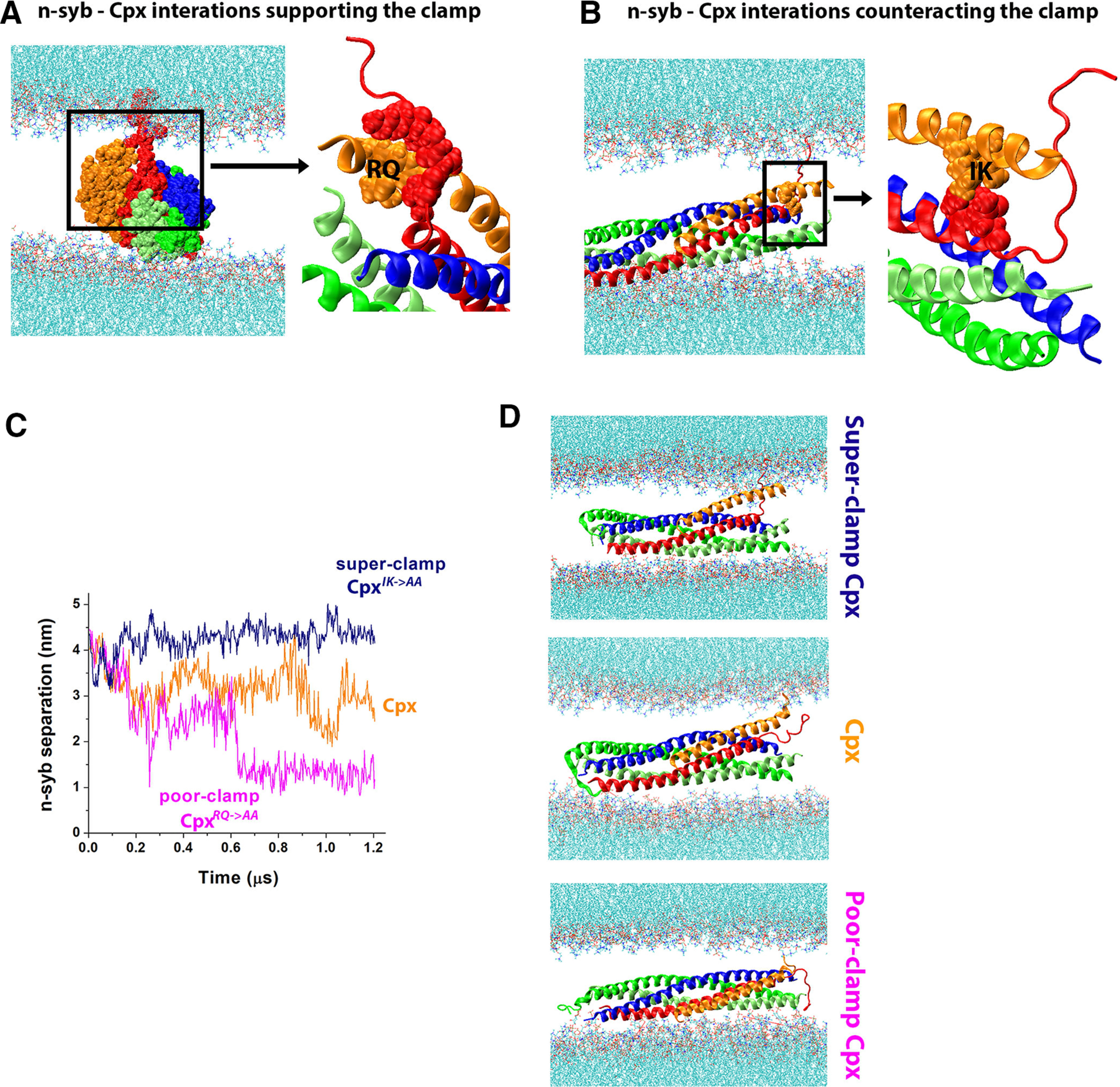
Spontaneous synaptic transmission is regulated by the protein complexin (Cpx). Cpx binds the SNARE complex, a coil-coiled four-helical bundle that mediates the attachment of a synaptic vesicle (SV) to the presynaptic membrane (PM). Cpx is thought to clamp spontaneous fusion events by stabilizing a partially unraveled state of the SNARE bundle; however, the molecular detail of this mechanism is still debated. We combined electrophysiology, molecular modeling, and site-directed mutagenesis in to develop and validate the atomic model of the Cpx-mediated clamped state of the SNARE complex. We took advantage of botulinum neurotoxins (BoNTs) B and G, which cleave the SNARE protein synaptobrevin (Syb) at different sites. Monitoring synaptic depression on BoNT loading revealed that the clamped state of the SNARE complex has two or three unraveled helical turns of Syb. Site-directed mutagenesis showed that the Cpx clamping function is predominantly maintained by its accessory helix (AH), while molecular modeling suggested that the Cpx AH interacts with the unraveled C terminus of Syb and the SV lipid bilayer. The developed molecular model was employed to design new Cpx poor-clamp and super-clamp mutations and to tested the predictions employing molecular dynamics simulations. Subsequently, we generated lines harboring these mutations and confirmed the poor-clamp and super-clamp phenotypes Altogether, these results validate the atomic model of the Cpx-mediated fusion clamp, wherein the Cpx AH inserts between the SNARE bundle and the SV lipid bilayer, simultaneously binding the unraveled C terminus of Syb and preventing full SNARE assembly.
自发性突触传递受蛋白复合物素 (Cpx) 调节。Cpx 结合 SNARE 复合物,SNARE 复合物是一种螺旋卷曲的四螺旋束,介导突触囊泡 (SV) 与突触前膜 (PM) 的附着。Cpx 通过稳定 SNARE 束的部分解开状态来钳制自发性融合事件;然而,这种机制的分子细节仍存在争议。我们结合电生理学、分子建模和定点突变在 中开发和验证了 Cpx 介导的 SNARE 复合物夹断状态的原子模型。我们利用肉毒杆菌神经毒素 (BoNTs) B 和 G,它们在不同的位点切割 SNARE 蛋白突触融合蛋白 (Syb)。监测 BoNT 加载时的突触抑制作用表明,SNARE 复合物的夹断状态有两个或三个解开的 Syb 螺旋。定点突变表明,Cpx 的夹断功能主要由其辅助螺旋 (AH) 维持,而分子建模表明 Cpx AH 与解开的 Syb C 端和 SV 脂双层相互作用。所开发的分子模型用于设计新的 Cpx 弱夹断和超夹断突变,并利用分子动力学模拟对其进行测试。随后,我们生成了携带这些突变的 株系,并通过 Altogether,这些结果验证了 Cpx 介导的融合夹断的原子模型,其中 Cpx AH 插入 SNARE 束和 SV 脂双层之间,同时结合解开的 Syb C 端并阻止完全 SNARE 组装。