Ghent-Fertility and Stem cell Team (G-FaST), Department for Reproductive Medicine, Ghent University Hospital, Ghent, Belgium.
Reproductive Medicine Center, The First Affiliated Hospital of Xiamen University, Xiamen, China.
Front Endocrinol (Lausanne). 2021 Feb 22;12:635370. doi: 10.3389/fendo.2021.635370. eCollection 2021.
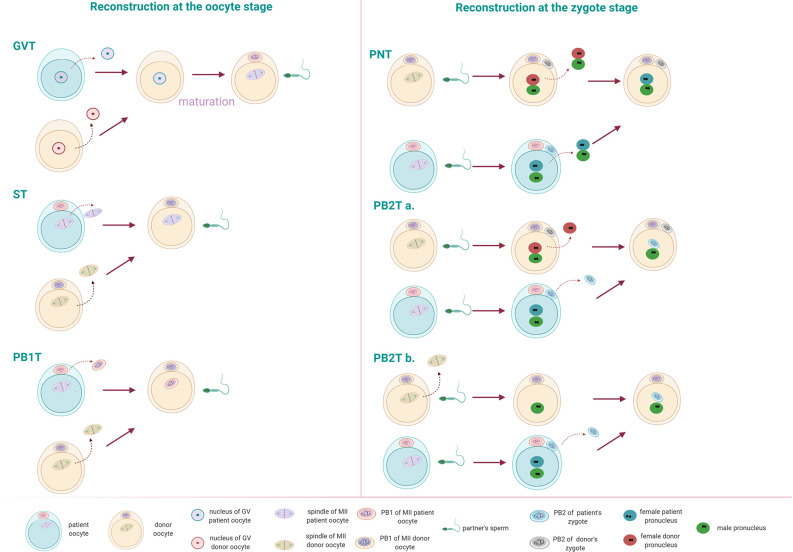
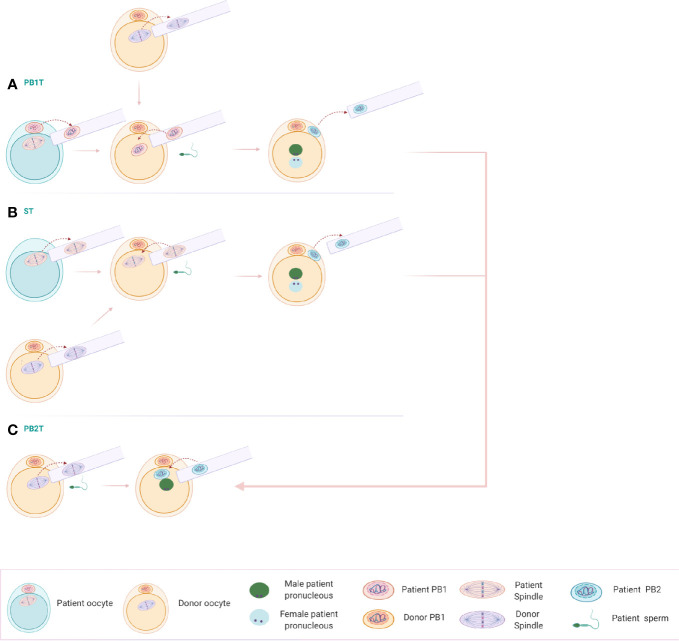
Diminished ovarian reserve (DOR) is associated with a reduced quantity and quality of the retrieved oocytes, usually leading to poor reproductive outcomes which remain a great challenge for assisted reproduction technology (ART). Women with DOR often have to seek for oocyte donation, precluding genetically related offspring. Germline nuclear transfer (NT) is a novel technology in ART that involves the transfer of the nuclear genome from an affected oocyte/zygote of the patient to the cytoplast of an enucleated donor oocyte/zygote. Therefore, it offers opportunities for the generation of genetically related embryos. Currently, although NT is clinically applied only in women with serious mitochondrial DNA disorders, this technology has also been proposed to overcome certain forms of female infertility, such as advanced maternal age and embryo developmental arrest. In this review, we are proposing the NT technology as a future treatment option for DOR patients. Strikingly, the application of different NT strategies will result in an increase of the total number of available reconstituted embryos for DOR patients.
卵巢储备功能降低(DOR)与可获取卵母细胞的数量和质量减少有关,通常导致不良的生殖结局,这仍然是辅助生殖技术(ART)的巨大挑战。DOR 患者通常需要寻求卵母细胞捐赠,从而排除了与遗传相关的后代。生殖系核转移(NT)是 ART 中的一项新技术,涉及将患者的受影响卵母细胞/受精卵的核基因组转移到去核供体卵母细胞/受精卵的胞质中。因此,它为产生与遗传相关的胚胎提供了机会。目前,尽管 NT 仅在患有严重线粒体 DNA 疾病的女性中临床应用,但该技术也被提议用于克服某些形式的女性不孕,如高龄和胚胎发育停滞。在这篇综述中,我们提出将 NT 技术作为 DOR 患者的未来治疗选择。引人注目的是,不同的 NT 策略的应用将增加 DOR 患者可获得的重组胚胎总数。