Kamal Amany M, Nabih Nermeen A, Elleboudy Nooran S, Radwan Sara M
Department of Biochemistry, Faculty of Pharmacy, Ain Shams University, Cairo 11566, Egypt.
Department of Internal Medicine, Clinical Hematology and Bone Marrow Transplantation Unit, Faculty of Medicine, Ain Shams University, Cairo 11591, Egypt.
Oncol Lett. 2021 Apr;21(4):325. doi: 10.3892/ol.2021.12587. Epub 2021 Feb 24.
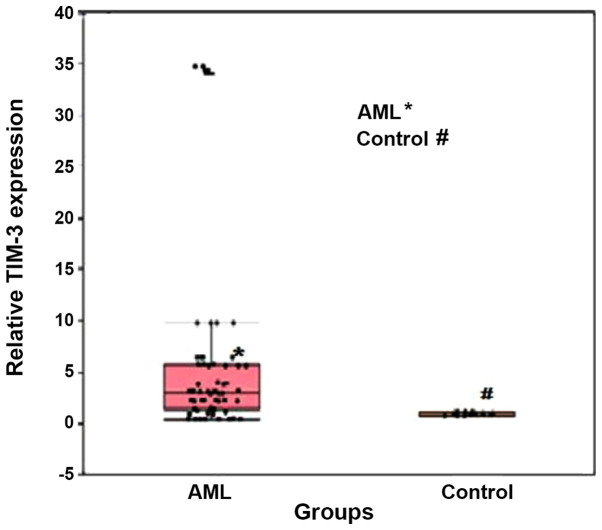
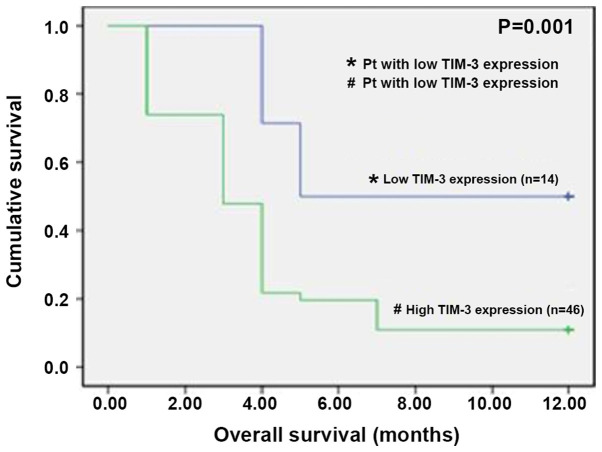
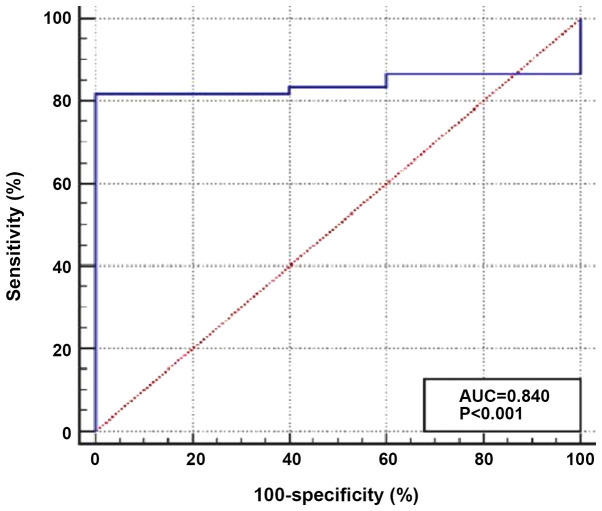
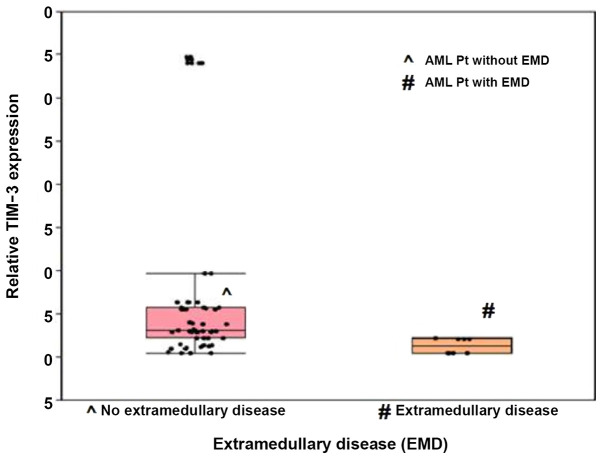
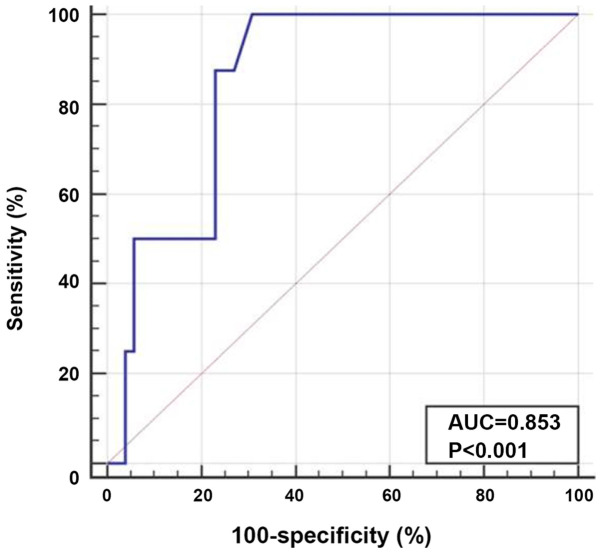
Despite recent advancements in the therapeutic landscape of acute myeloid leukemia (AML), the prognosis of patients remains poor. Immune check point inhibitors have been investigated in hematological malignancies, including AML; however, the role of T-cell immunoglobulin and mucin domain 3 (TIM-3) in AML has not yet been fully elucidated. Thus, the present study aimed to investigate TIM-3 gene expression in patients with AML and determine its associations with prognostic variables and clinical outcome. A total of 60 patients newly diagnosed with AML and 15 healthy matching individuals were recruited in the present study, and reverse transcription-quantitative PCR analysis was performed to detect TIM-3 expression. The results demonstrated that TIM-3 expression was significantly upregulated in patients with AML compared with that in healthy individuals (P<0.001). In addition, patients with extramedullary disease (EMD) exhibited significantly lower median TIM-3 expression levels compared with those without EMD (P=0.001). Furthermore, patients with high TIM-3 expression had significantly lower complete remission rates following induction chemotherapy compared with those with low TIM-3 expression (P=0.004). High TIM-3 expression was significantly associated with lower overall survival rates during the 1-year follow-up (P=0.001). Taken together, the results of the present study suggest that TIM-3 may act as a biomarker of a poor prognosis in patients with AML, and be used as a therapeutic target.
尽管急性髓系白血病(AML)治疗领域最近取得了进展,但患者的预后仍然很差。免疫检查点抑制剂已在包括AML在内的血液系统恶性肿瘤中进行了研究;然而,T细胞免疫球蛋白和粘蛋白结构域3(TIM-3)在AML中的作用尚未完全阐明。因此,本研究旨在调查AML患者中TIM-3基因的表达,并确定其与预后变量和临床结果的关联。本研究共招募了60例新诊断的AML患者和15名健康对照个体,采用逆转录定量PCR分析检测TIM-3表达。结果表明,与健康个体相比,AML患者中TIM-3表达显著上调(P<0.001)。此外,与无髓外疾病(EMD)的患者相比,有EMD的患者TIM-3表达水平中位数显著更低(P=0.001)。此外,与低TIM-3表达的患者相比,高TIM-3表达的患者诱导化疗后的完全缓解率显著更低(P=0.004)。在1年随访期间,高TIM-3表达与较低的总生存率显著相关(P=0.001)。综上所述,本研究结果表明,TIM-3可能是AML患者预后不良的生物标志物,并可作为治疗靶点。