Obstetrics and Gynecology Hospital, Fudan University, Shanghai, China.
Shanghai Key Laboratory of Female Reproductive Endocrine Related Diseases, Obstetrics and Gynecology Hospital, Fudan University, Shanghai, China.
Cancer Med. 2021 Apr;10(7):2380-2395. doi: 10.1002/cam4.3833. Epub 2021 Mar 10.
Deciphering the determinants of the intralesional immune reaction in cervical carcinogenesis may be conducive to improving the understanding of the disease and then improve outcomes.
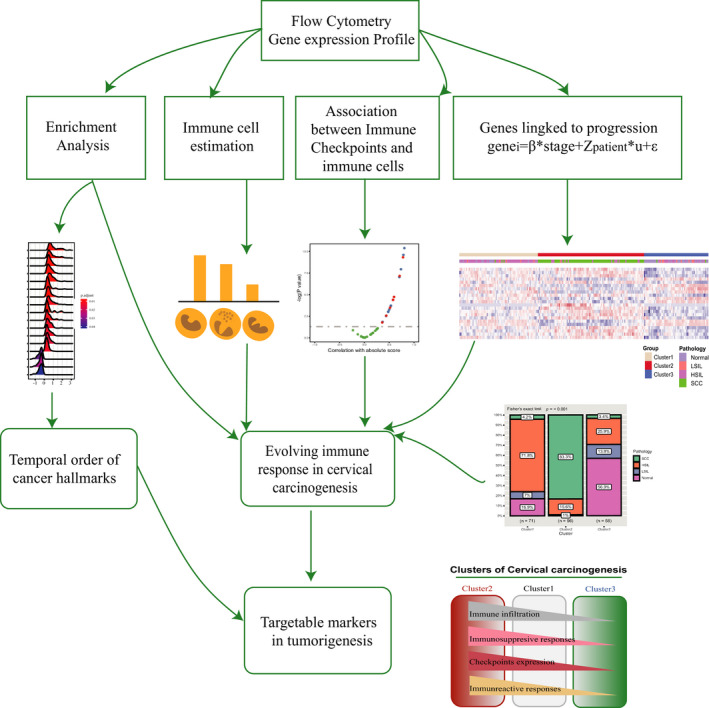
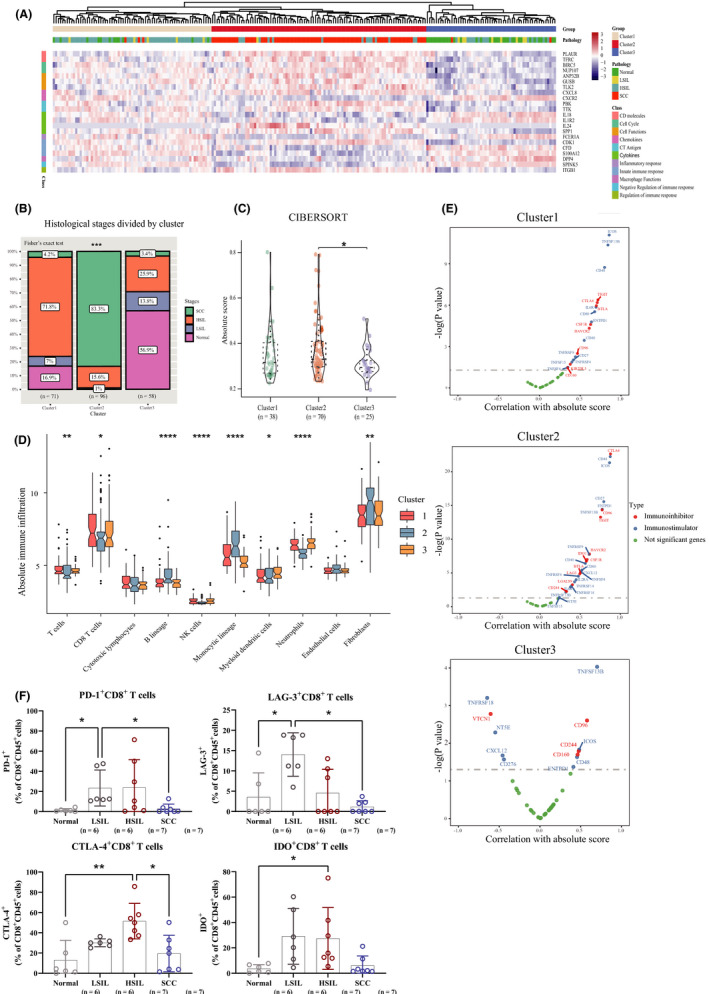
Public gene-expression data and full clinical annotation were searched in Gene Expression Omnibus in the joint analysis of the array-based four eligible cohorts. The infiltrating estimation was quantified using microenvironment cell populations-counter algorithm and absolute-mode CIBERSORT and verified by flow cytometry analysis. An unsupervised classification on immune genes strongly associated with progression, designated by linear mixed-effects regression. We determined immune response and signaling features of the different developmental stages and immune phenotypes by functional annotation and systematically correlated the expression of immune checkpoints with cell-infiltrating characteristics.
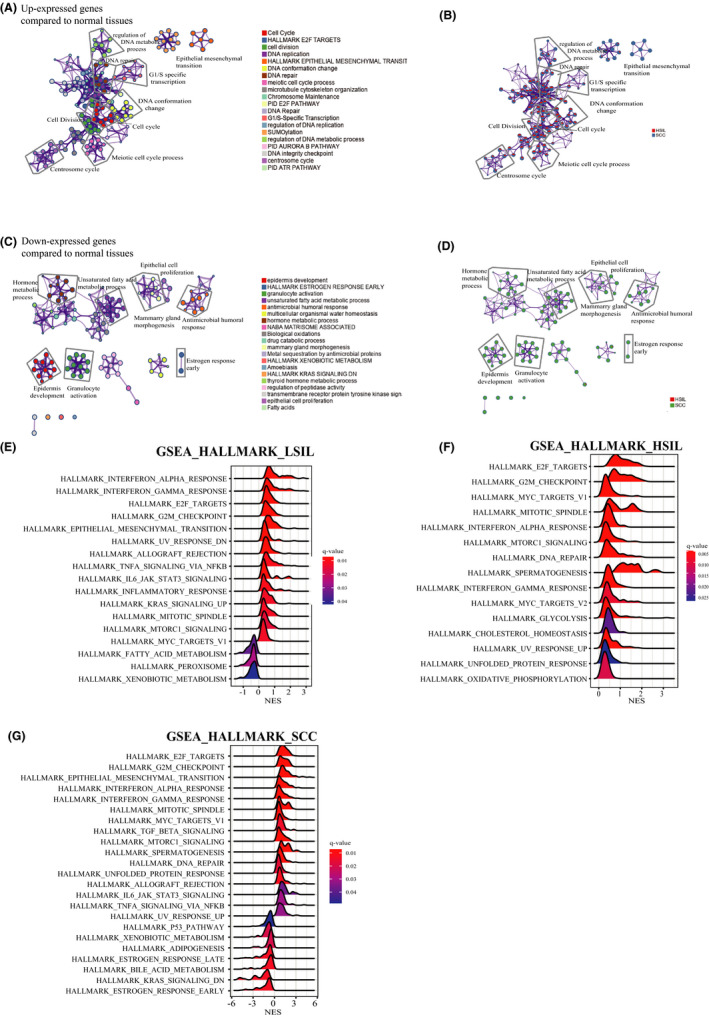
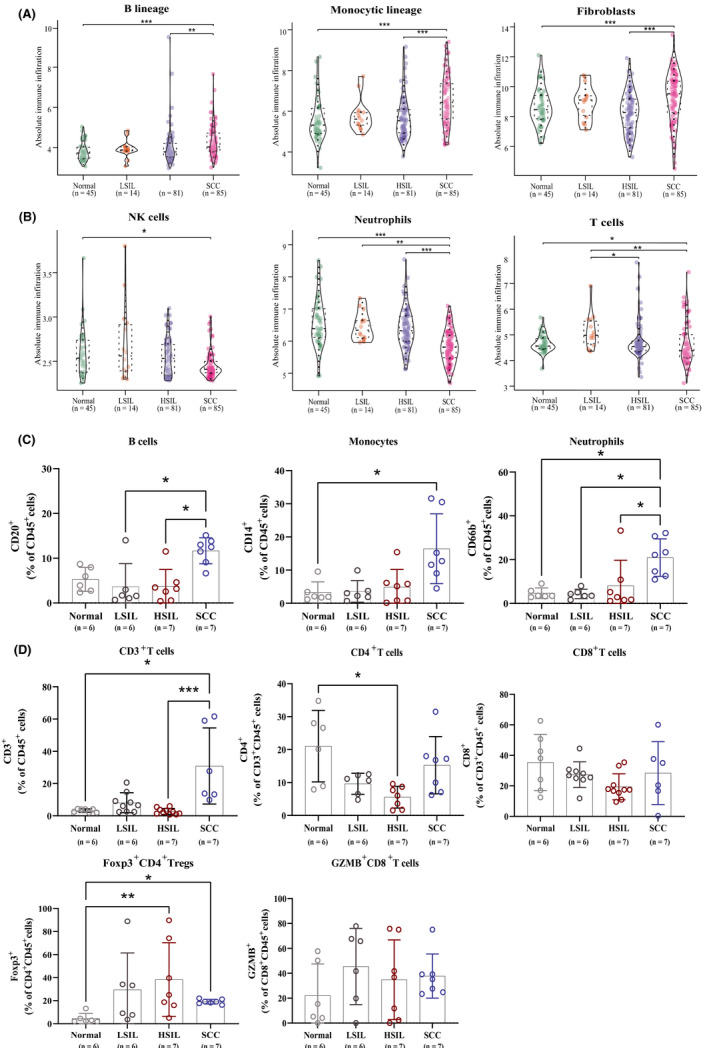
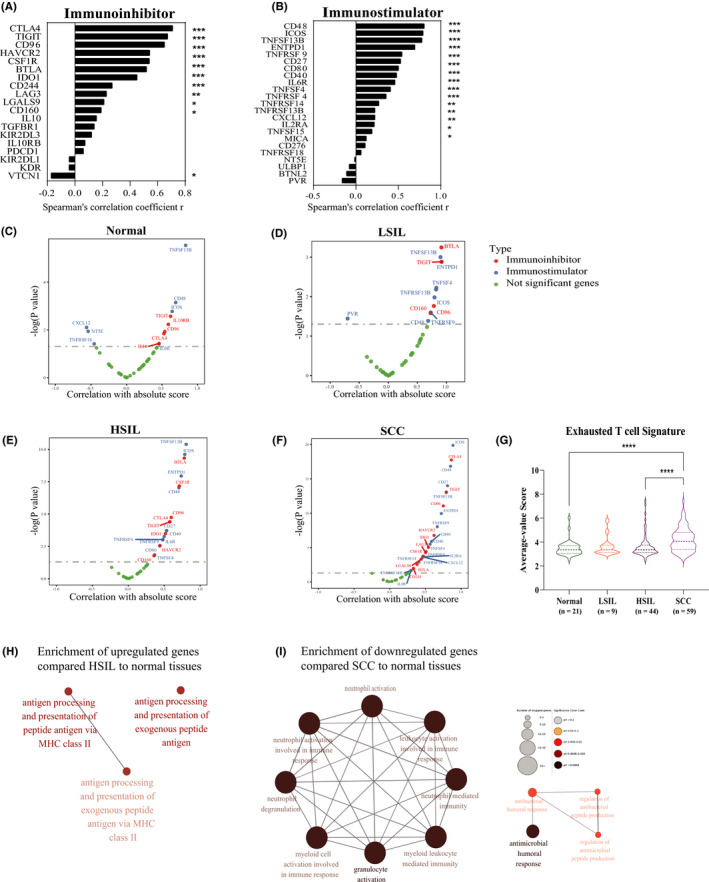
We identified the lesion-intrinsic immunosuppression mechanism was triggered at precancerous stages, such as genome instability and mutation, aerobic glycolysis, activation of proto-oncogene pathways and so forth. Predominant innate and adoptive cells were increasing from normalcy to cancer (B cell, total T cell, regulatory T cells [Tregs], monocytes, neutrophils, and M2-like macrophages) together with the decrease of CD4 T cell and CD8 T cell through the development of cervical cancer. Immune escape initiated on the expression of immunosuppressive molecules from high-grade squamous intraepithelial lesions (HSIL) and culminated in squamous cell carcinoma (SCC). Of note, the expression of immune checkpoints was escalated in the immune-hot and immune-warm phenotype largely encompassed by HSIL and SCC under the stress of both activated and suppressive immune responses.
Immune surveillance is unleashing from low-grade squamous intraepithelial lesions onwards and immune-suppression mechanisms are triggered in HSIL. Thorough knowledge of the immune changing pattern during cervical tumorigenesis contributes to finding the potential therapeutic targets to susceptive patients towards immune checkpoints inhibitors.
解析宫颈癌发生过程中肿瘤内免疫反应的决定因素,有助于加深对疾病的认识,从而改善治疗效果。
在基因表达综合数据库中联合分析了基于阵列的 4 个合格队列的公共基因表达数据和完整的临床注释。使用微环境细胞群计数器算法和绝对模式 CIBERSORT 量化浸润估计值,并通过流式细胞术分析进行验证。通过线性混合效应回归对与进展密切相关的免疫基因进行无监督分类。通过功能注释确定不同发育阶段和免疫表型的免疫反应和信号特征,并系统地将免疫检查点的表达与细胞浸润特征相关联。
我们发现,在癌前阶段,如基因组不稳定性和突变、有氧糖酵解、原癌基因途径的激活等,就触发了病变内在的免疫抑制机制。从正常到癌症,主要的先天和适应性细胞(B 细胞、总 T 细胞、调节性 T 细胞[Tregs]、单核细胞、中性粒细胞和 M2 样巨噬细胞)都在增加,而随着宫颈癌的发展,CD4 T 细胞和 CD8 T 细胞的数量减少。从高级别鳞状上皮内病变(HSIL)开始就启动了免疫逃逸,最终导致鳞状细胞癌(SCC)。值得注意的是,在 HSIL 和 SCC 中,大部分包含在 HSIL 和 SCC 中的免疫热和免疫温表型中,免疫检查点的表达在激活和抑制免疫反应的双重压力下逐渐增加。
免疫监视从低级别鳞状上皮内病变开始释放,而在 HSIL 中触发了免疫抑制机制。深入了解宫颈癌发生过程中的免疫变化模式有助于发现潜在的治疗靶点,使易感患者能够受益于免疫检查点抑制剂。