Department of Neurology, Johns Hopkins University, Baltimore, MD.
Department of Neurology, University of California, San Francisco, San Francisco, CA.
Ann Neurol. 2021 Jun;89(6):1234-1239. doi: 10.1002/ana.26062. Epub 2021 Mar 24.
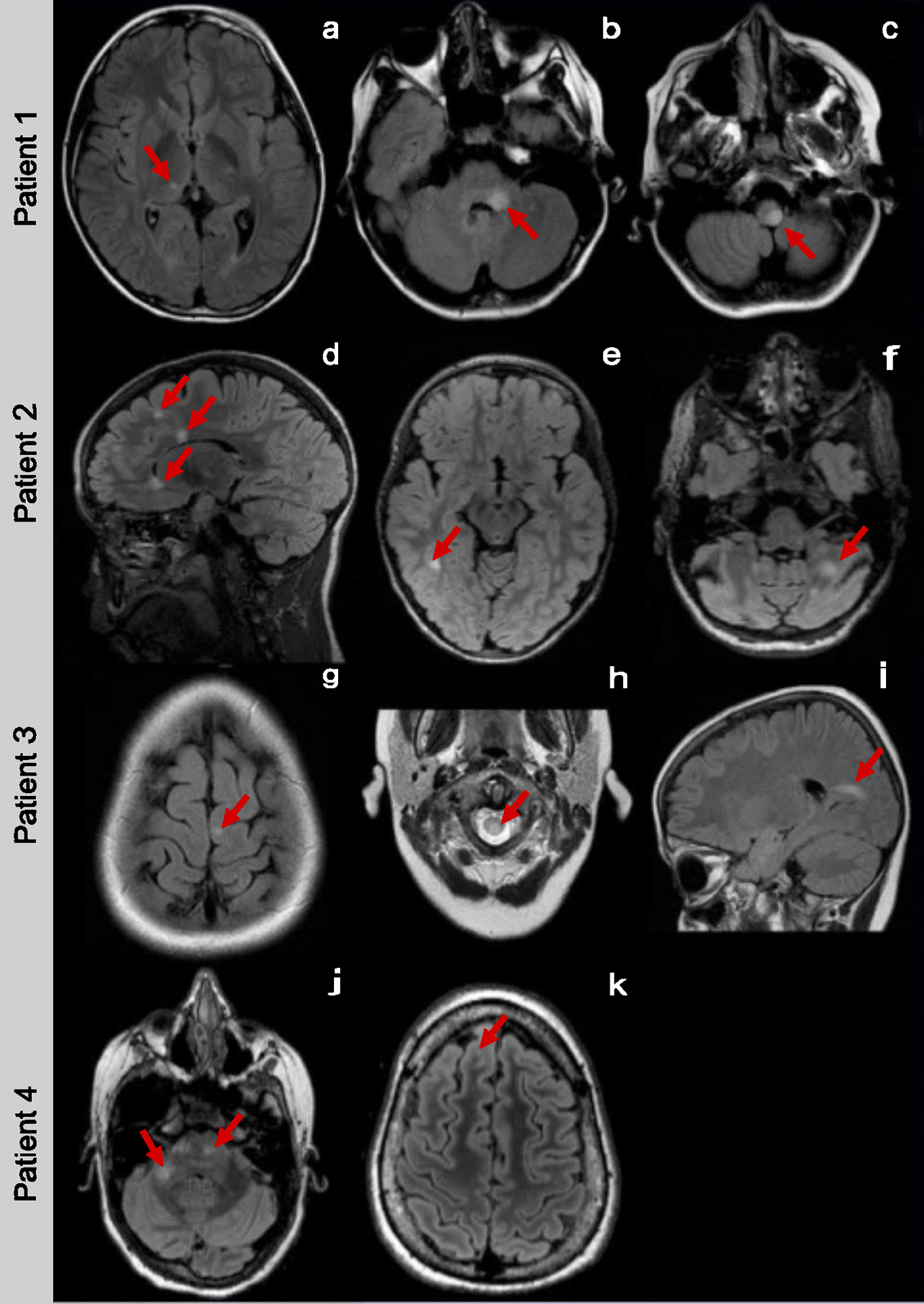
Although Epstein-Barr virus (EBV) is hypothesized to be a prerequisite for multiple sclerosis (MS), up to 15% of children with a diagnosis of MS were reported to be EBV-seronegative. When re-evaluating 25 EBV-seronegative children out of 189 pediatric patients with a diagnosis of clinically isolated syndrome/MS, we found anti-myelin oligodendrocyte glycoprotein (MOG) antibody in 11 of 25 (44%) EBV-seronegative but only 9 of 164 (5.5%, p < 0.001) EBV-seropositive patients. After critical review, MS remained a plausible diagnosis in only 4 of 14 EBV-seronegative/MOG antibody-negative patients. In children with an MS-like presentation, EBV seronegativity should alert clinicians to consider diagnoses other than MS, especially MOG-antibody disease. ANN NEUROL 2021;89:1234-1239.
虽然爱泼斯坦-巴尔病毒(EBV)被假设是多发性硬化症(MS)的前提条件,但据报道,高达 15%的确诊 MS 的儿童 EBV 血清阴性。当重新评估 189 例儿科临床孤立综合征/多发性硬化症患者中的 25 例 EBV 血清阴性患者时,我们发现 25 例 EBV 血清阴性患者中有 11 例(44%)抗髓鞘少突胶质细胞糖蛋白(MOG)抗体阳性,而 164 例 EBV 血清阳性患者中只有 9 例(5.5%,p < 0.001)。经过严格审查,只有 4 例 EBV 血清阴性/MOG 抗体阴性患者仍有可能诊断为 MS。在表现为 MS 样的儿童中,EBV 血清阴性应提醒临床医生考虑除 MS 以外的其他诊断,尤其是 MOG 抗体病。神经病学年鉴 2021;89:1234-1239。