Department of Epidemiology and Biostatistics, School of Public Health, Peking University, Beijing, 100191, China.
Research Center of Clinical Epidemiology, Peking University Third Hospital, Beijing, China.
BMC Public Health. 2021 Mar 11;21(1):481. doi: 10.1186/s12889-021-10537-x.
We aimed to examine the effect of physical activity on different cognitive domains among patients with diabetes.
We used two waves of data from the Chinese Health and Retirement Longitudinal Study (CHARLS, 2013-2015), a nationally representative dataset of Chinese population aged over 45. Total physical activity scores were calculated based on the International Physical Activity Questionnaire (IPAQ). Executive function and episodic memory were used as measures of cognitive function. We conducted lagged dependent variable models to explore the association between physical activity and cognitive function in full sample as well as two different age groups (45-65, ≥65).
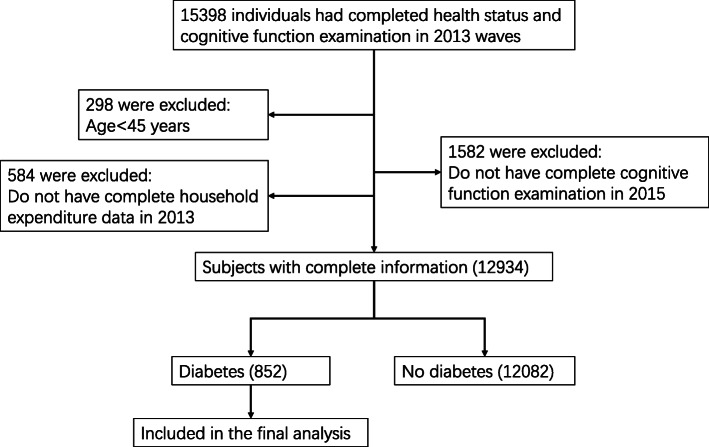
862 diabetic patients were included. We found that diabetic participants who had greater level of physical activity at baseline were associated with better episodic memory function in 2 years (p < 0.05). Moreover, physical activity was significantly associated with less decline in episodic memory in fully adjusted models, and the associations were stronger among patients aged 45-65 years (p < 0.05). No statistically significant association was found between physical activity and executive function in all age groups.
Physical activity may prevent some of the potential decline in episodic memory in diabetic patients. Clinicians and public health departments should strengthen the promotion of physical activity and develop early screening tools among diabetic participants to prevent the progression of cognitive impairment.
我们旨在研究体力活动对糖尿病患者不同认知领域的影响。
我们使用了中国健康与退休纵向研究(CHARLS,2013-2015 年)的两波数据,这是一个具有全国代表性的 45 岁以上中国人群数据集。总体力活动评分是根据国际体力活动问卷(IPAQ)计算的。执行功能和情景记忆被用作认知功能的衡量标准。我们进行了滞后因变量模型,以探讨全样本以及两个不同年龄组(45-65 岁,≥65 岁)中体力活动与认知功能之间的关系。
共纳入 862 例糖尿病患者。我们发现,基线时体力活动水平较高的糖尿病患者在 2 年内与情景记忆功能的改善相关(p<0.05)。此外,在完全调整的模型中,体力活动与情景记忆的衰退显著相关,且在 45-65 岁的患者中相关性更强(p<0.05)。在所有年龄组中,体力活动与执行功能之间均无统计学显著关联。
体力活动可能有助于预防糖尿病患者情景记忆的部分潜在下降。临床医生和公共卫生部门应加强对体力活动的宣传,并为糖尿病患者开发早期筛查工具,以预防认知障碍的进展。