Program in Neurogenetics, Department of Neurology, David Geffen School of Medicine, University of California, Los Angeles, Los Angeles, CA, USA.
Center for Autism Research and Treatment, Semel Institute, David Geffen School of Medicine, University of California, Los Angeles, Los Angeles, CA, USA.
Sci Rep. 2021 Mar 11;11(1):5748. doi: 10.1038/s41598-021-85061-4.
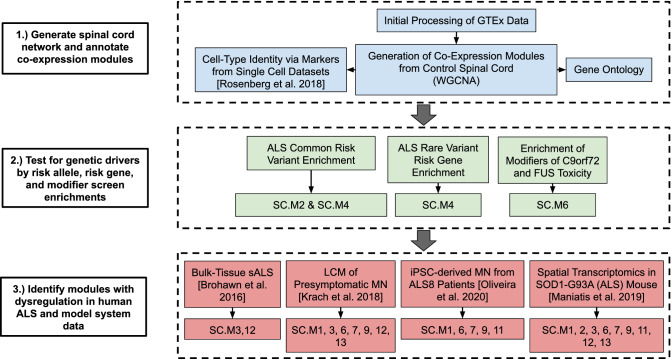
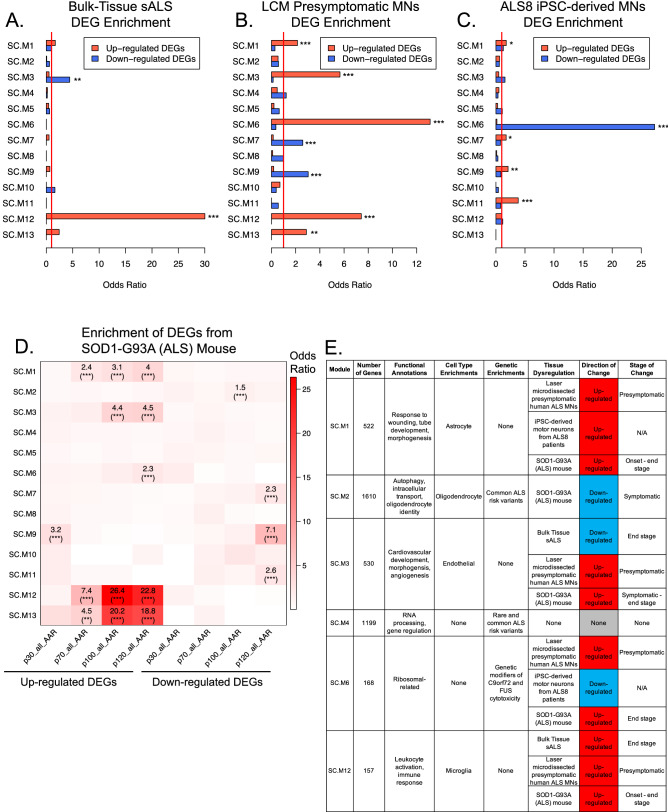
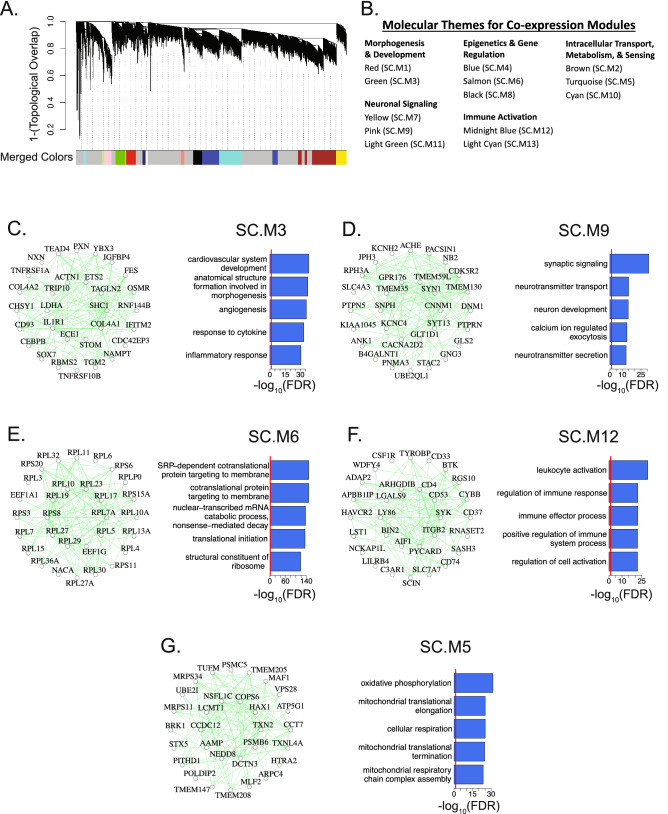
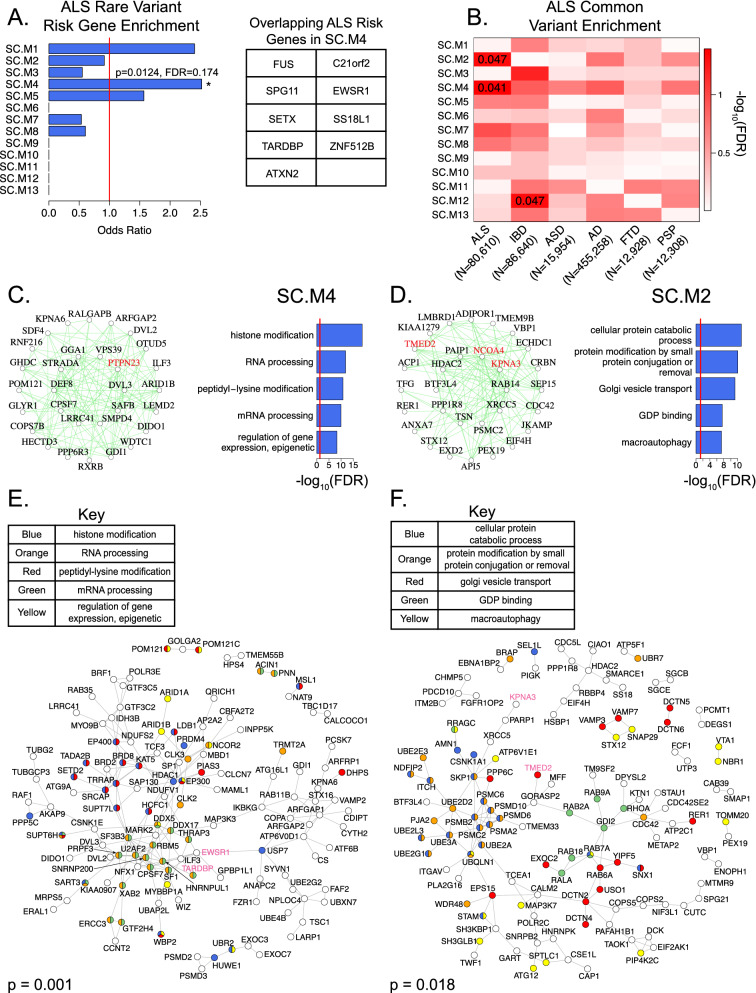
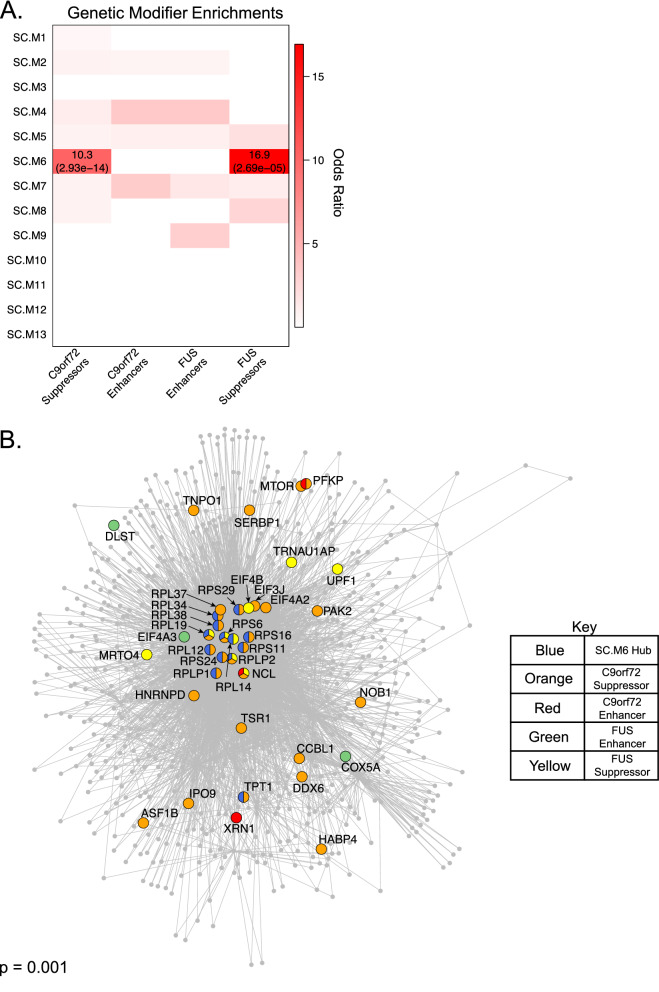
Amyotrophic lateral sclerosis (ALS) is a neurodegenerative disease defined by motor neuron (MN) loss. Multiple genetic risk factors have been identified, implicating RNA and protein metabolism and intracellular transport, among other biological mechanisms. To achieve a systems-level understanding of the mechanisms governing ALS pathophysiology, we built gene co-expression networks using RNA-sequencing data from control human spinal cord samples, identifying 13 gene co-expression modules, each of which represents a distinct biological process or cell type. Analysis of four RNA-seq datasets from a range of ALS disease-associated contexts reveal dysregulation in numerous modules related to ribosomal function, wound response, and leukocyte activation, implicating astrocytes, oligodendrocytes, endothelia, and microglia in ALS pathophysiology. To identify potentially causal processes, we partitioned heritability across the genome, finding that ALS common genetic risk is enriched within two specific modules, SC.M4, representing genes related to RNA processing and gene regulation, and SC.M2, representing genes related to intracellular transport and autophagy and enriched in oligodendrocyte markers. Top hub genes of this latter module include ALS-implicated risk genes such as KPNA3, TMED2, and NCOA4, the latter of which regulates ferritin autophagy, implicating this process in ALS pathophysiology. These unbiased, genome-wide analyses confirm the utility of a systems approach to understanding the causes and drivers of ALS.
肌萎缩侧索硬化症(ALS)是一种由运动神经元(MN)丧失定义的神经退行性疾病。已经确定了多个遗传风险因素,涉及 RNA 和蛋白质代谢以及细胞内运输等其他生物学机制。为了实现对 ALS 病理生理学相关机制的系统水平理解,我们使用来自对照人体脊髓样本的 RNA-seq 数据构建了基因共表达网络,确定了 13 个基因共表达模块,每个模块代表一个不同的生物学过程或细胞类型。对来自一系列与 ALS 疾病相关的 RNA-seq 数据集的分析揭示了与核糖体功能、伤口反应和白细胞激活相关的众多模块的失调,这表明星形胶质细胞、少突胶质细胞、内皮细胞和小胶质细胞在 ALS 病理生理学中起作用。为了确定潜在的因果过程,我们对基因组内的遗传力进行了划分,发现 ALS 常见的遗传风险富集在两个特定的模块中,即 SC.M4,代表与 RNA 处理和基因调控相关的基因,以及 SC.M2,代表与细胞内运输和自噬相关的基因,并在少突胶质细胞标志物中富集。后一个模块的顶级枢纽基因包括 ALS 相关风险基因,如 KPNA3、TMED2 和 NCOA4,后者调节铁蛋白自噬,这表明该过程与 ALS 病理生理学有关。这些无偏、全基因组分析证实了系统方法在理解 ALS 的原因和驱动因素方面的有效性。