Al Shabasy Sahar A, Abbassi Maggie M, Finch Aureliano Paolo, Baines Darrin, Farid Samar F
Department of Clinical Pharmacy, Faculty of Pharmacy, Cairo University, Kasr El-Aini St., Cairo, 11562, Egypt.
EuroQol Group Office, Rotterdam, The Netherlands.
Pharmacoeconomics. 2021 May;39(5):549-561. doi: 10.1007/s40273-021-01002-z. Epub 2021 Mar 12.
No value sets exist for either the EQ-5D-3L or the EQ-5D-5L in Egypt, despite local pharmacoeconomic guidelines recommending the use of the EQ-5D to derive utility. Most published Egyptian economic evaluation studies have used utility values from other published studies and systematic reviews.
Our objective was to develop an Egyptian EQ-5D-5L value set using the international EuroQol standardized protocol (EQ-VT-2.1).
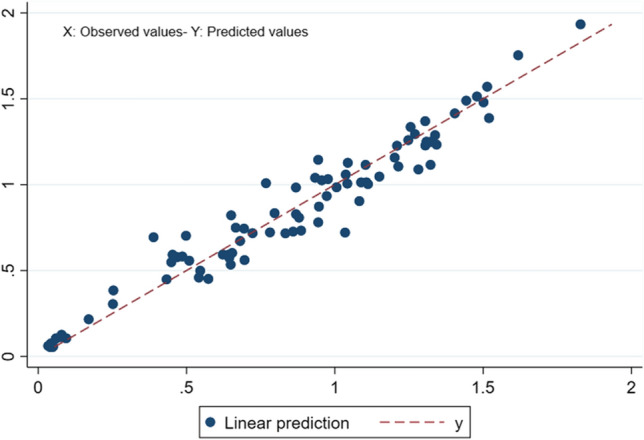
Adult Egyptian participants were recruited from public places using multi-stratified quota sampling based on age, sex, and geographical distribution. Two elicitation techniques were applied: the composite time trade-off (cTTO) and discrete-choice experiments (DCEs). Before actual data collection, interviewers' performance was assessed in a pilot phase. Data were modelled using generalized least square, Tobit, heteroskedastic, logit, and hybrid models, and the best fitting model was selected based on the value range between observed and predicted values, logical consistency of the parameters, significance level, and prediction accuracy.
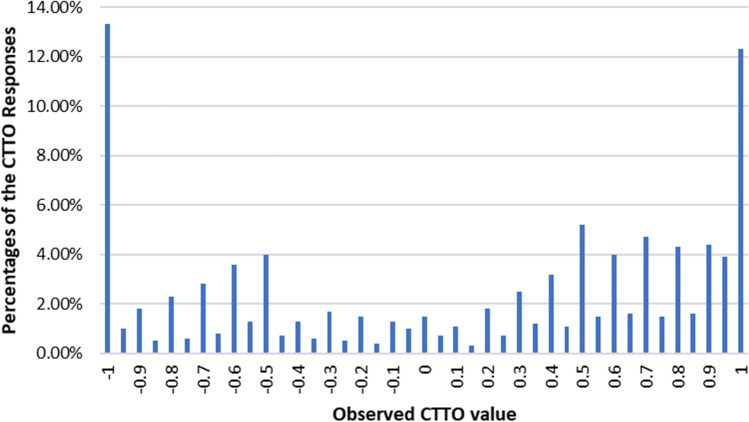
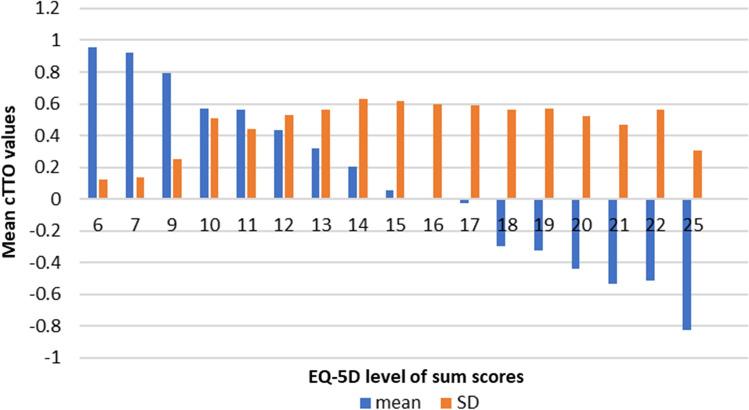
A total of 1378 interviews were conducted, of which 188 were excluded because they were incomplete or did not comply with protocol, 216 were pilot interviews, and 974 were included in the final analysis. The heteroskedastic model (model 4) based on the cTTO data was selected as the preferred model to generate the value set. Values ranged from - 0.93 for the worst health state (55555) to 1 for full health (11111), with 1136 (36.3%) of all predicted health states being worse than dead. Mobility had the largest impact on health state preference values.
This is the first value set for the EQ-5D-5L based on social preferences obtained from a nationally representative sample in Egypt or any Arabic-speaking country. The value set can be used as a scoring system for economic evaluations and to improve the quality of health technology assessment in the Egyptian healthcare system.
尽管当地药物经济学指南建议使用EQ-5D来得出效用值,但埃及既没有EQ-5D-3L也没有EQ-5D-5L的价值集。大多数已发表的埃及经济评估研究都使用了其他已发表研究和系统评价中的效用值。
我们的目的是使用国际EuroQol标准化方案(EQ-VT-2.1)制定埃及EQ-5D-5L价值集。
根据年龄、性别和地理分布,采用多分层配额抽样从公共场所招募成年埃及参与者。应用了两种诱导技术:复合时间权衡法(cTTO)和离散选择实验(DCE)。在实际数据收集之前,在试点阶段评估了访谈者的表现。使用广义最小二乘法、托比特法、异方差法、逻辑回归法和混合模型对数据进行建模,并根据观察值和预测值之间的取值范围、参数的逻辑一致性、显著性水平和预测准确性选择最佳拟合模型。
共进行了1378次访谈,其中188次因不完整或不符合方案而被排除,216次为试点访谈,974次纳入最终分析。基于cTTO数据的异方差模型(模型4)被选为生成价值集的首选模型。值的范围从最差健康状态(55555)的-0.93到完全健康(11111)的1,所有预测健康状态中有1136个(36.3%)比死亡更差。行动能力对健康状态偏好值的影响最大。
这是基于从埃及或任何阿拉伯语国家具有全国代表性的样本中获得的社会偏好得出的首个EQ-5D-5L价值集。该价值集可作为经济评估的评分系统,并用于提高埃及医疗保健系统中卫生技术评估的质量。