van der Zee Jens, Lau Alvaro, Shenkin Alexander
Laboratory of Geo-Information Science and Remote Sensing, Wageningen University & Research, Wageningen, the Netherlands.
Environmental Change Institute, School of Geography and the Environment, University of Oxford, Oxford, UK.
Ann Bot. 2021 Oct 27;128(6):725-736. doi: 10.1093/aob/mcab035.
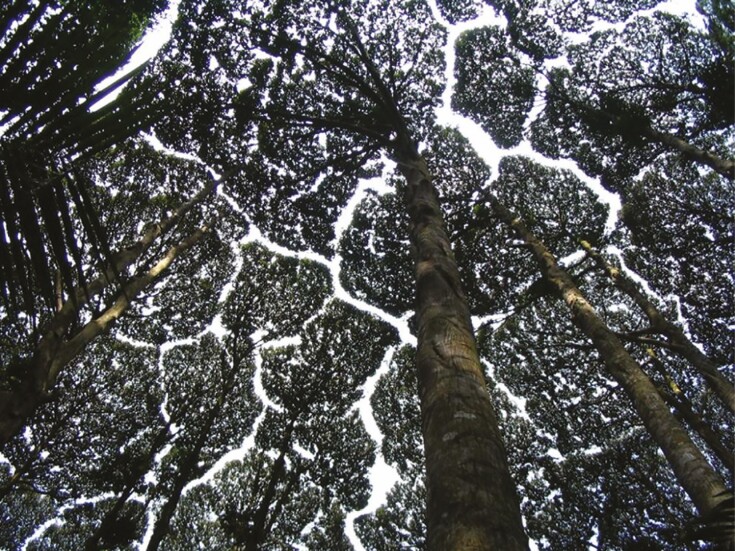
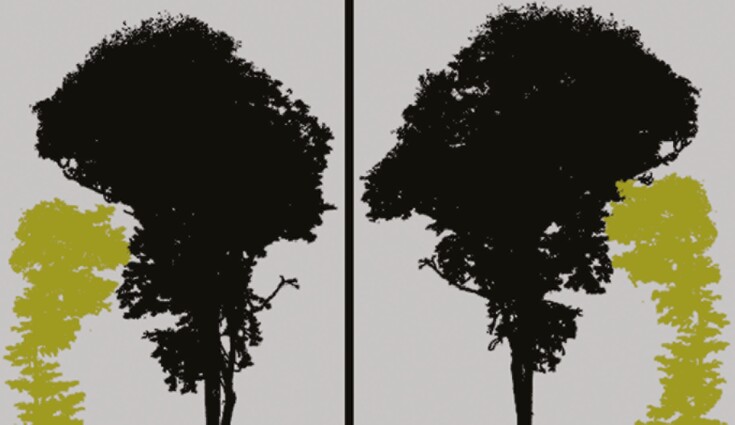
Crown shyness describes the phenomenon whereby tree crowns avoid growing into each other, producing a puzzle-like pattern of complementary tree crowns in the canopy. Previous studies found that tree slenderness plays a role in the development of crown shyness. Attempts to quantify crown shyness have largely been confined to 2-D approaches. This study aimed to expand the current set of metrics for crown shyness by quantifying the characteristic of 3-D surface complementarity between trees displaying crown shyness, using LiDAR-derived tree point clouds. Subsequently, the relationship between crown surface complementarity and slenderness of trees was assessed.
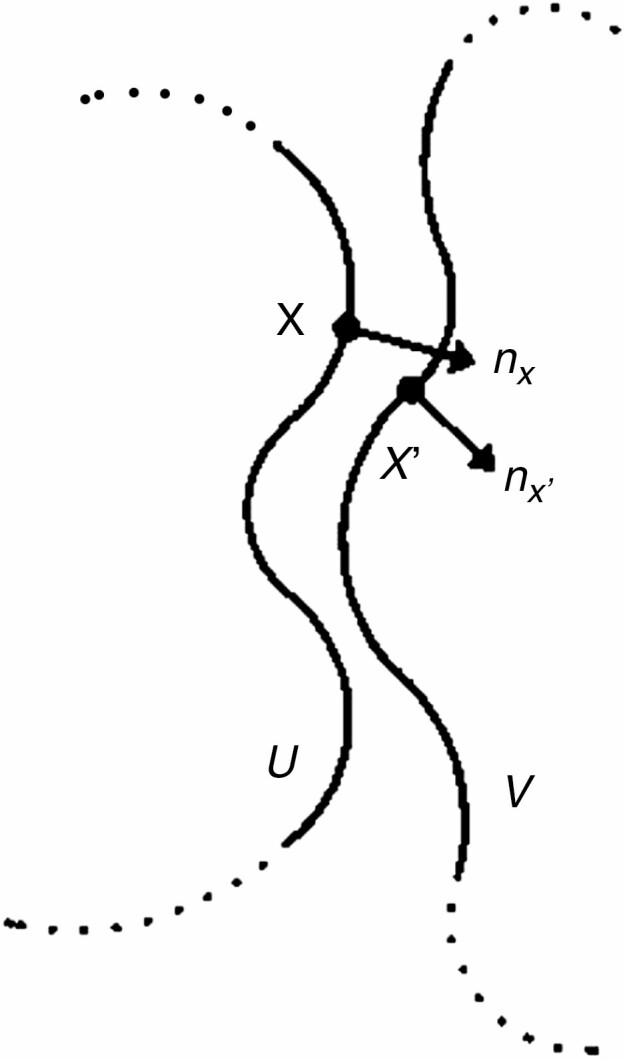
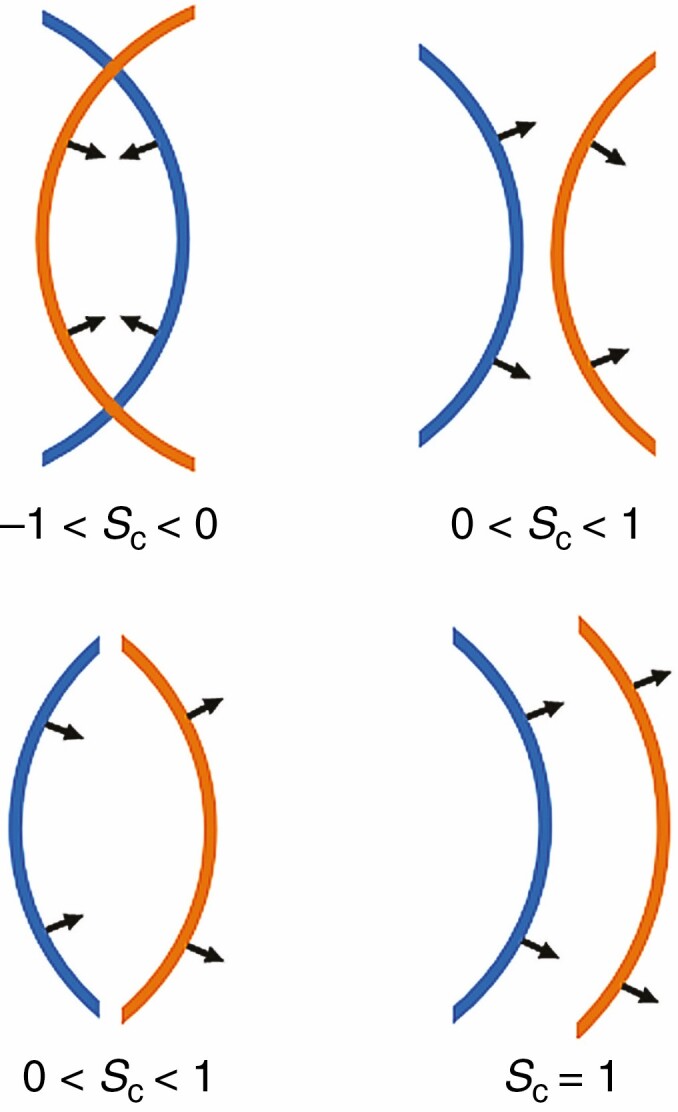
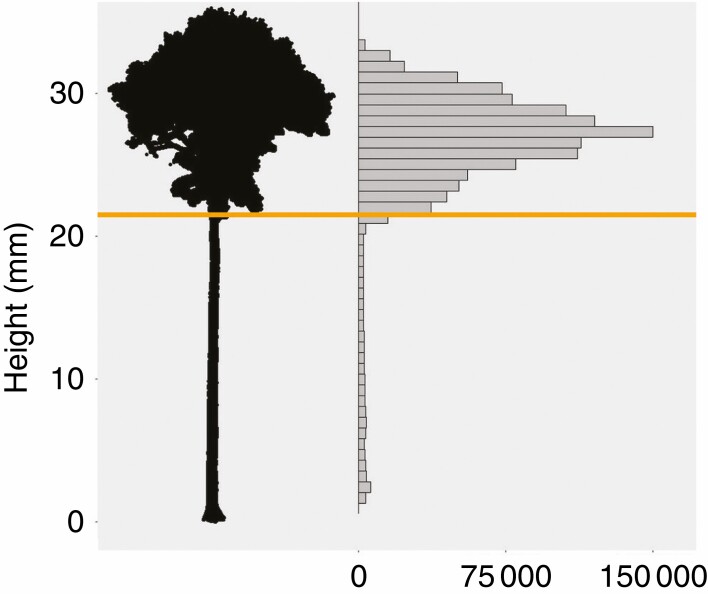
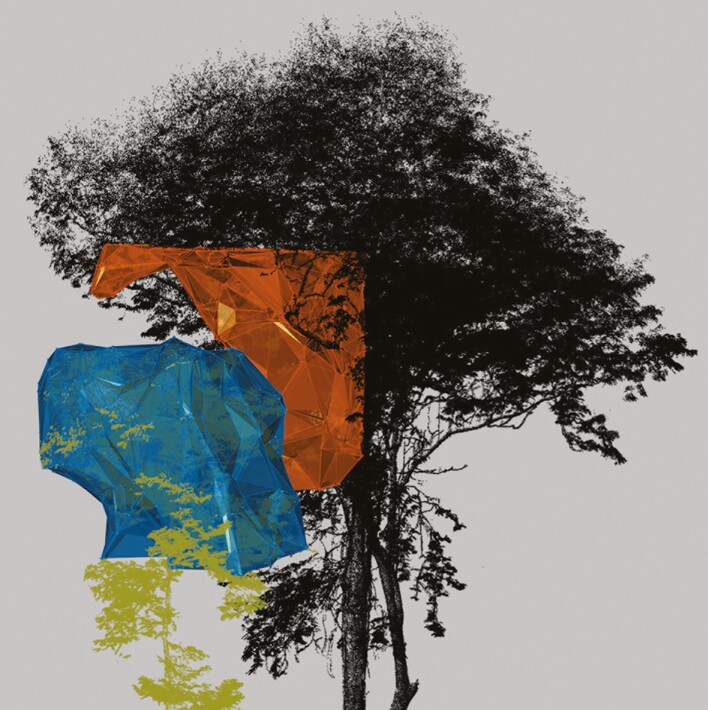
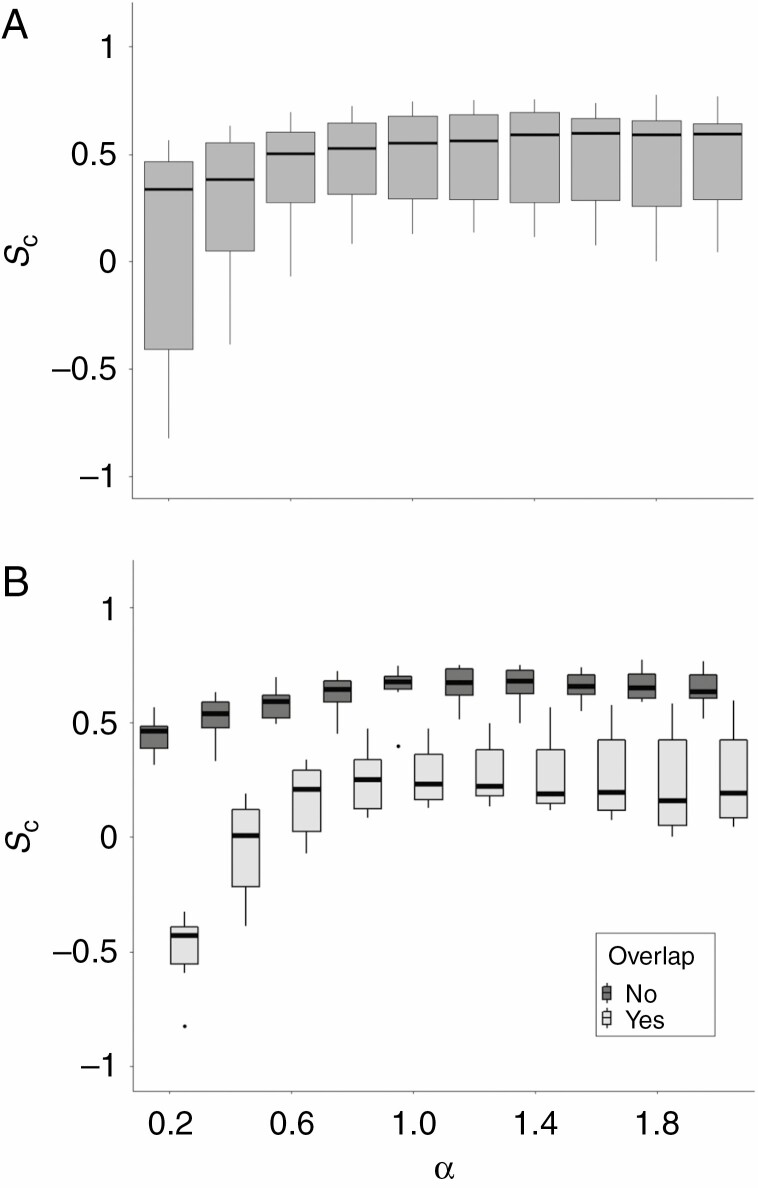
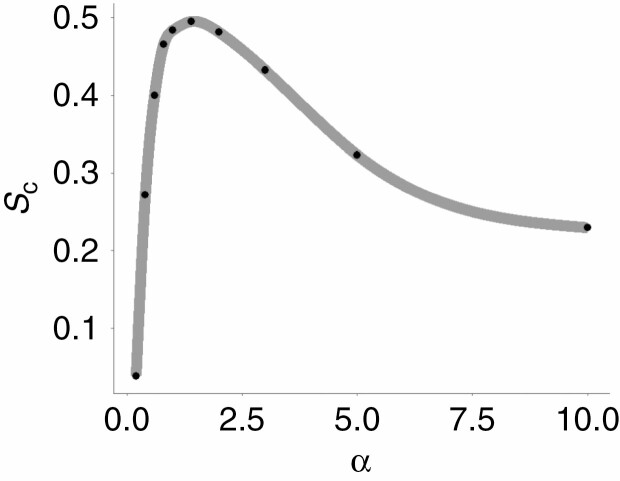
Fourteen trees were scanned using a laser scanning device. Individual tree points clouds were extracted semi-automatically and manually corrected where needed. A metric that quantifies the surface complementarity (Sc) of a pair of protein molecules is applied to point clouds of pairs of adjacent trees. Then 3-D tree crown surfaces were generated from point clouds by computing their α shapes.
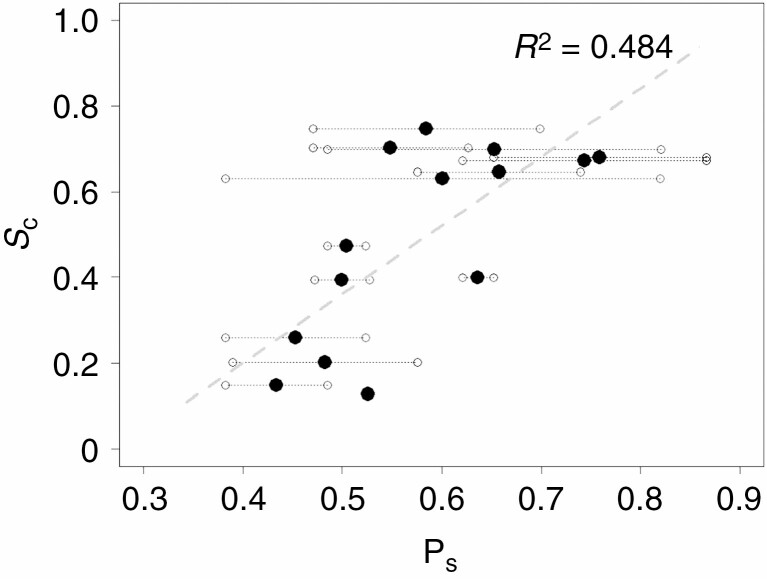
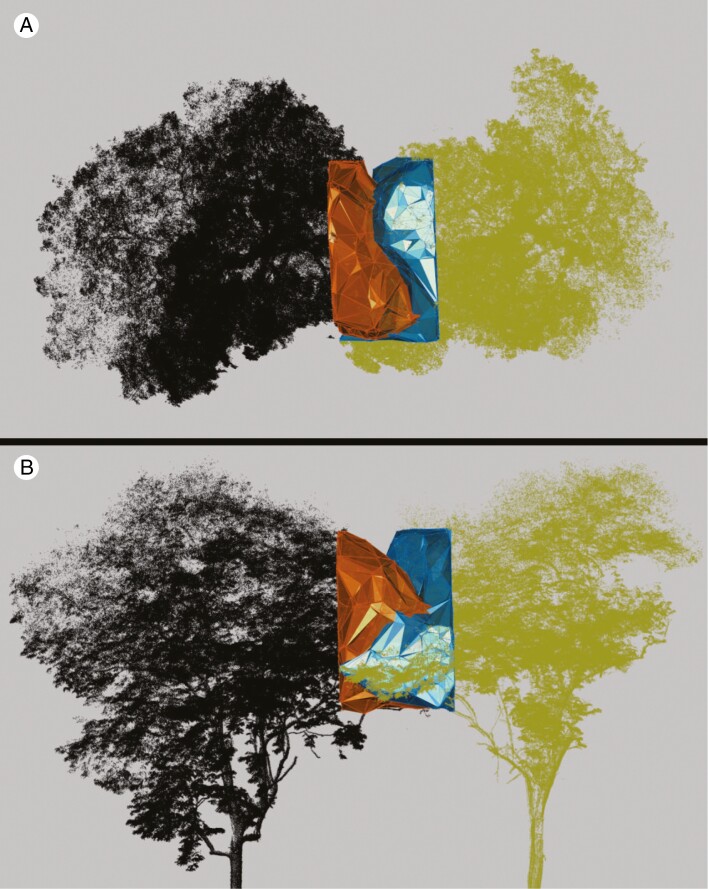
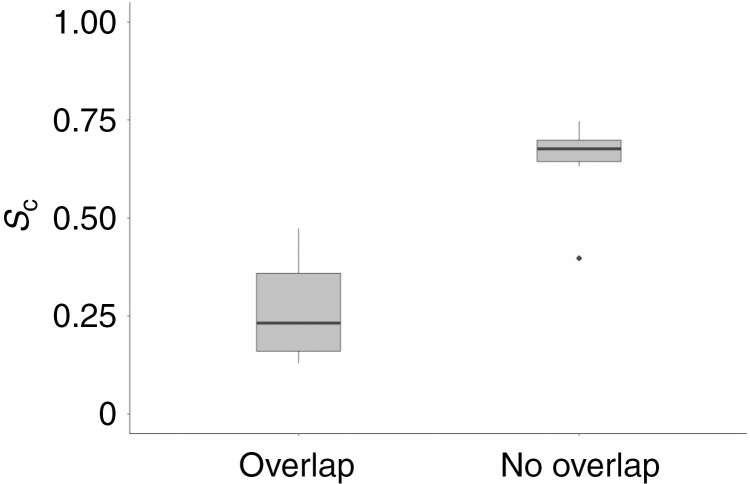
Tree pairs that were visually determined to have overlapping crowns scored significantly lower Sc values than pairs that did not overlap (n = 14, P < 0.01). Furthermore, average slenderness of pairs of trees correlated positively with their Sc score (R2 = 0.484, P < 0.01), showing agreement with previous studies on crown shyness.
The characteristic of crown surface complementarity present in trees displaying crown shyness was succesfully quantified using a 3-D surface complementarity metric adopted from molecular biology. Crown surface complementarity showed a positive relationship to tree slenderness, similar to other metrics used for measuring crown shyness. The 3-D metric developed in this study revealed how trees adapt the shape of their crowns to those of adjacent trees and how this is linked to the slenderness of the trees.
树冠羞避描述的是树冠避免相互生长,从而在树冠层形成类似拼图的互补树冠模式的现象。此前的研究发现树木的细长程度在树冠羞避的形成中起作用。量化树冠羞避的尝试大多局限于二维方法。本研究旨在通过使用激光雷达生成的树木点云,量化表现出树冠羞避的树木之间三维表面互补性的特征,从而扩展当前用于树冠羞避的指标集。随后,评估树冠表面互补性与树木细长程度之间的关系。
使用激光扫描设备对14棵树进行扫描。半自动提取单棵树的点云,并在需要时进行手动校正。将一种量化一对蛋白质分子表面互补性(Sc)的指标应用于相邻树对的点云。然后通过计算其α形状从点云生成三维树冠表面。
视觉上确定树冠有重叠的树对比没有重叠的树对Sc值显著更低(n = 14,P < 0.01)。此外,树对的平均细长程度与其Sc得分呈正相关(R2 = 0.484,P < 0.01),这与之前关于树冠羞避的研究结果一致。
利用从分子生物学采用的三维表面互补性指标成功量化了表现出树冠羞避的树木中树冠表面互补性的特征。树冠表面互补性与树木细长程度呈正相关,类似于用于测量树冠羞避的其他指标。本研究中开发的三维指标揭示了树木如何使它们的树冠形状适应相邻树木的形状,以及这如何与树木的细长程度相关联。