Sucedaram Yamuna, Johns Edward James, Husain Ruby, Abdul Sattar Munavvar, H Abdulla Mohammed, Nelli Giribabu, Rahim Nur Syahrina, Khalilpourfarshbafi Manizheh, Abdullah Nor Azizan
Department of Pharmacology, Faculty of Medicine, Universiti Malaya, Kuala Lumpur, 50603, Malaysia.
Department of Physiology, University College Cork, Cork, T12 K8AF, Ireland.
J Inflamm Res. 2021 Mar 5;14:689-710. doi: 10.2147/JIR.S299083. eCollection 2021.
We hypothesized that low estrogen levels aggravate obesity-related complications. Diet-induced obesity can cause distinct pathologies, including impaired glucose tolerance, inflammation, and organ injury that leads to fatty liver and chronic kidney diseases. To test this hypothesis, ovariectomized (OVX) rats were fed a high-fat style diet (HFSD), and we examined structural changes and inflammatory response in the kidney and liver.
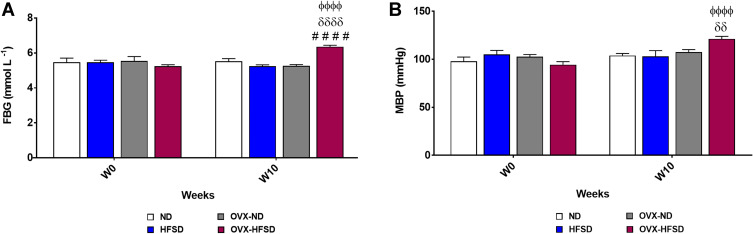
Sprague-Dawley female rats were ovariectomized or sham-operated and divided into four groups: sham-operated rats fed a normal diet (ND); ovariectomized rats fed a normal diet (OVX-ND); sham-operated rats fed a HFSD; ovariectomized rats fed a high-fat style diet (OVX-HFSD). Mean blood pressure and fasting blood glucose were measured on weeks 0 and 10. The rats were sacrificed 10 weeks after initiation of ND or HFSD, the kidney and liver were harvested for histological, immunohistochemical and immunofluorescence studies.
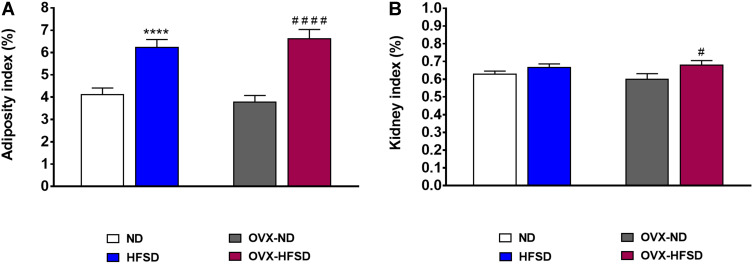
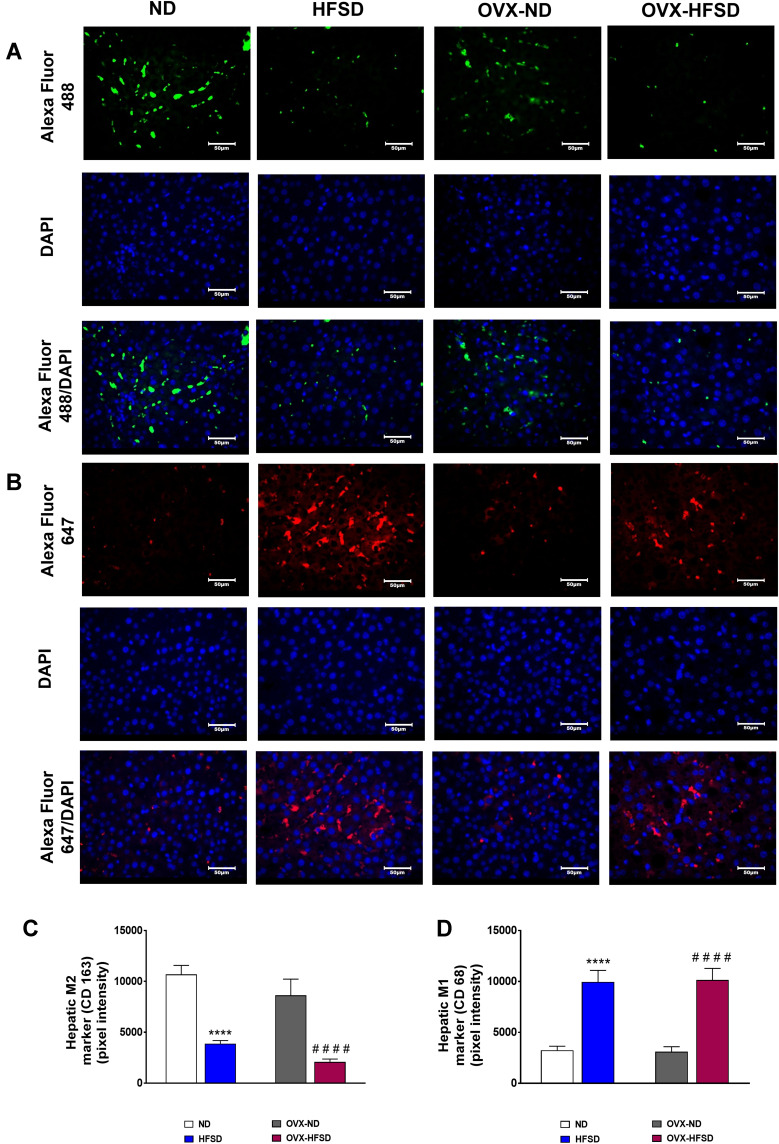
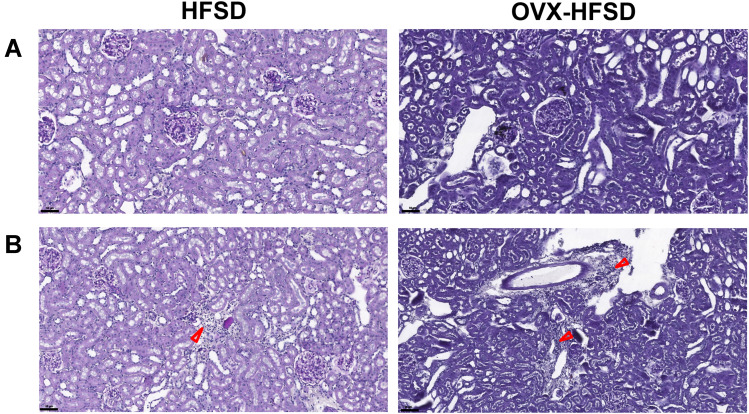
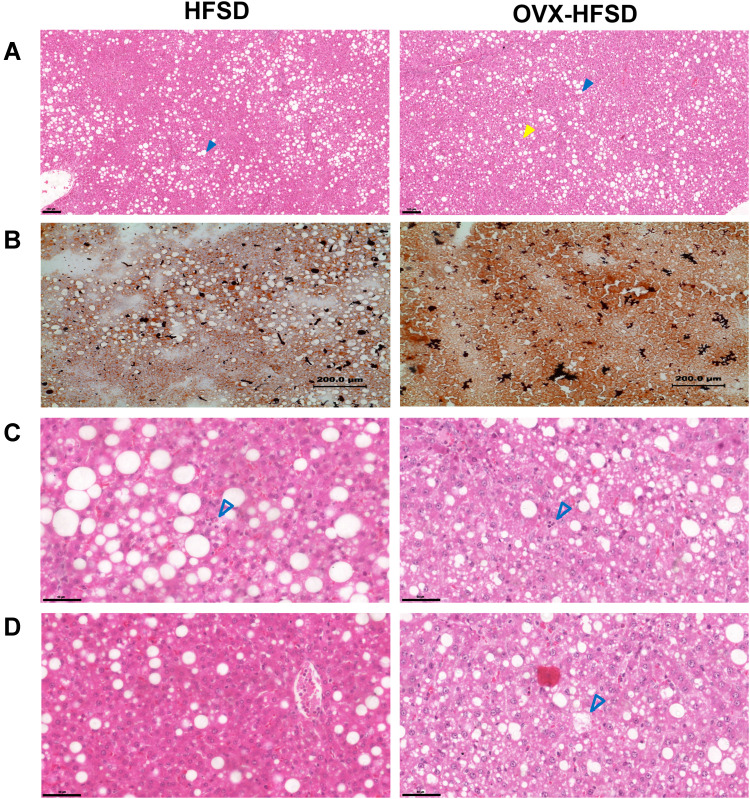
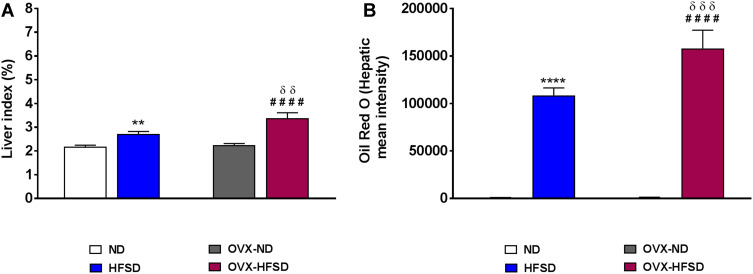
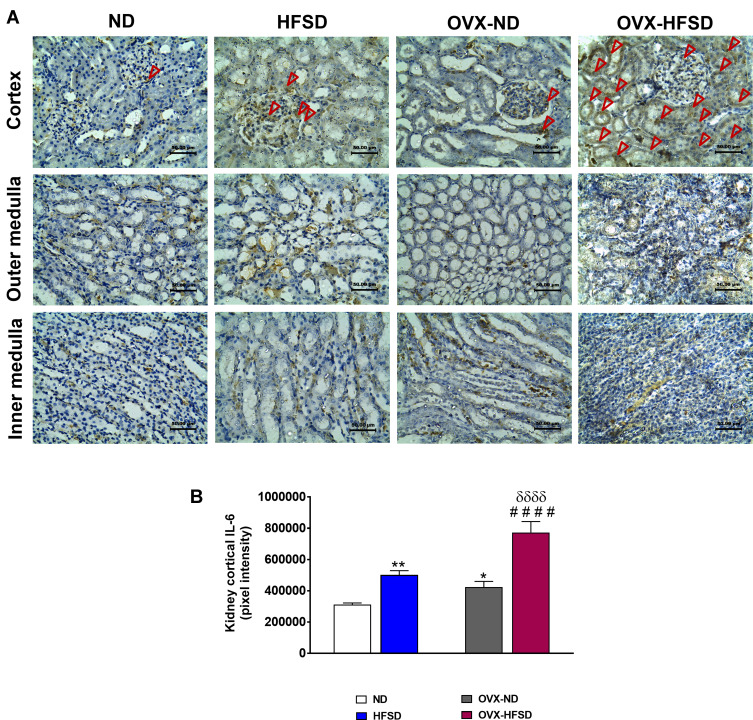
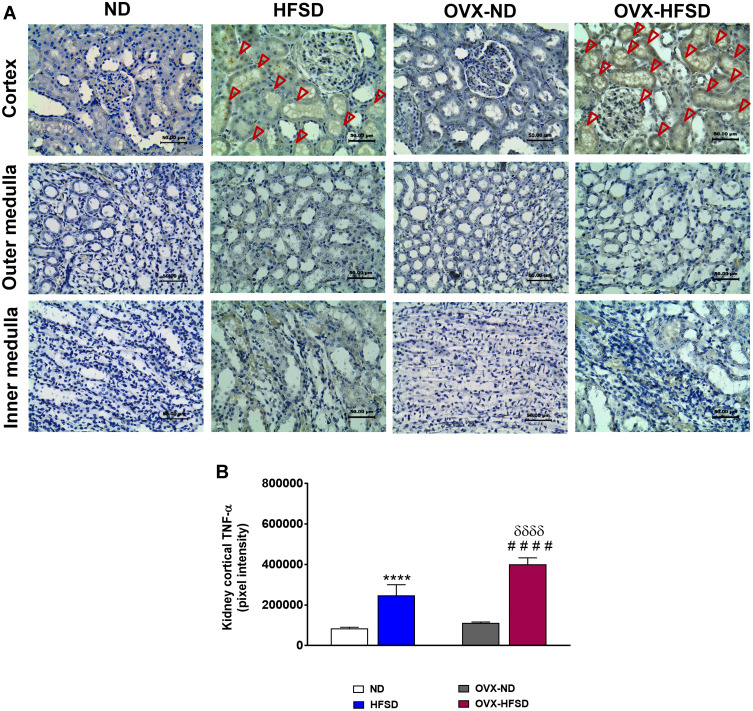
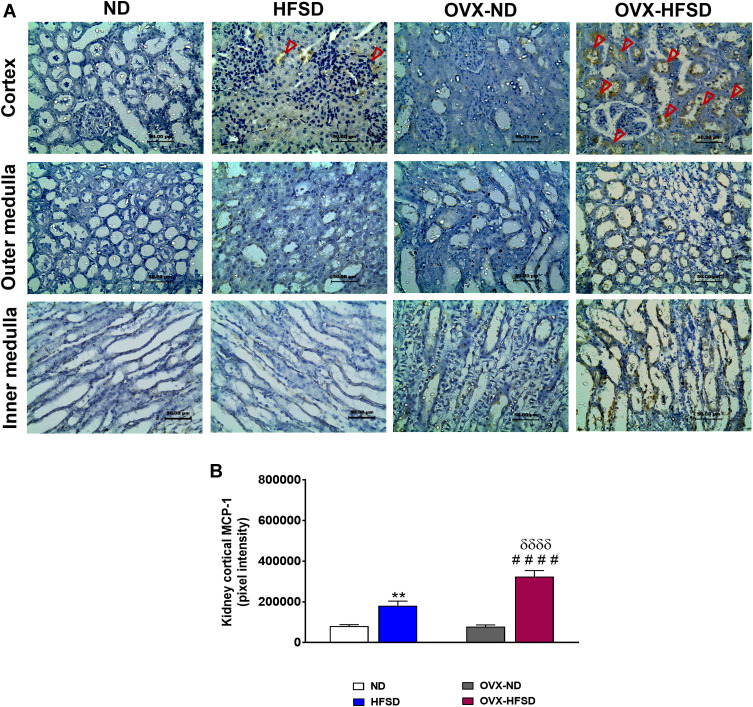
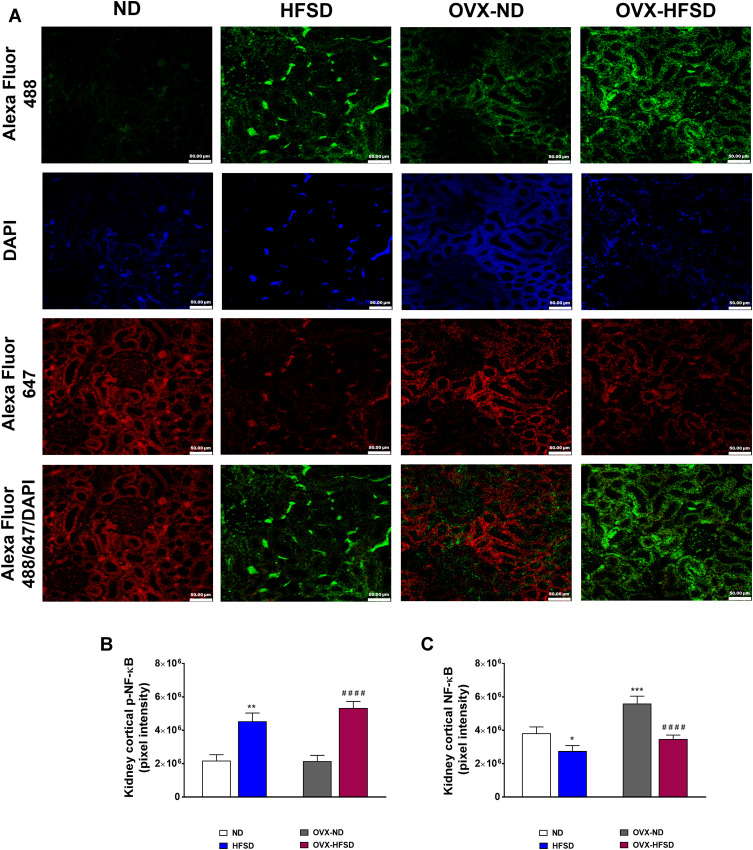
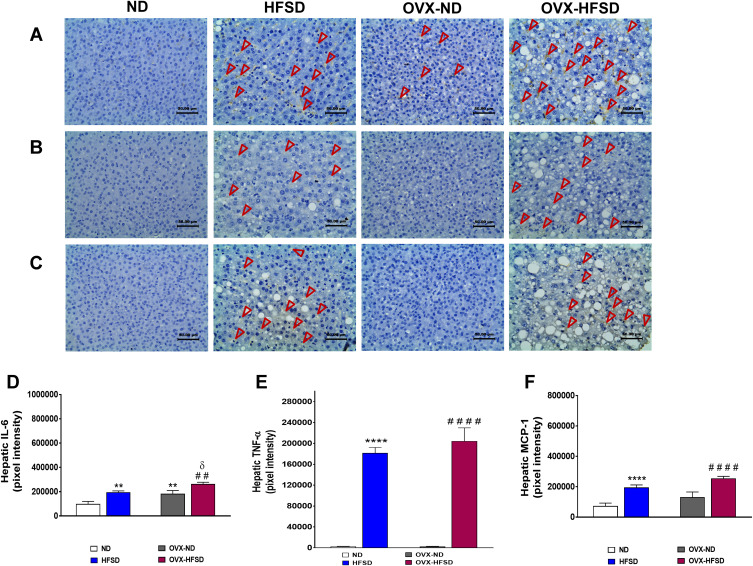
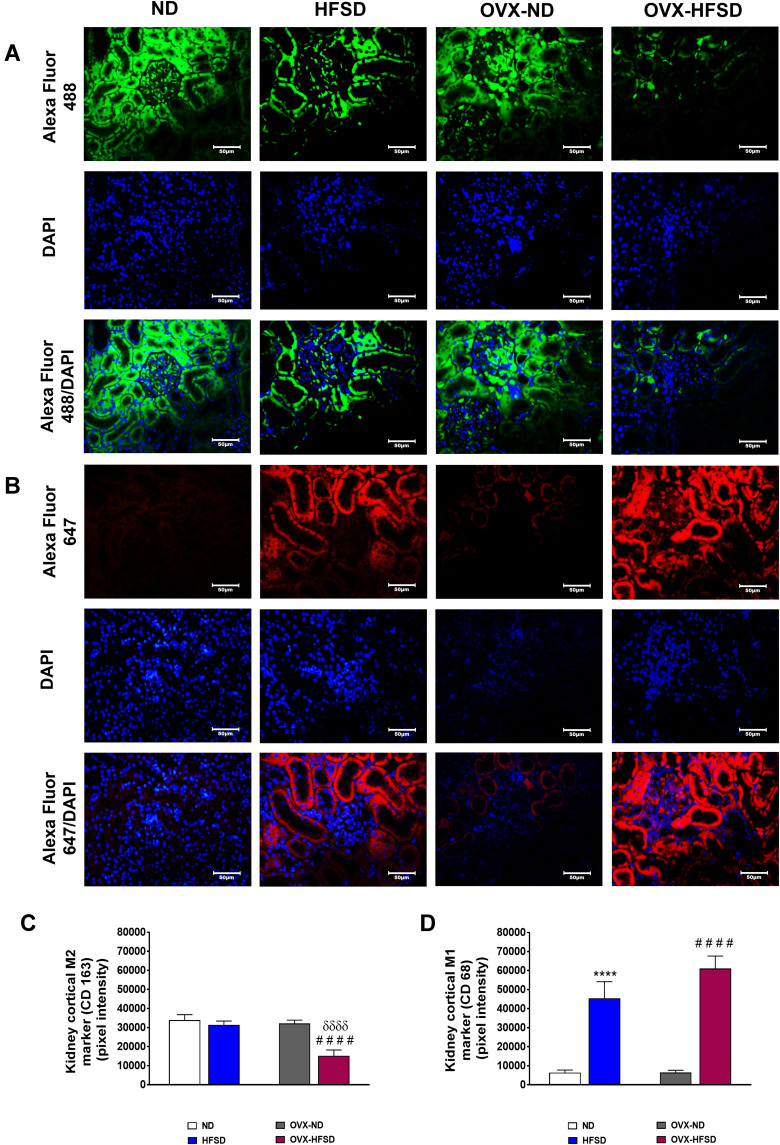
HFSD-fed rats presented a significantly greater adiposity index compared to their ND counterparts. Liver index, fasting blood glucose and mean blood pressure was increased in OVX-HFSD rats compared to HFSD rats at study terminal. Histological and morphometric studies showed focal interstitial mononuclear cell infiltration in the kidney of HFSD rats with mesangial expansion being greater in the OVX-HFSD rats. Both HFSD fed groups showed increased expressions of renal inflammatory markers, namely TNF-alpha, IL-6 and MCP-1, and infiltrating M1 macrophages with some influence of ovarian hormonal status. HFSD-feeding also caused hepatocellular steatosis which was aggravated in ovariectomized rats fed the same diet. Furthermore, hepatocellular ballooning was observed only in the OVX-HFSD rats. Similarly, HFSD-fed rats showed increased expressions of the inflammatory markers and M1 macrophage infiltration in the liver; however, only IL-6 expression was magnified in the OVX-HFSD.
Our data suggest that some of the structural changes and inflammatory response in the kidney and liver of rats fed a HFSD are exacerbated by ovariectomy.
我们推测低雌激素水平会加重肥胖相关并发症。饮食诱导的肥胖会引发多种不同的病理状况,包括葡萄糖耐量受损、炎症以及导致脂肪肝和慢性肾病的器官损伤。为验证这一假设,对去卵巢(OVX)大鼠喂食高脂饮食(HFSD),并检测肾脏和肝脏的结构变化及炎症反应。
将斯普拉格 - 道利雌性大鼠进行去卵巢手术或假手术,分为四组:喂食正常饮食(ND)的假手术大鼠;喂食正常饮食的去卵巢大鼠(OVX - ND);喂食HFSD的假手术大鼠;喂食高脂饮食的去卵巢大鼠(OVX - HFSD)。在第0周和第10周测量平均血压和空腹血糖。在开始喂食ND或HFSD 10周后处死大鼠,采集肾脏和肝脏用于组织学、免疫组织化学和免疫荧光研究。
与喂食ND的大鼠相比,喂食HFSD的大鼠肥胖指数显著更高。在研究末期,OVX - HFSD大鼠的肝脏指数、空腹血糖和平均血压相较于HFSD大鼠有所升高。组织学和形态计量学研究显示,HFSD大鼠肾脏有局灶性间质单核细胞浸润,系膜扩张在OVX - HFSD大鼠中更明显。两个喂食HFSD的组均显示肾脏炎症标志物肿瘤坏死因子 - α(TNF - α)、白细胞介素 - 6(IL - 6)和单核细胞趋化蛋白 - 1(MCP - 1)的表达增加,以及M1巨噬细胞浸润,且受卵巢激素状态的一定影响。喂食HFSD还导致肝细胞脂肪变性,在喂食相同饮食的去卵巢大鼠中病情加重。此外,仅在OVX - HFSD大鼠中观察到肝细胞气球样变。同样,喂食HFSD的大鼠肝脏中炎症标志物表达增加且有M1巨噬细胞浸润;然而,仅IL - 6的表达在OVX - HFSD大鼠中放大。
我们的数据表明,去卵巢会加剧喂食HFSD大鼠肾脏和肝脏的一些结构变化及炎症反应。