Nagamma Takkella, Konuri Anjaneyulu, Bhat Kumar Mr, Udupa Padmanabha, Rao Guruprasad, Nayak Yogendra
Department of Biochemistry, Melaka Manipal Medical College (Manipal Campus), Manipal Academy of Higher Education, Manipal, Karnataka, 576104, India.
Department of Anatomy, Manipal-TATA Medical College, Manipal Academy of Higher Education, Manipal, Karnataka, 576104, India.
J Tradit Complement Med. 2021 Jul 18;12(2):131-140. doi: 10.1016/j.jtcme.2021.07.003. eCollection 2022 Mar.
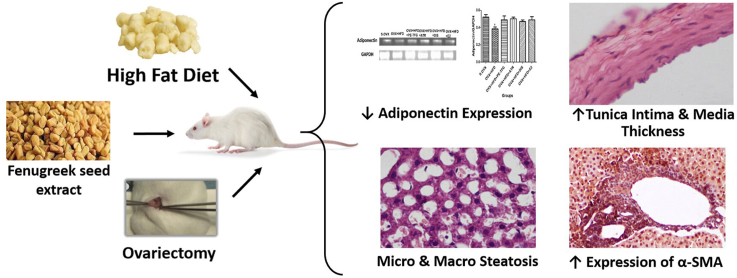
L. seeds (TFG) are used as spices in Indian cuisine. In Indian traditional medicine, TFG is used to treat diabetes, dyslipidemia, obesity, arthritis, cancer, digestive disorders, and postmenopausal conditions. Pathophysiology of postmenopausal diseases involves low-grade systemic inflammation. The purpose of this study is to investigate the prophylactic effect of petroleum ether fraction of TFG-extract (PE-TFG) on inflammatory markers, and histopathological changes in ovariectomized rats (OVX-rats) fed with a high-fat diet (HFD).
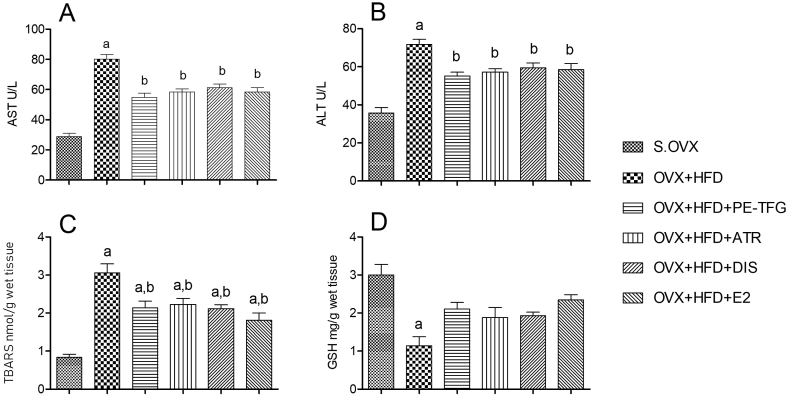
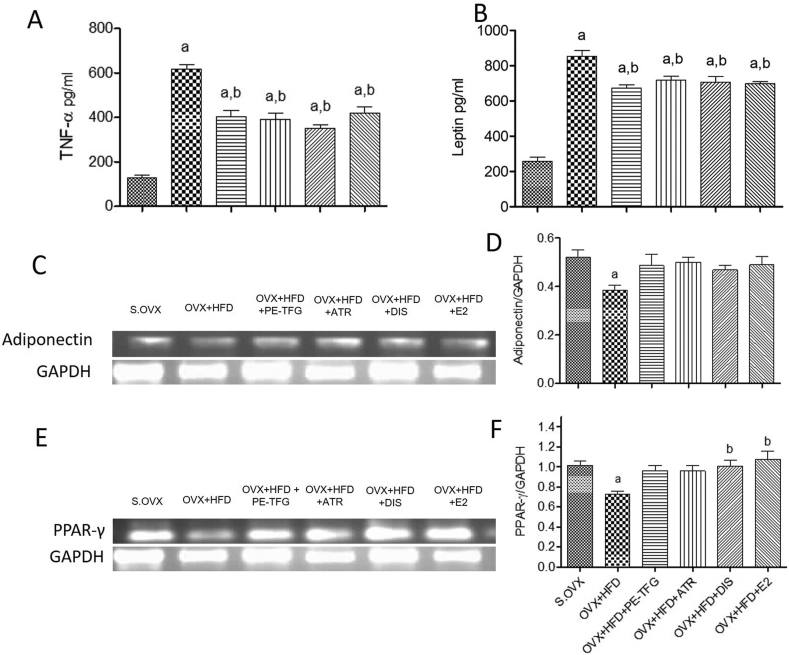
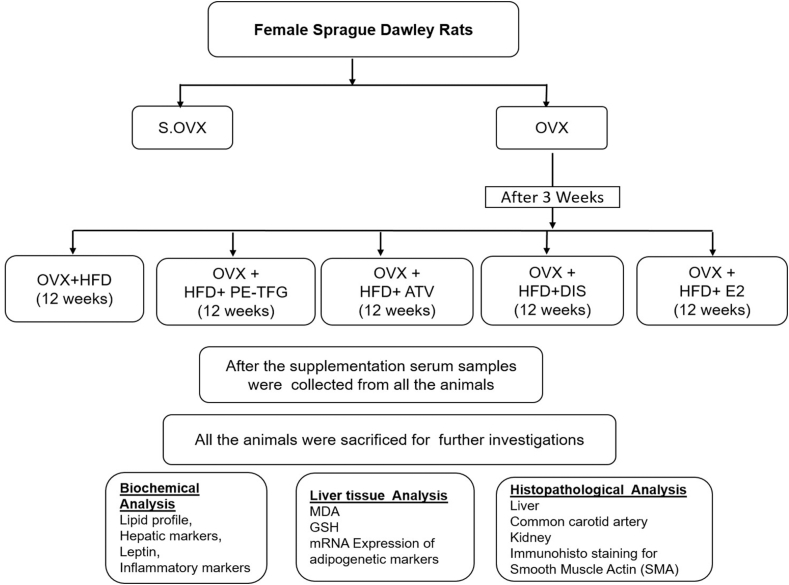
OVX female Sprague Dawley rats were used for the study. Three weeks after ovariectomy, rats were randomized in different groups and administered PE-TFG, atorvastatin, diosgenin, 17β-estradiol for 12 weeks along with HFD. The sham-operated rats (S.OVX) were fed with a standard pellet diet. At the end of 12-weeks, rats were sacrificed, and blood samples were used to estimate lipid profile, glucose, hepatic markers, TNF-α, and leptin. Liver, kidney, and common carotid artery were isolated for testing oxidative stress markers, mRNA expression of adiponectin, PPAR-γ, and histopathological changes.
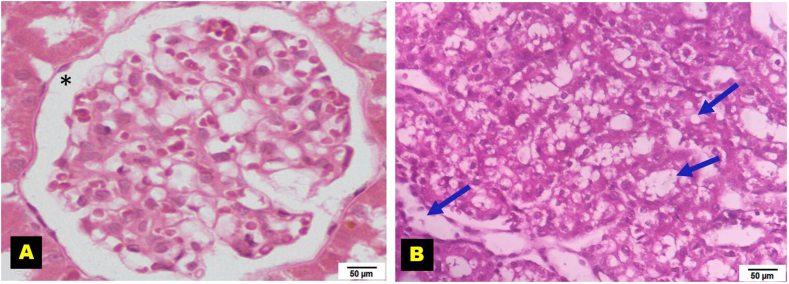
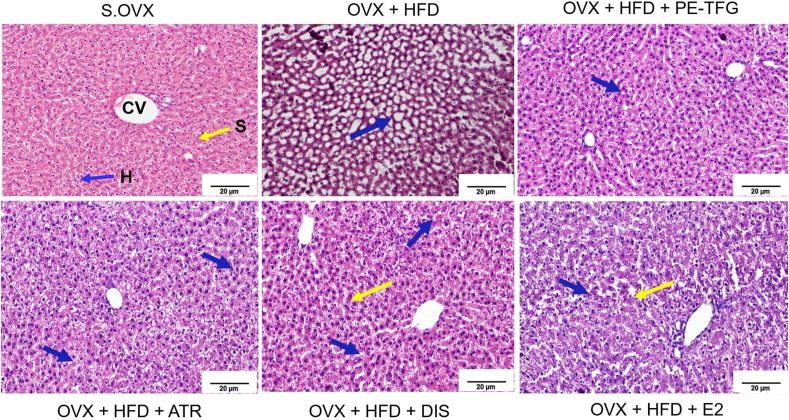
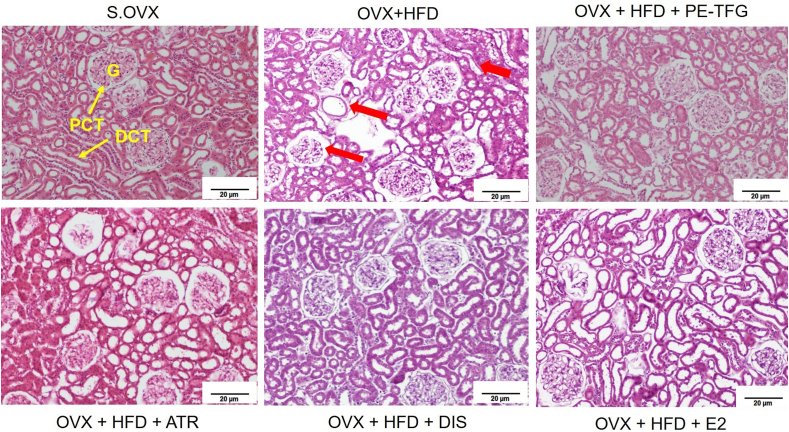
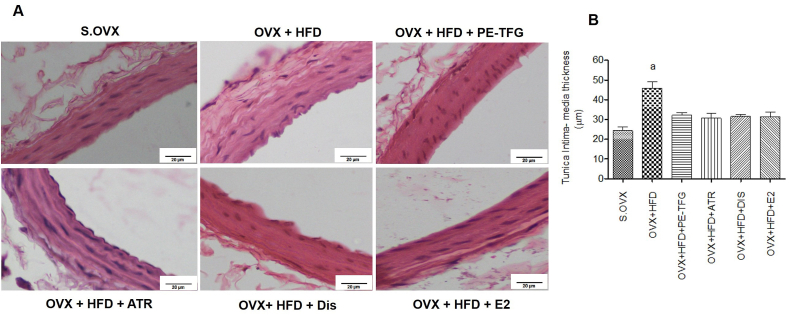
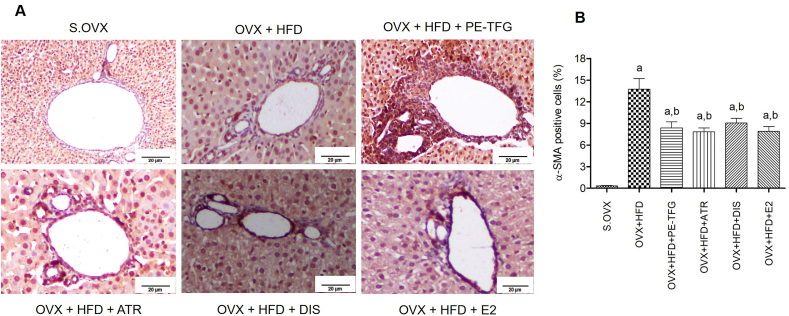
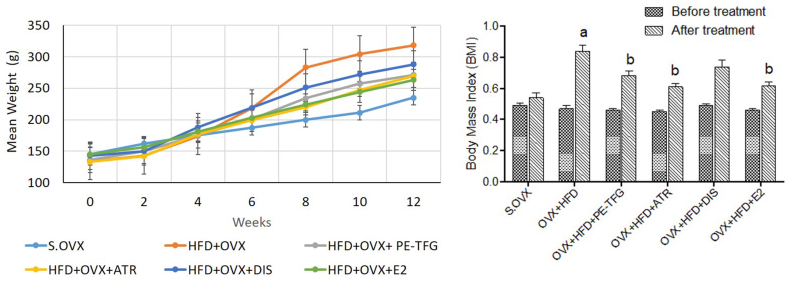
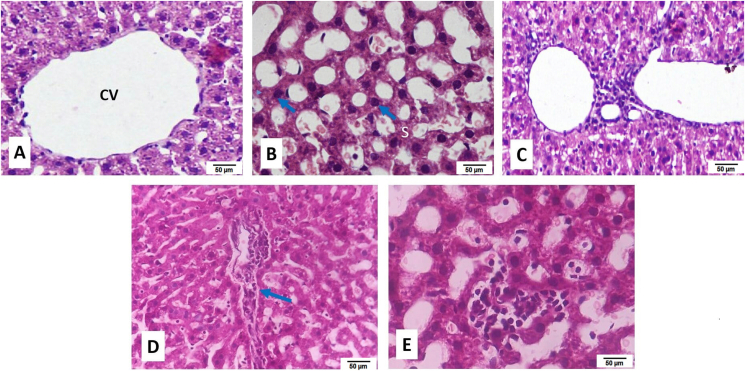
Administration of PE-TFG significantly decreased (P < 0.05) total cholesterol, LDL, hepatic markers, leptin, TNF-α and improved mRNA expression of adiponectin and PPAR-γ in HFD-fed OVX-rats. Further, micro and macro hepatic steatosis, inflammation, glomerular hypertrophy, degenerated tubules in kidney, increased tunica intima, and media thickness of common carotid artery and the pathological changes were not significant upon PE-TFG administration compared to S.OVX-rats.
PE-TFG protects cellular inflammation and metabolic alternations in HFD-fed OVX-rats and thus can be explored further in postmenopausal diseases as a prophylactic agent.
亚麻籽(TFG)在印度菜肴中用作香料。在印度传统医学中,TFG用于治疗糖尿病、血脂异常、肥胖、关节炎、癌症、消化系统疾病和绝经后疾病。绝经后疾病的病理生理学涉及低度全身炎症。本研究的目的是探讨TFG提取物的石油醚馏分(PE-TFG)对高脂饮食(HFD)喂养的去卵巢大鼠(OVX大鼠)炎症标志物和组织病理学变化的预防作用。
使用OVX雌性Sprague Dawley大鼠进行研究。卵巢切除术后三周,将大鼠随机分为不同组,并与HFD一起给予PE-TFG、阿托伐他汀、薯蓣皂苷元、17β-雌二醇12周。假手术大鼠(S.OVX)给予标准颗粒饲料。12周结束时,处死大鼠,采集血样用于评估血脂、血糖、肝脏标志物、TNF-α和瘦素。分离肝脏、肾脏和颈总动脉用于检测氧化应激标志物、脂联素、PPAR-γ的mRNA表达以及组织病理学变化。
给予PE-TFG可显著降低(P < 0.05)高脂饮食喂养的OVX大鼠的总胆固醇、低密度脂蛋白、肝脏标志物、瘦素、TNF-α,并改善脂联素和PPAR-γ的mRNA表达。此外,与S.OVX大鼠相比,给予PE-TFG后,肝脏微小结节性和大结节性脂肪变性、炎症、肾小球肥大、肾脏肾小管变性、颈总动脉内膜和中膜厚度增加以及病理变化均不显著。
PE-TFG可保护高脂饮食喂养的OVX大鼠的细胞炎症和代谢改变,因此可作为预防剂在绝经后疾病中进一步探索。