Milián-García Yoamel, Young Robert, Madden Mary, Bullas-Appleton Erin, Hanner Robert H
Department of Integrative Biology University of Guelph Guelph ON Canada.
Canadian Food Inspection Agency Government of Canada Ottawa ON Canada.
Ecol Evol. 2021 Feb 10;11(5):1999-2014. doi: 10.1002/ece3.7139. eCollection 2021 Mar.
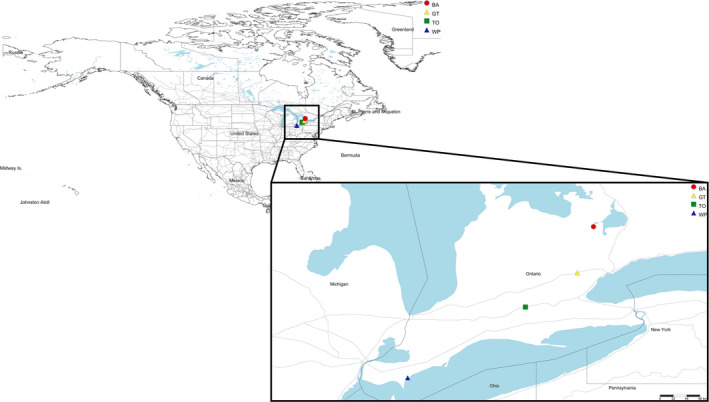
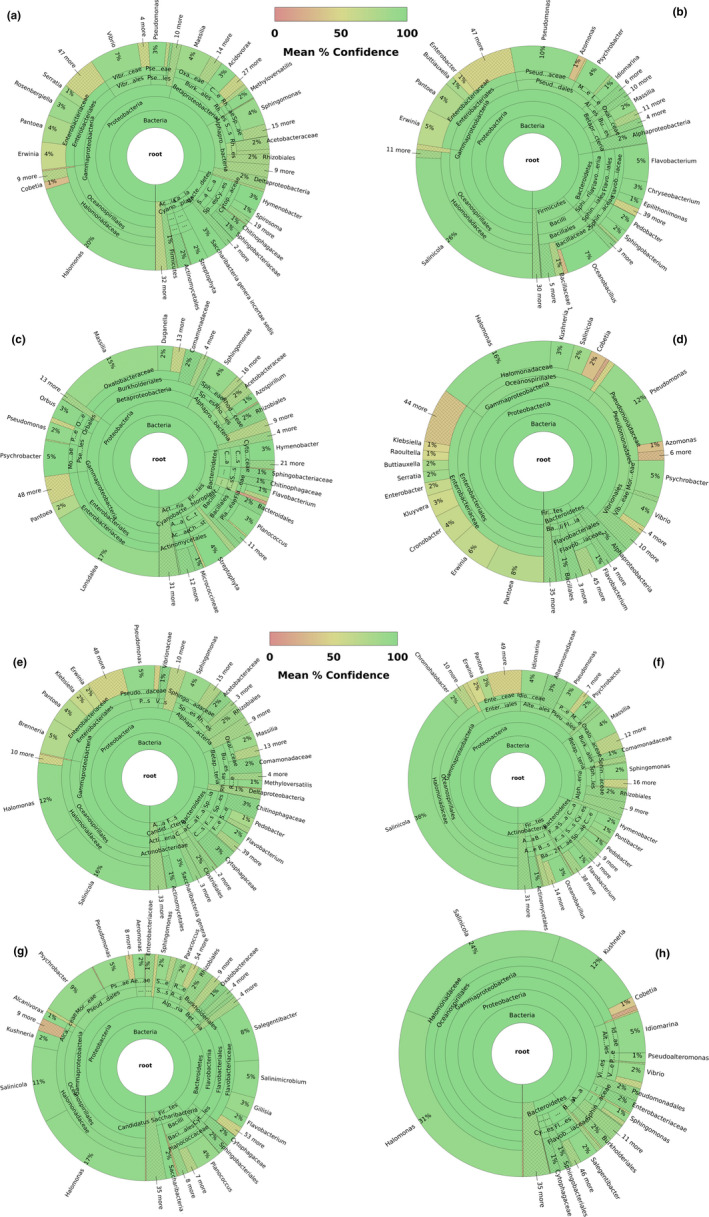
Environmental DNA (eDNA) metabarcoding has revolutionized biodiversity monitoring and invasive pest biosurveillance programs. The introduction of insect pests considered invasive alien species (IAS) into a non-native range poses a threat to native plant health. The early detection of IAS can allow for prompt actions by regulating authorities, thereby mitigating their impacts. In the present study, we optimized and validated a fast and cost-effective eDNA metabarcoding protocol for biosurveillance of IAS and characterization of insect and microorganism diversity. Forty-eight traps were placed, following the CFIA's annual forest insect trapping survey, at four locations in southern Ontario that are high risk for forest IAS. We collected insects and eDNA samples using Lindgren funnel traps that contained a saturated salt (NaCl) solution in the collection jar. Using cytochrome c oxidase I (COI) as a molecular marker, a modified Illumina protocol effectively identified 2,535 Barcode Index Numbers (BINs). BINs were distributed among 57 Orders and 304 Families, with the vast majority being arthropods. Two IAS ( and ) are regulated by the Canadian Food Inspection Agency (CFIA) as plant health pests, are known to occur in the study area, and were identified through eDNA in collected traps. Similarly, using 16S ribosomal RNA and nuclear ribosomal internal transcribed spacer (ITS), five bacterial and three fungal genera, which contain species of regulatory concern across several Canadian jurisdictions, were recovered from all sampling locations. Our study results reaffirm the effectiveness and importance of integrating eDNA metabarcoding as part of identification protocols in biosurveillance programs.
环境DNA(eDNA)宏条形码技术彻底改变了生物多样性监测和入侵害虫生物监测计划。将被视为外来入侵物种(IAS)的害虫引入非原生范围对本地植物健康构成威胁。早期发现外来入侵物种可使监管当局迅速采取行动,从而减轻其影响。在本研究中,我们优化并验证了一种快速且经济高效的eDNA宏条形码技术方案,用于外来入侵物种的生物监测以及昆虫和微生物多样性的表征。按照加拿大食品检验局(CFIA)的年度森林昆虫诱捕调查,在安大略省南部四个森林外来入侵物种高风险地点放置了48个诱捕器。我们使用林格伦漏斗诱捕器收集昆虫和eDNA样本,诱捕器的收集罐中含有饱和盐(NaCl)溶液。使用细胞色素c氧化酶I(COI)作为分子标记,一种改良的Illumina方案有效识别出2535个条形码索引号(BINs)。BINs分布在57个目和304个科中,绝大多数是节肢动物。两种外来入侵物种( 和 )被加拿大食品检验局(CFIA)列为植物健康害虫,已知在研究区域出现,并通过收集到的诱捕器中的eDNA得以识别。同样,使用16S核糖体RNA和核糖体核糖体内转录间隔区(ITS),从所有采样地点中发现了五个细菌属和三个真菌属,这些属包含在加拿大多个司法管辖区受到监管关注的物种。我们的研究结果再次证实了将eDNA宏条形码技术作为生物监测计划识别方案一部分的有效性和重要性。