VanRyzin Jonathan W, Marquardt Ashley E, McCarthy Margaret M
Department of Pharmacology, University of Maryland School of Medicine, Baltimore, Maryland, United States.
Program in Neuroscience, University of Maryland School of Medicine, Baltimore, Maryland, United States.
Int J Play. 2020;9(1):58-75. doi: 10.1080/21594937.2020.1723370. Epub 2020 Feb 18.
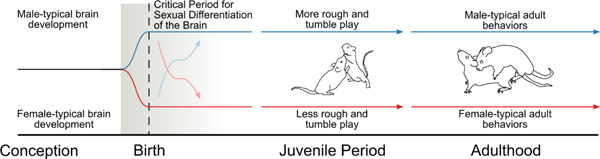
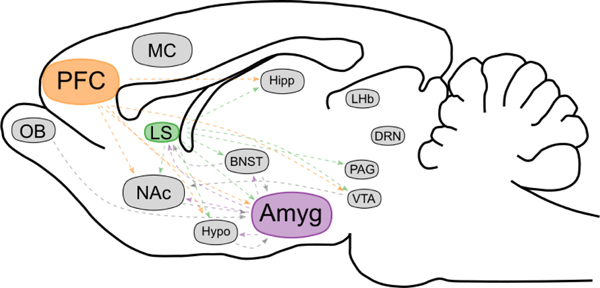
Social play consists of reciprocal physical interactions between conspecifics with many features conserved across species, including the propensity for males to engage in play more frequently and with higher physical intensity. Animal models, such as the laboratory rat, reveal that the underlying neural circuitry of play is subject to sexual differentiation during a critical period early in life. In this review, we discuss the developmental processes that produce distinct neural nodes which modulate both shared and sex-specific aspects of play with a focus on the medial amygdala, lateral septum, and prefrontal cortex. While the cellular mechanisms determining sex differences in play are beginning to be uncovered, the ultimate advantages of play continue to be debated.
社交玩耍包括同种个体之间相互的身体互动,具有许多跨物种保守的特征,包括雄性更频繁地参与玩耍且身体强度更高的倾向。动物模型,如实验室大鼠,表明玩耍的潜在神经回路在生命早期的关键时期会发生性分化。在这篇综述中,我们讨论了产生不同神经节点的发育过程,这些神经节点调节玩耍的共同方面和性别特异性方面,重点关注内侧杏仁核、外侧隔区和前额叶皮层。虽然决定玩耍中性别差异的细胞机制开始被揭示,但玩耍的最终优势仍在争论中。