Ma Yu-Shui, Wu Ting-Miao, Ling Chang-Chun, Yu Fei, Zhang Jie, Cao Ping-Sheng, Gu Li-Peng, Wang Hui-Ming, Xu Hong, Li Liu, Wu Zhi-Jun, Wang Gao-Ren, Li Wen, Lin Qin-Lu, Liu Ji-Bin, Fu Da
Central Laboratory for Medical Research, Shanghai Tenth People's Hospital, Tongji University School of Medicine, Shanghai 200072, P.R. China.
Cancer Institute, Nantong Tumor Hospital, Nantong 226631, P.R. China.
Mol Ther Oncolytics. 2021 Feb 6;20:484-498. doi: 10.1016/j.omto.2021.02.005. eCollection 2021 Mar 26.
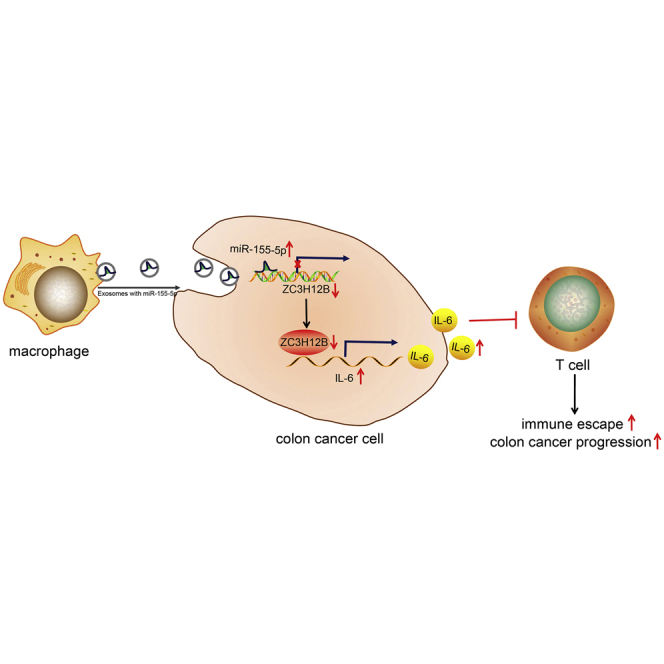
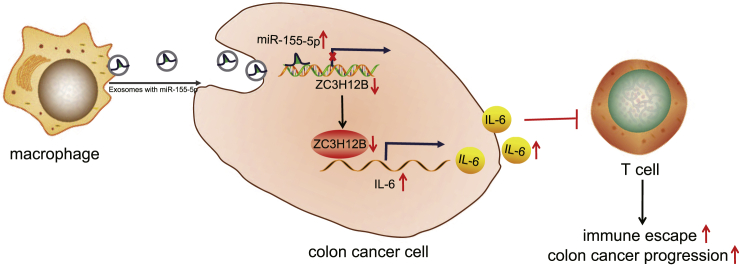
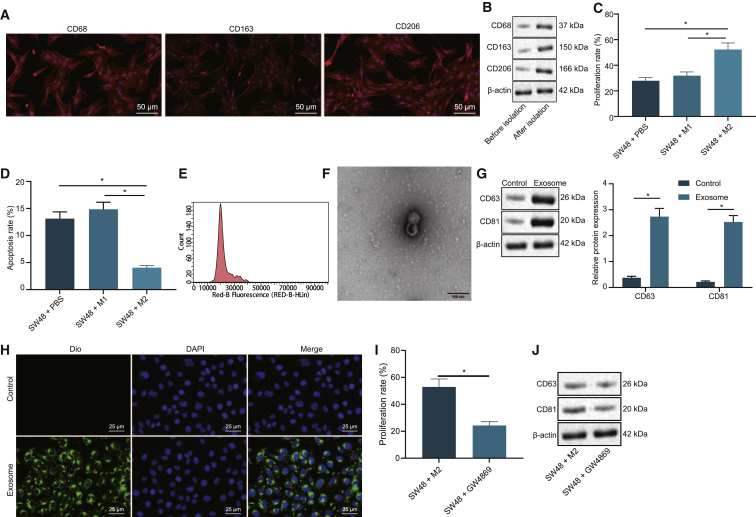
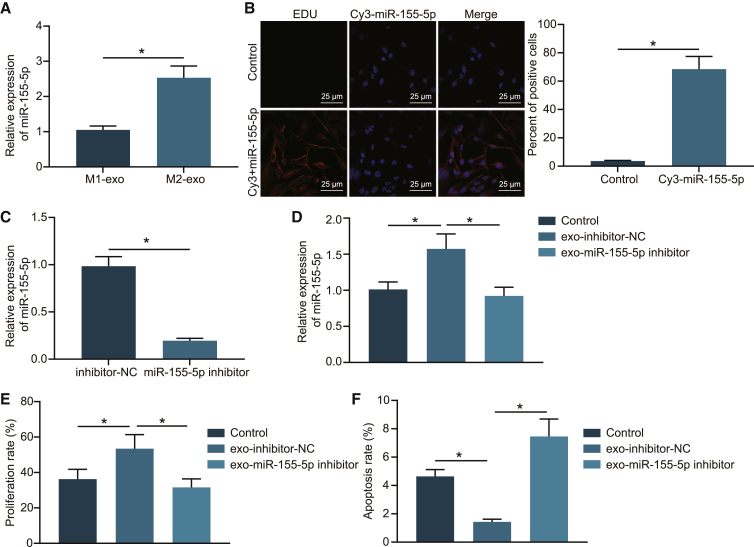
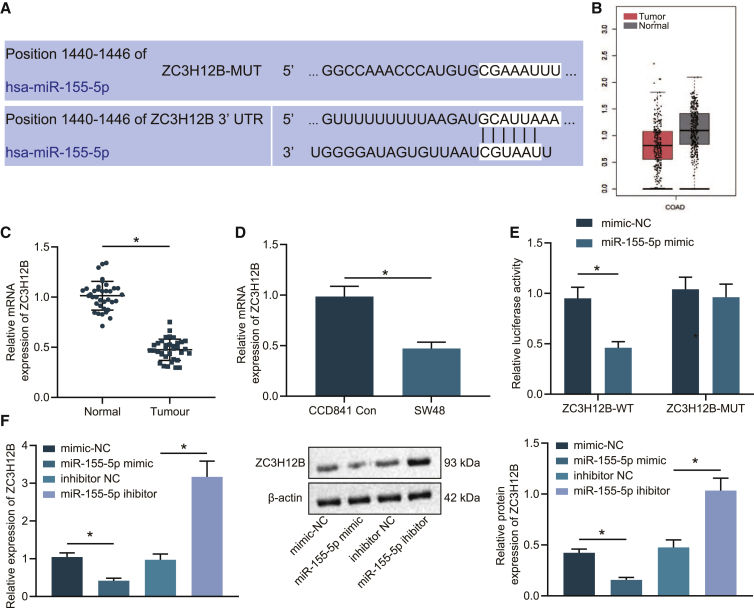
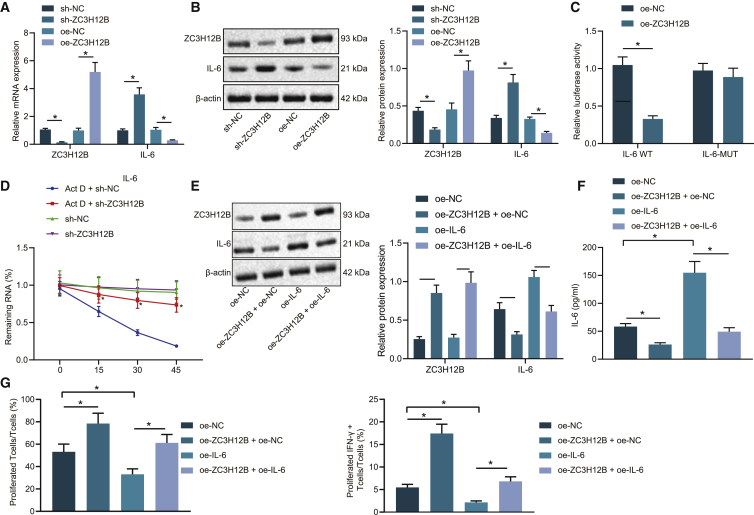
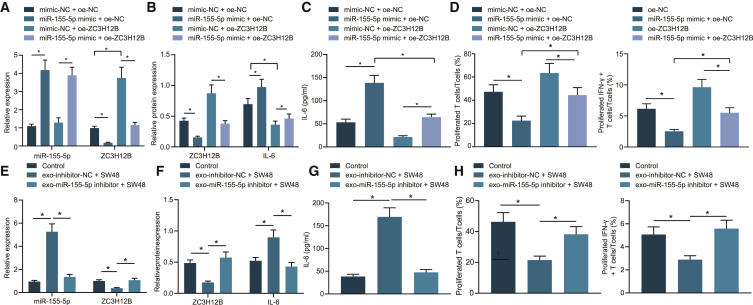
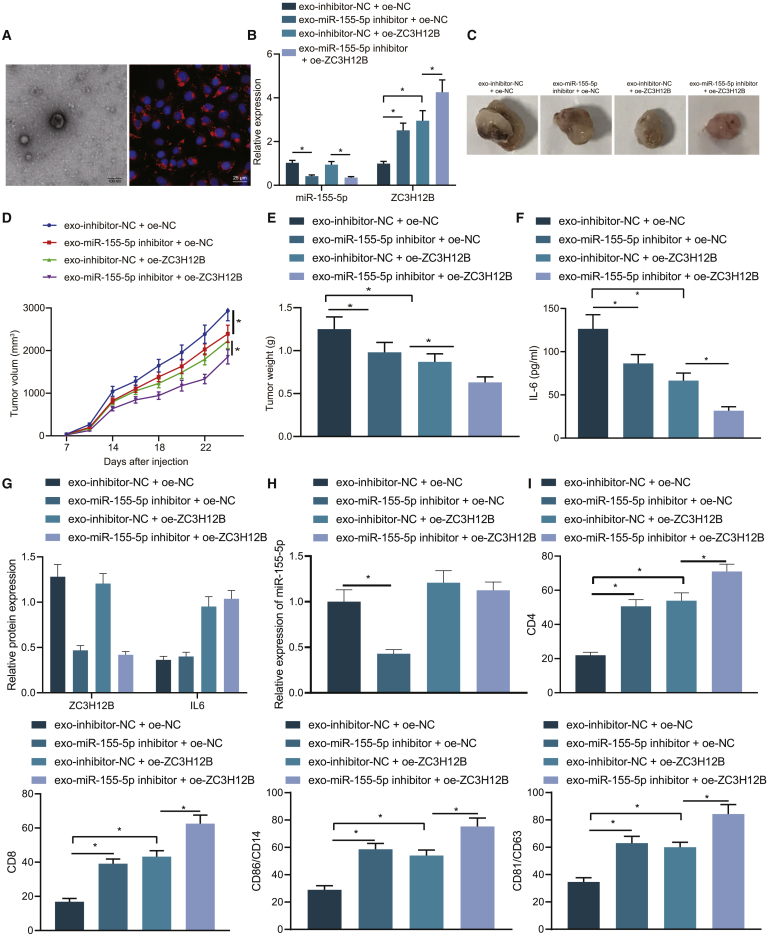
Previous evidence has highlighted M2 macrophage regulation of cancer cells via exosome shuttling of microRNAs (miRNAs or miRs). The current study set out to explore the possible role of M2 macrophage-derived exosomal miR-155-5p in regard to immune escape of colon cancer cells. Experimental data from quantitative reverse-transcriptase PCR (qRT-PCR) and western blot analysis revealed highly expressed miR-155-5p and interleukin (IL)-6 and poorly expressed ZC3H12B in M2 macrophage-derived exosomes. Additionally, miR-155-5p could be transferred by M2 macrophage-isolated exosomes to colon cancer cells, which targeted ZC3H12B by binding to the 3¢ UTR, as identified by dual luciferase reporter gene. Meanwhile, gain- and loss-of function experimentation on miR-155-5p and ZC3H12B in SW48 and HT29 cells cocultured with M2 macrophage-secreted exosomes demonstrated that miR-155-5p overexpression or ZC3H12B silencing promoted the proliferation and antiapoptosis ability of SW48 and HT29 cells, as well as augmenting the CD3 T cell proliferation and the proportion of interferon (IFN)-γ T cells. Xenograft models confirmed that M2 macrophage-derived exosomal miR-155-5p reduced the ZC3H12B expression to upregulate IL-6, which consequently induced immune escape and tumor formation. Collectively, our findings indicated that M2 macrophage-derived exosomal miR-155-5p can potentially promote the immune escape of colon cancer by impairing ZC3H12B-mediated IL-6 stability reduction, thereby promoting the occurrence and development of colon cancer.
先前的证据强调了M2巨噬细胞通过外泌体转运微小RNA(miRNA或miR)对癌细胞的调控作用。本研究旨在探讨M2巨噬细胞来源的外泌体miR-155-5p在结肠癌细胞免疫逃逸方面的潜在作用。定量逆转录聚合酶链反应(qRT-PCR)和蛋白质印迹分析的实验数据显示,M2巨噬细胞来源的外泌体中miR-155-5p和白细胞介素(IL)-6高表达,而ZC3H12B低表达。此外,M2巨噬细胞分离出的外泌体可将miR-155-5p转移至结肠癌细胞,双荧光素酶报告基因鉴定显示,miR-155-5p通过与3′非翻译区(UTR)结合靶向ZC3H12B。同时,在与M2巨噬细胞分泌的外泌体共培养的SW48和HT29细胞中对miR-155-5p和ZC3H12B进行功能获得和缺失实验表明,miR-155-5p过表达或ZC3H12B沉默可促进SW48和HT29细胞的增殖和抗凋亡能力,同时增加CD3⁺ T细胞增殖及干扰素(IFN)-γ⁺ T细胞比例。异种移植模型证实,M2巨噬细胞来源的外泌体miR-155-5p降低ZC3H12B表达以上调IL-6,从而诱导免疫逃逸和肿瘤形成。总体而言,我们的研究结果表明,M2巨噬细胞来源的外泌体miR-155-5p可能通过损害ZC3H12B介导的IL-6稳定性降低来促进结肠癌的免疫逃逸,从而促进结肠癌的发生和发展。