Hu Yan, Li Xiaoqun, Zhang Qin, Gu Zhengrong, Luo Ying, Guo Jiawei, Wang Xiuhui, Jing Yingying, Chen Xiao, Su Jiacan
Department of Trauma Orthopedics, Changhai Hospital, Naval Medical University, Shanghai, 200433, China.
Institute of Translational Medicine, Shanghai University, Shanghai, 200444, China.
Bioact Mater. 2021 Feb 23;6(9):2905-2913. doi: 10.1016/j.bioactmat.2021.02.014. eCollection 2021 Sep.
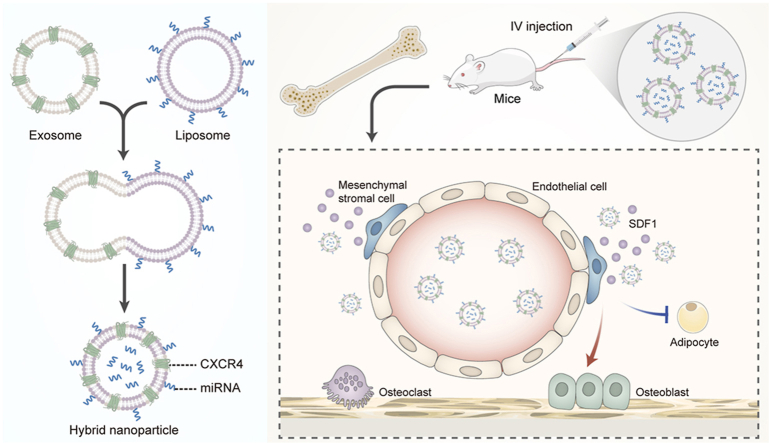
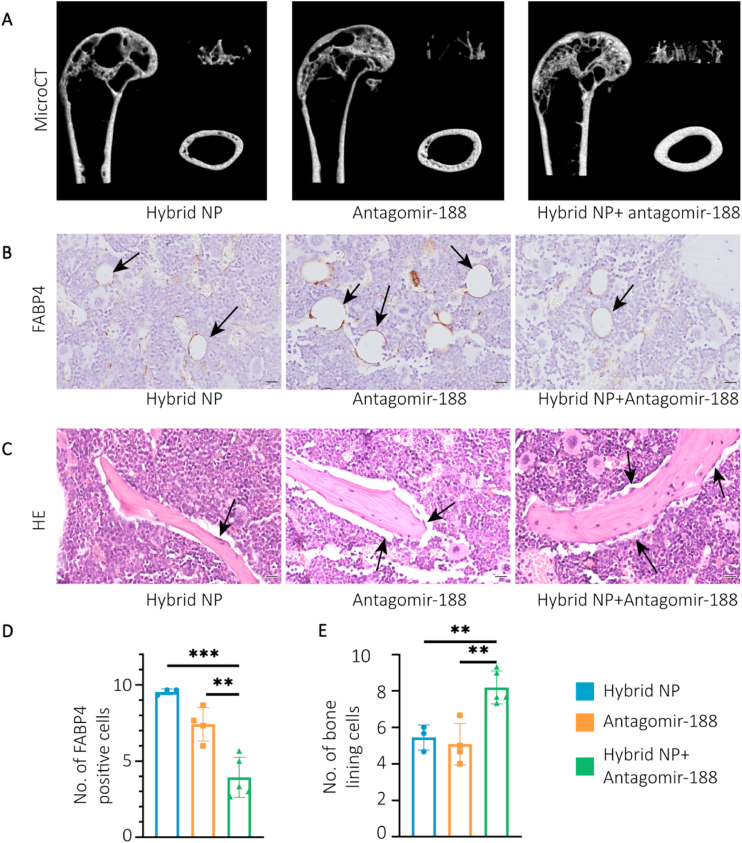
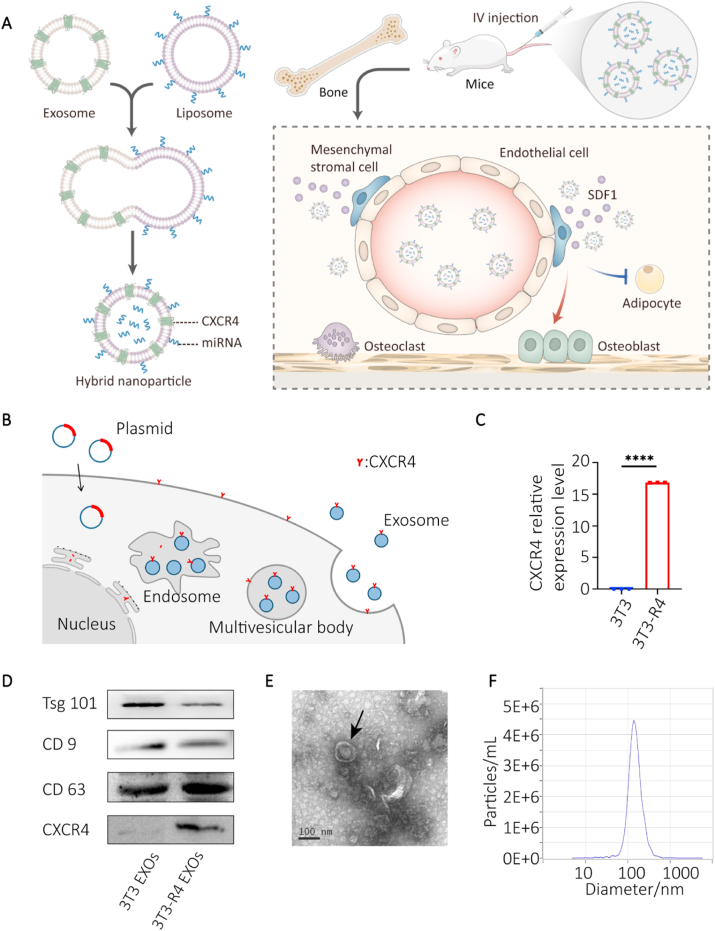
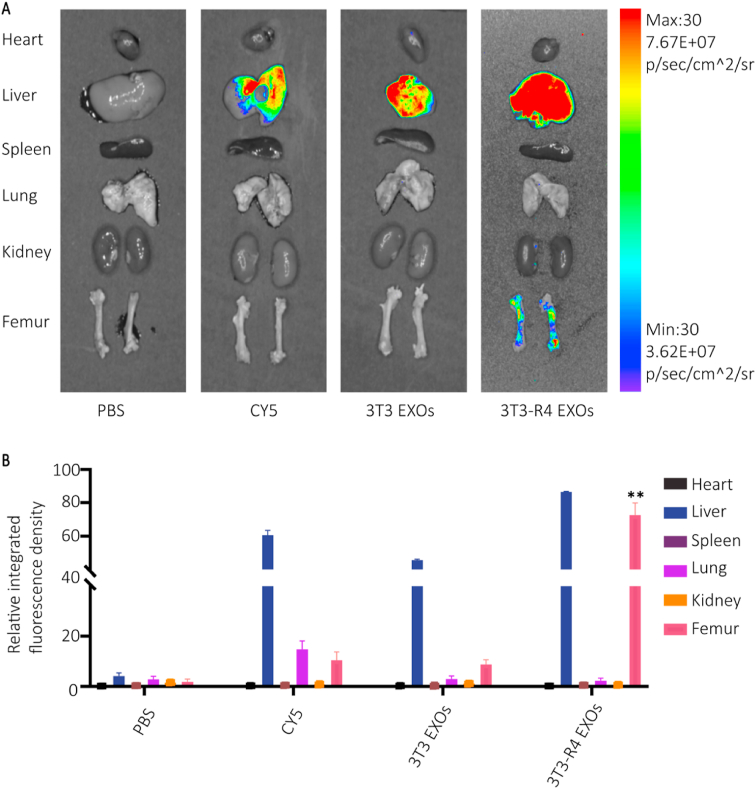
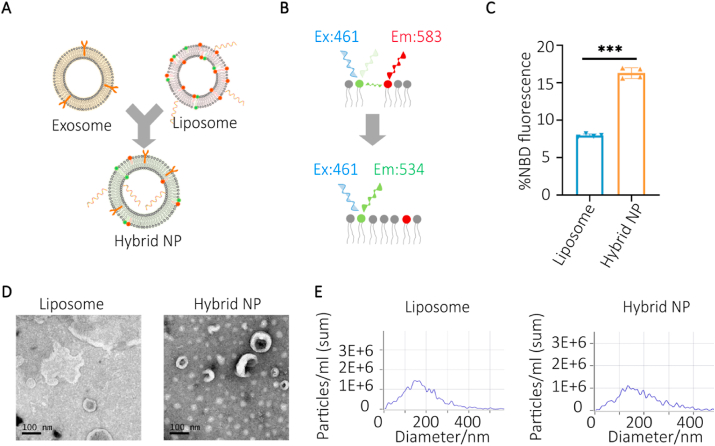
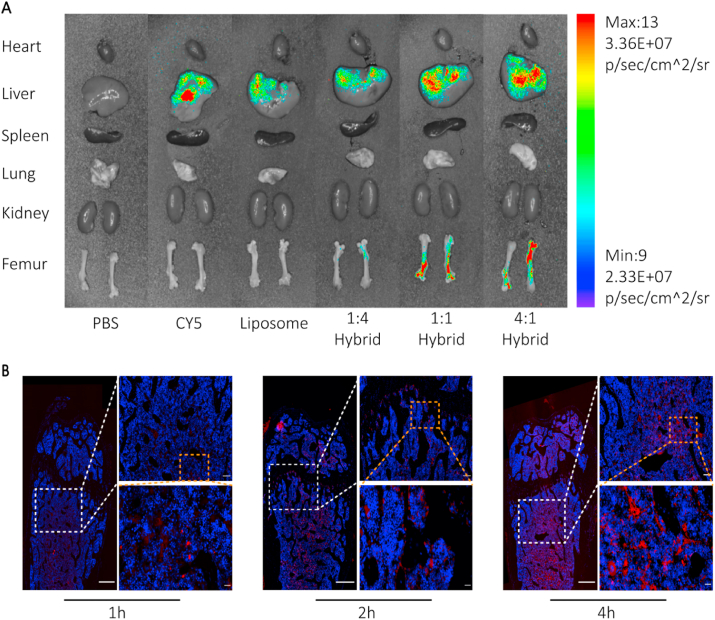
The differentiation shift from osteogenesis to adipogenesis of bone marrow mesenchymal stem cells (BMSCs) characterizes many pathological bone loss conditions. Stromal cell-derived factor-1 (SDF1) is highly enriched in the bone marrow for C-X-C motif chemokine receptor 4 (CXCR4)-positive hematopoietic stem cell (HSC) homing and tumor bone metastasis. In this study, we displayed CXCR4 on the surface of exosomes derived from genetically engineered NIH-3T3 cells. CXCR4 exosomes selectively accumulated in the bone marrow. Then, we fused CXCR4 exosomes with liposomes carrying antagomir-188 to produce hybrid nanoparticles (NPs). The hybrid NPs specifically gathered in the bone marrow and released antagomir-188, which promoted osteogenesis and inhibited adipogenesis of BMSCs and thereby reversed age-related trabecular bone loss and decreased cortical bone porosity in mice. Taken together, this study presents a novel way to obtain bone-targeted exosomes via surface display of CXCR4 and a promising anabolic therapeutic approach for age-related bone loss.
骨髓间充质干细胞(BMSCs)从成骨向脂肪生成的分化转变是许多病理性骨质流失情况的特征。基质细胞衍生因子-1(SDF1)在骨髓中高度富集,用于C-X-C基序趋化因子受体4(CXCR4)阳性造血干细胞(HSC)归巢和肿瘤骨转移。在本研究中,我们在源自基因工程NIH-3T3细胞的外泌体表面展示了CXCR4。CXCR4外泌体选择性地在骨髓中积累。然后,我们将CXCR4外泌体与携带抗 miR-188的脂质体融合,以产生杂交纳米颗粒(NPs)。杂交NPs特异性地聚集在骨髓中并释放抗 miR-188,其促进BMSCs的成骨并抑制脂肪生成,从而逆转小鼠与年龄相关的小梁骨丢失并降低皮质骨孔隙率。综上所述,本研究提出了一种通过CXCR4表面展示获得骨靶向外泌体的新方法,以及一种针对与年龄相关的骨质流失的有前景的合成代谢治疗方法。