Roberts Patrick, Buhrich Alice, Caetano-Andrade Victor, Cosgrove Richard, Fairbairn Andrew, Florin S Anna, Vanwezer Nils, Boivin Nicole, Hunter Barry, Mosquito Desley, Turpin Gerry, Ferrier Åsa
Department of Archaeology, Max Planck Institute for the Science of Human History, Germany.
School of Social Science, The University of Queensland, Brisbane, Australia.
iScience. 2021 Feb 16;24(3):102190. doi: 10.1016/j.isci.2021.102190. eCollection 2021 Mar 19.
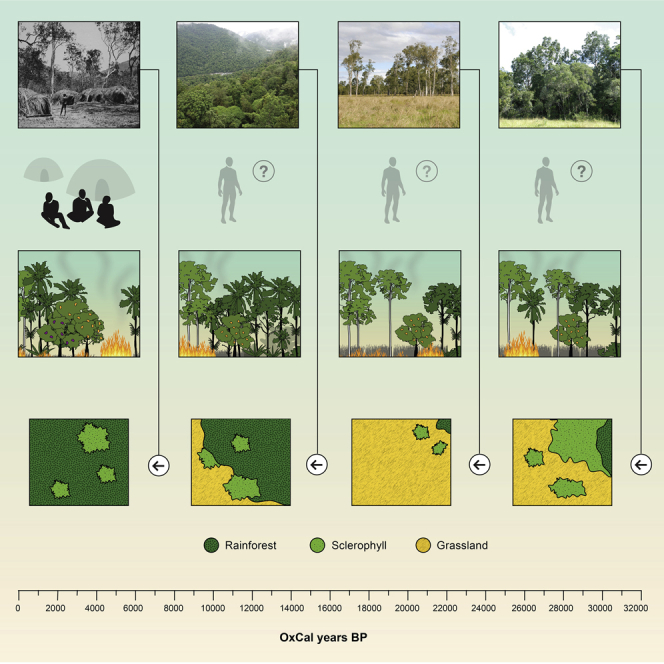
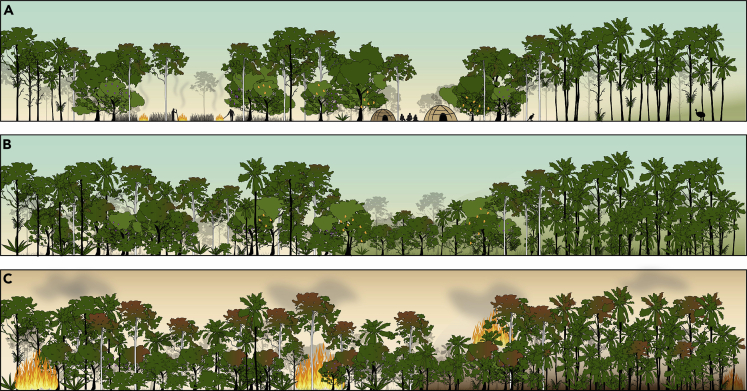
The "Wet Tropics" of Australia host a unique variety of plant lineages that trace their origins to the super-continent of Gondwanaland. While these "ancient" evolutionary records are rightly emphasized in current management of the region, multidisciplinary research and lobbying by Rainforest Aboriginal Peoples have also demonstrated the significance of the cultural heritage of the "Wet Tropics." Here, we evaluate the existing archeological, paleoenvironmental, and historical evidence to demonstrate the diverse ways in which these forests are globally significant, not only for their ecological heritage but also for their preservation of traces of millennia of anthropogenic activities, including active burning and food tree manipulation. We argue that detailed paleoecological, ethnobotanical, and archeological studies, working within the framework of growing national and world heritage initiatives and active application of traditional knowledge, offer the best opportunities for sustainable management of these unique environments in the face of increasingly catastrophic climate change and bushfires.
澳大利亚的“湿热带地区”拥有独特的多种植物谱系,它们的起源可追溯到冈瓦纳超级大陆。虽然这些“古老的”进化记录在该地区目前的管理中得到了恰当的重视,但雨林原住民的多学科研究和游说也证明了“湿热带地区”文化遗产的重要性。在此,我们评估现有的考古、古环境和历史证据,以证明这些森林在全球具有重要意义的多种方式,不仅因其生态遗产,还因其保存了数千年来人类活动的痕迹,包括主动焚烧和对食用树木的操控。我们认为,在国家和世界遗产倡议不断发展的框架内开展详细的古生态、民族植物学和考古研究,并积极应用传统知识,为面对日益灾难性的气候变化和丛林大火对这些独特环境进行可持续管理提供了最佳机会。