Budke Christoph, Dierend Werner, Schön Hans-Georg, Hora Katja, Mühling Karl Hermann, Daum Diemo
Faculty of Agricultural Sciences and Landscape Architecture, Osnabrück University of Applied Sciences, Osnabrück, Germany.
SQM International N.V, Antwerpen, Belgium.
Front Plant Sci. 2021 Feb 24;12:638671. doi: 10.3389/fpls.2021.638671. eCollection 2021.
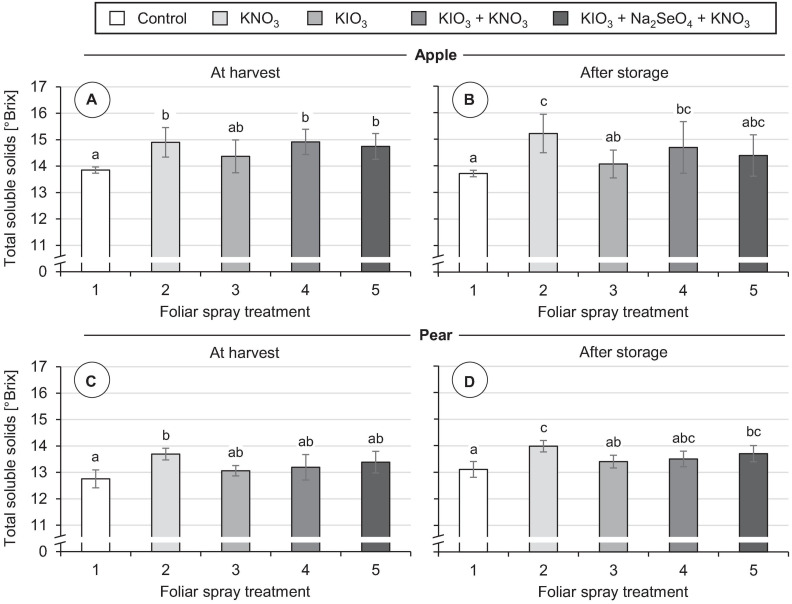
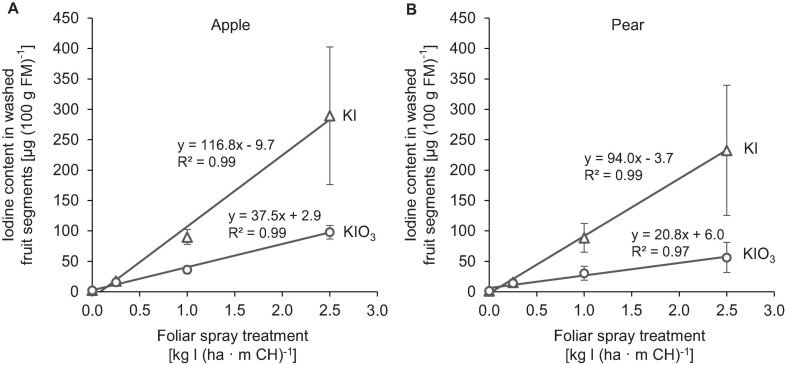
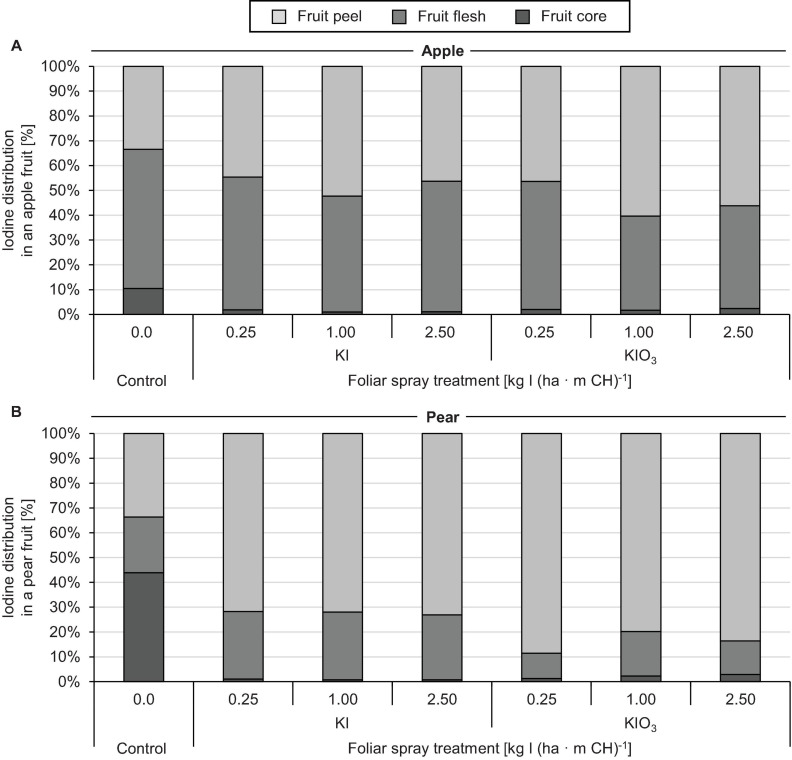
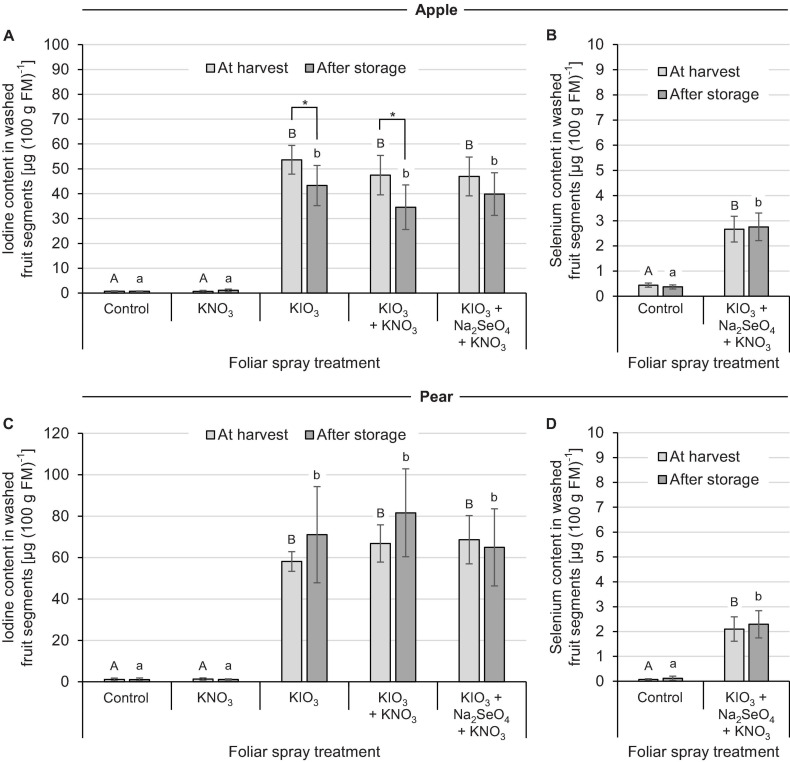
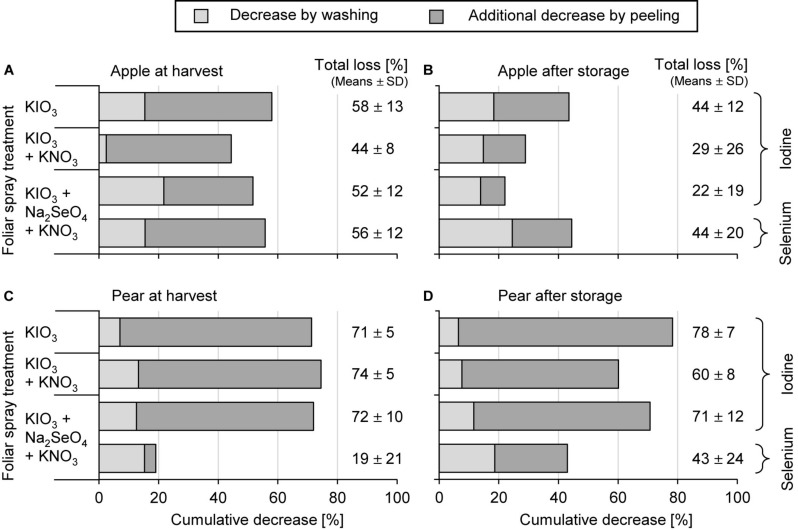
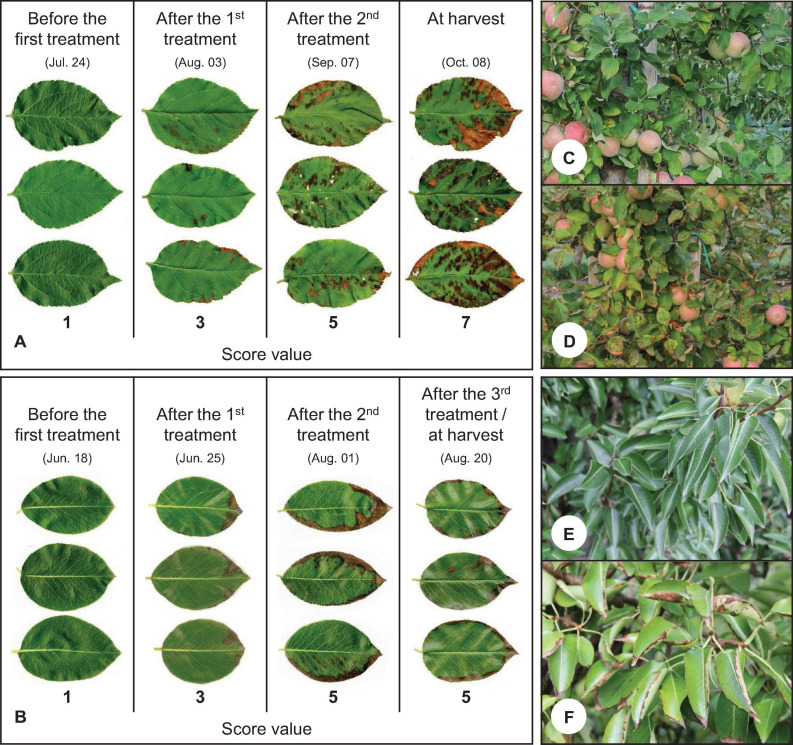
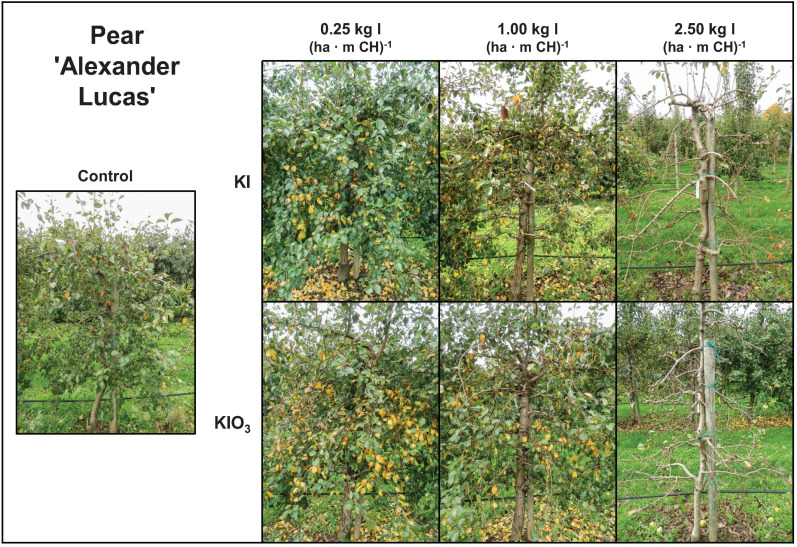
Many people across the world suffer from iodine (I) deficiency and related diseases. The I content in plant-based foods is particularly low, but can be enhanced by agronomic biofortification. Therefore, in this study two field experiments were conducted under orchard conditions to assess the potential of I biofortification of apples and pears by foliar fertilization. Fruit trees were sprayed at various times during the growing season with solutions containing I in different concentrations and forms. In addition, tests were carried out to establish whether the effect of I sprays can be improved by co-application of potassium nitrate (KNO) and sodium selenate (NaSeO). Iodine accumulation in apple and pear fruits was dose-dependent, with a stronger response to potassium iodide (KI) than potassium iodate (KIO). In freshly harvested apple and pear fruits, 51% and 75% of the biofortified iodine was localized in the fruit peel, respectively. The remaining I was translocated into the fruit flesh, with a maximum of 3% reaching the core. Washing apples and pears with running deionized water reduced their I content by 14%. To achieve the targeted accumulation level of 50-100 μg I per 100 g fresh mass in washed and unpeeled fruits, foliar fertilization of 1.5 kg I per hectare and meter canopy height was required when KIO was applied. The addition of KNO and NaSeO to I-containing spray solutions did not affect the I content in fruits. However, the application of KNO increased the total soluble solids content of the fruits by up to 1.0 °Brix compared to the control, and NaSeO in the spray solution increased the fruit selenium (Se) content. Iodine sprays caused leaf necrosis, but without affecting the development and marketing quality of the fruits. Even after three months of cold storage, no adverse effects of I fertilization on general fruit characteristics were observed, however, I content of apples decreased by 20%.
世界上许多人都患有碘缺乏症及相关疾病。植物性食物中的碘含量特别低,但可通过农艺生物强化来提高。因此,本研究在果园条件下进行了两项田间试验,以评估通过叶面施肥对苹果和梨进行碘生物强化的潜力。在生长季节的不同时间,用含有不同浓度和形态碘的溶液对果树进行喷洒。此外,还进行了试验,以确定通过同时施用硝酸钾(KNO)和硒酸钠(NaSeO)是否可以提高碘喷雾的效果。苹果和梨果实中的碘积累呈剂量依赖性,对碘化钾(KI)的反应比对碘酸钾(KIO)更强。在刚收获的苹果和梨果实中,分别有51%和75%的生物强化碘位于果皮中。其余的碘转移到果肉中,最多有3%到达果核。用流动的去离子水清洗苹果和梨会使其碘含量降低14%。为了使清洗后未去皮的果实达到每100克鲜重50 - 100微克碘的目标积累水平,施用KIO时,每公顷树冠高度需要叶面施肥1.5千克碘。在含碘喷雾溶液中添加KNO和NaSeO不会影响果实中的碘含量。然而,与对照相比,施用KNO可使果实的总可溶性固形物含量提高多达1.0°Brix,喷雾溶液中的NaSeO可提高果实的硒(Se)含量。碘喷雾导致叶片坏死,但不影响果实的发育和销售品质。即使在冷藏三个月后,也未观察到碘施肥对果实总体特性有不利影响,然而,苹果的碘含量下降了20%。