College of Veterinary Medicine, National Risk Assessment Laboratory for Antimicrobial Resistant of Microorganisms in Animals, Guangdong Provincial Key Laboratory of Veterinary Pharmaceutics Development and Safety Evaluation, Key Laboratory of Zoonosis of Ministry of Agricultural and Rural Affairs,Center for Emerging and Zoonotic Diseases, South China Agricultural University, Guangzhou, China.
Guangdong Laboratory for Lingnan Modern Agriculture, Guangzhou, China.
Nucleic Acids Res. 2021 Apr 19;49(7):3981-3996. doi: 10.1093/nar/gkab149.
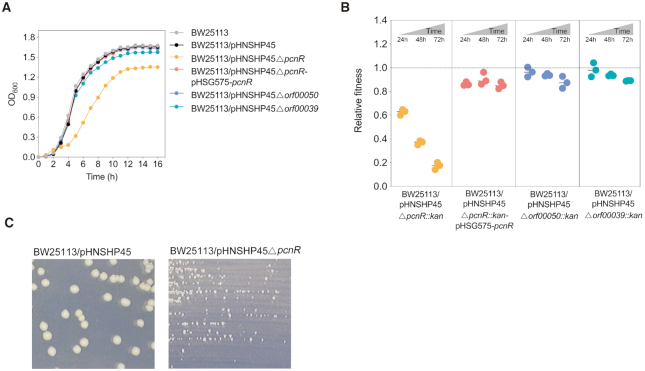
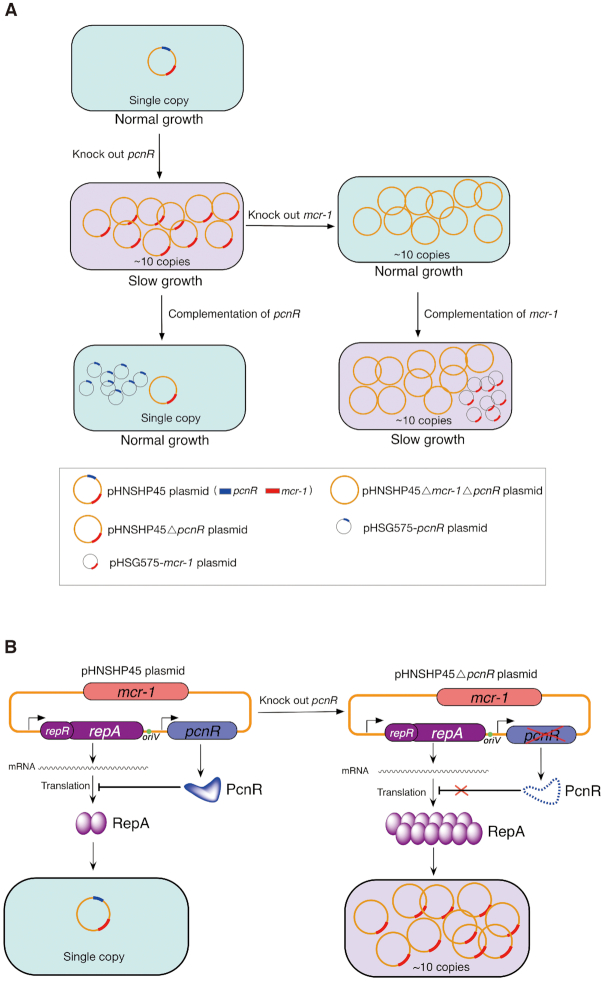
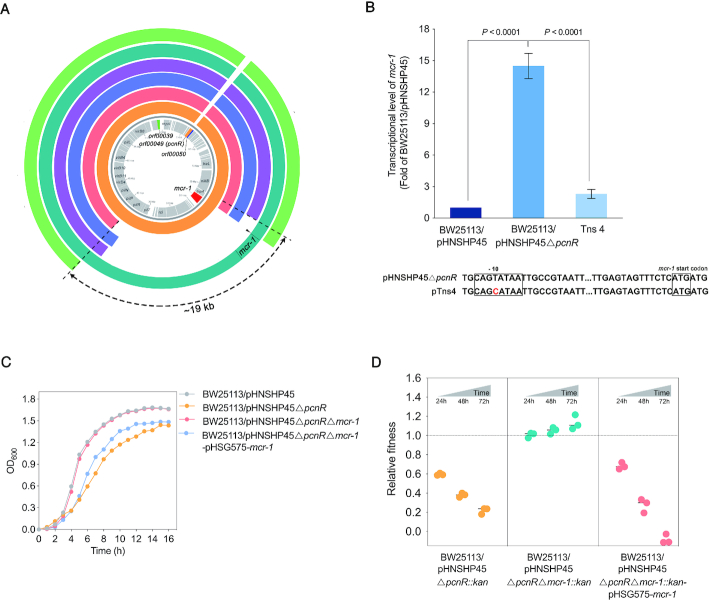
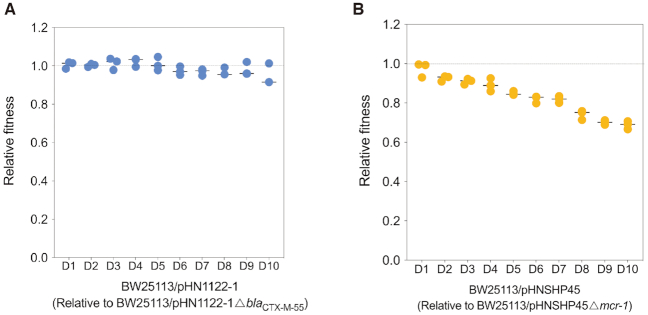
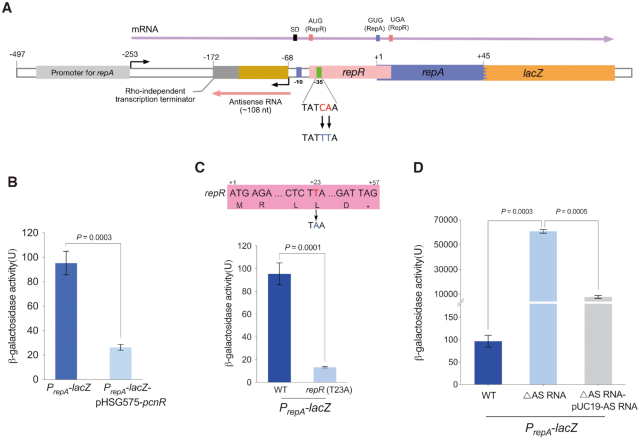
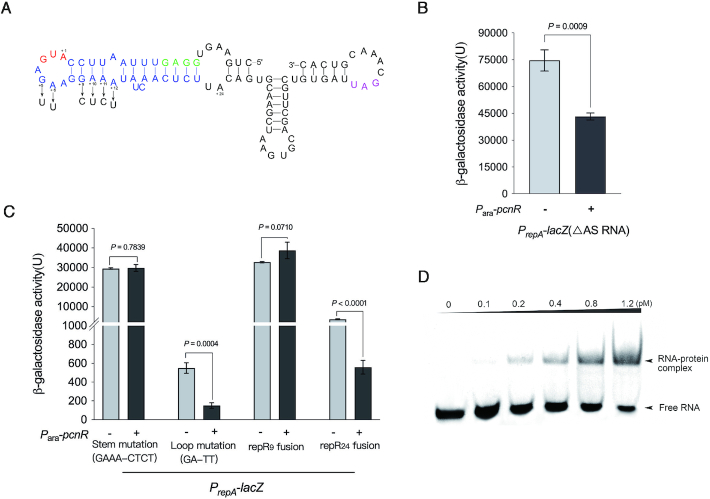
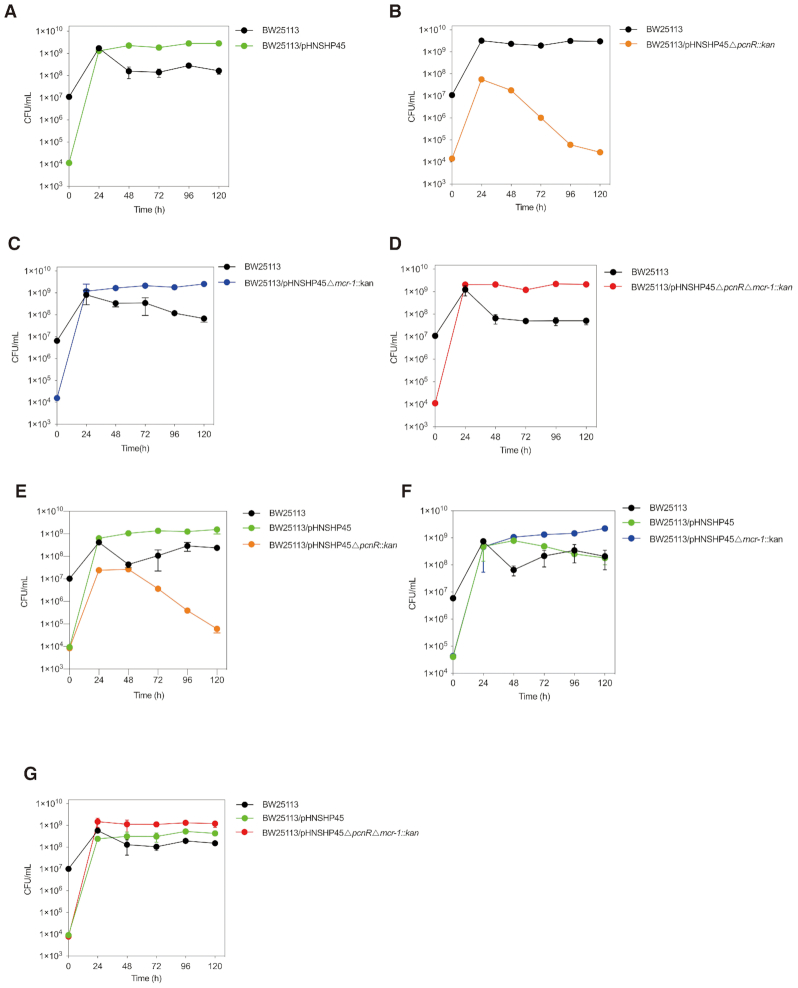
The plasmid-encoded colistin resistance gene mcr-1 challenges the use of polymyxins and poses a threat to public health. Although IncI2-type plasmids are the most common vector for spreading the mcr-1 gene, the mechanisms by which these plasmids adapt to host bacteria and maintain resistance genes remain unclear. Herein, we investigated the regulatory mechanism for controlling the fitness cost of an IncI2 plasmid carrying mcr-1. A putative ProQ/FinO family protein encoded by the IncI2 plasmid, designated as PcnR (plasmid copy number repressor), balances the mcr-1 expression and bacteria fitness by repressing the plasmid copy number. It binds to the first stem-loop structure of the repR mRNA to repress RepA expression, which differs from any other previously reported plasmid replication control mechanism. Plasmid invasion experiments revealed that pcnR is essential for the persistence of the mcr-1-bearing IncI2 plasmid in the bacterial populations. Additionally, single-copy mcr-1 gene still exerted a fitness cost to host bacteria, and negatively affected the persistence of the IncI2 plasmid in competitive co-cultures. These findings demonstrate that maintaining mcr-1 plasmid at a single copy is essential for its persistence, and explain the significantly reduced prevalence of mcr-1 following the ban of colistin as a growth promoter in China.
质粒编码的黏菌素耐药基因 mcr-1 对黏菌素的使用构成了挑战,对公共健康构成了威胁。尽管 IncI2 型质粒是传播 mcr-1 基因的最常见载体,但这些质粒适应宿主细菌并维持耐药基因的机制尚不清楚。在此,我们研究了控制携带 mcr-1 的 IncI2 质粒适应成本的调控机制。由 IncI2 质粒编码的假定 ProQ/FinO 家族蛋白,命名为 PcnR(质粒拷贝数抑制剂),通过抑制质粒拷贝数来平衡 mcr-1 表达和细菌适应性。它与 repR mRNA 的第一个茎环结构结合,抑制 RepA 的表达,这与以前报道的任何其他质粒复制控制机制都不同。质粒入侵实验表明,pcnR 是 mcr-1 携带的 IncI2 质粒在细菌群体中持续存在所必需的。此外,单拷贝 mcr-1 基因仍然对宿主细菌产生适应性成本,并且对 IncI2 质粒在竞争共培养中的持续存在产生负面影响。这些发现表明,将 mcr-1 质粒维持在单拷贝对于其持续存在至关重要,并且解释了在中国禁止黏菌素作为生长促进剂后 mcr-1 患病率显著降低的原因。