Department of Physical Medicine & Rehabilitation, Qilu Hospital, Cheeloo College of Medicine, Shandong University, Jinan, 250012, Shandong, China.
Department of Neurosurgery, University of Maryland School of Medicine, 685 West Baltimore Street, MSTF Building 823, Baltimore, MD, 21201, USA.
Stem Cell Res Ther. 2021 Mar 15;12(1):180. doi: 10.1186/s13287-021-02200-4.
Severe peripheral nerve injury significantly affects patients' quality of life and induces neuropathic pain. Neural crest stem cells (NCSCs) exhibit several attractive characteristics for cell-based therapies following peripheral nerve injury. Here, we investigate the therapeutic effect of NCSC therapy and associated changes in the spinal cord in a sciatic nerve transection (SNT) model.
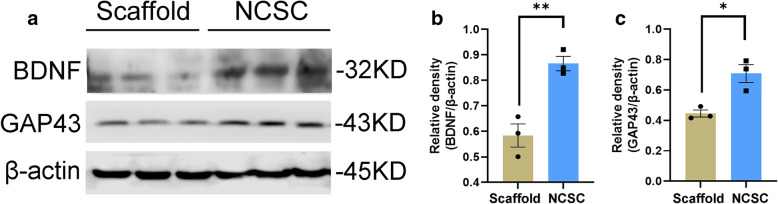
Complex sciatic nerve gap injuries in rats were repaired with cell-free and cell-laden nerve scaffolds for 12 weeks (scaffold and NCSC groups, respectively). Catwalk gait analysis was used to assess the motor function recovery. The mechanical withdrawal threshold and thermal withdrawal latency were used to assess the development of neuropathic pain. Activation of glial cells was examined by immunofluorescence analyses. Spinal levels of extracellular signal-regulated kinase (ERK), NF-κB P65, brain-derived neurotrophic factor (BDNF), growth-associated protein (GAP)-43, calcitonin gene-related peptide (CGRP), and inflammation factors were calculated by western blot analysis.
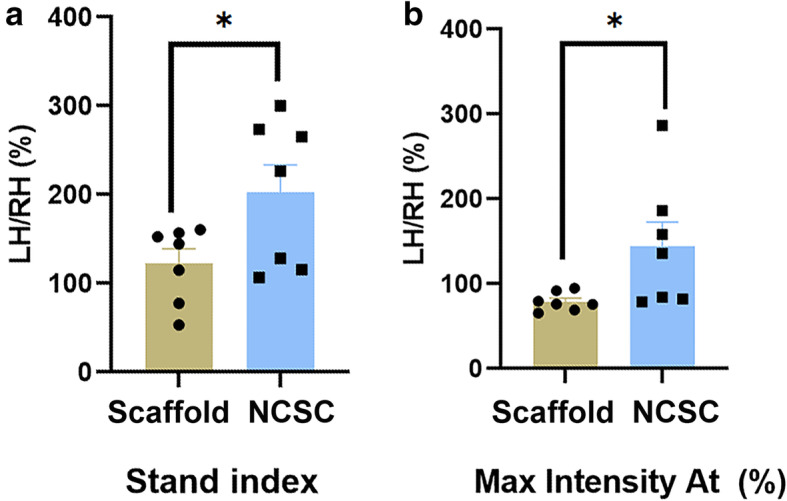
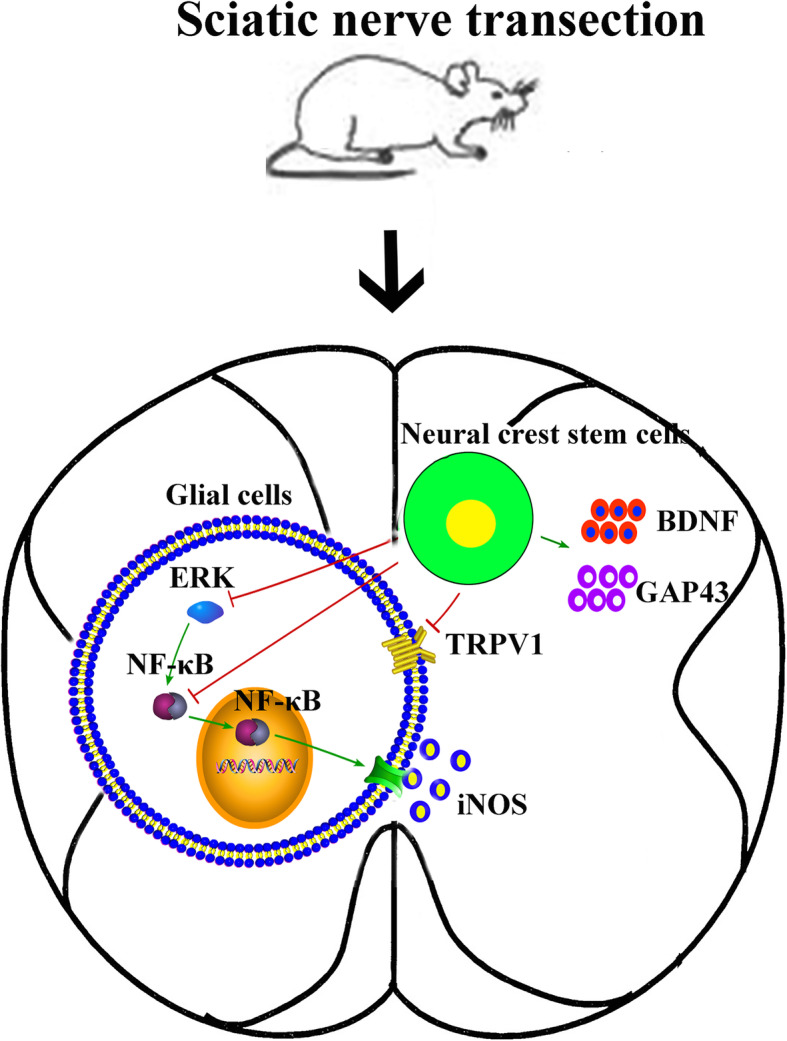
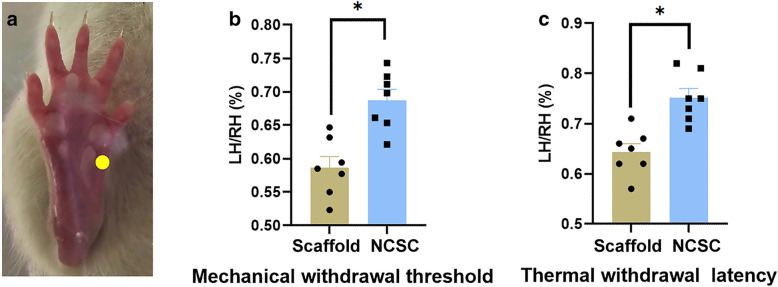
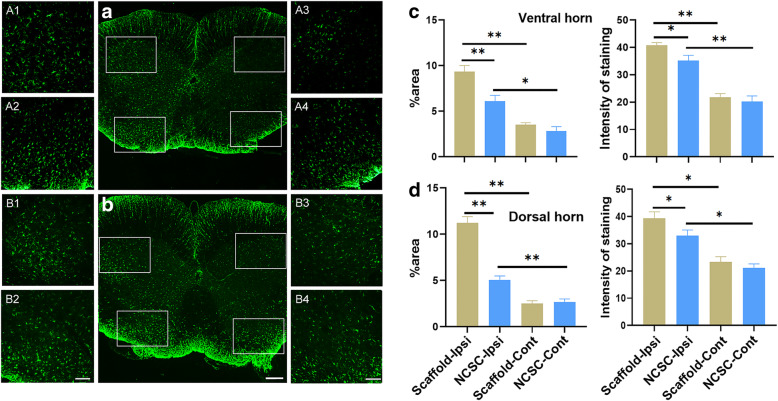
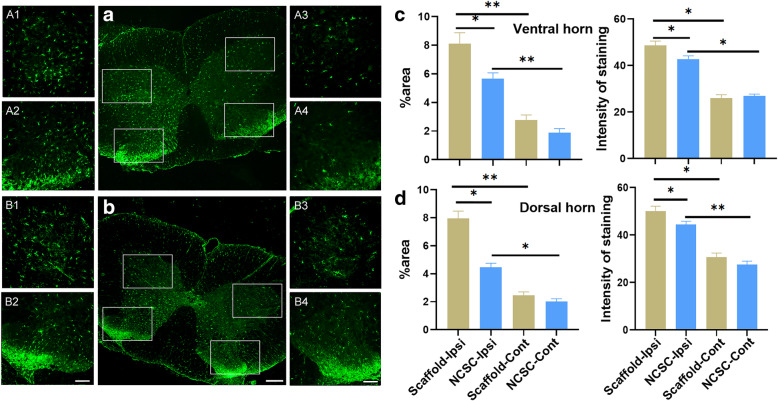
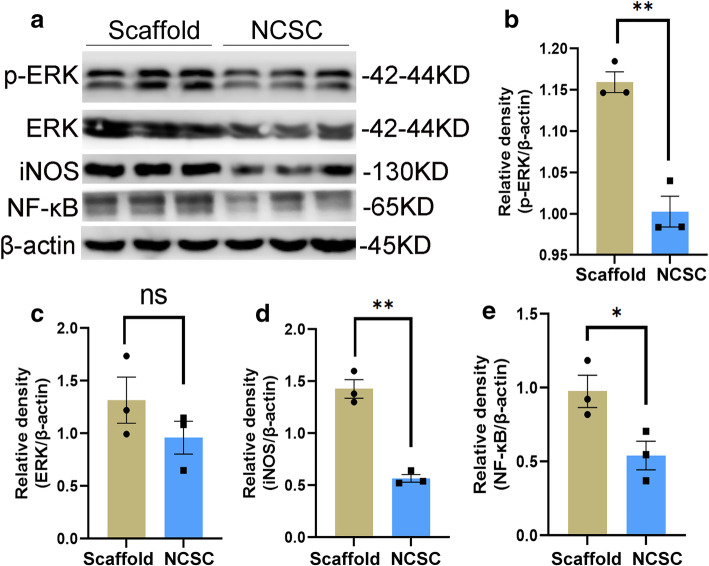
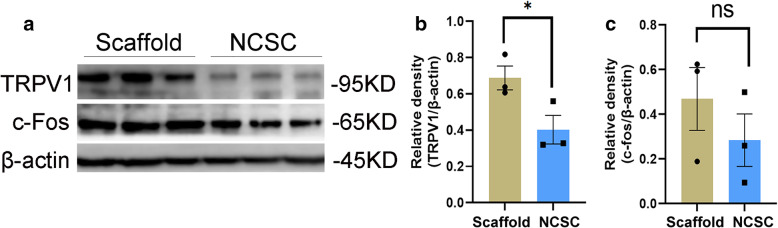
Catwalk gait analysis showed that animals in the NCSC group exhibited a higher stand index and Max intensity At (%) relative to those that received the cell-free scaffold (scaffold group) (p < 0.05). The mechanical and thermal allodynia in the medial-plantar surface of the ipsilateral hind paw were significantly relieved in the NCSC group. Sunitinib (SNT)-induced upregulation of glial fibrillary acidic protein (GFAP) (astrocyte) and ionized calcium-binding adaptor molecule 1 (Iba-1) (microglia) in the ipsilateral L4-5 dorsal and ventral horn relative to the contralateral side. Immunofluorescence analyses revealed decreased astrocyte and microglia activation. Activation of ERK and NF-κB signals and expression of transient receptor potential vanilloid 1 (TRPV1) expression were downregulated.
NCSC-laden nerve scaffolds mitigated SNT-induced neuropathic pain and improved motor function recovery after sciatic nerve repair. NCSCs also protected the spinal cord from SNT-induced glial activation and central sensitization.
严重的周围神经损伤显著影响患者的生活质量,并导致神经性疼痛。神经嵴干细胞(NCSCs)在周围神经损伤后的细胞治疗中表现出多种有吸引力的特性。在这里,我们研究了 NCSC 治疗在坐骨神经横断(SNT)模型中的治疗效果以及脊髓的变化。
在大鼠复杂坐骨神经间隙损伤中,分别使用无细胞和细胞负载神经支架修复 12 周(支架组和 NCSC 组)。步态分析用于评估运动功能恢复情况。机械撤回阈值和热撤回潜伏期用于评估神经性疼痛的发展。通过免疫荧光分析检查神经胶质细胞的激活。通过 Western blot 分析计算脊髓细胞外信号调节激酶(ERK)、核因子κB P65、脑源性神经营养因子(BDNF)、生长相关蛋白(GAP)-43、降钙素基因相关肽(CGRP)和炎症因子的水平。
步态分析显示,NCSC 组动物的站立指数和最大强度 At(%)均高于接受无细胞支架的动物(支架组)(p<0.05)。内侧足底表面同侧后爪的机械和热感觉过敏在 NCSC 组中得到显著缓解。与对侧相比,SNT 诱导的同侧 L4-5 背角和腹角中的胶质纤维酸性蛋白(GFAP)(星形胶质细胞)和离子钙结合接头分子 1(Iba-1)(小胶质细胞)上调。免疫荧光分析显示星形胶质细胞和小胶质细胞激活减少。ERK 和 NF-κB 信号的激活和瞬时受体电位香草素 1(TRPV1)的表达下调。
NCSC 负载的神经支架减轻了 SNT 诱导的神经性疼痛,并改善了坐骨神经修复后的运动功能恢复。NCSCs 还保护脊髓免受 SNT 诱导的神经胶质激活和中枢敏化。