Clinical Collaboration Unit Translational Immunology, German Cancer Consortium (DKTK), Department of Internal Medicine, University Hospital Tübingen, 72076 Tübingen, Germany.
Institute for Cell Biology, Department of Immunology, University of Tübingen, 72076 Tübingen, Germany.
Sci Transl Med. 2021 Apr 21;13(590). doi: 10.1126/scitranslmed.abf7517. Epub 2021 Mar 15.
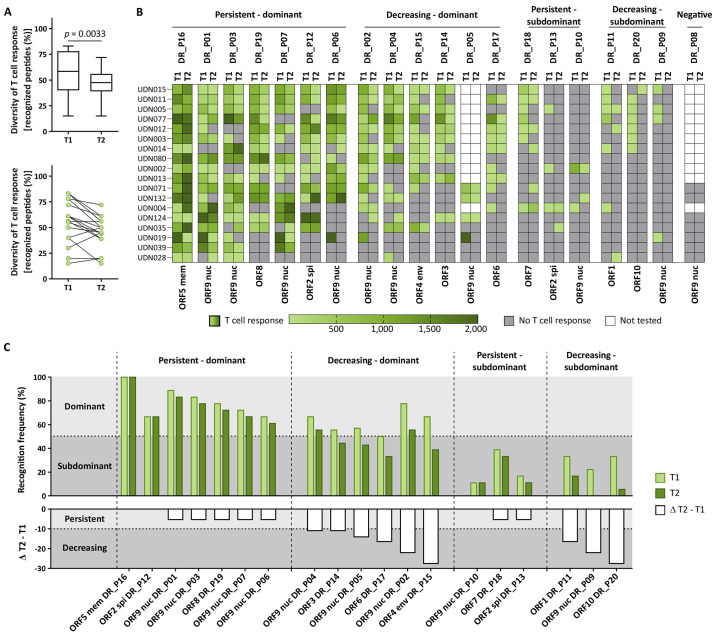
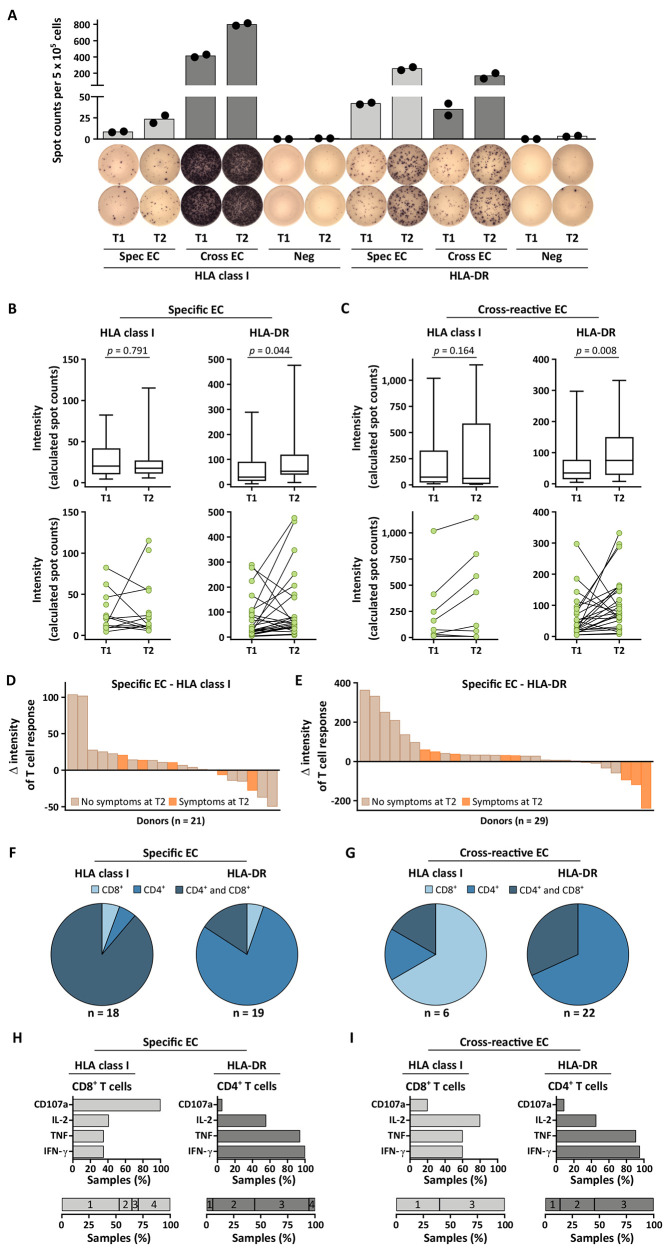
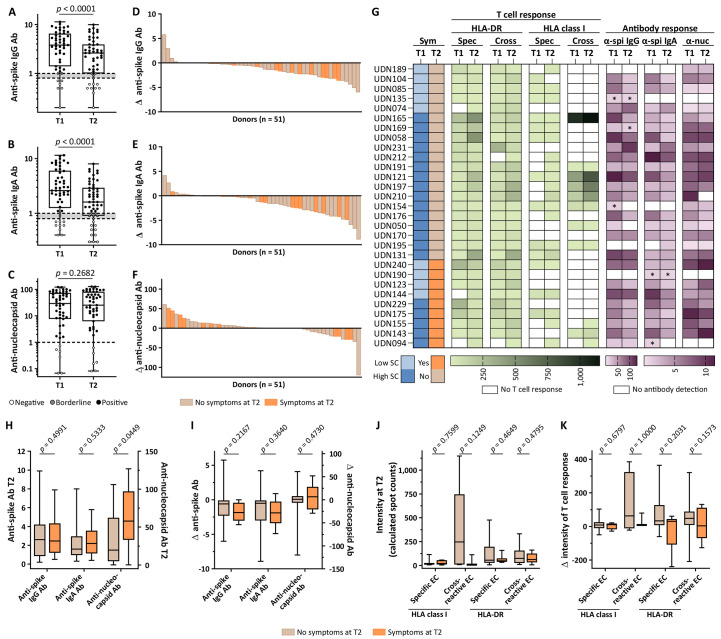
Long-term immunological memory to severe acute respiratory syndrome coronavirus 2 (SARS-CoV-2) is crucial for the development of population-level immunity, which is the aim of vaccination approaches. Reports on rapidly decreasing antibody titers have led to questions regarding the efficacy of humoral immunity alone. The relevance of T cell memory after coronavirus disease 2019 (COVID-19) remains unclear. Here, we investigated SARS-CoV-2 antibody and T cell responses in matched samples of COVID-19 convalescent individuals up to 6 months after infection. Longitudinal analysis revealed decreasing and stable spike- and nucleocapsid-specific antibody responses, respectively. In contrast, functional T cell responses remained robust, and even increased, in both frequency and intensity. Single peptide mapping of T cell diversity over time identified open reading frame-independent, dominant T cell epitopes mediating long-term SARS-CoV-2 T cell responses. Identification of these epitopes may be fundamental for COVID-19 vaccine design.
针对严重急性呼吸综合征冠状病毒 2(SARS-CoV-2)的长期免疫记忆对于人群水平免疫的发展至关重要,这是疫苗接种方法的目标。有关抗体滴度迅速下降的报告引发了对单独体液免疫功效的质疑。新冠肺炎(COVID-19)后 T 细胞记忆的相关性尚不清楚。在这里,我们在感染后长达 6 个月的时间里,对 COVID-19 康复个体的匹配样本进行了 SARS-CoV-2 抗体和 T 细胞反应研究。纵向分析显示,分别为刺突蛋白和核衣壳特异性抗体反应下降和稳定。相比之下,功能 T 细胞反应的频率和强度均保持强劲,甚至增加。随着时间的推移,对 T 细胞多样性的单肽作图鉴定了与开放阅读框无关的、主导 SARS-CoV-2 T 细胞反应的 T 细胞表位。鉴定这些表位可能是 COVID-19 疫苗设计的基础。