McKay Orthopaedic Research Laboratory, Orthopaedic Surgery, University of Pennsylvania, Philadelphia, USA.
Translational Musculoskeletal Research Center, CMC VA Medical Center, Philadelphia, USA.
Sci Rep. 2021 Mar 15;11(1):5950. doi: 10.1038/s41598-021-85276-5.
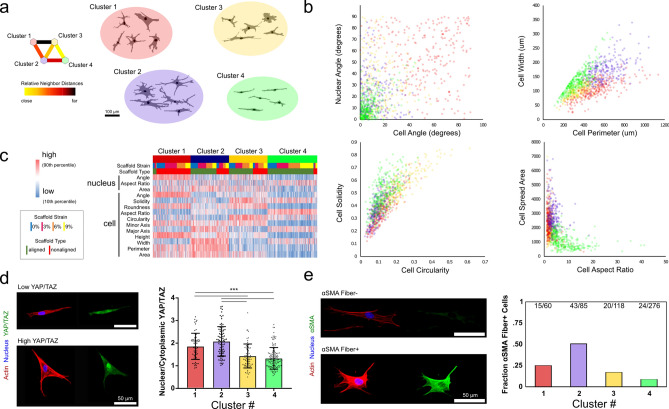
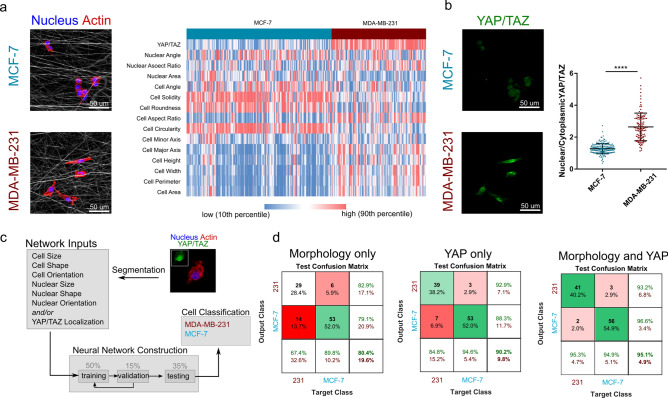
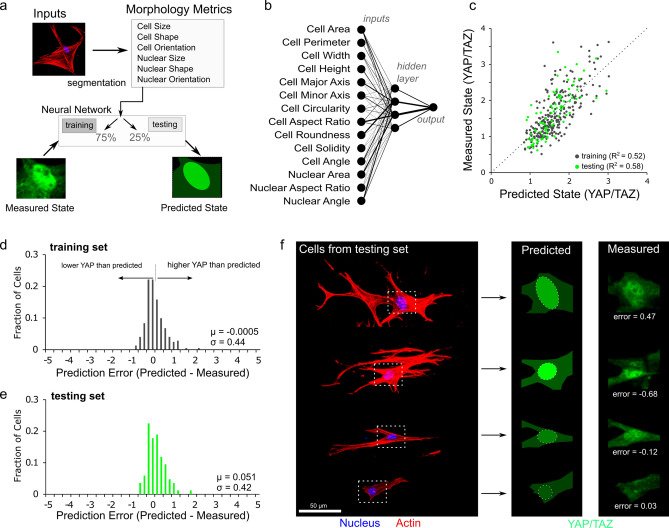
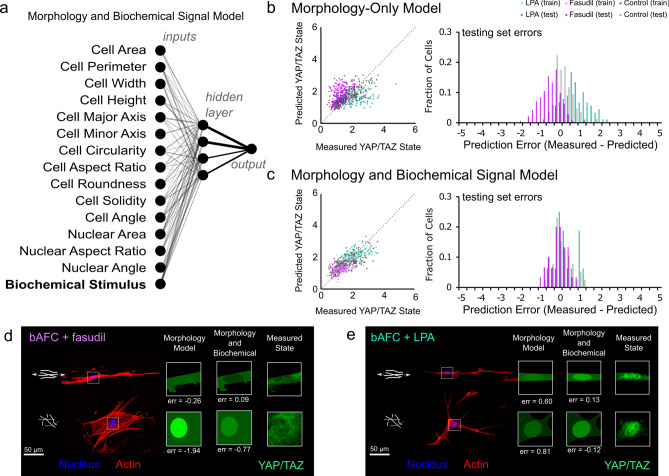
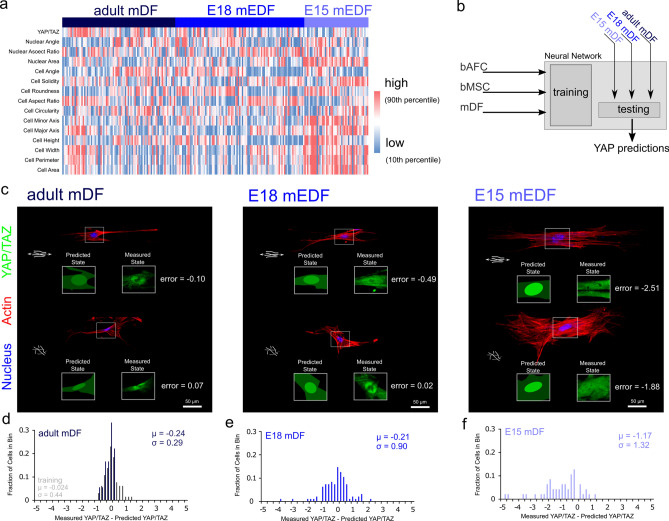
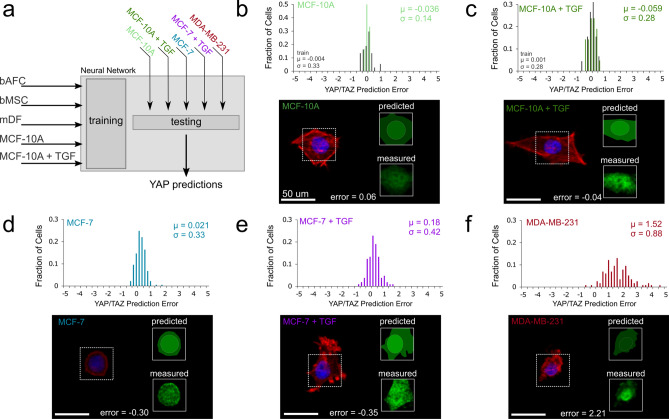
Cells interpret cues from and interact with fibrous microenvironments through the body based on the mechanics and organization of these environments and the phenotypic state of the cell. This in turn regulates mechanoactive pathways, such as the localization of mechanosensitive factors. Here, we leverage the microscale heterogeneity inherent to engineered fiber microenvironments to produce a large morphologic data set, across multiple cells types, while simultaneously measuring mechanobiological response (YAP/TAZ nuclear localization) at the single cell level. This dataset describing a large dynamic range of cell morphologies and responses was coupled with a machine learning approach to predict the mechanobiological state of individual cells from multiple lineages. We also noted that certain cells (e.g., invasive cancer cells) or biochemical perturbations (e.g., modulating contractility) can limit the predictability of cells in a universal context. Leveraging this finding, we developed further models that incorporate biochemical cues for single cell prediction or identify individual cells that do not follow the established rules. The models developed here provide a tool for connecting cell morphology and signaling, incorporating biochemical cues in predictive models, and identifying aberrant cell behavior at the single cell level.
细胞通过身体感知和与纤维微环境相互作用的线索,基于这些环境的力学和组织特性以及细胞的表型状态。这反过来又调节机械激活途径,例如机械敏感因子的定位。在这里,我们利用工程纤维微环境固有的微尺度异质性,生成一个大规模的形态学数据集,涵盖多种细胞类型,同时在单细胞水平上测量机械生物学反应(YAP/TAZ 核定位)。该数据集描述了细胞形态和反应的大范围动态范围,并与机器学习方法相结合,从多个谱系预测单个细胞的机械生物学状态。我们还注意到,某些细胞(例如侵袭性癌细胞)或生化扰动(例如调节收缩性)可以限制在普遍情况下细胞的可预测性。利用这一发现,我们开发了进一步的模型,这些模型将单个细胞预测的生化线索或识别不符合既定规则的单个细胞纳入其中。这里开发的模型提供了一种连接细胞形态和信号的工具,将生化线索纳入预测模型,并在单细胞水平上识别异常细胞行为。