Li Haixing, Luo Haibo, Huan Wang, Shi Zelin, Yan Chongnan, Wang Lanbo, Mu Yueming, Liu Yunpeng
Shenyang Institute of Automation, Chinese Academy of Sciences, No. 114 Nanta Street, Shenhe District, Shenyang City, Liaoning Province China.
Institutes for Robotics and Intelligent Manufacturing, Chinese Academy of Sciences, Shenyang Institute of Automation, No. 114 Nanta Street, Shenhe District, Shenyang City, Liaoning Province China.
Neural Comput Appl. 2021;33(18):11589-11602. doi: 10.1007/s00521-021-05856-4. Epub 2021 Mar 10.
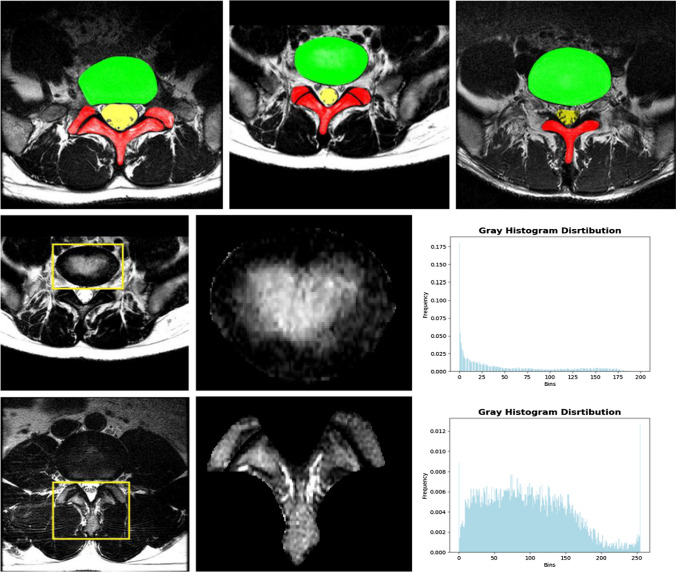
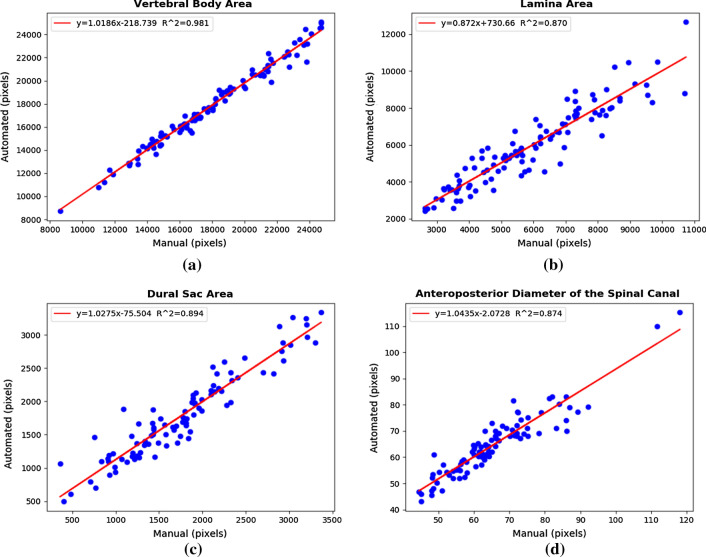
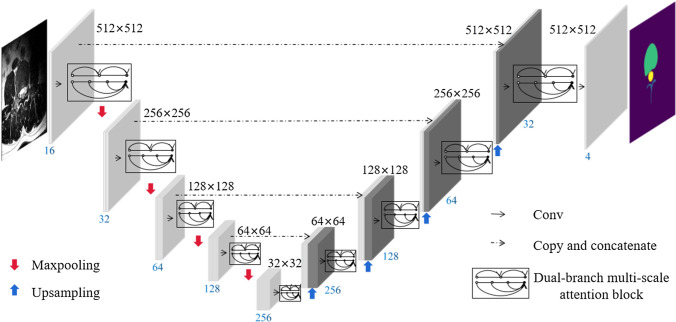
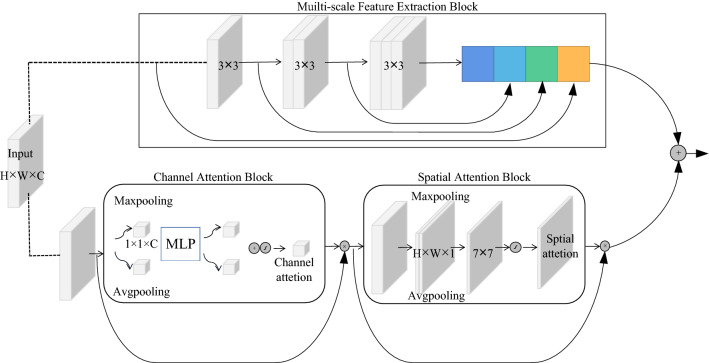
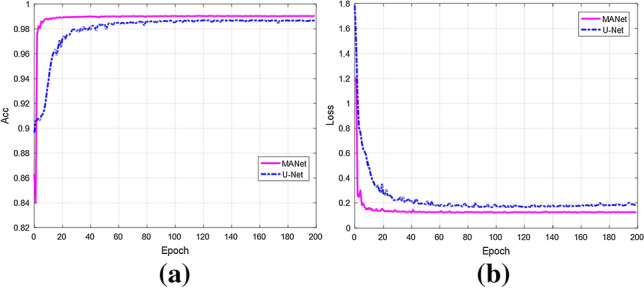
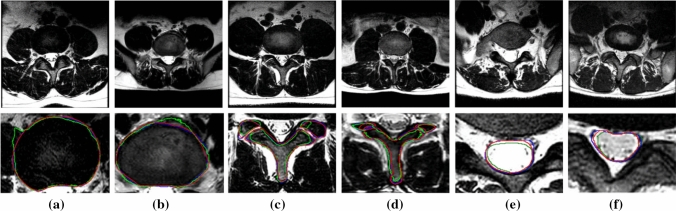
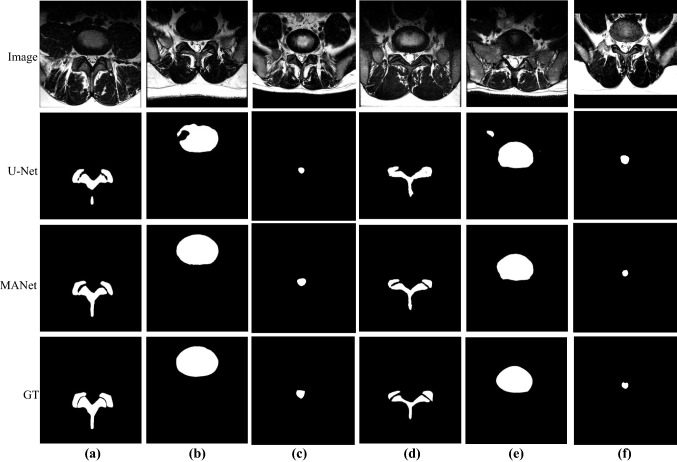
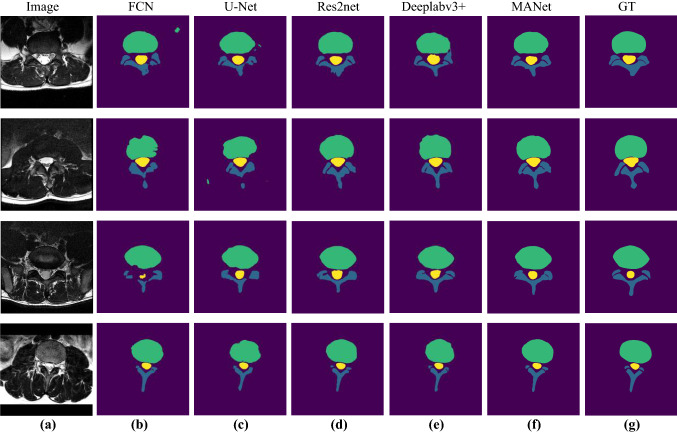
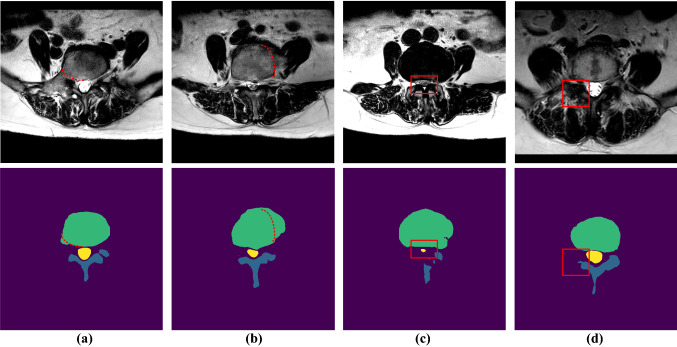
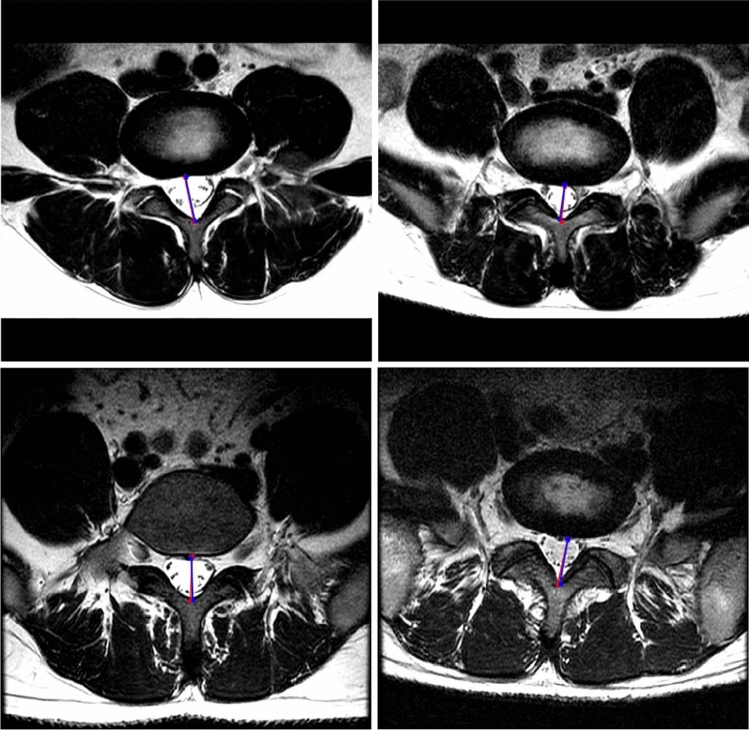
Lumbar spinal stenosis (LSS) is a lumbar disease with a high incidence in recent years. Accurate segmentation of the vertebral body, lamina and dural sac is a key step in the diagnosis of LSS. This study presents an lumbar spine magnetic resonance imaging image segmentation method based on deep learning. In addition, we define the quantitative evaluation methods of two clinical indicators (that is the anteroposterior diameter of the spinal canal and the cross-sectional area of the dural sac) to assist LSS diagnosis. To improve the segmentation performance, a dual-branch multi-scale attention module is embedded into the network. It contains multi-scale feature extraction based on three 3 × 3 convolution operators and vital information selection based on attention mechanism. In the experiment, we used lumbar datasets from the spine surgery department of Shengjing Hospital of China Medical University to evaluate the effect of the method embedded the dual-branch multi-scale attention module. Compared with other state-of-the-art methods, the average dice similarity coefficient was improved from 0.9008 to 0.9252 and the average surface distance was decreased from 6.40 to 2.71 mm.
腰椎管狭窄症(LSS)是近年来发病率较高的一种腰椎疾病。准确分割椎体、椎板和硬脊膜囊是LSS诊断的关键步骤。本研究提出了一种基于深度学习的腰椎磁共振成像图像分割方法。此外,我们定义了两种临床指标(即椎管前后径和硬脊膜囊横截面积)的定量评估方法,以辅助LSS诊断。为了提高分割性能,在网络中嵌入了双分支多尺度注意力模块。它包含基于三个3×3卷积算子的多尺度特征提取和基于注意力机制的重要信息选择。在实验中,我们使用了中国医科大学盛京医院脊柱外科的腰椎数据集来评估嵌入双分支多尺度注意力模块的方法的效果。与其他现有方法相比,平均骰子相似系数从0.9008提高到0.9252,平均表面距离从6.40毫米降低到2.71毫米。