Shi Yin, Feng Xiaoqian, Lin Liming, Wang Jing, Chi Jiaying, Wu Biyuan, Zhou Guilin, Yu Feiyuan, Xu Qian, Liu Daojun, Quan Guilan, Lu Chao, Pan Xin, Cai Jianfeng, Wu Chuanbin
College of Pharmacy, Jinan University, Guangzhou, Guangdong, 511443, China.
Department of Pharmaceutics, School of Pharmaceutical Sciences, Sun Yat-Sen University, Guangzhou, Guangdong, 510006, China.
Bioact Mater. 2021 Oct;6(10):3207-3217. doi: 10.1016/j.bioactmat.2021.02.038. Epub 2021 Mar 11.
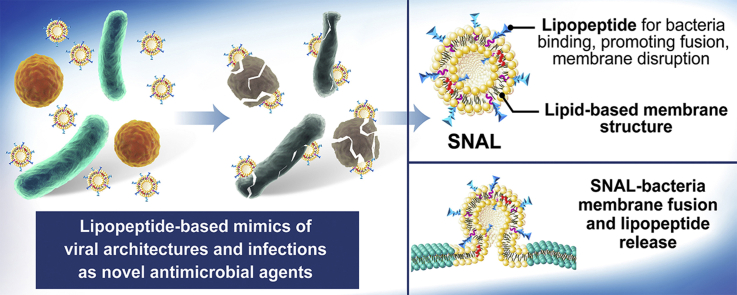
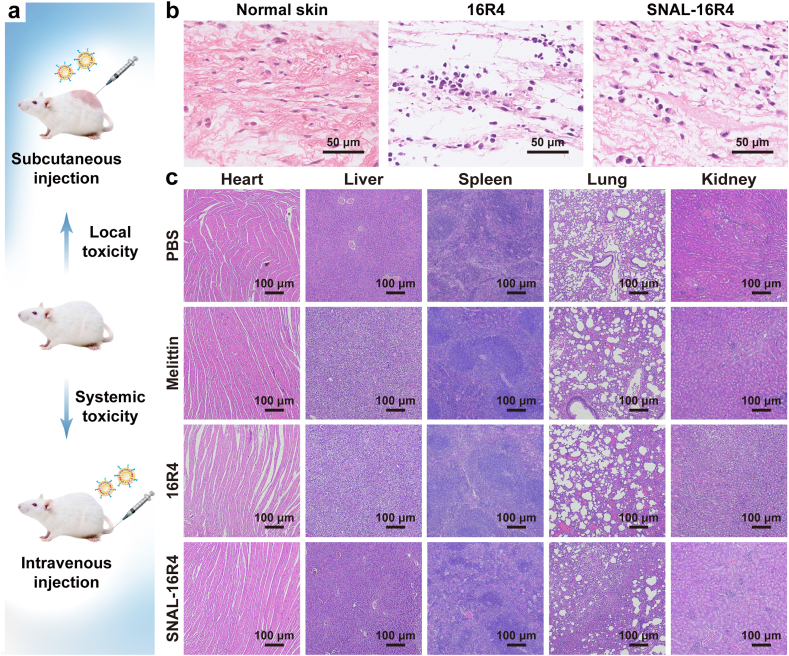
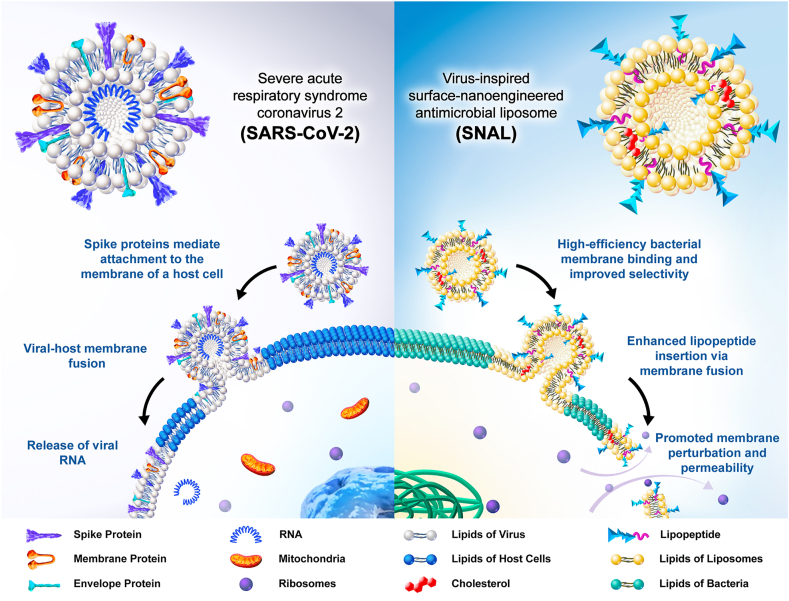
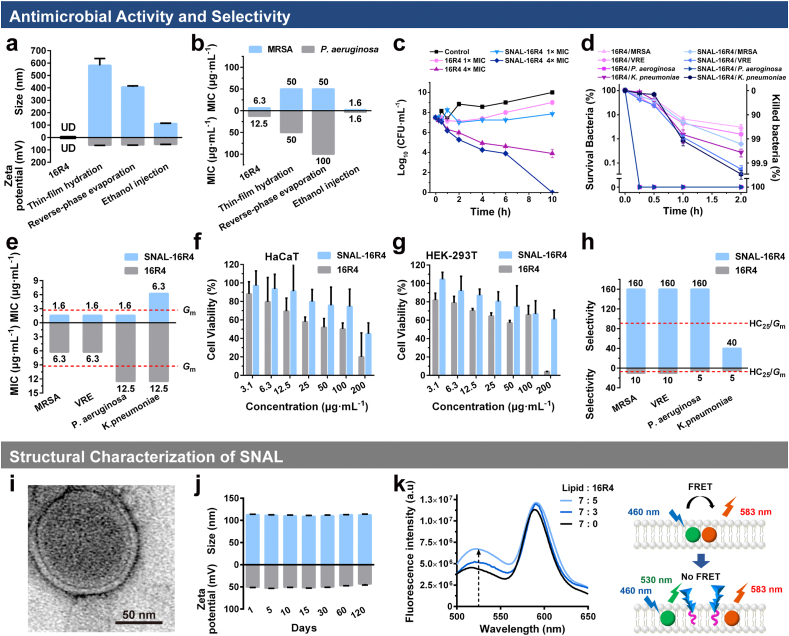
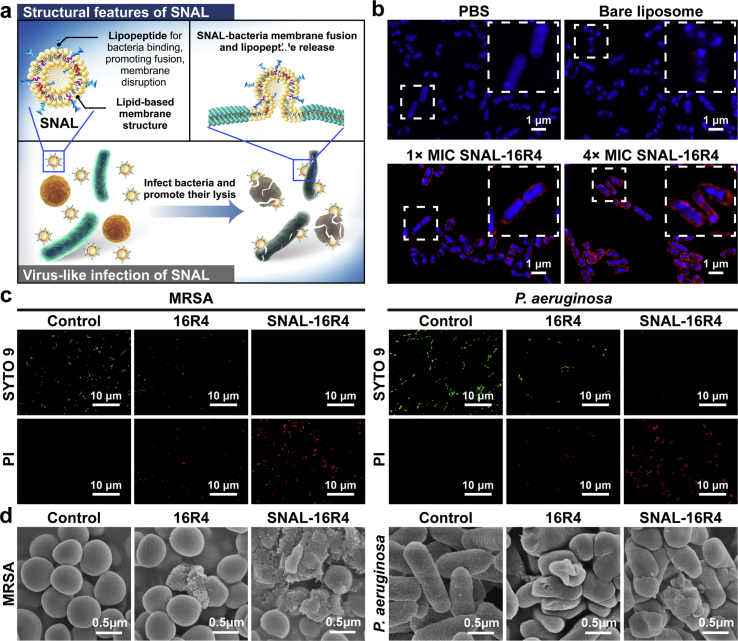
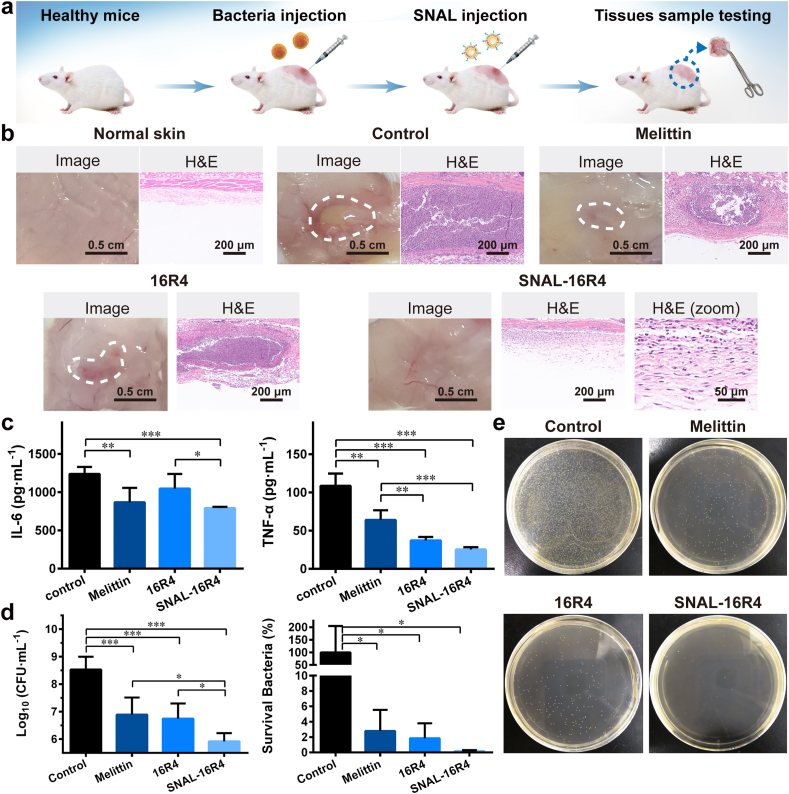
Enveloped viruses such as SARS-CoV-2 frequently have a highly infectious nature and are considered effective natural delivery systems exhibiting high efficiency and specificity. Since simultaneously enhancing the activity and selectivity of lipopeptides is a seemingly unsolvable problem for conventional chemistry and pharmaceutical approaches, we present a biomimetic strategy to construct lipopeptide-based mimics of viral architectures and infections to enhance their antimicrobial efficacy while avoiding side effects. Herein, a surface-nanoengineered antimicrobial liposome (SNAL) is developed with the morphological features of enveloped viruses, including a moderate size range, lipid-based membrane structure, and highly lipopeptide-enriched bilayer surface. The SNAL possesses virus-like infection to bacterial cells, which can mediate high-efficiency and high-selectivity bacteria binding, rapidly attack and invade bacteria via plasma membrane fusion pathway, and induce a local "burst" release of lipopeptide to produce irreversible damage of cell membrane. Remarkably, viral mimics are effective against multiple pathogens with low minimum inhibitory concentrations (1.6-6.3 μg mL), high bactericidal efficiency of >99% within 2 h, >10-fold enhanced selectivity over free lipopeptide, 99.8% reduction in skin MRSA load after a single treatment, and negligible toxicity. This bioinspired design has significant potential to enhance the therapeutic efficacy of lipopeptides and may create new opportunities for designing next-generation antimicrobials.
像严重急性呼吸综合征冠状病毒 2(SARS-CoV-2)这样的包膜病毒通常具有高度传染性,被认为是高效且特异的天然递送系统。由于同时提高脂肽的活性和选择性对于传统化学和制药方法来说似乎是一个无法解决的问题,我们提出了一种仿生策略,构建基于脂肽的病毒结构和感染模拟物,以提高其抗菌效果同时避免副作用。在此,开发了一种具有包膜病毒形态特征的表面纳米工程抗菌脂质体(SNAL),包括适中的尺寸范围、基于脂质的膜结构以及富含脂肽的双层表面。SNAL 对细菌细胞具有类似病毒的感染能力,它可以介导高效且高选择性的细菌结合,通过质膜融合途径快速攻击并侵入细菌,并诱导脂肽局部“爆发”释放,从而对细胞膜造成不可逆损伤。值得注意的是,病毒模拟物对多种病原体有效,最低抑菌浓度低(1.6 - 6.3 μg/mL),在 2 小时内杀菌效率>99%,比游离脂肽的选择性提高>10 倍,单次治疗后皮肤耐甲氧西林金黄色葡萄球菌(MRSA)载量降低 99.8%,且毒性可忽略不计。这种受生物启发的设计在提高脂肽治疗效果方面具有巨大潜力,可能为设计下一代抗菌药物创造新机会。