Binzhou Medical University Hospital, The Yellow Rive Second Road, Binzhou City, Shandong Province, China.
Medicine (Baltimore). 2021 Mar 12;100(10):e25067. doi: 10.1097/MD.0000000000025067.
Cronkhite-Canada syndrome (CCS) is a rare non-familial polyposis syndrome characterized by multiple gastrointestinal polyps with the ectodermal triad. To date, many complications of CCS have been reported in the literature, but perianal condyloma acuminatum with malignant transformation has not been included.
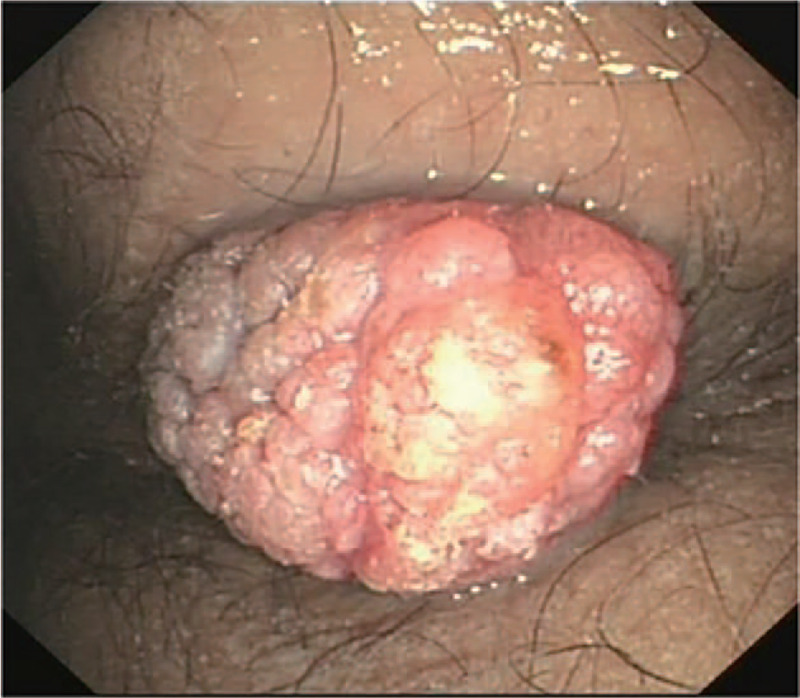
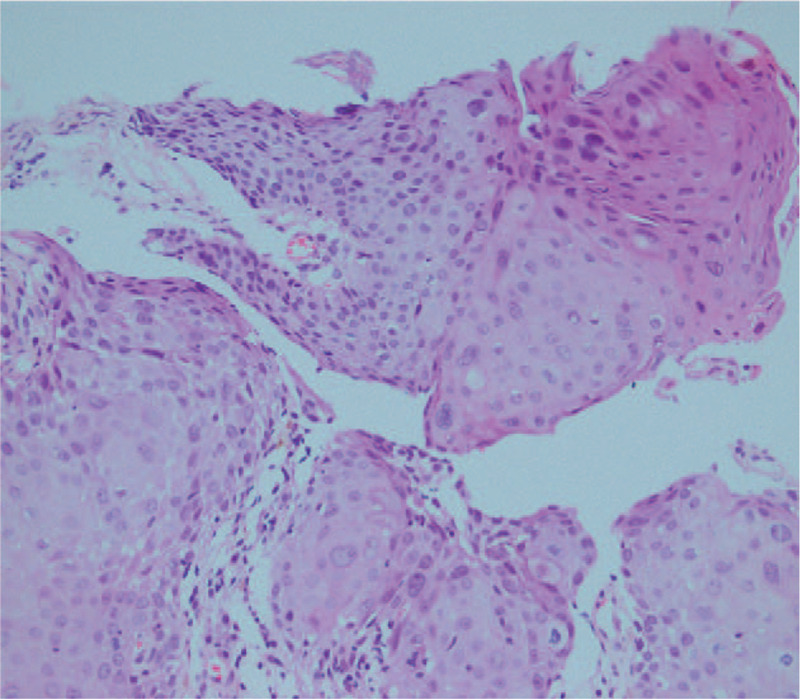
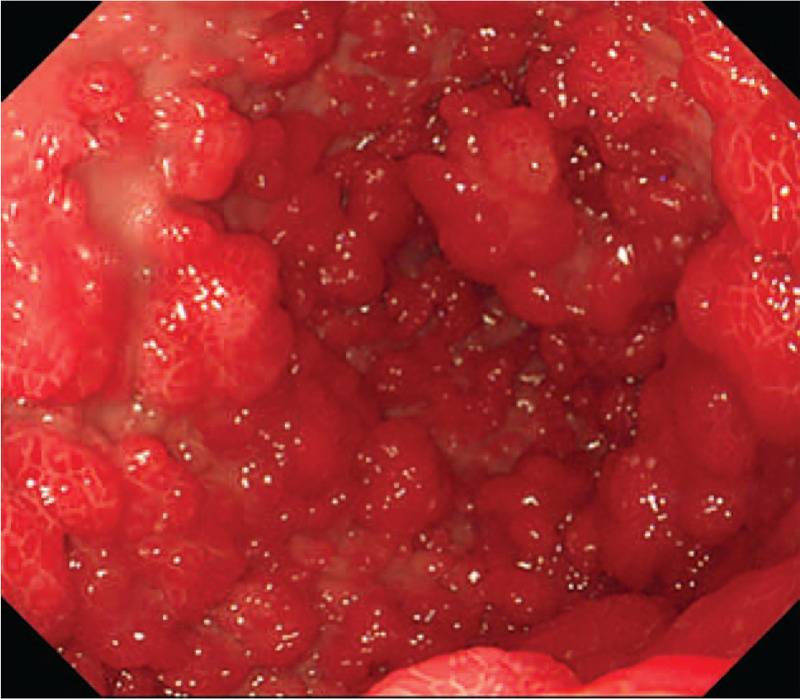
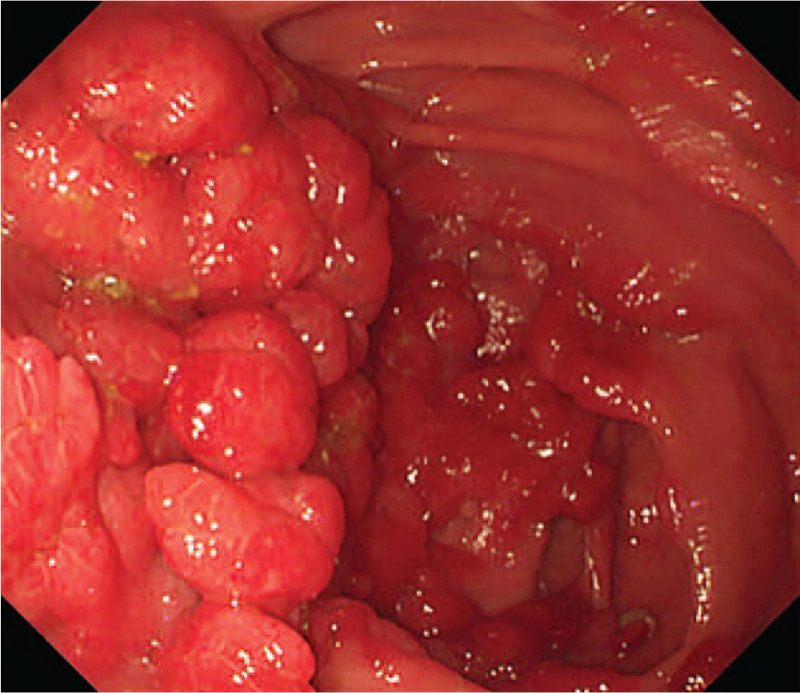
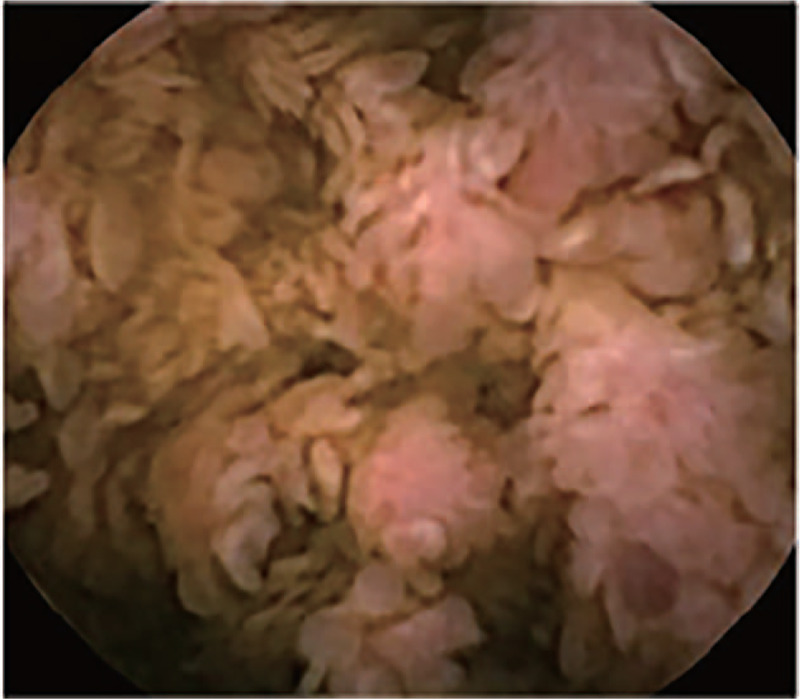
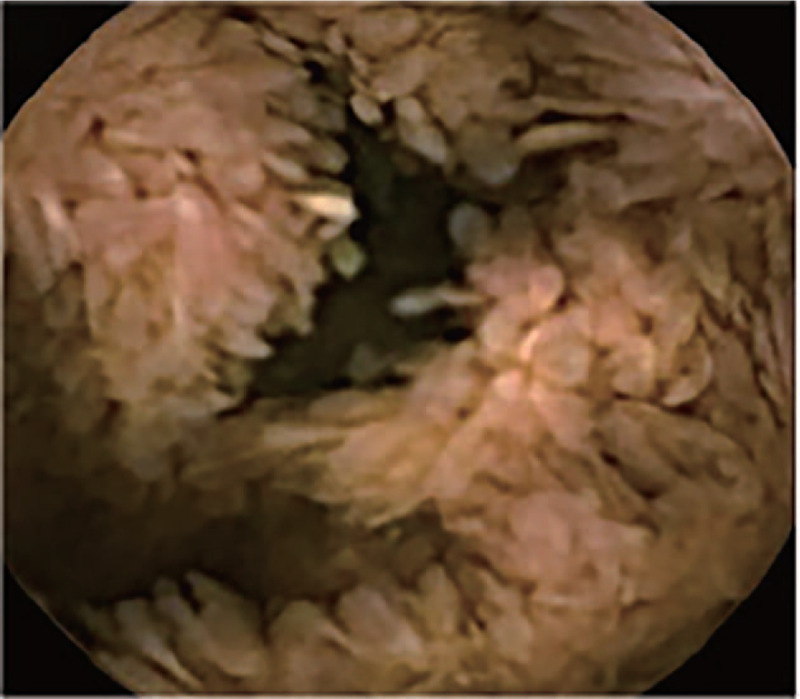
This report presents the case of a 52-year-old Chinese man who presented with diarrhea, loss of appetite, and weight loss. He developed skin pigmentation and atrophy of the fingernails and toenails. Upper gastrointestinal endoscopy, colonoscopy, capsule endoscopy, and enteroscopy revealed diffuse polyps along the entire digestive tract. Histopathological examination revealed polyps of different pathological types dominated by hamartoma. Physical examination revealed a crissum cauliflower-like neoplasm (2.5 × 2.0 cm). After perianal tumor resection, pathology suggested that this was a perianal condylomatous lesion with malignant transformation, as well as well-differentiated squamous cell carcinoma.
These clinical features and endoscopic findings were consistent with CCS which associated with perianal condyloma acuminatum with malignant transformation.
Clinical remission was achieved with glucocorticoid, azathioprine, and nutritional support.
At the 4-year follow-up, the patient had no diarrhea or loss of appetite, had gained 13 kg in weight, and the perianal tumor had not recurred.
No previous report has described CCS in a patient with perianal condyloma acuminatum with malignant transformation. As both conditions are related to immune disorders, their occurrence may be correlated.
Cronkhite-Canada 综合征(CCS)是一种罕见的非家族性多发性息肉病综合征,其特征为多发性胃肠道息肉伴外胚层三联征。迄今为止,CCS 的许多并发症已在文献中报道,但伴恶性转化的肛周尖锐湿疣尚未包括在内。
本报告介绍了一例 52 岁的中国男性,其主要表现为腹泻、食欲不振和体重减轻。他出现皮肤色素沉着和指甲及趾甲萎缩。上消化道内镜、结肠镜、胶囊内镜和小肠镜检查显示整个消化道弥漫性息肉。组织病理学检查显示以错构瘤为主的不同病理类型的息肉。体格检查发现肛门处有一个类似于菜花的肿瘤(2.5×2.0cm)。肛周肿瘤切除术后,病理提示为肛周尖锐湿疣伴恶性转化,以及分化良好的鳞状细胞癌。
这些临床特征和内镜表现与 CCS 一致,CCS 伴有肛周尖锐湿疣伴恶性转化。
患者接受了糖皮质激素、巯嘌呤和营养支持治疗,达到临床缓解。
在 4 年的随访中,患者无腹泻或食欲不振,体重增加了 13kg,肛周肿瘤未复发。
之前没有报道过 CCS 患者伴有肛周尖锐湿疣伴恶性转化。由于这两种情况都与免疫紊乱有关,它们的发生可能相关。