Zhang Xu, Maity Tapan K, Ross Karen E, Qi Yue, Cultraro Constance M, Bahta Meriam, Pitts Stephanie, Keswani Meghana, Gao Shaojian, Nguyen Khoa Dang P, Cowart Julie, Kirkali Fatos, Wu Cathy, Guha Udayan
Thoracic and GI Malignancies Branch, Center for Cancer Research, NCI, NIH, Bethesda, Maryland.
Dept. of Biochemistry and Molecular & Cellular Biology, Georgetown University Medical Center, Washington, D.C.
Cancer Res. 2021 Jun 1;81(11):3051-3066. doi: 10.1158/0008-5472.CAN-20-2435. Epub 2021 Mar 16.
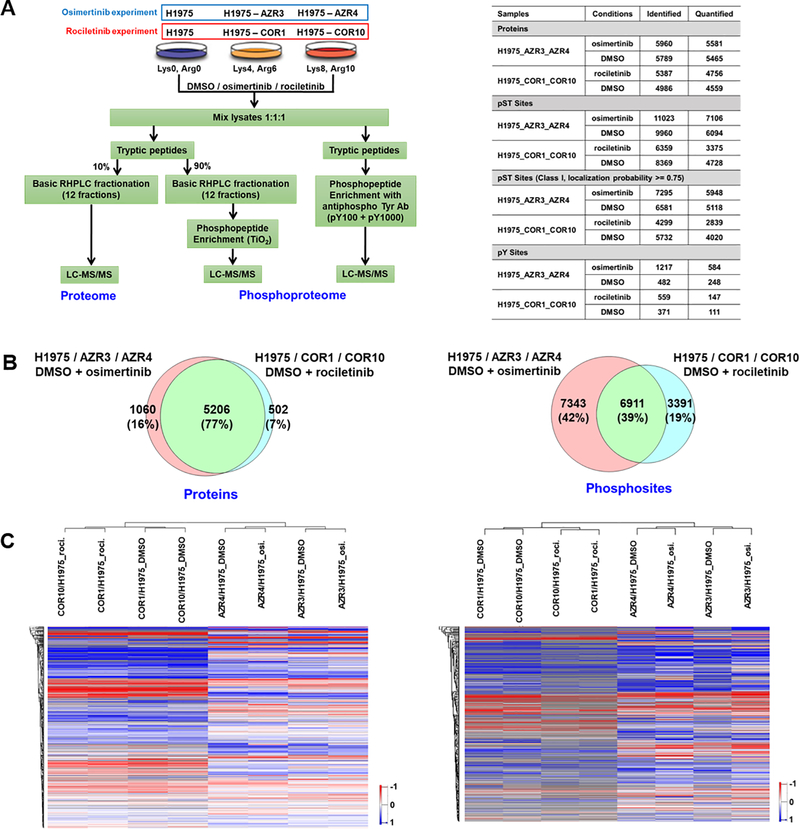
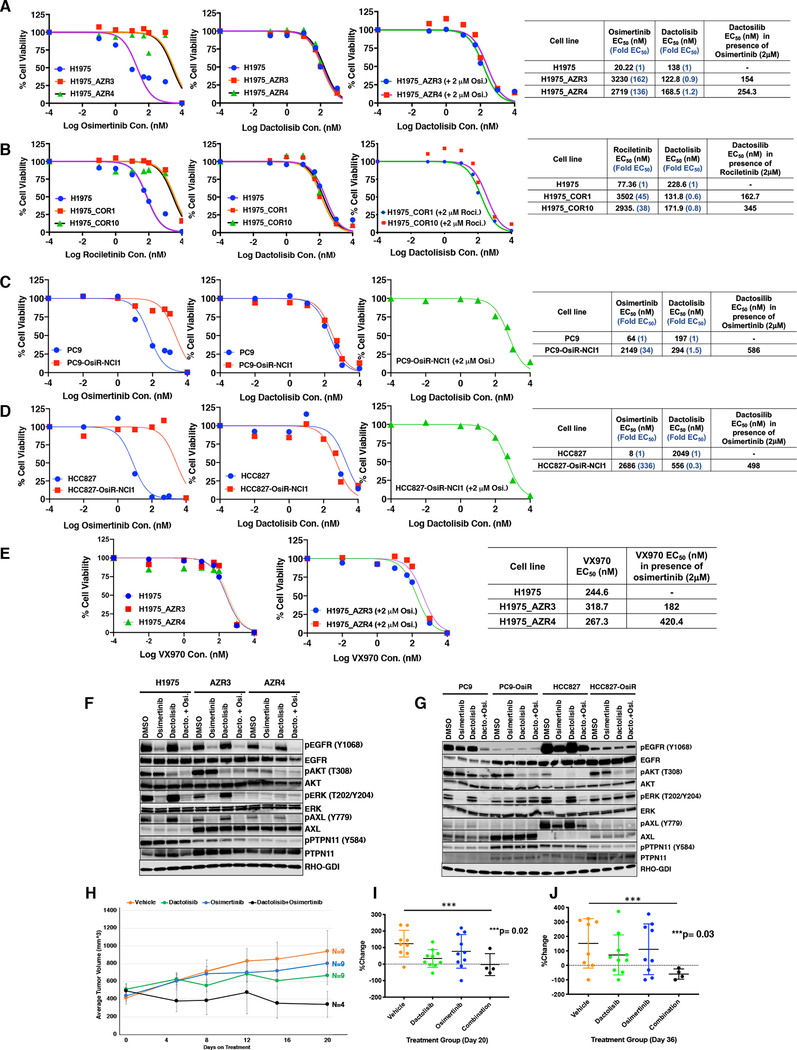
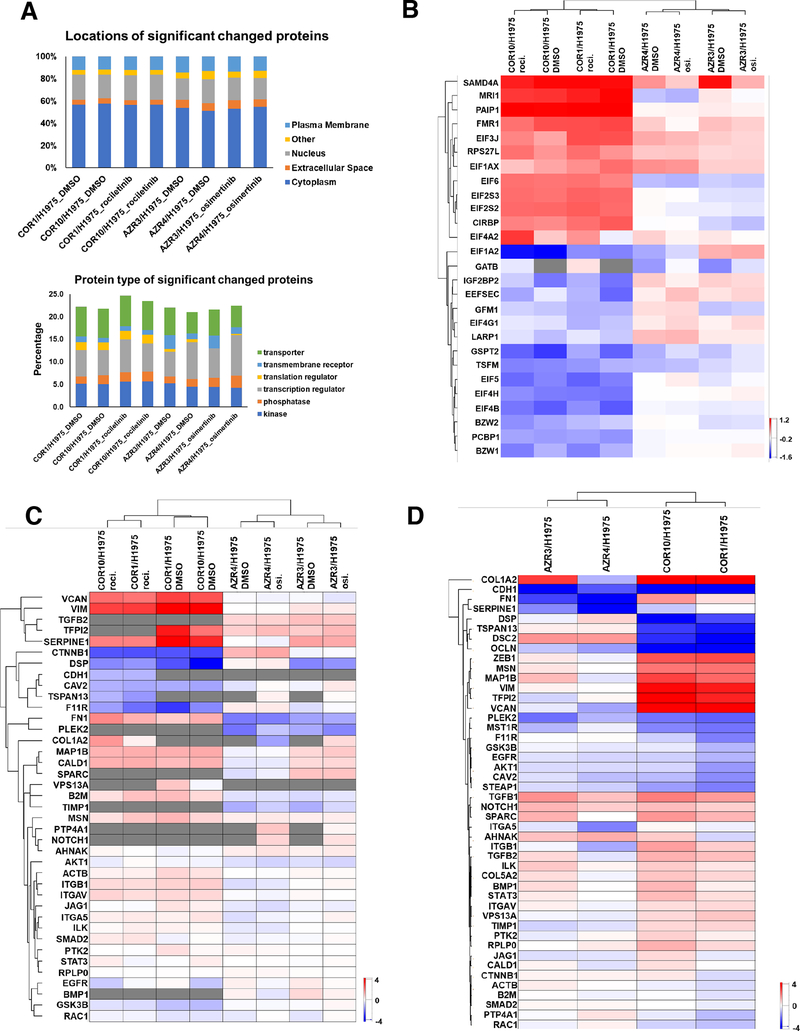
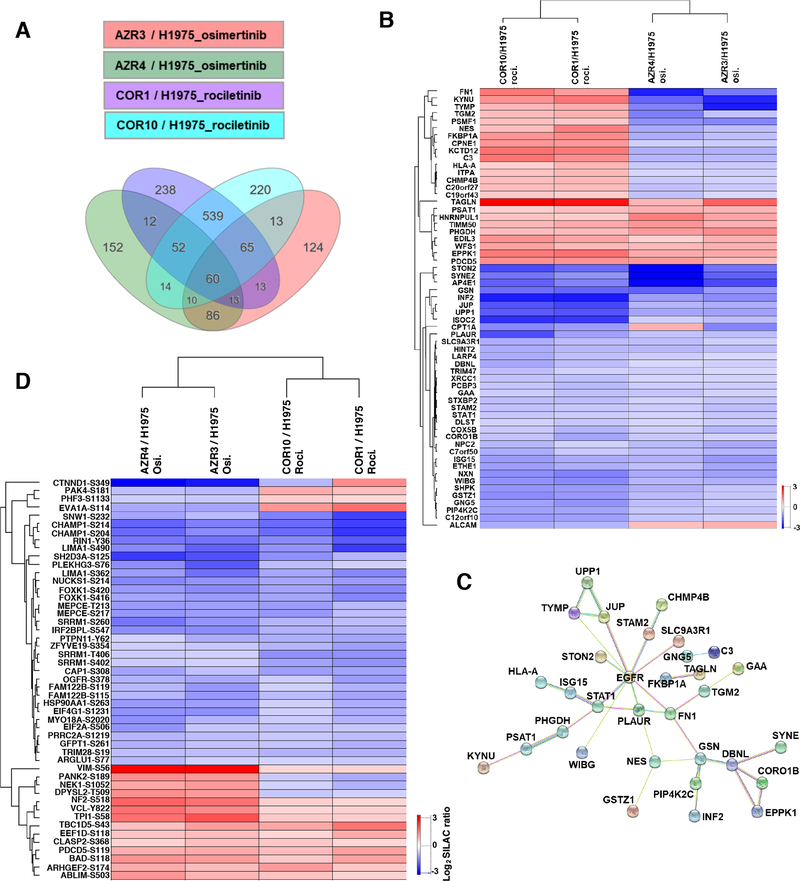
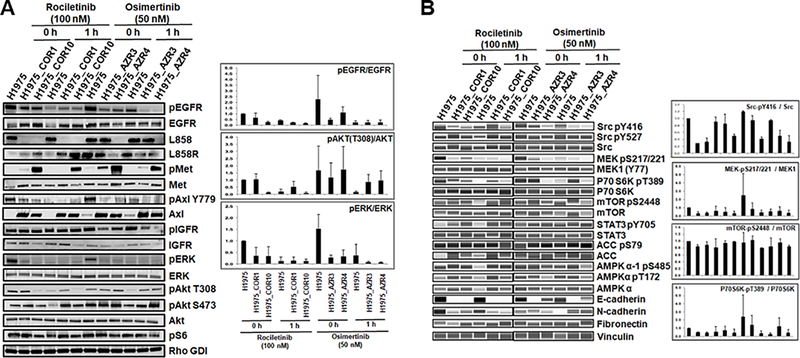
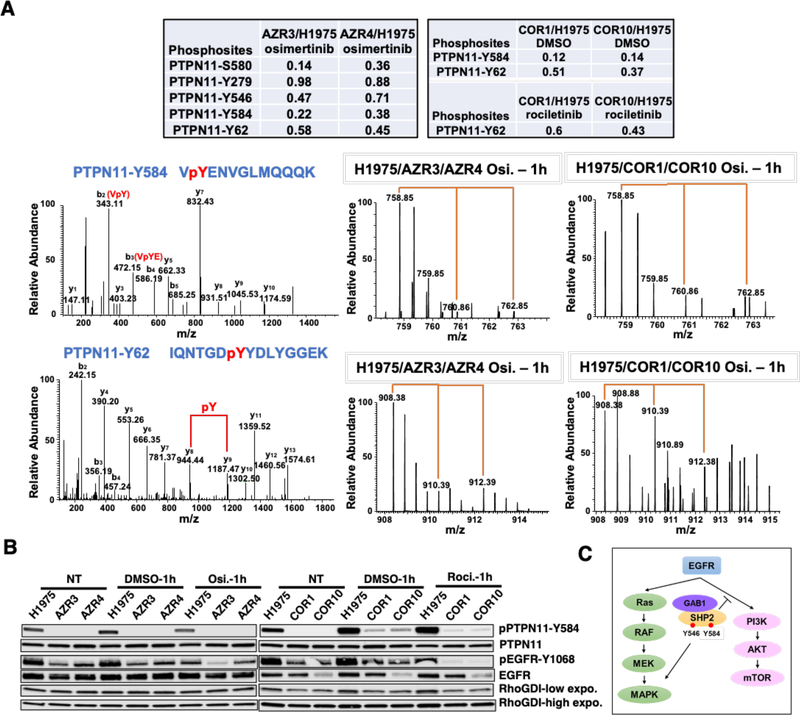
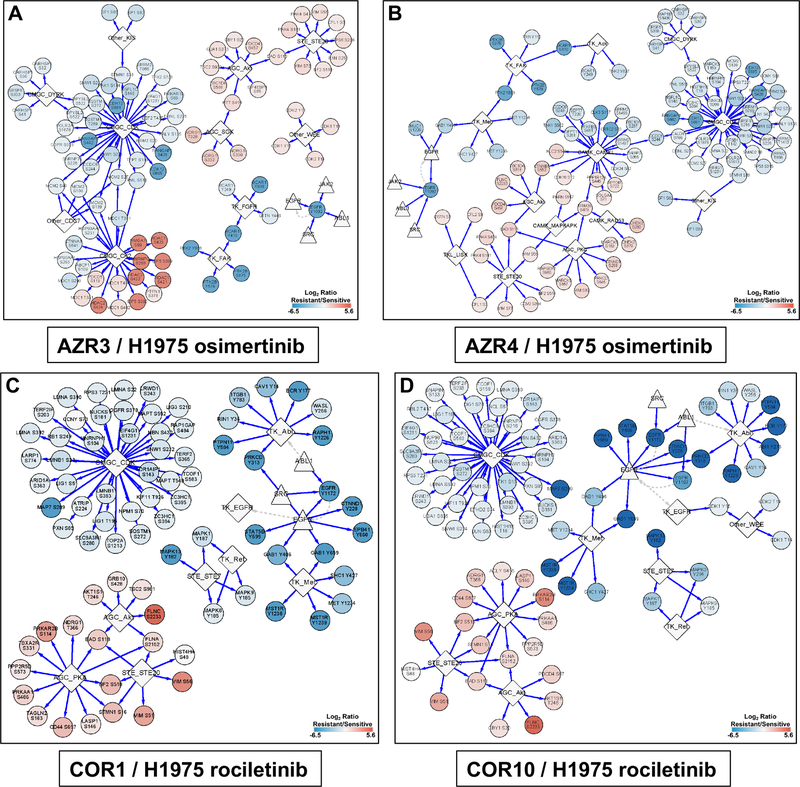
Lung cancer is the leading cause of cancer mortality worldwide. The treatment of patients with lung cancer harboring mutant EGFR with orally administered EGFR tyrosine kinase inhibitors (TKI) has been a paradigm shift. Osimertinib and rociletinib are third-generation irreversible EGFR TKIs targeting the EGFR T790M mutation. Osimertinib is the current standard of care for patients with EGFR mutations due to increased efficacy, lower side effects, and enhanced brain penetrance. Unfortunately, all patients develop resistance. Genomic approaches have primarily been used to interrogate resistance mechanisms. Here we characterized the proteome and phosphoproteome of a series of isogenic EGFR-mutant lung adenocarcinoma cell lines that are either sensitive or resistant to these drugs, comprising the most comprehensive proteomic dataset resource to date to investigate third generation EGFR TKI resistance in lung adenocarcinoma. Unbiased global quantitative mass spectrometry uncovered alterations in signaling pathways, revealed a proteomic signature of epithelial-mesenchymal transition, and identified kinases and phosphatases with altered expression and phosphorylation in TKI-resistant cells. Decreased tyrosine phosphorylation of key sites in the phosphatase SHP2 suggests its inhibition, resulting in subsequent inhibition of RAS/MAPK and activation of PI3K/AKT pathways. Anticorrelation analyses of this phosphoproteomic dataset with published drug-induced P100 phosphoproteomic datasets from the Library of Integrated Network-Based Cellular Signatures program predicted drugs with the potential to overcome EGFR TKI resistance. The PI3K/MTOR inhibitor dactolisib in combination with osimertinib overcame resistance both and . Taken together, this study reveals global proteomic alterations upon third generation EGFR TKI resistance and highlights potential novel approaches to overcome resistance. SIGNIFICANCE: Global quantitative proteomics reveals changes in the proteome and phosphoproteome in lung cancer cells resistant to third generation EGFR TKIs, identifying the PI3K/mTOR inhibitor dactolisib as a potential approach to overcome resistance.
肺癌是全球癌症死亡的主要原因。使用口服表皮生长因子受体(EGFR)酪氨酸激酶抑制剂(TKI)治疗携带EGFR突变的肺癌患者是一种治疗模式的转变。奥希替尼和罗西替尼是针对EGFR T790M突变的第三代不可逆EGFR TKI。由于疗效提高、副作用降低和脑渗透性增强,奥希替尼是目前EGFR突变患者的标准治疗药物。不幸的是,所有患者都会产生耐药性。基因组学方法主要用于探究耐药机制。在此,我们对一系列对这些药物敏感或耐药的同基因EGFR突变肺腺癌细胞系的蛋白质组和磷酸化蛋白质组进行了表征,这是迄今为止用于研究肺腺癌中第三代EGFR TKI耐药性的最全面的蛋白质组学数据集资源。无偏倚的全局定量质谱分析揭示了信号通路的改变,揭示了上皮-间质转化的蛋白质组学特征,并鉴定了TKI耐药细胞中表达和磷酸化发生改变的激酶和磷酸酶。磷酸酶SHP2关键位点的酪氨酸磷酸化减少表明其受到抑制,随后导致RAS/MAPK受到抑制和PI3K/AKT通路的激活。该磷酸化蛋白质组数据集与基于整合网络的细胞特征库计划中已发表的药物诱导的P100磷酸化蛋白质组数据集的反相关分析预测了具有克服EGFR TKI耐药性潜力的药物。PI3K/MTOR抑制剂达可替尼与奥希替尼联合使用克服了耐药性。综上所述,本研究揭示了第三代EGFR TKI耐药后的全局蛋白质组学改变,并突出了克服耐药性的潜在新方法。意义:全局定量蛋白质组学揭示了对第三代EGFR TKIs耐药的肺癌细胞中蛋白质组和磷酸化蛋白质组的变化,确定PI3K/mTOR抑制剂达可替尼是一种克服耐药性的潜在方法。