Department of Earth and Planetary Sciences, Yale University, New Haven, CT, USA.
School of Earth and Environment, Institute of Geophysics and Tectonics, The University of Leeds, Leeds, UK.
Nat Commun. 2021 Mar 16;12(1):1535. doi: 10.1038/s41467-021-21849-2.
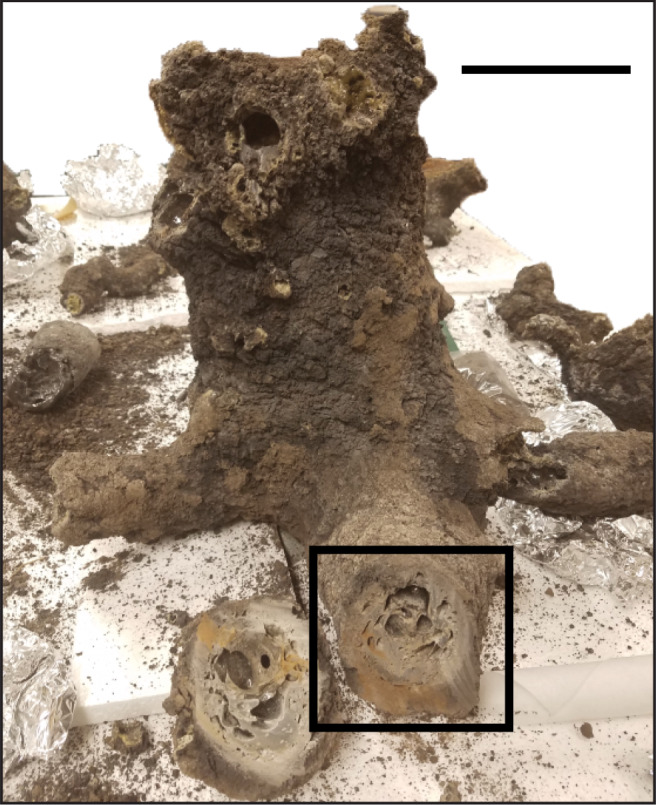
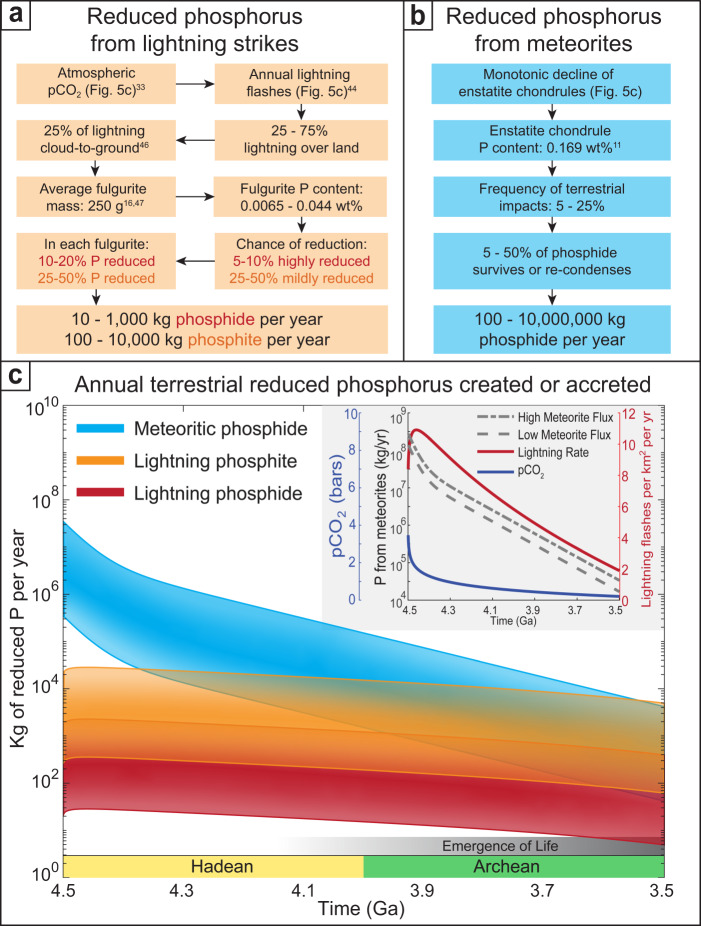
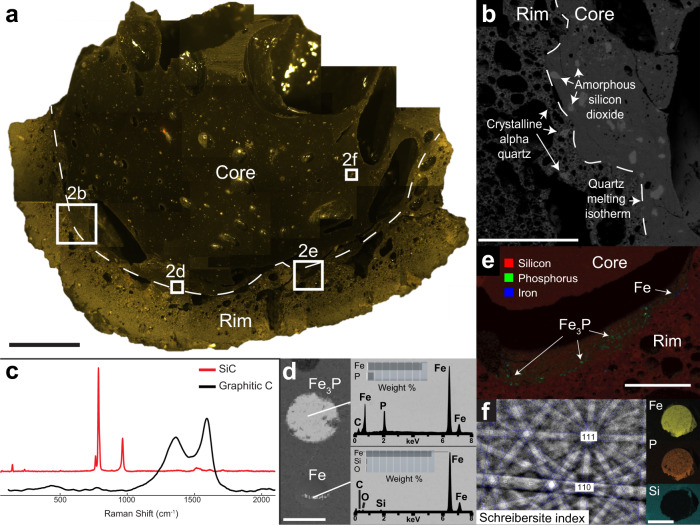
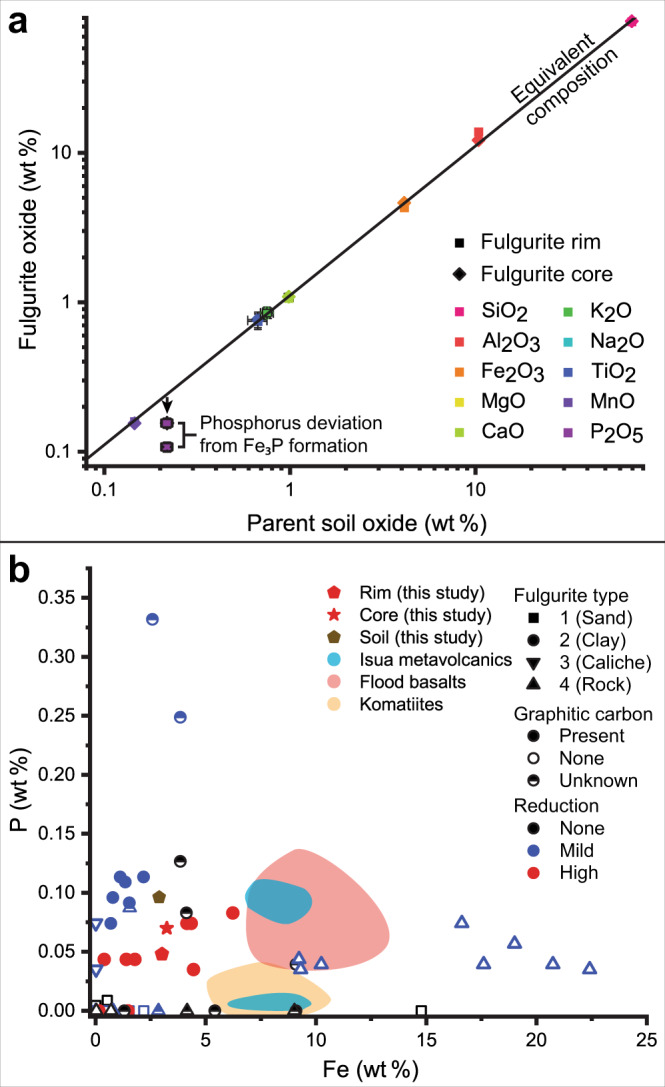
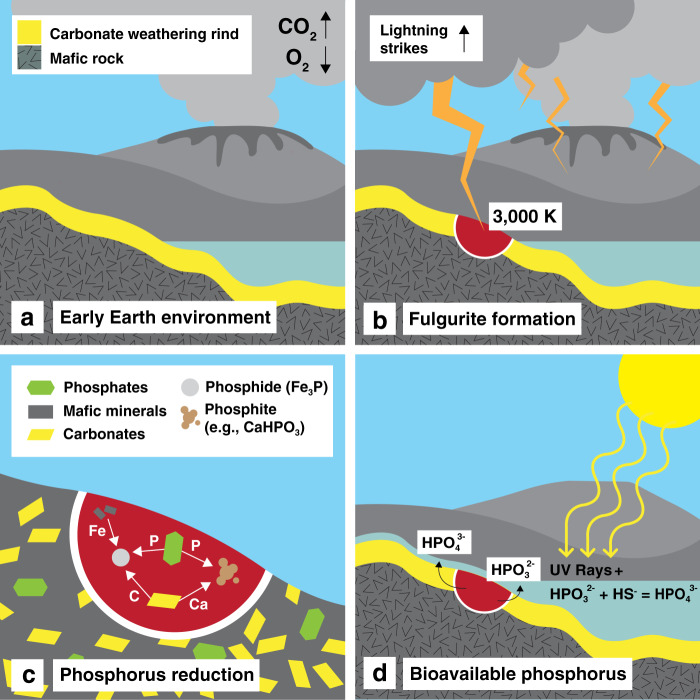
When hydrated, phosphides such as the mineral schreibersite, (Fe,Ni)P, allow for the synthesis of important phosphorus-bearing organic compounds. Such phosphides are common accessory minerals in meteorites; consequently, meteorites are proposed to be a main source of prebiotic reactive phosphorus on early Earth. Here, we propose an alternative source for widespread phosphorus reduction, arguing that lightning strikes on early Earth potentially formed 10-1000 kg of phosphide and 100-10,000 kg of phosphite and hypophosphite annually. Therefore, lightning could have been a significant source of prebiotic, reactive phosphorus which would have been concentrated on landmasses in tropical regions. Lightning strikes could likewise provide a continual source of prebiotic reactive phosphorus independent of meteorite flux on other Earth-like planets, potentially facilitating the emergence of terrestrial life indefinitely.
当水合时,诸如矿物磷铁镍矿(Fe,Ni)P 之类的磷化物允许合成重要的含磷有机化合物。此类磷化物是陨石中常见的次要矿物;因此,陨石被认为是早期地球上原始生物反应性磷的主要来源。在这里,我们提出了另一种广泛的磷还原来源,认为早期地球上的雷击可能每年形成 10-1000 公斤的磷化物和 100-10000 公斤的亚磷酸盐和次磷酸盐。因此,闪电可能是原始生物反应性磷的重要来源,这些磷会集中在热带地区的陆地上。雷击同样可以为其他类似地球的行星上独立于陨石通量的原始生物反应性磷提供持续的来源,从而有可能无限期地促进陆地生命的出现。