Graduate School of Life Science, Hokkaido University, Sapporo, 060-0810, Japan.
Department of Chemistry, Dhaka University of Engineering and Technology, Gazipur Gazipur, 1700, Bangladesh.
Sci Rep. 2021 Mar 16;11(1):5971. doi: 10.1038/s41598-021-85559-x.
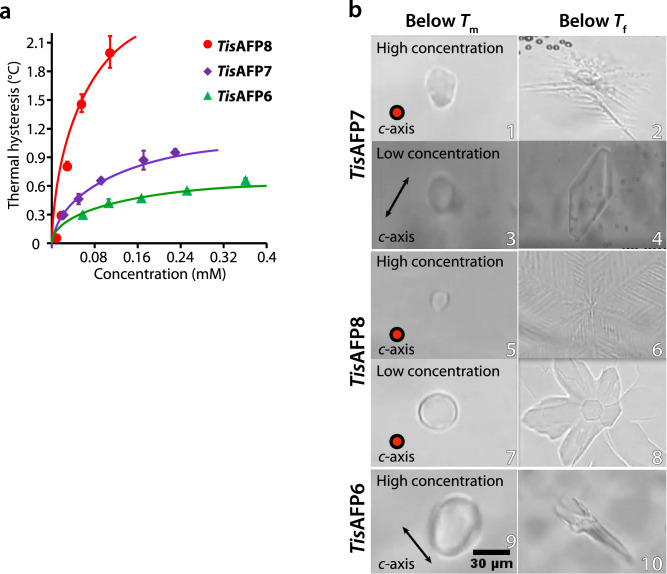
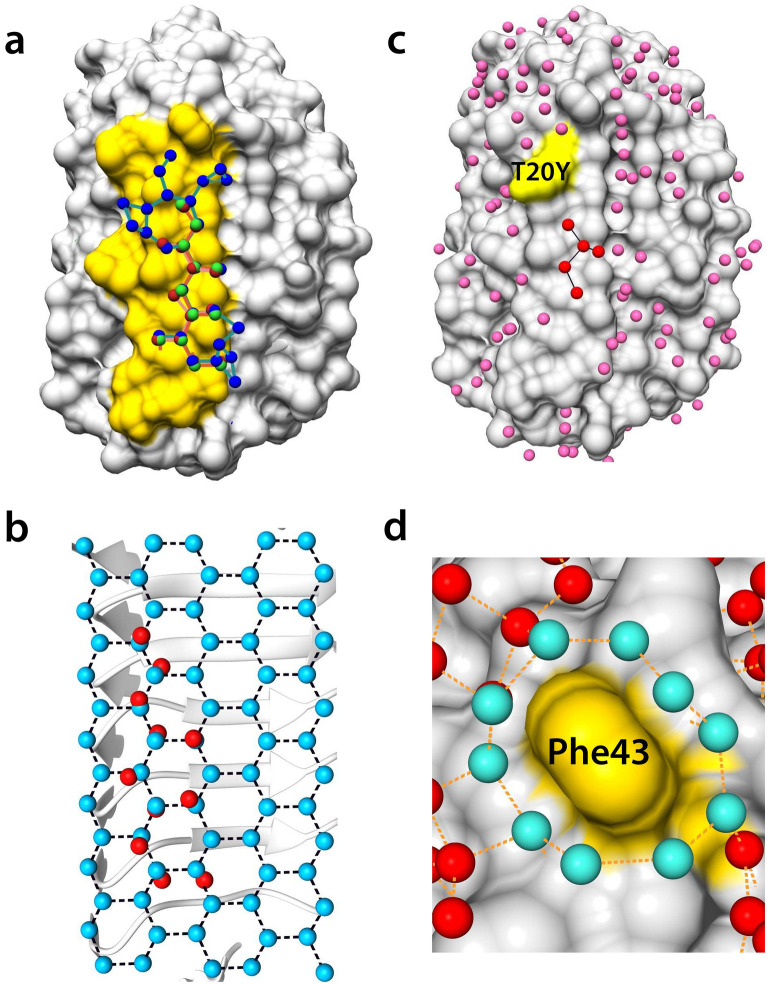
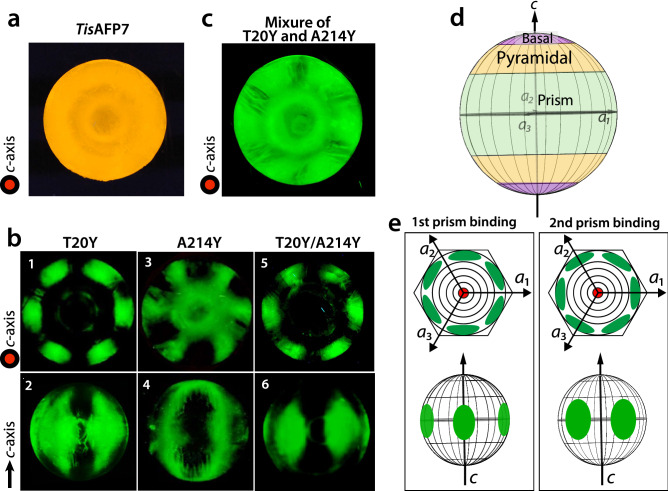
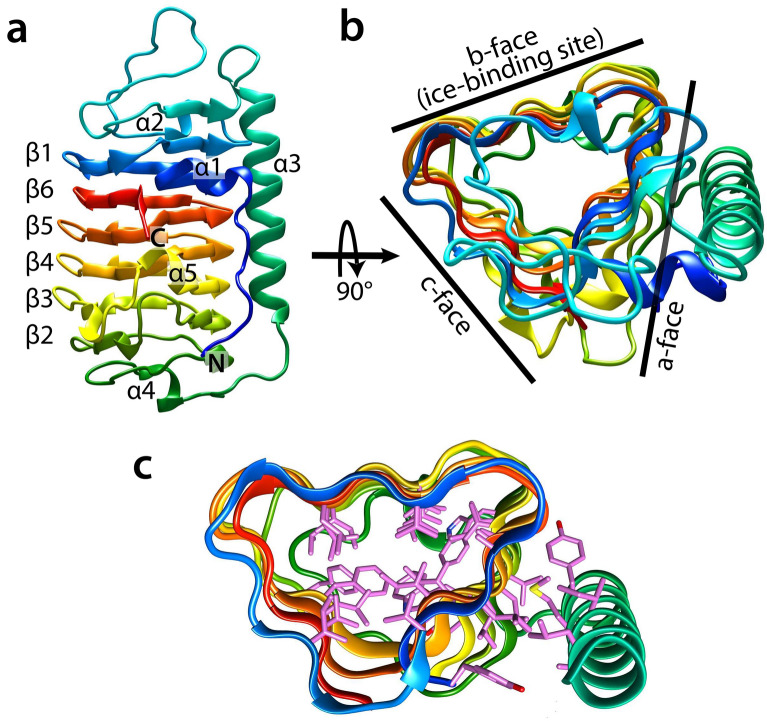
Antifreeze proteins (AFPs) inhibit ice growth by adsorbing onto specific ice planes. Microbial AFPs show diverse antifreeze activity and ice plane specificity, while sharing a common molecular scaffold. To probe the molecular mechanisms responsible for AFP activity, we here characterized the antifreeze activity and crystal structure of TisAFP7 from the snow mold fungus Typhula ishikariensis. TisAFP7 exhibited intermediate activity, with the ability to bind the basal plane, compared with a hyperactive isoform TisAFP8 and a moderately active isoform TisAFP6. Analysis of the TisAFP7 crystal structure revealed a bound-water network arranged in a zigzag pattern on the surface of the protein's ice-binding site (IBS). While the three AFP isoforms shared the water network pattern, the network on TisAFP7 IBS was not extensive, which was likely related to its intermediate activity. Analysis of the TisAFP7 crystal structure also revealed the presence of additional water molecules that form a ring-like network surrounding the hydrophobic side chain of a crucial IBS phenylalanine, which might be responsible for the increased adsorption of AFP molecule onto the basal plane. Based on these observations, we propose that the extended water network and hydrophobic hydration at IBS together determine the TisAFP activity.
抗冻蛋白(AFPs)通过吸附在特定的冰面上来抑制冰的生长。微生物 AFP 表现出不同的抗冻活性和冰面特异性,同时共享一个共同的分子支架。为了探究 AFP 活性的分子机制,我们在这里对来自雪霉真菌 Typhula ishikariensis 的 TisAFP7 的抗冻活性和晶体结构进行了表征。与高活性同工型 TisAFP8 和中活性同工型 TisAFP6 相比,TisAFP7 表现出中等活性,能够结合基面。TisAFP7 晶体结构的分析揭示了在蛋白质冰结合位点(IBS)表面排列成之字形的结合水网络。虽然这三种 AFP 同工型共享水网络模式,但 TisAFP7 IBS 上的网络不广泛,这可能与其中等活性有关。对 TisAFP7 晶体结构的分析还揭示了存在额外的水分子,它们形成围绕 IBS 中关键苯丙氨酸疏水性侧链的环状网络,这可能是 AFP 分子增加吸附到基面的原因。基于这些观察结果,我们提出扩展的水网络和 IBS 处的疏水性水合作用共同决定了 TisAFP 的活性。