Komolafe Kayode, Komolafe Titilope Ruth, Fatoki Toluwase Hezekiah, Akinmoladun Afolabi Clement, Brai Bartholomew I C, Olaleye Mary Tolulope, Akindahunsi Afolabi Akintunde
Department of Biochemistry, Faculty of Science, Federal University Oye-Ekiti, PMB 373, Oye-Ekiti, Nigeria.
Department of Biochemistry, School of Sciences, The Federal University of Technology, PMB 704, Akure, Nigeria.
Rev Bras Farmacogn. 2021;31(2):142-161. doi: 10.1007/s43450-021-00132-x. Epub 2021 Mar 11.
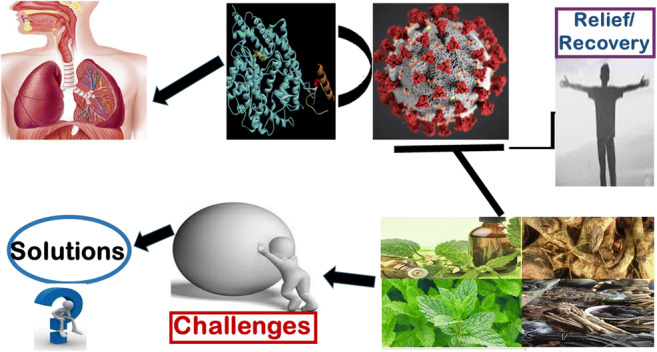
Coronavirus disease 2019 (COVID-19) is a virulent viral disease that has now become a public health emergency of global significance and still without an approved treatment regimen or cure. In the absence of curative drugs and with vaccines development still in progress, alternative approaches to stem the tide of the pandemic are being considered. The potential of a phytotherapeutic approach in the management of the dreaded disease has gained attention, especially in developing countries, with several claims of the development of anti-COVID-19 herbal formulations. This is a plausible approach especially with the increasing acceptance of herbal medicine in both alternative and orthodox medical practices worldwide. Also, the established efficacy of herbal remedies in the treatment of numerous viral diseases including those caused by coronaviruses, as well as diseases with symptoms associated with COVID-19, presents a valid case for serious consideration of herbal medicine in the treatment of COVID-19. However, there are legitimate concerns and daunting challenges with the use of herbs and herbal products. These include issues of quality control, unethical production practice, inadequate information on the composition, use and mechanisms, weak regulatory policies, herb-drug interactions and adverse reactions, and the tendency for abuse. This review discusses the feasibility of intervention with herbal medicine in the COVID-19 pandemic and the need to take proactive measures to protect public health by improving the quality and safety of herbal medicine deployed to combat the disease. Graphical abstract.
The online version contains supplementary material available at 10.1007/s43450-021-00132-x.
2019冠状病毒病(COVID-19)是一种烈性病毒性疾病,现已成为具有全球意义的突发公共卫生事件,目前仍没有获批的治疗方案或治愈方法。在缺乏治愈药物且疫苗研发仍在进行的情况下,人们正在考虑采用替代方法来遏制疫情蔓延。植物疗法在应对这种可怕疾病方面的潜力已受到关注,尤其是在发展中国家,已有多项关于开发抗COVID-19草药配方的报道。这是一种可行的方法,特别是鉴于全球范围内替代医学和传统医学实践中对草药的接受度不断提高。此外,草药疗法在治疗包括冠状病毒引起的疾病以及具有与COVID-19相关症状的疾病在内的众多病毒性疾病方面已确立的疗效,为在治疗COVID-19时认真考虑草药疗法提供了有力依据。然而,使用草药和草药产品存在合理的担忧和严峻的挑战。这些问题包括质量控制、不道德的生产行为、关于成分、用途和作用机制的信息不足、监管政策薄弱、草药与药物相互作用及不良反应,以及滥用的倾向。本综述讨论了在COVID-19大流行中采用草药疗法进行干预的可行性,以及通过提高用于抗击该疾病的草药的质量和安全性来采取积极措施保护公众健康的必要性。图形摘要。
在线版本包含可在10.1007/s43450-021-00132-x获取的补充材料。