Zimerman Ricardo A, Cadegiani Flavio A, Pereira E Costa Rute Alves, Goren Andy, Campello de Souza Bruno
Infectious Diseases, Hospital da Brigada Militar, Porto Alegre, BRA.
Clinical Director, Applied Biology Inc, Irvine, USA.
Cureus. 2021 Mar 11;13(3):e13819. doi: 10.7759/cureus.13819.
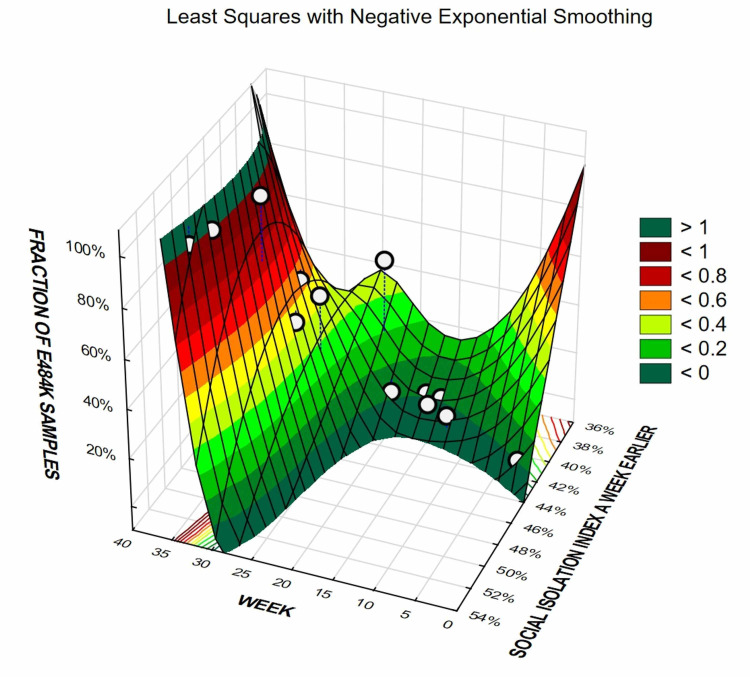
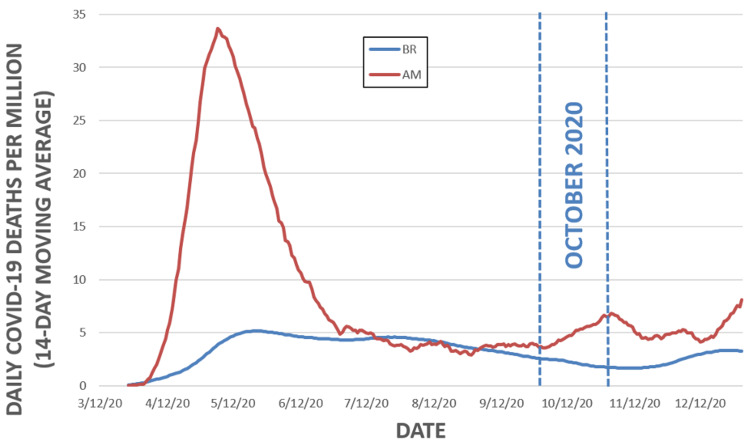
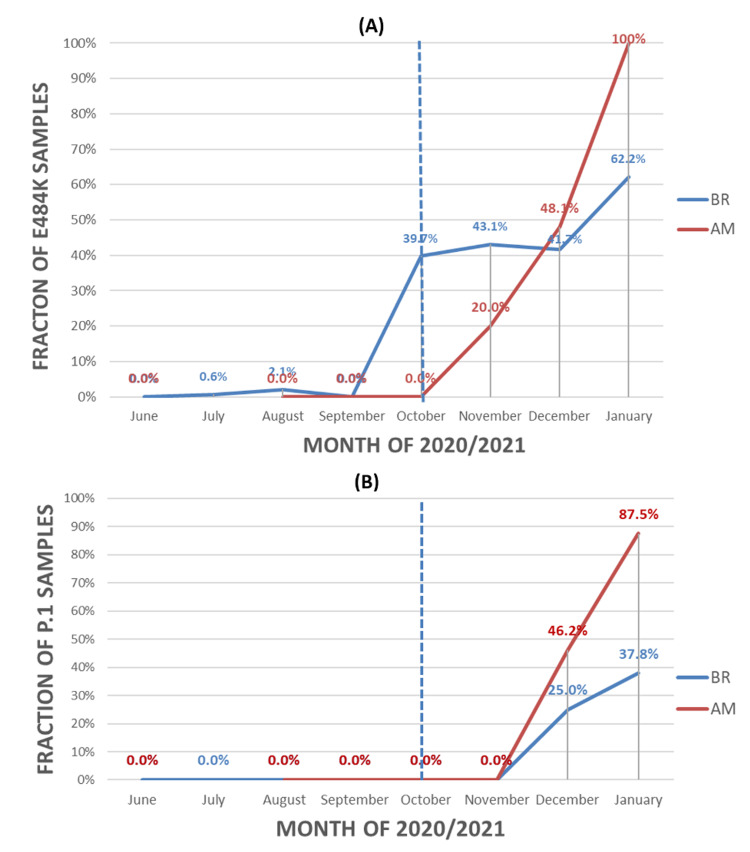
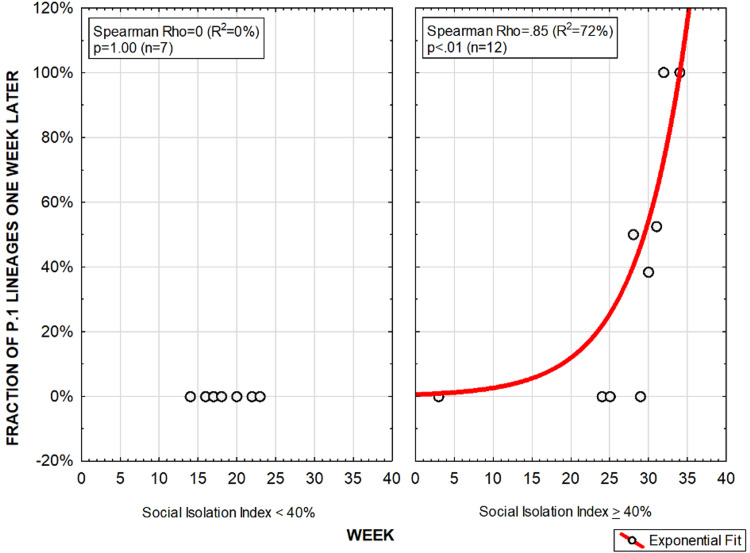
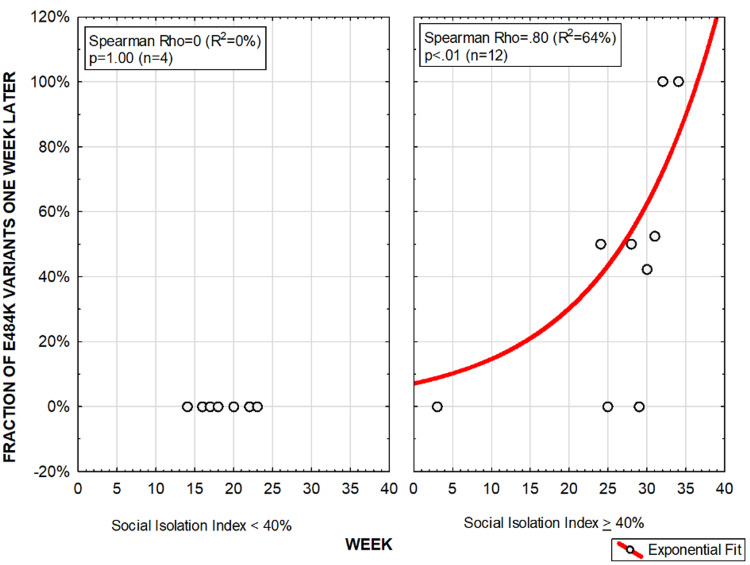
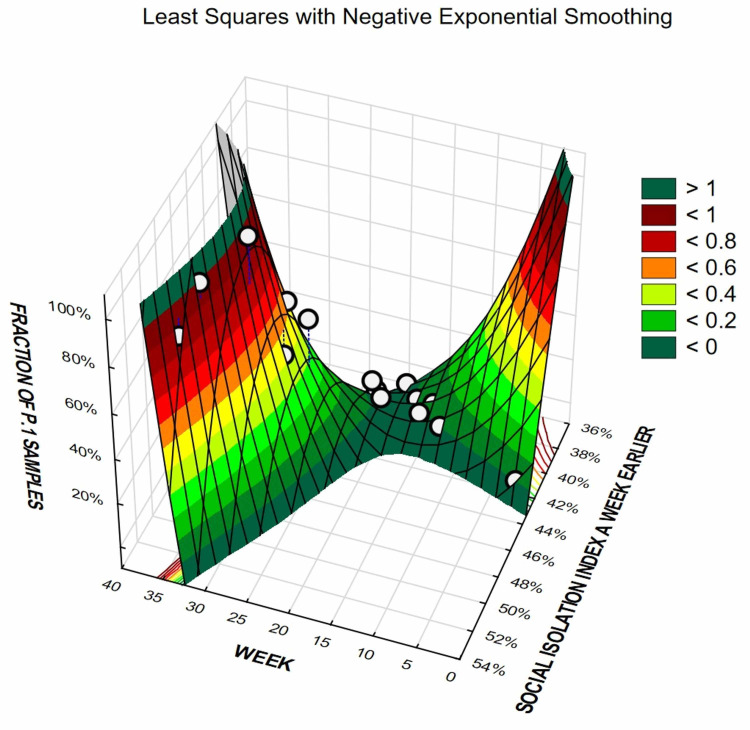
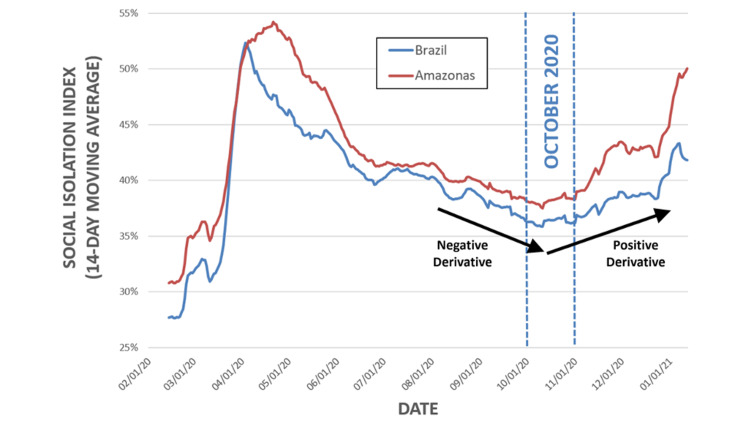
Background While public health strategies to contain the current coronavirus disease 2019 (COVID-19) pandemic are primarily focused on social distancing and isolation, emerging evidence suggest that in some regions social isolation failed to lead to further decrease in the number of COVID-19 deaths in the long run. This apparent paradox was particularly observed in the northern region of Brazil, in the state of Amazonas. We hypothesized that the emergence of new severe acute respiratory syndrome coronavirus 2 (SARS-CoV-2) mutations, leading to more transmissible and pathogenic variants, could explain the lack of further reductions in COVID-19 new cases and related deaths in some regions. Our objective is to determine if social isolation is associated with the emergence of new SARS-CoV-2 variants, particularly the P.1 lineage and E484K mutants, in Brazil and in the state of Amazonas. Materials and methods We assessed the prevailing SARS-CoV-2 genomes present in Brazil available on the GISAID (Global Initiative on Sharing All Influenza Data) database collected between June 1, 2020, and January 31, 2021. Data regarding demographics, lineage, and prevalence of P.1 lineage and E484K mutations were obtained. Social isolation was measured using the Social Isolation Index (SII), which quantifies the percentage of individuals that stayed within a distance of 450 meters from their homes on a given day, between February 1, 2020, and January 24, 2021. The number of daily COVID-19 deaths was obtained from the Brazilian Ministry of Health (OpenDataSUS, 2021) between March 12, 2020, and January 10, 2021. SII was correlated with the prevalence P.1 lineage and E484K mutations in the eight following weeks. All univariate associations were estimated using the Spearman Correlation Index. 3D surfaces were employed to reflect the relationship between time, social isolation, and prevalence of genomic variants simultaneously. Results A total of 773 and 77 samples were obtained in Brazil and in the Amazonas state, respectively. In the state of Amazonas, SII on a given week was positively, significantly, and moderately or strongly (r > 0.6) correlated with the prevalence of both P.1 lineage and other E484K variants in the six following weeks after the SII on a given week. Conversely, in overall Brazil, correlations between SII and P.1 lineage and E484K variants were weaker and shorter, or negative, respectively. When SII was below 40%, P.1 lineage or E484K variants were not detected in the following weeks. When SII was above 40%, apparently exponential positive correlations between SII and prevalence of both P.1 lineage and E484K variants were observed. Conclusion The results of this study indicate that SII above 40% is associated with the emergence of SARS-CoV-2 E484K variants and P.1 lineage in the state of Amazonas, which was not observed in overall Brazil.
背景 虽然当前用于遏制2019年冠状病毒病(COVID-19)大流行的公共卫生策略主要集中在社交距离和隔离上,但新出现的证据表明,在某些地区,从长远来看,社交隔离未能导致COVID-19死亡人数进一步下降。这种明显的矛盾在巴西北部的亚马孙州尤为明显。我们推测,新的严重急性呼吸综合征冠状病毒2(SARS-CoV-2)突变的出现,导致了更具传播性和致病性的变体,这可以解释在某些地区COVID-19新病例和相关死亡人数缺乏进一步下降的原因。我们的目的是确定社交隔离是否与巴西及亚马孙州新出现的SARS-CoV-2变体,特别是P.1谱系和E484K突变体有关。
材料和方法 我们评估了2020年6月1日至2021年1月31日期间在GISAID(全球共享流感数据倡议组织)数据库中可获取的巴西流行的SARS-CoV-2基因组。获取了有关人口统计学、谱系以及P.1谱系和E484K突变的流行率的数据。使用社交隔离指数(SII)来衡量社交隔离情况,该指数量化了2020年2月1日至2021年1月24日期间在某一天呆在离家450米范围内的个体百分比。2020年3月12日至2021年1月10日期间的每日COVID-19死亡人数来自巴西卫生部(OpenDataSUS,2021)。SII与接下来八周内P.1谱系和E484K突变的流行率相关。所有单变量关联均使用斯皮尔曼相关指数进行估计。使用三维表面来同时反映时间、社交隔离和基因组变体流行率之间的关系。
结果 在巴西和亚马孙州分别获得了773个和77个样本。在亚马孙州,给定一周的SII与该周SII之后接下来六周内P.1谱系和其他E484K变体的流行率呈正相关、显著相关,且为中度或强相关(r>0.6)。相反,在整个巴西,SII与P.1谱系和E484K变体之间分别具有较弱且持续时间较短的相关性或负相关性。当SII低于40%时,在接下来的几周内未检测到P.1谱系或E484K变体。当SII高于40%时,观察到SII与P.1谱系和E484K变体的流行率之间明显呈指数正相关。
结论 本研究结果表明,40%以上的SII与亚马孙州SARS-CoV-2 E484K变体和P.1谱系的出现有关,而在整个巴西未观察到这种情况。