T.E. Starzl Transplantation Institute, Department of Surgery, University of Pittsburgh, Pittsburgh, PA 15261, USA.
Department of Dermatology and Rheumatology, Xiangya Hospital, Central South University, Changsha, Hunan 410008, China.
Sci Transl Med. 2021 Mar 17;13(585). doi: 10.1126/scitranslmed.abb0122.
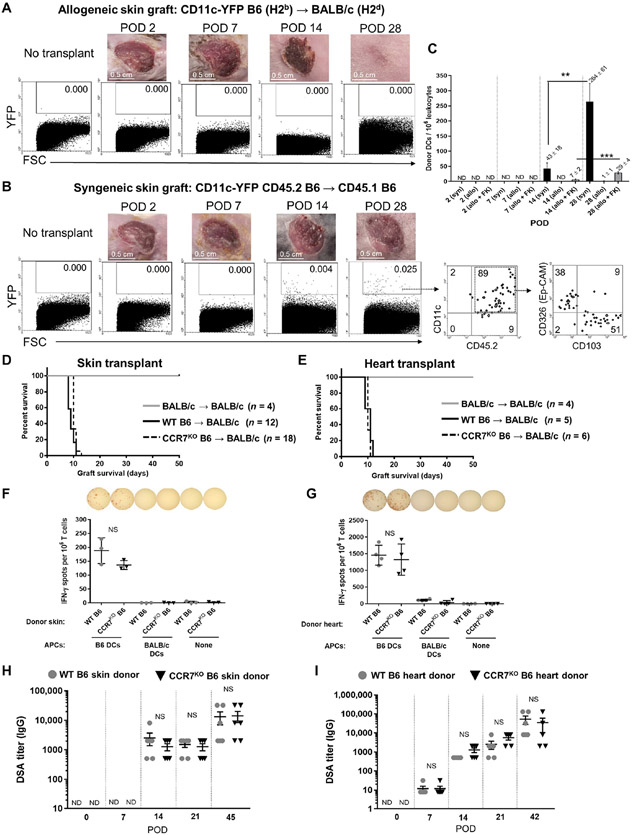
Despite the role of donor-specific antibodies (DSAs) in recognizing major histocompatibility complex (MHC) antigens and mediating transplant rejection, how and where recipient B cells in lymphoid tissues encounter donor MHC antigens remains unclear. Contrary to the dogma, we demonstrated here that migration of donor leukocytes out of skin or heart allografts is not necessary for B or T cell allosensitization in mice. We found that mouse skin and cardiac allografts and human skin grafts release cell-free donor MHC antigens via extracellular vesicles (EVs) that are captured by subcapsular sinus (SCS) macrophages in lymph nodes or analog macrophages in the spleen. Donor EVs were transported across the SCS macrophages, and donor MHC molecules on the EVs were recognized by alloreactive B cells. This triggered B cell activation and DSA production, which were both prevented by SCS macrophage depletion. These results reveal an unexpected role for graft-derived EVs and open venues to interfere with EV biogenesis, trafficking, or function to restrain priming or reactivation of alloreactive B cells.
尽管供体特异性抗体 (DSA) 在识别主要组织相容性复合体 (MHC) 抗原和介导移植排斥反应方面发挥作用,但在淋巴组织中,受体 B 细胞如何以及在何处遇到供体 MHC 抗原仍不清楚。与教条相反,我们在这里证明,在小鼠中,供体细胞从皮肤或心脏同种异体移植物中迁移出来并不是 B 或 T 细胞同种致敏所必需的。我们发现,小鼠皮肤和心脏同种异体移植物和人皮肤移植物通过细胞外囊泡 (EV) 释放无细胞供体 MHC 抗原,这些 EV 被淋巴结中的被膜下窦 (SCS) 巨噬细胞或脾脏中的类似巨噬细胞捕获。供体 EV 穿过 SCS 巨噬细胞运输,EV 上的供体 MHC 分子被同种反应性 B 细胞识别。这引发了 B 细胞的激活和 DSA 的产生,而 SCS 巨噬细胞耗竭可以阻止这一过程。这些结果揭示了移植物衍生的 EV 的意外作用,并为干扰 EV 发生、运输或功能以抑制同种反应性 B 细胞的启动或再激活开辟了途径。