Department of Surgery, University of Pittsburgh, T.E. Starzl Transplantation Institute, Pittsburgh, Pennsylvania, USA.
Hubei Key Laboratory of Medical Technology on Transplantation, Transplant Center, Institute of Hepatobiliary Diseases, Zhongnan Hospital, Wuhan University, Wuhan, Hubei, China.
Curr Opin Organ Transplant. 2019 Dec;24(6):670-678. doi: 10.1097/MOT.0000000000000701.
Extracellular vesicles released by prokaryote or eukaryote cells are emerging as mechanisms of cell-to-cell communication, by either physically interacting with the surface of target cells or transferring proteins/peptides, lipids, carbohydrates, and nuclei acids to acceptor cells. Accumulating evidence indicates that extracellular vesicles, among other functions, regulate innate and adaptive immune responses. We revisit here the effects that extracellular vesicles of various origins have on innate immunity.
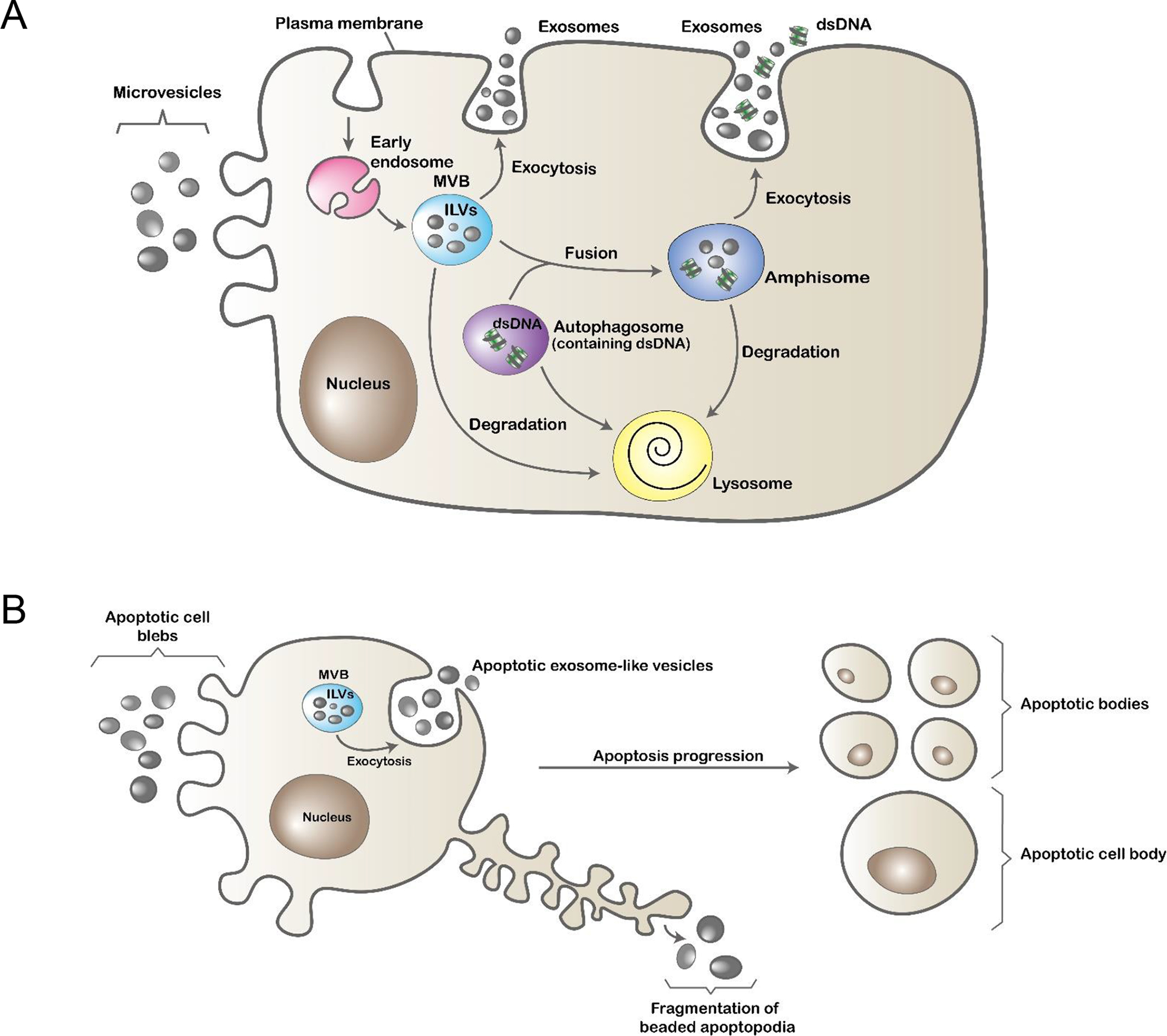
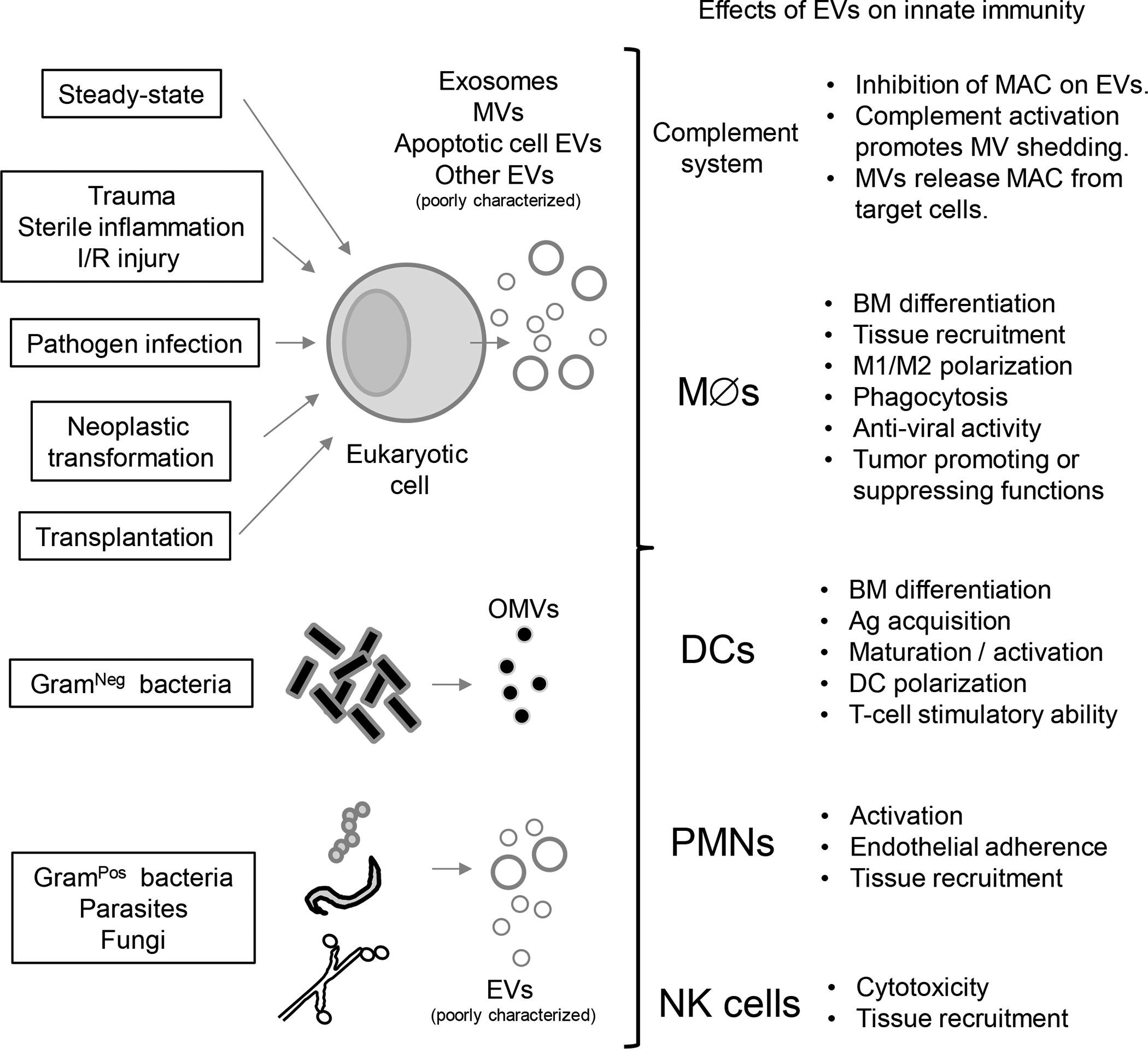
Extracellular vesicles comprise a heterogeneous group of vesicles with different biogenesis, composition and biological properties, which include exosomes, microvesicles, apoptotic cell-derived extracellular vesicles, and other extracellular vesicles still not well characterized. Extracellular vesicles released by pathogens, leukocytes, nonhematopoietic cells, tumor cells, and likely allografts, can either stimulate or suppress innate immunity via multiple mechanisms. These include transfer to target leukocytes of pro-inflammatory or anti-inflammatory mediators, membrane receptors, enzymes, mRNAs, and noncoding RNAs; and interaction of extracellular vesicles with the complement and coagulation systems. As a result, extracellular vesicles affect differentiation, polarization, activation, tissue recruitment, cytokine and chemokine production, cytolytic and phagocytic function, and antigen transfer ability, of different types of innate immune cells.
The field of intercellular communication via extracellular vesicles is a rapid evolving area and the effects of pathogen-derived and host-derived extracellular vesicles on innate immunity in particular, have received increasing attention during the past decade. Future studies will be necessary to assess the full potential of the crosstalk between extracellular vesicles and the innate immune system and its use for therapeutic applications to treat chronic inflammation-based diseases and cancer growth and dissemination, among the growing list of disorders in which the innate immune system plays a critical role.
原核细胞或真核细胞释放的细胞外囊泡作为细胞间通讯的机制正在出现,其通过与靶细胞表面物理相互作用或向受体细胞转移蛋白质/肽、脂质、碳水化合物和核碱基来实现。越来越多的证据表明,细胞外囊泡除了其他功能外,还调节先天和适应性免疫反应。我们在这里重新审视了各种来源的细胞外囊泡对先天免疫的影响。
细胞外囊泡包含一组具有不同生物发生、组成和生物学特性的异质囊泡,包括外泌体、微泡、凋亡细胞衍生的细胞外囊泡和其他尚未很好表征的细胞外囊泡。病原体、白细胞、非造血细胞、肿瘤细胞释放的细胞外囊泡,以及可能的同种异体移植物,可通过多种机制刺激或抑制先天免疫。这些机制包括将促炎或抗炎介质、膜受体、酶、mRNA 和非编码 RNA 转移到靶白细胞;以及细胞外囊泡与补体和凝血系统的相互作用。结果,细胞外囊泡影响不同类型先天免疫细胞的分化、极化、激活、组织募集、细胞因子和趋化因子产生、细胞溶解和吞噬功能以及抗原转移能力。
通过细胞外囊泡进行细胞间通讯的领域是一个快速发展的领域,特别是病原体衍生和宿主衍生的细胞外囊泡对先天免疫的影响,在过去十年中受到了越来越多的关注。未来的研究将有必要评估细胞外囊泡与先天免疫系统之间的串扰的全部潜力及其在治疗慢性炎症性疾病和癌症生长和传播等不断增加的先天免疫系统发挥关键作用的疾病中的应用。