Mazzocchi Andrea, Soker Shay, Skardal Aleksander
Wake Forest Institute for Regenerative Medicine, Wake Forest School of Medicine, Medical Center, Winston-Salem, North Carolina 27101, USA.
Virginia Tech-Wake Forest School of Biomedical Engineering and Sciences, Wake Forest School of Medicine, Medical Center Boulevard, Winston-Salem, North Carolina 27157, USA.
Appl Phys Rev. 2019 Mar;6(1). doi: 10.1063/1.5056188. Epub 2019 Feb 6.
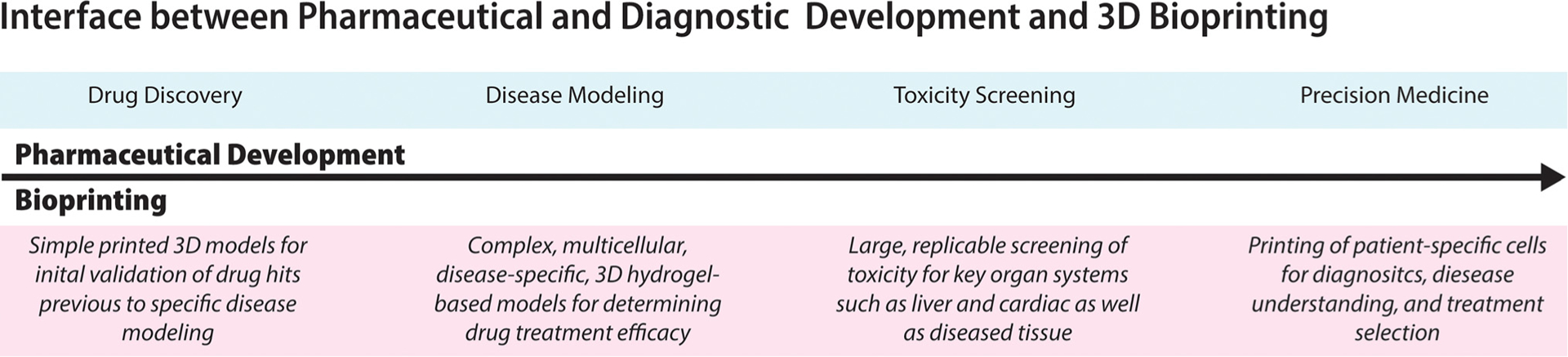
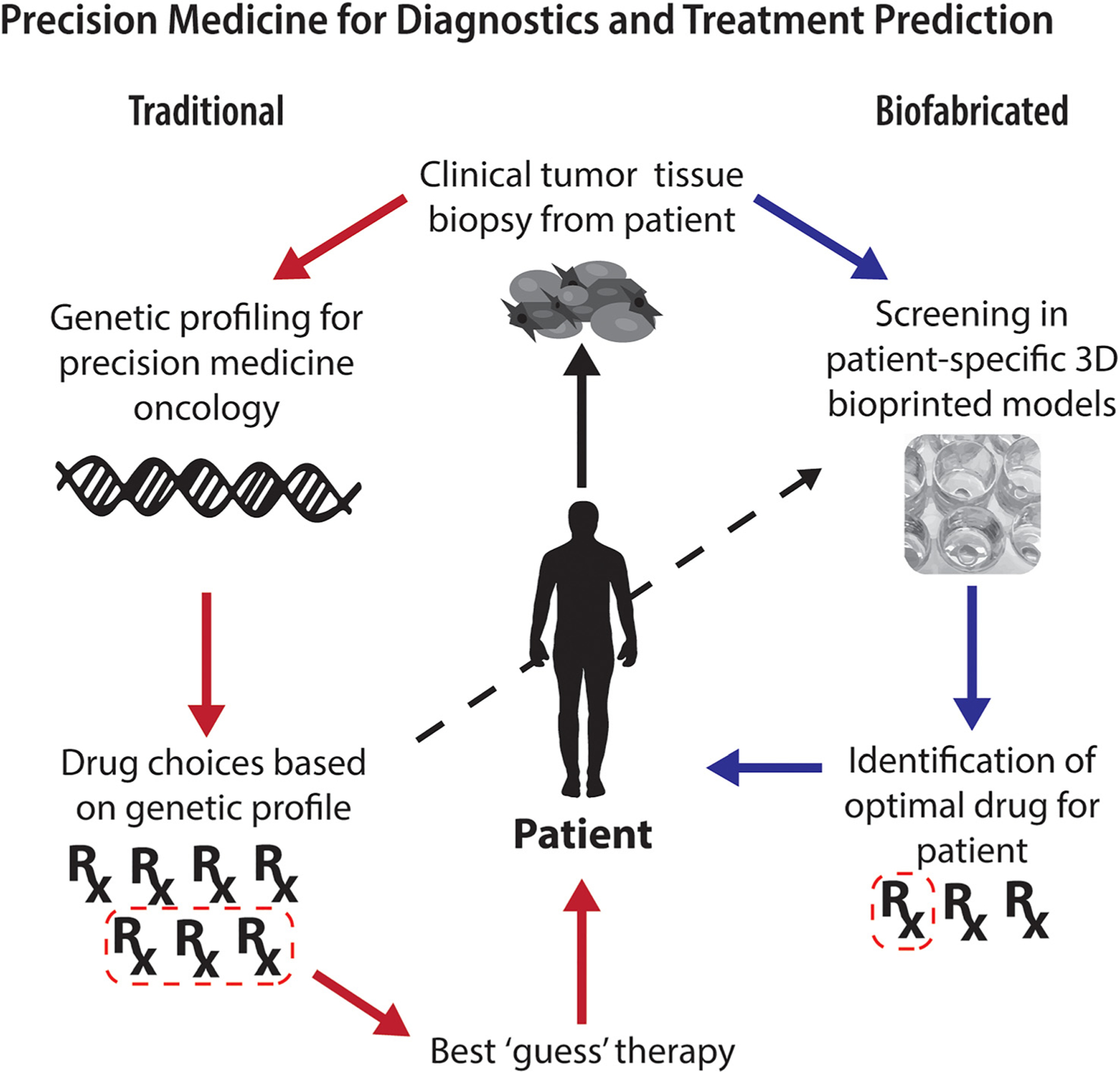
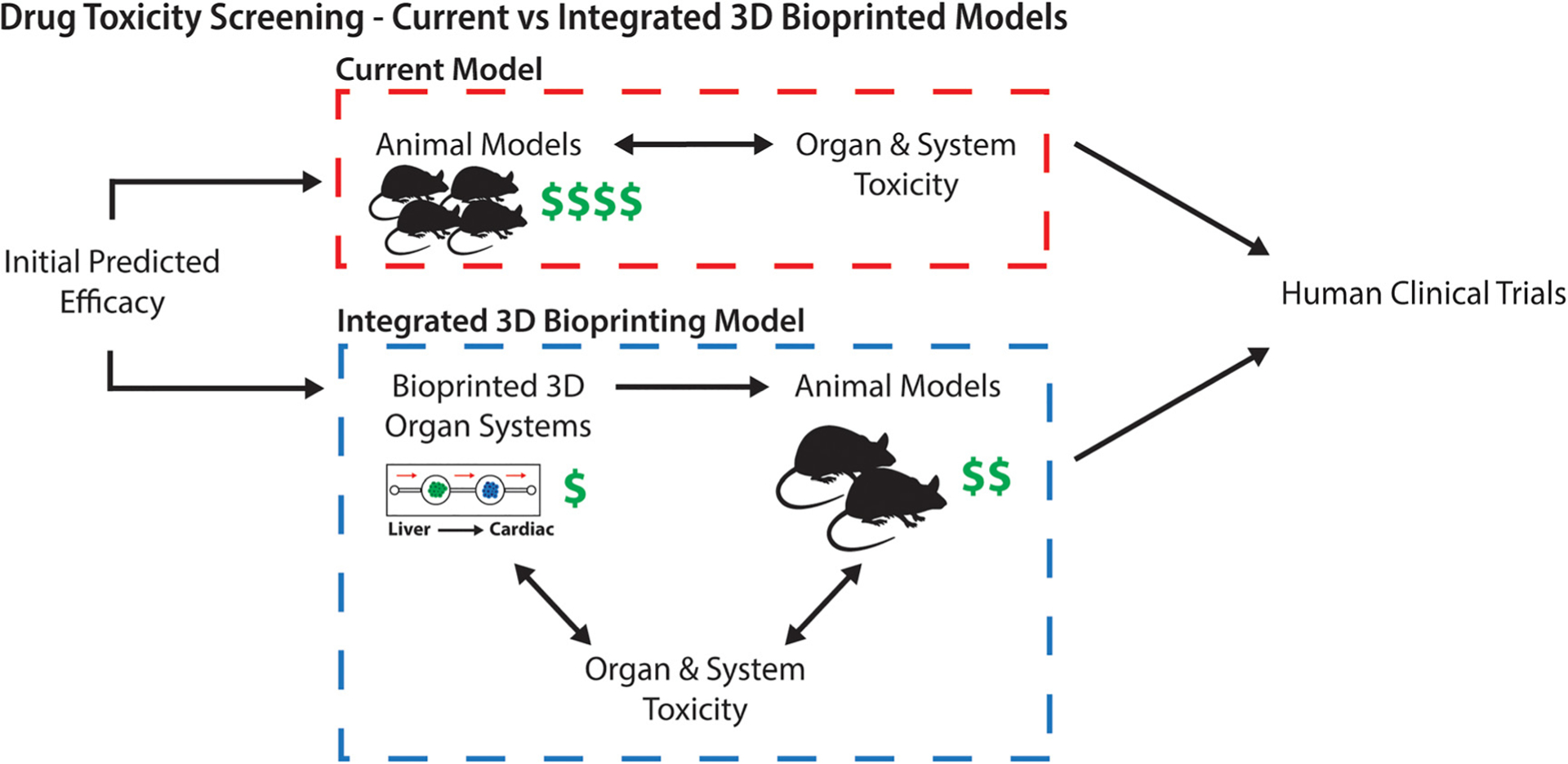
High-throughput technologies have become essential in many fields of pharmaceutical and biological development and production. Such technologies were initially developed with compatibility with liquid handling-based cell culture techniques to produce large-scale 2D cell culture experiments for the compound analysis of candidate drug compounds. Over the past two decades, tools for creating 3D cell cultures, organoids, and other 3D models, such as cell supportive biomaterials and 3D bioprinting, have rapidly advanced. Concurrently, a significant body of evidence has accumulated which speaks to the many benefits that 3D model systems have over traditional 2D cell cultures. Specifically, 3D cellular models better mimic aspects such as diffusion kinetics, cell-cell interactions, cell-matrix interactions, inclusion of stroma, and other features native to tissue and as such have become an integral part of academic research. However, most high throughput assays were not developed to specifically support 3D systems. Here, we describe the need for improved compatibility and relevant advances toward deployment and adoption of high throughput 3D models to improve disease modeling, drug efficacy testing, and precision medicine applications.
高通量技术在药物和生物研发及生产的许多领域已变得至关重要。此类技术最初是为了与基于液体处理的细胞培养技术兼容而开发的,用于进行大规模二维细胞培养实验,以分析候选药物化合物。在过去二十年中,用于创建三维细胞培养物、类器官和其他三维模型的工具,如细胞支持性生物材料和三维生物打印技术,取得了迅速进展。与此同时,大量证据表明三维模型系统相对于传统二维细胞培养具有诸多优势。具体而言,三维细胞模型能更好地模拟扩散动力学、细胞间相互作用、细胞与基质相互作用、基质包含以及组织固有的其他特征等方面,因此已成为学术研究不可或缺的一部分。然而,大多数高通量检测方法并非专门为支持三维系统而开发。在此,我们描述了提高兼容性的必要性以及在部署和采用高通量三维模型方面的相关进展,以改善疾病建模、药物疗效测试和精准医学应用。